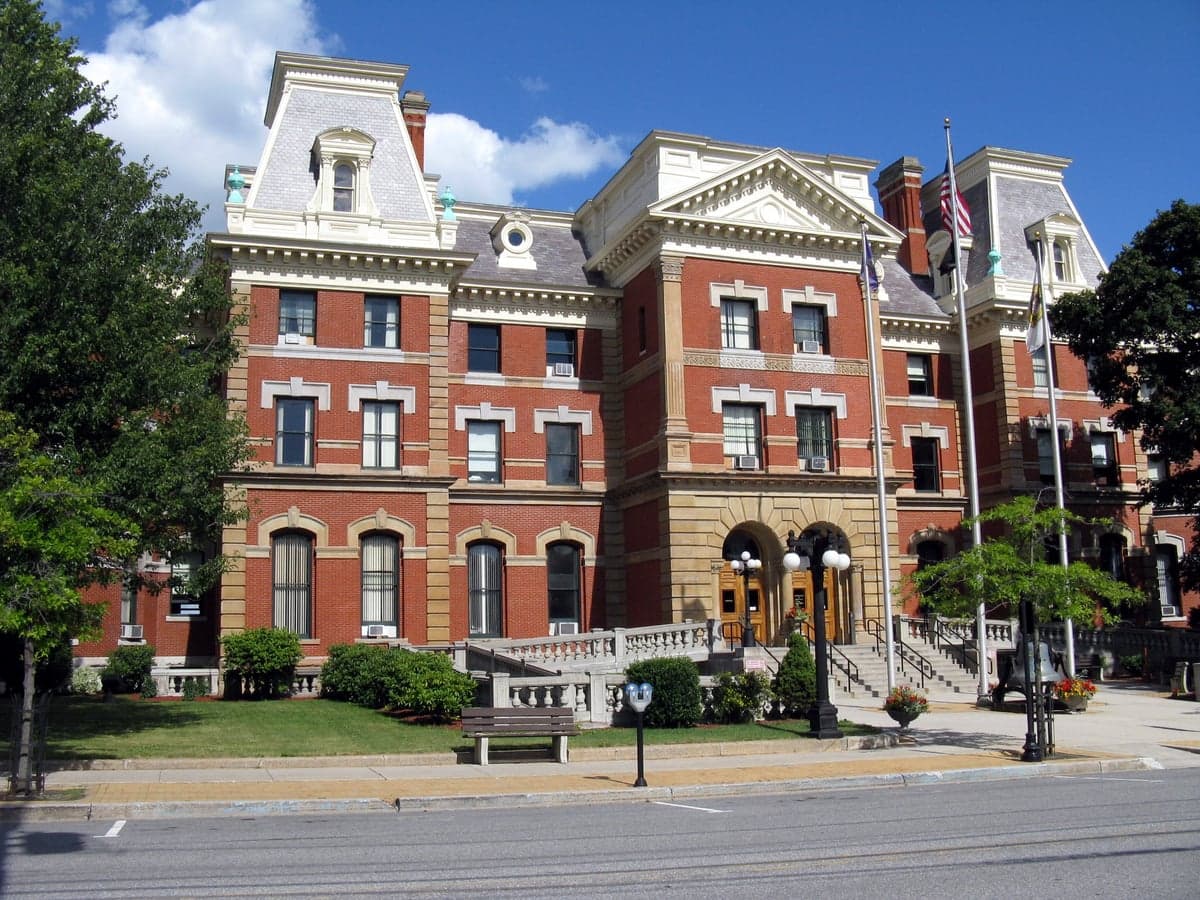
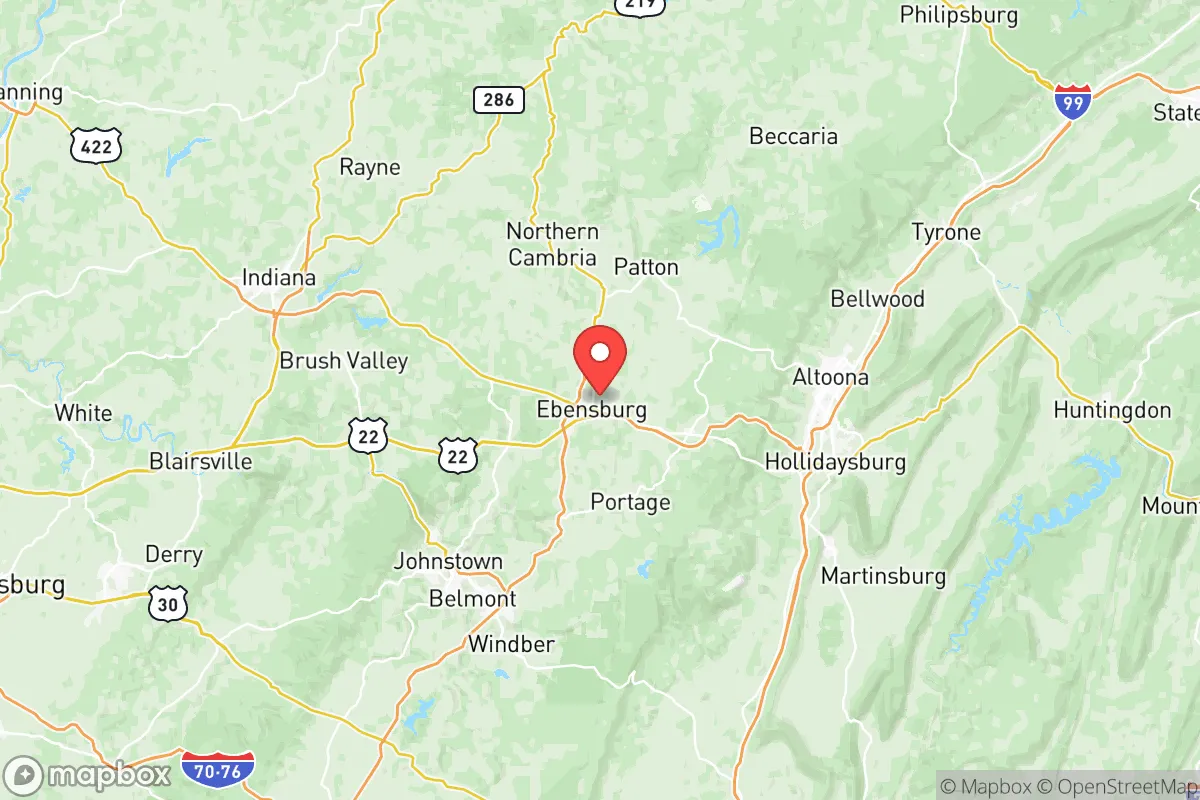
Photo: Wikipedia
Demographics of Cambria County
Affluence Level in Cambria County
A below-average socioeconomic profile. Incomes, home values, and educational attainment trail the U.S., with higher poverty and unemployment.
People of Cambria County
Today, Cambria County’s 132,355 residents form one of Pennsylvania’s most ethnically rooted populations, shaped by 19th-century industrial migration and a modern stability that sets it apart from faster-growing parts of the state. The county is overwhelmingly white (90.8%) and native-born (foreign-born residents make up just 0.4% of the population), with a small but established Black community (2.9%) and a growing Hispanic presence (2.0%). Its identity remains tied to the working-class heritage of Johnstown, Ebensburg, and the smaller boroughs that once powered the region’s coal and steel economy.
Settlement & growth (pre-1960)
Before European settlement, the area now known as Cambria County was part of the hunting and trading grounds of the Iroquois Confederacy, particularly the Seneca and Lenape peoples. The region saw little permanent Native settlement due to its rugged Allegheny Mountain terrain, but it served as a corridor between the Ohio and Susquehanna watersheds. French and British traders passed through in the 1700s, but no colonial forts or missions were established here.
American settlement began in earnest after the Revolutionary War, with the first wave of Scots-Irish and German immigrants arriving in the 1790s and early 1800s. These pioneers were drawn by cheap land grants and the promise of subsistence farming in the mountain valleys. They founded the county’s earliest permanent communities: Ebensburg (settled 1796, became the county seat in 1805), Loretto (founded 1799 by Irish Catholic immigrants), and Carrolltown (founded 1830 by German Catholics). These towns remain the cultural heart of the county’s rural interior, with Loretto still home to Saint Francis University and a strong Irish Catholic identity.
The transformative wave came with the discovery of bituminous coal and the arrival of the Pennsylvania Railroad in the 1850s. Between 1850 and 1910, Cambria County’s population exploded from roughly 17,000 to over 200,000, driven by the demand for coal and steel. The Cambria Iron Company (later Bethlehem Steel) in Johnstown became the anchor. This industrial boom pulled in a massive wave of Southern and Eastern European immigrants: Italians (especially from Abruzzo and Sicily), Poles, Slovaks, Slovenes, and Hungarians arrived between 1880 and 1920. They settled in dense ethnic neighborhoods in Johnstown (the Cambria City, Minersville, and Morrellville sections), South Fork, and Portage. Each group built its own Catholic parish, social hall, and fraternal society — a pattern still visible in Johnstown’s annual ethnic festivals and the surviving church architecture.
A smaller but significant wave of African American migration occurred between 1910 and 1930, as Black workers from the Upper South (Virginia, West Virginia, and Maryland) were recruited to fill labor shortages in the steel mills and coal mines. They concentrated in Johnstown’s Hornerstown and Oakhurst neighborhoods, forming the core of the county’s Black community that persists today. By 1930, Cambria County’s Black population had reached about 3,000 — roughly 1.5% of the total at the time.
The post-World War II period saw a gradual decline in immigration and a shift toward suburbanization. The 1950s and early 1960s brought a small influx of Appalachian migrants from deeper in the mountains, but the county’s population peaked in 1940 at 213,000 and began a slow, steady decline as coal mining mechanized and steel production consolidated.
Modern era (post-1965)
The 1965 Hart-Cellar Act had minimal direct impact on Cambria County. Unlike major metropolitan areas, the county attracted almost no new international immigration after 1965. The foreign-born population today is just 0.4% — one of the lowest rates in Pennsylvania. The small Asian population (0.4%) and Indian population (0.1%) are almost entirely professionals working at the region’s hospitals (Conemaugh Memorial Medical Center in Johnstown) or at the University of Pittsburgh at Johnstown, and they are dispersed rather than concentrated in any single neighborhood.
The dominant demographic story since 1970 has been domestic out-migration. The collapse of the steel industry in the 1970s and 1980s triggered a sustained population loss: the county shrank from 183,000 in 1970 to 132,355 today. Young adults left for Pittsburgh, Philadelphia, and the Sun Belt, leaving behind an aging population. The median age is now 46.5, well above the national average. This out-migration has been almost entirely white, which has slightly increased the non-white share of the remaining population — but the county remains 90.8% white.
Hispanic population growth (now 2.0%) is the most notable recent shift. This growth is driven by a small but steady influx of Mexican and Puerto Rican families, many drawn by lower housing costs and jobs in warehousing, logistics, and healthcare. They are concentrated in Johnstown (particularly the Moxham neighborhood) and in Richland Township, where newer apartment complexes have attracted younger families. The Black population (2.9%) has remained stable in absolute numbers but has aged in place, with younger Black residents often leaving for larger cities.
Suburbanization within the county has been modest but real. Richland Township and Geistown have grown as bedroom communities for Johnstown commuters, while Ebensburg has seen some growth as a government and service hub. But there has been no large-scale exurban boom; the county’s rugged terrain and limited highway access have constrained development.
The future
Cambria County’s population is projected to continue declining slowly, likely falling below 125,000 by 2040. The county is becoming slightly more diverse, but from a very low base. The Hispanic share is expected to rise to 4-5% over the next two decades, driven by natural increase and continued in-migration of younger families. The Asian and Indian populations will likely remain small, tied to the healthcare and education sectors. The Black population will probably hold steady or decline slightly as older residents pass away.
The cultural identity of the county is evolving from a purely industrial, white ethnic identity toward a more mixed but still predominantly white working-class and rural character. The old ethnic neighborhoods in Johnstown are fading as younger generations move out, but the county’s many ethnic festivals (Polish, Slovak, Italian, Irish) continue to draw crowds and preserve a sense of heritage. New residents are increasingly retirees from higher-cost areas of Pennsylvania and New Jersey, drawn by the county’s low home prices and rural character.
For someone moving in now, Cambria County offers a stable, affordable, and deeply rooted community — but one that is shrinking and aging. The job market is anchored by healthcare, education, and government, with limited growth in manufacturing or technology. The county’s future depends on whether it can attract enough younger families, particularly Hispanic and other new residents, to offset the ongoing loss of its white population. The character of the county will remain predominantly white and culturally conservative, but with a slowly growing diversity that is most visible in Johnstown and Richland Township.

* Values derived from national, state, county, city and local statistics and may differ in a specific area. Last updated: 2026-07-09T07:46:54.000Z
Narrative content on this page is AI-generated and may contain mistakes. Verify any details that matter before acting on them.
ReloMaps may earn a commission from affiliate links at no extra cost to you.

