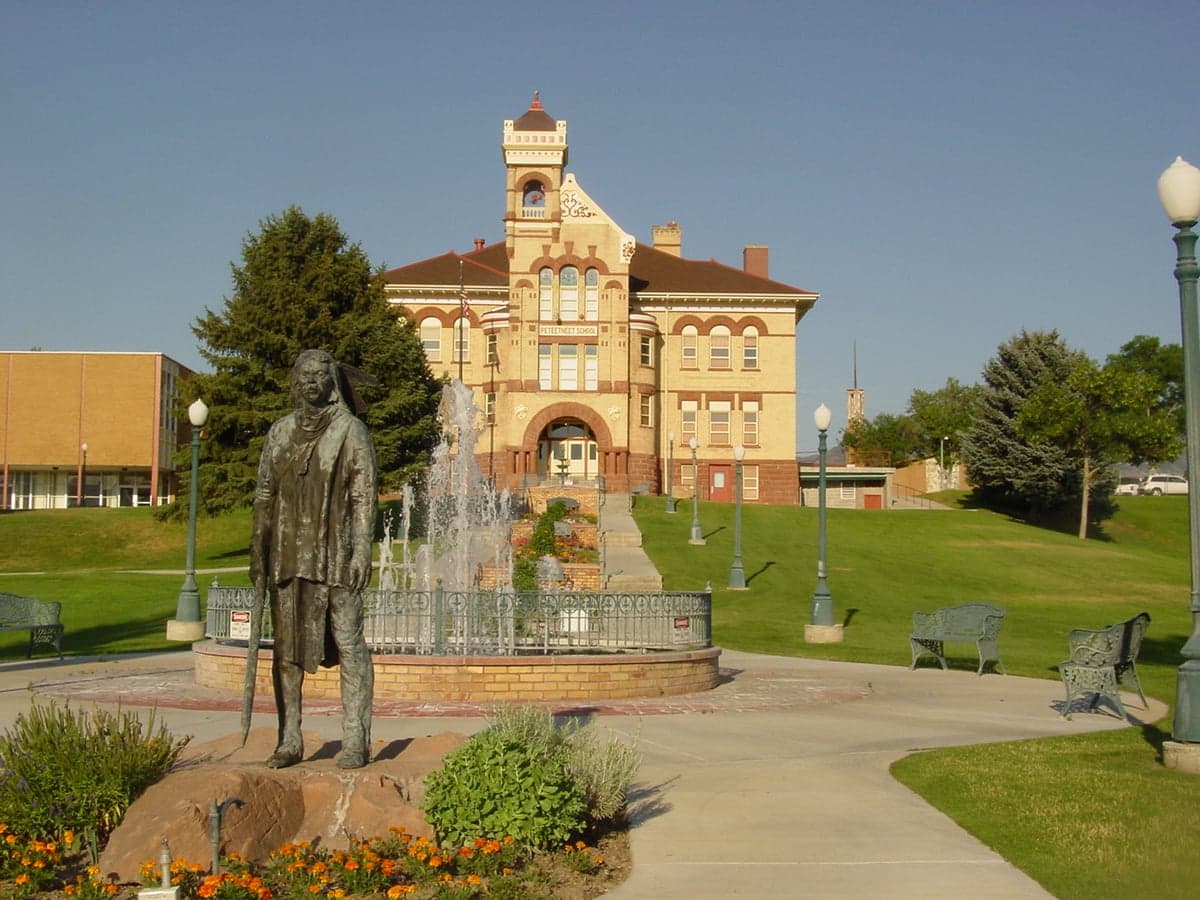
Photo: Wikipedia
Political ClimatePolitical Climate in Payson, UT
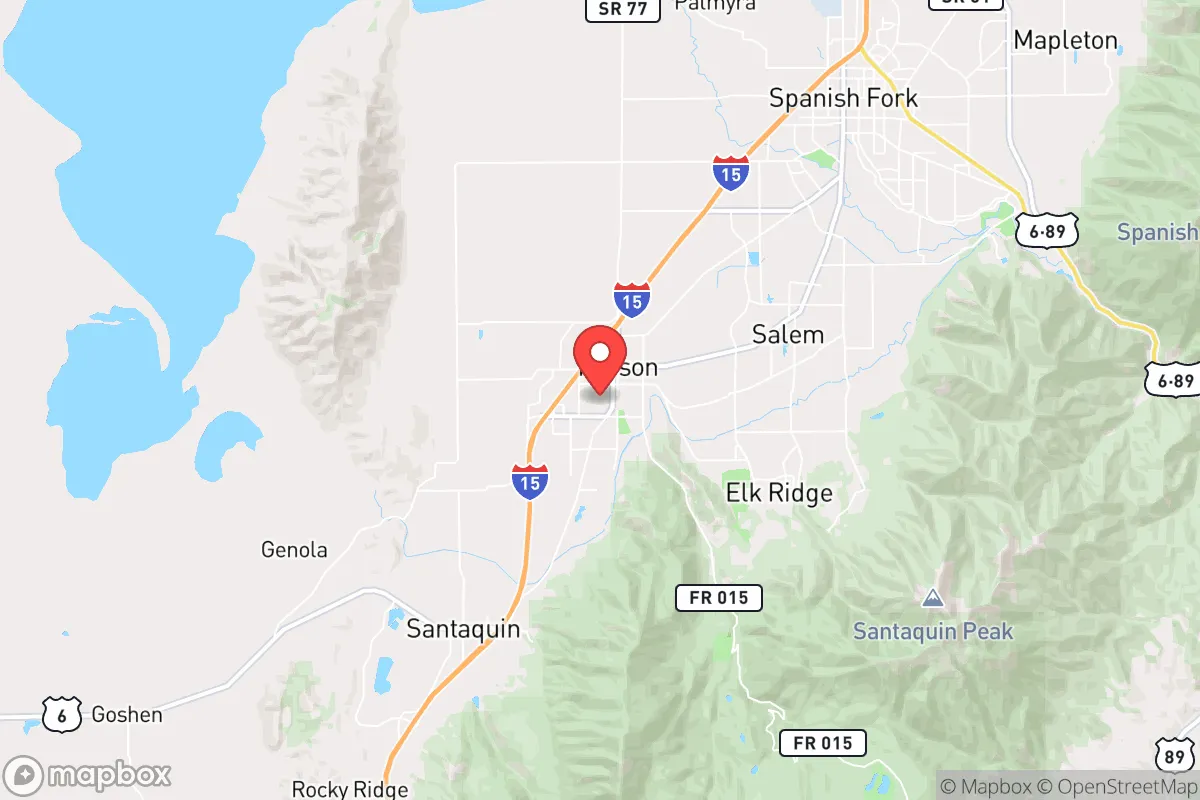
District shown is the primary district for this city’s centroid. Cities may span multiple districts.
Local Political AnalysisPolitical Analysis of Payson, UT
Payson has long been a reliably conservative community, and that hasn’t changed. The city sits in Utah County, which is the heart of the state’s Republican base, and its Cook PVI of R+10 puts it just a hair to the left of the state overall (R+11). In practice, that means you can expect Republican candidates to win local and federal races by comfortable margins—usually 60-70% of the vote in presidential elections. But the political story here isn’t just about the numbers; it’s about how the area’s growth is slowly shifting the conversation, even if the overall lean stays solidly red.
How it compares
Compared to the rest of Utah, Payson is actually a little more moderate than you might think. The state’s R+11 rating is driven by places like Provo and Orem, which are deeply conservative and heavily influenced by Brigham Young University and the LDS Church’s institutional presence. Payson, by contrast, has a more working-class, agricultural history, and its politics reflect that. You’ll find fewer of the culture-war intensity debates you see in the northern part of the county. Drive 15 minutes north to Spanish Fork, and you’ll see a similar vibe—conservative but pragmatic. Head 20 minutes south to Nephi in Juab County, and you’ll hit a much more rural, even more conservative area (R+16 or so). The real contrast is with Salt Lake City, about 50 miles north, which is a Democratic stronghold (Cook PVI D+10). That distance isn’t just geographic; it’s a cultural and political chasm. Payson residents often feel like the state legislature in Salt Lake City doesn’t fully understand their concerns about water rights, land use, and local control.
What this means for residents
For conservative residents, life in Payson is comfortable. Local government is reliably Republican, and you’ll find your values reflected in school board decisions, zoning policies, and public events. The city council and mayor’s office are almost always held by Republicans, and there’s little appetite for progressive policies like rent control or sanctuary city status. For liberal residents, it’s a different story. You’ll be in a clear minority, and that can feel isolating. There’s no active Democratic Party presence in town, and local elections are often decided in the Republican primary. That said, the area is not hostile—most people are polite and neighborly, and you won’t face overt discrimination. The real challenge is that your vote for president or Senate won’t change the outcome, and local policy debates will rarely align with your views. The growing population—Payson has added about 5,000 people since 2010—is bringing in some younger families and remote workers from more moderate areas, which could slowly nudge the needle, but that’s a long-term trend measured in decades, not election cycles.
One cultural distinction worth noting: Payson’s political climate is deeply intertwined with the LDS Church, which is the dominant religious institution. That means many local political discussions—about Sunday alcohol sales, school prayer, or land use near temples—are shaped by church teachings. This isn’t unique to Payson; it’s true across most of Utah County. But it does mean that non-LDS residents, or those who are less observant, can feel a bit outside the mainstream. The trajectory here is toward slow, incremental change. The city is growing, and with growth comes diversity of thought. But for the foreseeable future, Payson will remain a solidly conservative, family-oriented community where the political conversation is polite, predictable, and deeply rooted in local traditions.

State Political ClimatePolitical Climate in Utah
State Political AnalysisPolitical Environment in the State
Utah is a deeply Republican state with a Cook PVI of R+11, meaning it votes about 11 points more Republican than the national average in presidential elections. The dominant coalition is a blend of the Church of Jesus Christ of Latter-day Saints (LDS) cultural influence, a strong small-government ethos, and a growing population of conservative-leaning transplants. Over the last 10-20 years, the state has become more reliably Republican at the federal level, even as its fast-growing urban core—Salt Lake City and its suburbs—has shown signs of a modest leftward drift, particularly on social issues. The result is a state that is solidly red but with a more nuanced, sometimes libertarian-leaning flavor than the Deep South.
Urban vs. rural divide
The political map of Utah is a classic story of urban islands in a red sea. The Wasatch Front—the string of cities from Ogden through Salt Lake City to Provo—is where the vast majority of the population lives and where the political action is. Salt Lake City itself is a deep blue enclave, consistently voting Democratic by 30-40 points in presidential races, driven by a mix of young professionals, university students, and a growing non-LDS population. Its suburbs, however, tell a more complex story. Provo and Orem are among the most conservative cities in the nation, anchored by Brigham Young University and a heavily LDS population. Sandy and Draper in the south end of the valley are reliably Republican but with a more moderate, business-friendly tilt. Meanwhile, Park City is a notable outlier—a wealthy mountain resort town that votes reliably Democratic, fueled by second-home owners and a tourism economy. Outside the Wasatch Front, the state is overwhelmingly red. St. George in the southwest is a fast-growing retirement and family destination that votes heavily Republican, while rural counties like Duchesne and Uintah in the east are among the most conservative in the country, often voting 80%+ Republican. The divide is less about a culture war and more about density: the more urbanized an area, the more likely it is to have a visible Democratic minority.
Policy environment
Utah’s policy environment is defined by low taxes, a light regulatory touch, and a strong emphasis on local control. There is no state income tax on a flat-rate basis—it’s a flat 4.65% individual income tax, and the state sales tax is around 6.1% (with local add-ons). Property taxes are among the lowest in the nation. The state has a right-to-work law and is generally pro-business, with a regulatory climate that favors development and resource extraction. Education policy is a mixed bag: the state spends below the national average per pupil, but it has a robust school choice system, including charter schools and a new universal school voucher program (the Utah Fits All Scholarship) passed in 2023. Healthcare is a point of tension—Utah expanded Medicaid under the Affordable Care Act via a voter initiative in 2018, but the legislature has since added work requirements and other restrictions. Election laws are moderately restrictive: voter ID is required, same-day registration is not available, and mail-in voting is universal but with signature verification. The state has a nonpartisan redistricting commission, but the legislature can override its maps, which it did after the 2020 census, drawing maps that favor Republicans.
Recent policy direction
Utah’s recent legislative sessions have been a flurry of activity, particularly on cultural and liberty-related issues. On gun and self-defense law, Utah is a constitutional carry state (permitless carry for adults 21+), and in 2024 it passed a law prohibiting local governments from banning firearms in public buildings. On parental and education rights, the state passed HB 261 in 2024, which restricts how public schools can discuss topics related to race, sex, and gender, and requires parental notification for any changes to a student’s health or well-being. On speech and privacy, Utah has a strong shield law for journalists and passed a social media regulation law (SB 152) in 2023 requiring age verification and parental consent for minors, which is being challenged in court. On medical and bodily autonomy, the state banned nearly all abortions in 2020 with a trigger law that took effect after Dobbs, with exceptions only for rape, incest, and life of the mother. On property rights, Utah is a strong property-rights state, with a 2023 law (HB 462) limiting the ability of HOAs to restrict solar panels and xeriscaping. On taxation, the legislature has been cutting income taxes incrementally, with a 2024 bill reducing the flat rate from 4.65% to 4.55%. On voting and ballot access, the state passed a law in 2024 requiring all ballots to be returned by 8 p.m. on Election Day, eliminating the grace period for postmarked ballots. The overall direction is toward more conservative social policy, lower taxes, and a more assertive state role in regulating tech and education.
Civil unrest & political movements
Utah is not a hotbed of civil unrest, but it has its flashpoints. The most visible political movements are on the right: the Utah Republican Party is internally divided between a more pragmatic, business-friendly wing and a populist, anti-establishment wing that has pushed for more aggressive action on immigration and election integrity. There have been small but vocal protests at the state capitol over COVID-19 mandates and mask requirements, particularly in 2020-2021. On the left, the Utah Democratic Party is small but active, with protests over abortion rights and LGBTQ+ issues, particularly after the passage of HB 261. Immigration politics are a simmering issue: Utah has a state-level guest worker program (the Utah Compact) that is more moderate than many red states, but there is no sanctuary city policy, and local law enforcement cooperates with federal immigration authorities. Election integrity controversies have been minimal compared to other states, though some rural counties have called for hand-counting ballots. The most visible flashpoint for a new resident would likely be the ongoing debate over public land use, particularly in rural areas where federal land ownership is high and local officials have pushed for greater state control, including a 2024 lawsuit challenging the federal government’s authority over unappropriated lands.
Projection
Over the next 5-10 years, Utah’s political trajectory is likely to remain solidly Republican, but with increasing internal tension. The state is growing fast—about 1.5% annually—driven by in-migration from California and other states. These newcomers tend to be more moderate or libertarian than the native-born population, which could slowly shift the suburbs of Salt Lake County and Utah County toward a more center-right posture. The urban core of Salt Lake City will likely become more Democratic, but the state’s rural and exurban areas will remain deeply red, and the legislature will continue to draw maps that protect Republican majorities. The biggest wildcard is the LDS Church’s evolving stance on social issues—if it becomes more accommodating on LGBTQ+ rights or immigration, that could ripple through the state’s politics. For now, expect more of the same: lower taxes, more school choice, tighter abortion restrictions, and a continued push for state control over federal lands. A new resident moving in now should expect to find a state that is politically stable but not static, with a conservative majority that is increasingly shaped by suburban moderates and rural populists.
For a new resident, the bottom line is this: Utah is a place where conservative values are the default, but the flavor is more Western libertarian than Southern evangelical. You’ll find low taxes, strong property rights, and a government that generally stays out of your business—except on social issues like abortion and education, where it is increasingly assertive. If you’re a conservative, you’ll feel at home almost anywhere outside of Salt Lake City proper. If you’re a liberal, you’ll find a small but active community in the urban core and a state that respects your right to live your life, even if the laws don’t always align with your views. The key is knowing where you’re moving: Provo is not Park City, and St. George is not Salt Lake City. Pick your community wisely, and you’ll find a state that delivers on its promises of opportunity and quality of life.
* Values derived from national, state, county, city and local statistics and may differ in a specific area. Last updated: 2026-11-06T03:24:06.000Z
Narrative content on this page is AI-generated and may contain mistakes. Verify any details that matter before acting on them.
ReloMaps may earn a commission from affiliate links at no extra cost to you.

