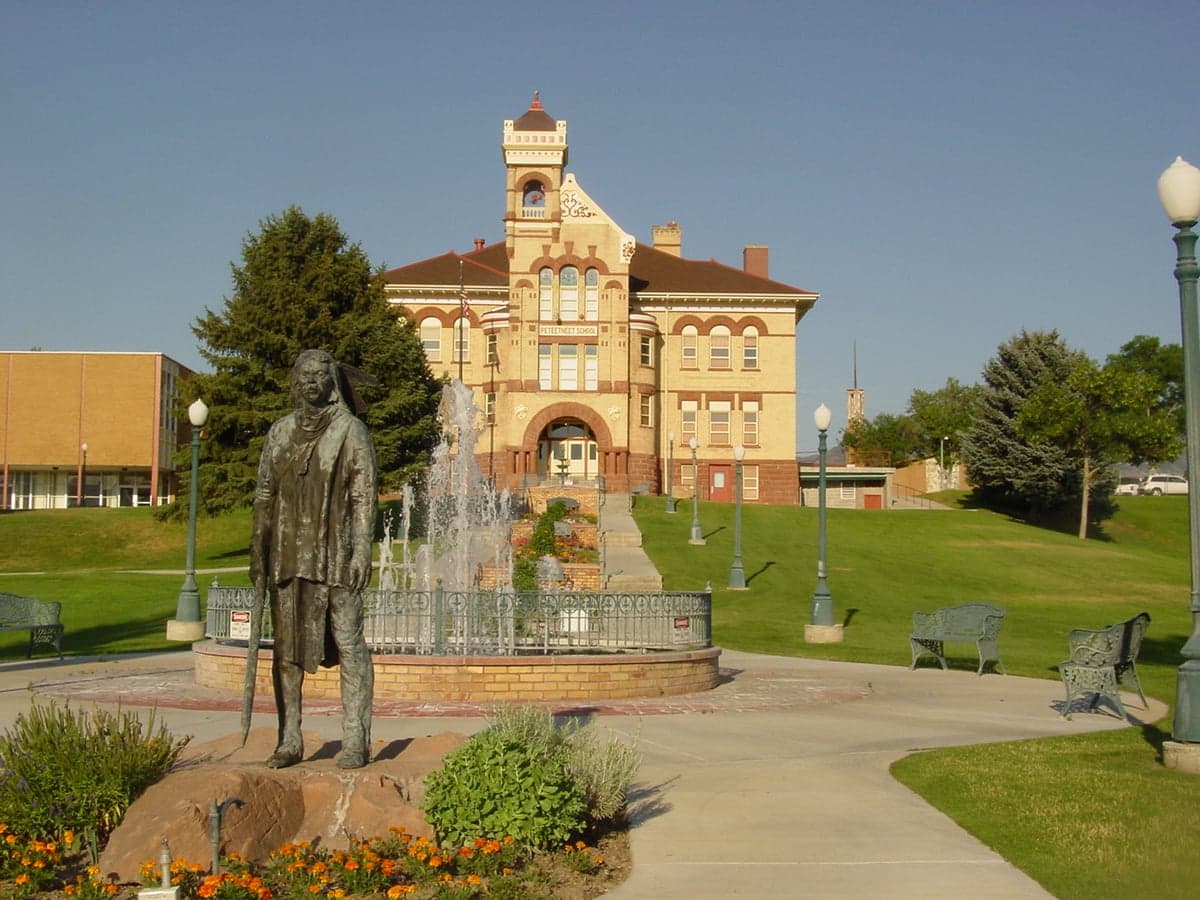
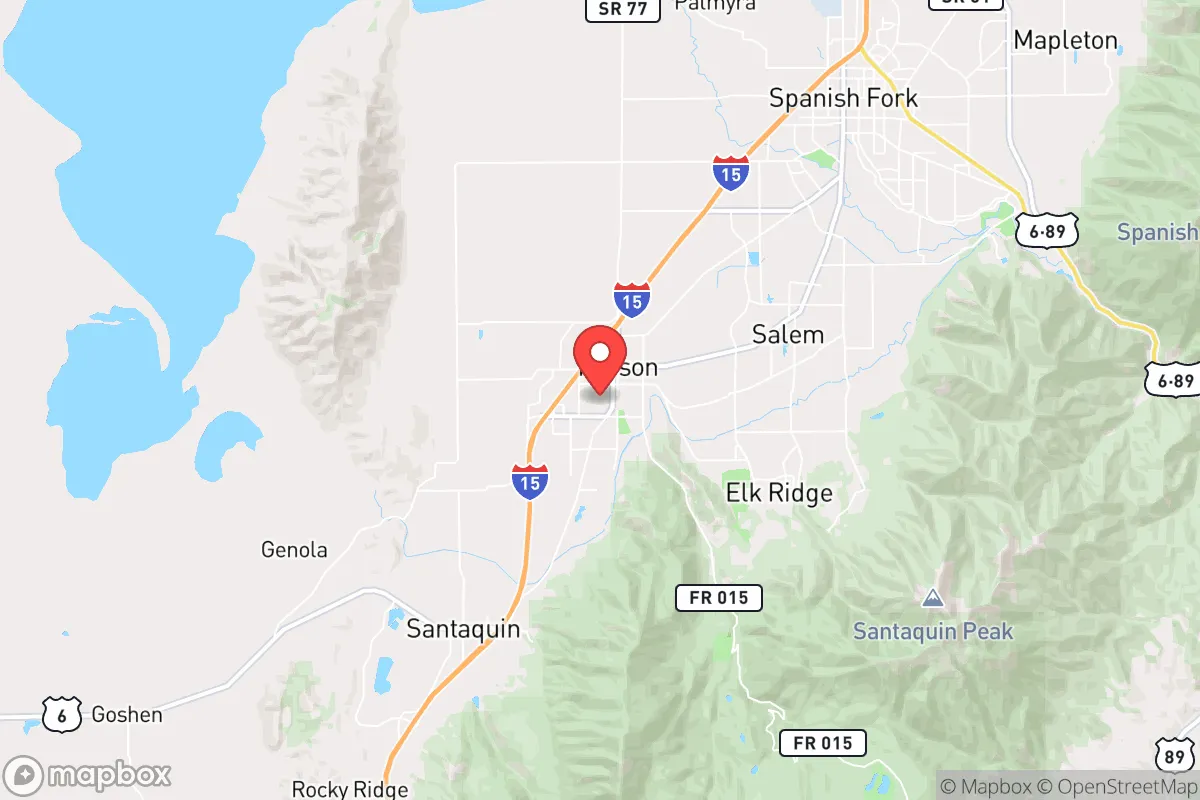
Photo: Wikipedia
Personal Sovereignty in Payson, UT
Viable for self-reliance. Generally workable, though some barriers may limit total independence.
What does Personal Sovereignty tell us?
Personal Sovereignty measures your capacity for self-reliance and independence with minimal government friction. Higher scores mean fewer barriers between you and the way you want to live... but it assumes you have the space you need and good neighbors.
What does this tell us?
Personal Sovereignty measures your capacity for self-reliance and independence with minimal government friction. Higher scores mean fewer barriers between you and the way you want to live... but it assumes you have the space you need and good neighbors.
State Policy
Energy independence: Net exporter (108% of energy produced in-state)
Personal Liberty
Homesteading

Personal Liberty Analysis
Payson, Utah, offers a personal sovereignty environment that is among the strongest in the nation, shaped by a state-level culture of limited government, robust property rights, and a legal framework that heavily favors individual autonomy. For those prioritizing independence—whether through self-defense, homesteading, or resisting federal overreach—Utah’s constitutional and statutory protections create a foundation that is notably more permissive than most Western states. Payson itself, as a growing city in Utah County, benefits from this state posture while maintaining a local character that leans toward self-reliance, though it is not entirely free of municipal regulation.
Tax burden and regulatory posture in Payson and Utah County
Utah’s overall tax burden is moderate compared to the national average, but its structure is notably friendly to property owners and small businesses. The state has a flat income tax rate of 4.55% (as of 2026), and Payson’s property tax rate is approximately 0.6% of assessed value—well below the national average of 1.1%. There is no state-level estate or inheritance tax, which matters for long-term wealth transfer. Regulatory posture at the state level is light-touch: Utah has a right-to-work law, no state-level minimum wage above the federal $7.25, and a business climate ranked in the top 10 nationally by the Tax Foundation. Payson’s municipal code is generally permissive, with no city-level income tax and limited zoning overlays beyond basic land-use controls. However, the city does enforce standard building codes and requires permits for major construction, which can add time and cost for DIY builders. For a reader comparing to states like California or Oregon, the regulatory burden here is dramatically lower—permitting for a single-family home typically takes weeks, not months.
Self-defense and gun law specifics in Payson and Utah
Utah is a constitutional carry state, meaning no permit is required to carry a concealed firearm for anyone 21 or older who is legally allowed to possess a gun. Payson does not impose any additional local restrictions beyond state law, so open carry is also legal without a permit. The state has a strong "stand your ground" statute with no duty to retreat in any place where a person is lawfully present. Castle doctrine protections extend to occupied vehicles and workplaces, not just homes. For those interested in defensive use of force, Utah’s laws are among the most protective of individual judgment: a person may use deadly force if they reasonably believe it is necessary to prevent death or great bodily harm to themselves or another. There is no state-level red flag law, and magazine capacity is not restricted. Background checks are required only for commercial sales, not private transfers. For a relocation reader, this means Payson offers a legal environment where self-defense decisions are largely left to the individual, with minimal government second-guessing.
Self-reliance and homesteading viability: lot sizes, zoning, and off-grid feasibility
Payson’s zoning code allows for a range of lot sizes, with many residential parcels in the city proper being 0.25 to 0.5 acres. However, for serious homesteading—raising livestock, keeping chickens, or maintaining a substantial garden—the key is to look at the city’s agricultural and rural zones. Payson has an "A-1 Agricultural" zone that permits parcels as small as 1 acre for livestock, but most agricultural land in the area is on larger lots of 5 to 20 acres, particularly on the city’s east side toward the mountains. The city allows up to 6 chickens per residential lot without a permit, and goats, sheep, and horses are allowed on lots of 1 acre or more with a conditional use permit. Off-grid feasibility is limited within city limits: Payson requires connection to municipal water and sewer for any habitable structure, and solar panels are permitted but must meet building code standards. For true off-grid living, the unincorporated areas of Utah County outside Payson—such as the foothills near Santaquin or the west desert—offer more freedom, with no building codes enforced by the county for remote structures. Rainwater collection is legal in Utah (since 2010) with a limit of 2,500 gallons per property, and graywater systems are permitted with a simple permit. For a family wanting to reduce reliance on utilities, Payson’s city code is moderately accommodating, but the surrounding county land is where full self-reliance becomes feasible.
Personal liberties: parental rights, medical autonomy, speech, and property
Utah has some of the strongest parental rights protections in the country. The state’s "Parental Rights in Education" law (HB 261, 2024) requires schools to notify parents of any changes in a student’s emotional or physical health, and parents have the right to opt their children out of any curriculum they find objectionable. Medical autonomy is mixed: Utah has not expanded Medicaid under the ACA, but it does not mandate COVID-19 or other adult vaccines. The state has a broad religious exemption for medical procedures, and there is no state-level vaccine passport requirement. For medical freedom advocates, Utah’s legal environment is permissive regarding alternative treatments—naturopathic doctors and direct primary care are legal and common. Free speech is strongly protected under the Utah Constitution, which explicitly states that "no law shall be passed to abridge or restrain the freedom of speech." Payson has no local ordinances restricting speech or assembly beyond standard time-place-manner rules. Property rights are robust: Utah has a strong eminent domain law that requires "just compensation" and limits takings to public use, not economic development. The state also has a "private property rights protection act" that requires government to prove a compelling interest before restricting land use. For a reader concerned about government overreach, Payson’s legal framework provides multiple layers of protection for individual decision-making in family, health, and property matters.
Overall, Payson offers a personal sovereignty profile that ranks among the top tier of U.S. cities for those prioritizing autonomy. The combination of constitutional carry, low taxes, permissive zoning for homesteading, and strong parental rights creates an environment where individuals and families can largely chart their own course without heavy government interference. Compared to areas like the Pacific Northwest or the Northeast, where regulatory density is higher, Payson’s light-touch governance is a clear advantage. The main trade-off is that within city limits, some off-grid and homesteading ambitions are constrained by municipal codes—but the surrounding county land provides a release valve. For a conservative-leaning individual or family seeking a place where personal freedom is the default rather than the exception, Payson represents a strong, data-backed choice.

* Values derived from national, state, county, city and local statistics and may differ in a specific area. Last updated: 2026-11-06T03:24:06.000Z
Narrative content on this page is AI-generated and may contain mistakes. Verify any details that matter before acting on them.
ReloMaps may earn a commission from affiliate links at no extra cost to you.

