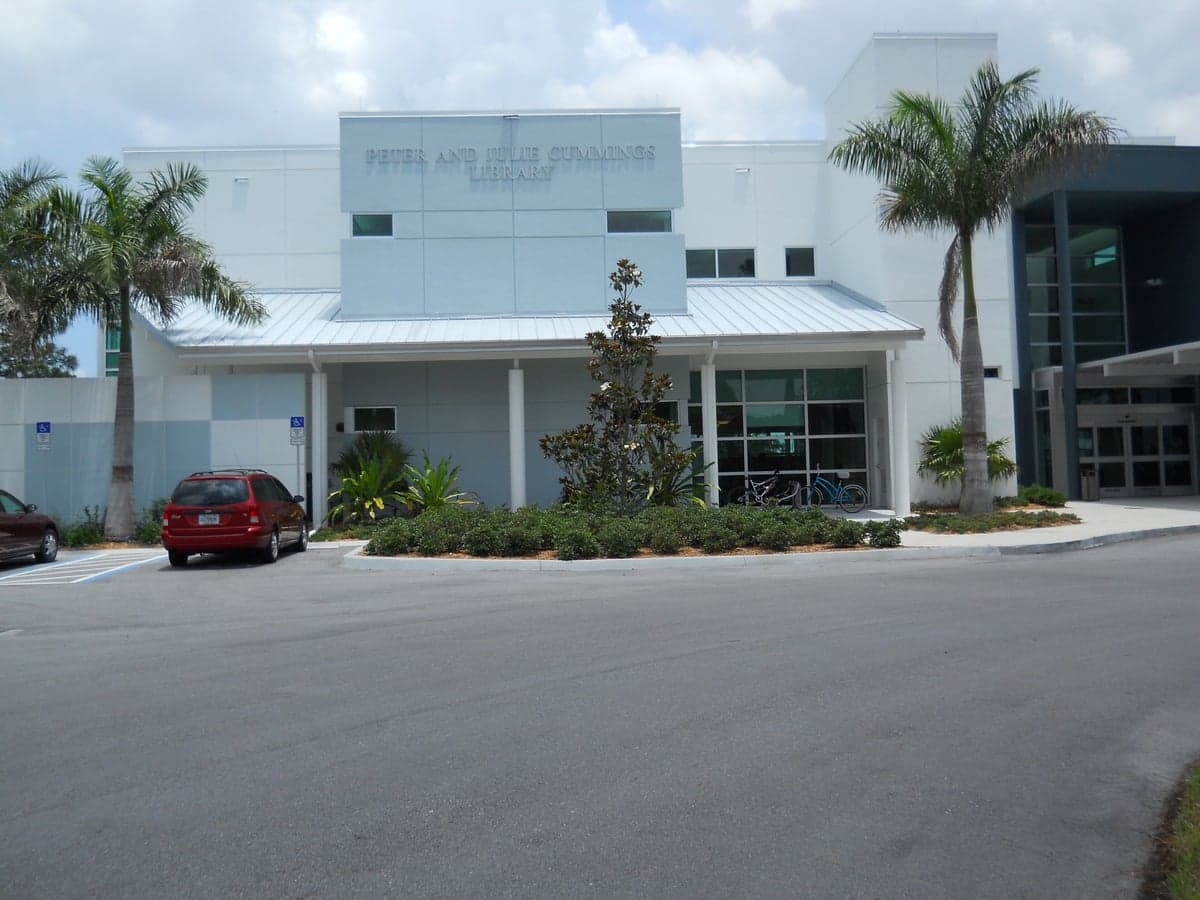
Photo: Wikipedia
Political ClimatePolitical Climate in Palm City, FL
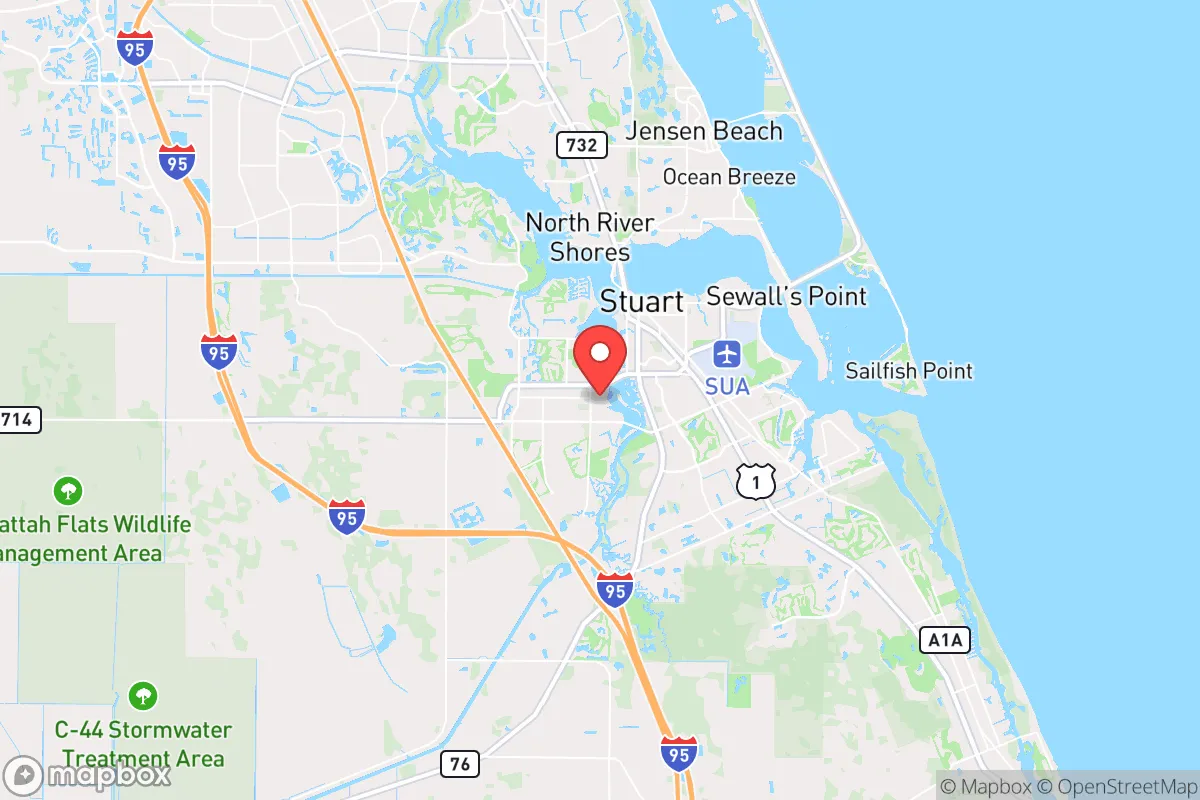
District shown is the primary district for this city’s centroid. Cities may span multiple districts.
Local Political AnalysisPolitical Analysis of Palm City, FL
Palm City leans solidly Republican, with a Cook Partisan Voting Index of R+7, making it a reliably conservative pocket in Florida’s Treasure Coast region. Over the past decade, the area has shifted further right, mirroring the broader trend in Martin County, which hasn’t voted for a Democratic presidential candidate since 1992. While the surrounding state of Florida as a whole lacks a published Cook PVI, its statewide elections have trended red in recent cycles, though Palm City’s tilt is notably stronger than the state average—think of it as a deeper shade of the same color.
How it compares
Compared to Florida’s broader political landscape, Palm City stands out for its consistency. Neighboring Stuart, just a few miles east, leans Republican but with a slightly softer edge, often electing more moderate local officials. Head west to Port St. Lucie, and you’ll find a more competitive mix—St. Lucie County has swung between parties in presidential races, with a growing Democratic base among younger transplants. Palm City, by contrast, has remained a GOP stronghold, with voter registration data showing Republicans outnumbering Democrats roughly 2-to-1. This isn’t a purple area; it’s a place where conservative candidates routinely win primaries, not just general elections. The local Republican club is active, and campaign signs for GOP candidates dominate yards along Martin Highway and Cove Road during election season.
What this means for residents
For conservative residents, Palm City’s political climate feels like a natural fit. Local policies tend to favor low taxes, limited regulation, and a strong law-and-order approach—the county’s property tax rate is among the lowest in the region, and zoning laws keep development relatively restrained. Liberal residents, while a clear minority, aren’t isolated; they’ll find like-minded neighbors in pockets near the river or in newer subdivisions, but they should expect to be outvoted on most local issues. School board meetings and city council decisions often reflect the majority’s values, with debates over growth management and environmental protections (a hot topic given the St. Lucie River’s health) frequently splitting along party lines. Practically, this means a conservative can feel their vote carries weight, while a liberal might need to engage in grassroots efforts or join regional coalitions to see change.
Culturally, Palm City’s political lean shapes daily life in subtle ways. The area’s policy distinctions include a strong emphasis on Second Amendment rights—gun shops are common, and open carry is a topic of local discussion—and a resistance to mask mandates or vaccine requirements that flared up during the pandemic. The local chamber of commerce leans pro-business, and the county’s growth plan prioritizes rural character over dense development, a stance that appeals to retirees and families seeking space. Over the long term, expect the political trajectory to hold steady: as Florida’s population grows, Palm City’s demographics—older, wealthier, and whiter than the state average—suggest it will remain a conservative anchor, even as nearby areas like Port St. Lucie diversify. For anyone moving here, the takeaway is simple: if you’re comfortable with a red-leaning community that values stability and tradition, you’ll feel at home; if you’re not, you’ll find your niche, but you won’t change the tide.

State Political ClimatePolitical Climate in Florida
State Political AnalysisPolitical Environment in the State
Florida has transformed from a quintessential swing state into a solidly Republican-leaning powerhouse over the past decade, a shift driven by massive in-migration from blue states and a decisive rightward turn among Hispanic voters, particularly in Miami-Dade County. The state now operates under unified Republican control, with Governor Ron DeSantis winning re-election by nearly 20 points in 2022, and the GOP holding supermajorities in both legislative chambers. This trajectory marks a stark departure from the 2000s and early 2010s, when Florida was the ultimate battleground, decided by margins of less than 1% in presidential elections.
Urban vs. rural divide
The political map of Florida is a study in stark contrasts. The major metropolitan areas of Miami-Dade, Broward, and Palm Beach counties in the southeast remain the Democratic stronghold, though their grip is loosening. Miami-Dade, once a Democratic lock, has shifted dramatically: in 2020, Joe Biden won it by only 7 points, down from Hillary Clinton's 29-point margin in 2016. This is largely due to a massive swing among Cuban-American and Venezuelan-American voters, who have embraced the GOP's hardline stance on socialism and communism. Conversely, the I-4 corridor stretching from Tampa through Orlando to Daytona Beach is the classic swing region, with fast-growing suburbs like Lakeland and Ocala trending red. The rural Panhandle, from Pensacola to Tallahassee, is deeply conservative, while the Gainesville area, home to the University of Florida, provides a small blue island. The Jacksonville metro area, the state's largest by population, leans Republican but has competitive pockets, particularly in Duval County's urban core.
Policy environment
Florida's policy environment is defined by a low-tax, low-regulation posture that appeals strongly to conservative relocators. There is no state income tax, a major draw for high-earners and retirees. Property taxes are moderate, with a $50,000 homestead exemption baked into the state constitution. The regulatory climate is business-friendly, with a right-to-work law and minimal labor union influence. Education policy has been a flashpoint: the state has one of the nation's largest school voucher programs (the Family Empowerment Scholarship) and has passed laws restricting classroom discussion of sexual orientation and gender identity (the Parental Rights in Education Act, commonly known as "Don't Say Gay"). Healthcare policy is market-driven; Florida did not expand Medicaid under the Affordable Care Act, leaving roughly 800,000 residents in the coverage gap. Election laws have been tightened: the 2021 SB 90 law added voter ID requirements, limited drop boxes, and restricted third-party ballot collection, changes that have withstood court challenges.
Recent policy direction
The last three years have seen an aggressive conservative legislative agenda. On gun and self-defense law, Florida in 2023 enacted permitless carry (constitutional carry), allowing any adult who can legally possess a firearm to carry it concealed without a permit. On parental and education rights, the state expanded the "Don't Say Gay" law to cover all grades and banned DEI programs in public universities. On speech and privacy, Governor DeSantis signed the "Stop WOKE Act" (2022), which restricts workplace and classroom training on race and gender, though parts have been blocked by federal courts. On medical and bodily autonomy, Florida passed a 6-week abortion ban (HB 5, 2023), one of the strictest in the nation, with no exceptions for rape or incest. On property rights, the state has preempted local rent control ordinances and streamlined development approvals. On taxation, the legislature has cut the corporate income tax rate and expanded sales tax holidays. On voting and ballot access, the state has purged non-citizen voter rolls and made it a felony for convicted felons to vote unless they have paid all fines and restitution, a requirement that effectively disenfranchises many.
Civil unrest & political movements
Florida has been a national epicenter for political movements on both sides. The Parkland school shooting in 2018 sparked the March for Our Lives movement, a youth-led gun control campaign that remains active. In 2020, Miami, Tampa, and Jacksonville saw significant Black Lives Matter protests, though they were smaller and less destructive than in many northern cities. On the right, the "Don't Say Gay" and "Stop WOKE" laws have galvanized conservative parent groups, who have successfully run for school board seats across the state. Immigration politics are uniquely intense in Florida: the state passed SB 1718 in 2023, which requires businesses with 25+ employees to use E-Verify, bans local governments from providing ID to undocumented immigrants, and makes transporting them into the state a crime. This has led to a visible exodus of undocumented workers from construction and agriculture in areas like Homestead and Immokalee. There is no sanctuary city movement of any significance; the state has aggressively preempted any local "sanctuary" policies. Election integrity remains a live issue, with the state creating a new Office of Election Crimes and Security in 2022, which has prosecuted a handful of cases of alleged double voting.
Projection
Over the next 5-10 years, Florida's Republican lean is likely to deepen, driven by continued in-migration from high-tax, high-crime states like New York, Illinois, and California. These new residents tend to be older, wealthier, and more conservative than the national average. The Hispanic vote, particularly in Miami-Dade, is expected to continue its rightward shift, potentially making the county competitive for Republicans at the presidential level by 2028. However, the state's growing population of young, diverse, and college-educated voters in the Orlando and Tampa metros could create a countervailing force, especially if national Democratic messaging moderates. The biggest wildcard is climate change: rising sea levels and more intense hurricanes could eventually slow growth in coastal areas like Miami Beach and Fort Lauderdale, potentially altering the demographic and political calculus. A new resident moving in now should expect a state that will remain firmly under Republican control, with continued tax cuts, school choice expansion, and cultural conservatism, but with persistent pockets of blue in the urban cores and college towns.
For a new resident, the bottom line is this: Florida offers a low-tax, business-friendly environment with a government that actively promotes conservative cultural values. If you align with that, you'll find a state that is increasingly efficient and aligned with your priorities. If you lean left, you'll find a state where your vote counts less in statewide races, but where local governments in cities like Tampa, Orlando, and Miami Beach still provide some blue refuge. The political climate is not passive—it's actively shaped by a governor with national ambitions and a legislature that moves quickly. Expect the culture wars to remain front and center, and plan your move accordingly.
* Values derived from national, state, county, city and local statistics and may differ in a specific area. Last updated: 2026-09-28T20:45:33.000Z
Narrative content on this page is AI-generated and may contain mistakes. Verify any details that matter before acting on them.
ReloMaps may earn a commission from affiliate links at no extra cost to you.

