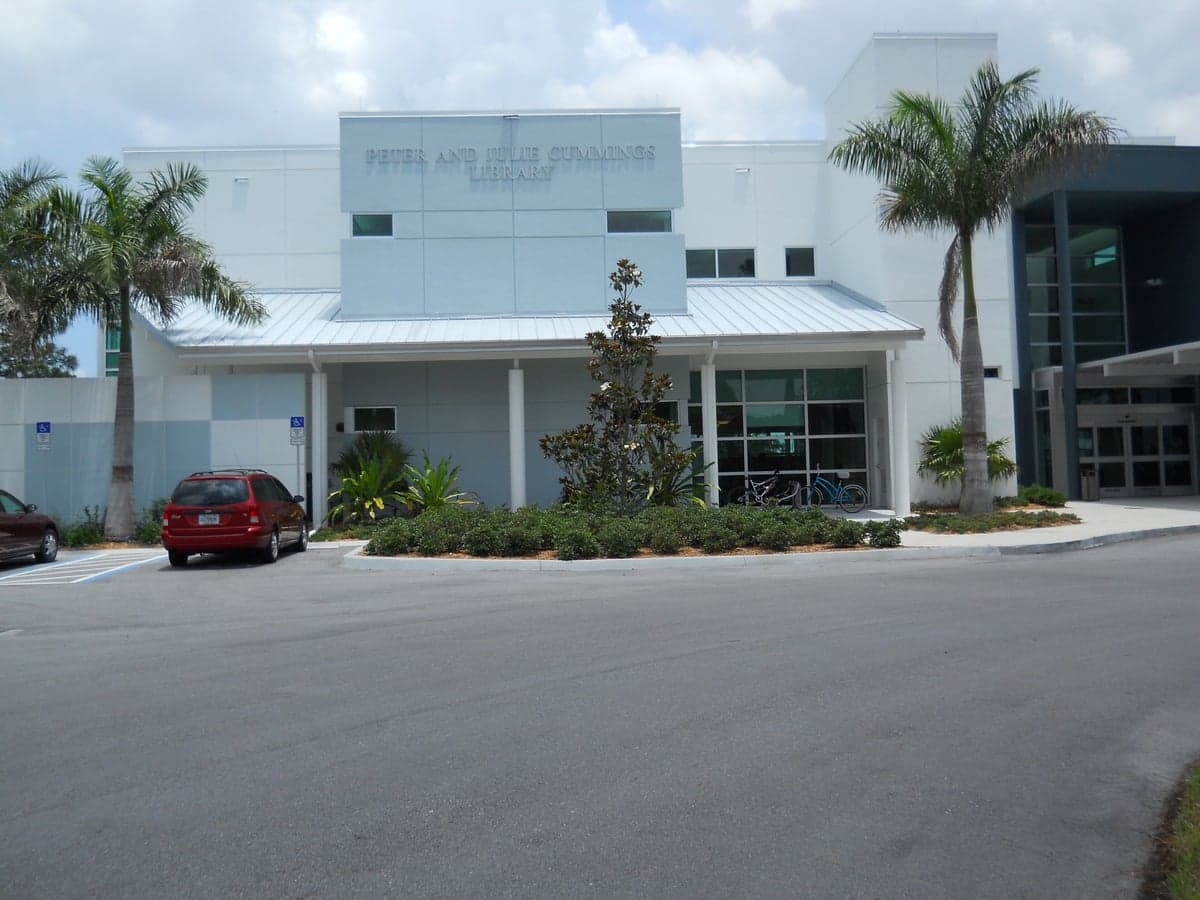
Photo: Wikipedia
Personal Sovereignty in Palm City, FL
Viable for self-reliance. Generally workable, though some barriers may limit total independence.
What does Personal Sovereignty tell us?
Personal Sovereignty measures your capacity for self-reliance and independence with minimal government friction. Higher scores mean fewer barriers between you and the way you want to live... but it assumes you have the space you need and good neighbors.
What does this tell us?
Personal Sovereignty measures your capacity for self-reliance and independence with minimal government friction. Higher scores mean fewer barriers between you and the way you want to live... but it assumes you have the space you need and good neighbors.
State Policy
Energy independence: Importer (10% of energy produced in-state)
Personal Liberty
Homesteading

Personal Liberty Analysis
Palm City, Florida, offers a personal sovereignty environment shaped by Florida’s strong preemption laws, a low-tax state framework, and a regulatory culture that leans toward individual discretion rather than heavy-handed oversight. Located in Martin County, this unincorporated community benefits from state-level protections that limit local government overreach in areas like firearms, property rights, and business licensing, while the county itself maintains a moderate, development-friendly posture. For single individuals and families prioritizing autonomy, Palm City provides a practical balance of legal freedom and everyday self-reliance, though some constraints—such as coastal building codes and HOA restrictions in certain subdivisions—require attention.
Tax burden and regulatory posture in Palm City
Florida’s absence of a state income tax is the cornerstone of Palm City’s tax appeal, meaning residents keep 100% of their earned income, retirement distributions, and investment gains. Martin County’s combined sales tax rate is 7%, which includes the state’s 6% base plus a 1% local surtax, a figure that is competitive with other Florida counties but slightly higher than the state minimum. Property taxes in Palm City are governed by the Save Our Homes amendment, which caps annual assessed value increases at 3% for homesteaded properties, providing long-term predictability for homeowners. The regulatory environment is generally light-touch: Martin County does not impose rent control, has no local minimum wage above the state’s $13.00 per hour (as of 2026), and permits home-based businesses with minimal red tape, provided they don’t generate excessive traffic or noise. However, Palm City lies within the Indian River Lagoon watershed, which triggers state-level septic system and fertilizer restrictions aimed at water quality—a notable regulatory layer that affects property owners with large lots or waterfront parcels. Overall, the tax burden is low by national standards, and the regulatory posture is permissive for most residential and small-business activities, though environmental rules add a moderate compliance cost.
Self-defense and gun law specifics in Palm City
Florida’s firearm laws are among the most permissive in the Southeast, and Palm City residents benefit fully from these state-level protections. Florida is a permitless carry state as of July 2023, meaning any law-abiding adult 21 or older can carry a concealed firearm without a license, though a permit is still available for reciprocity with other states. Open carry is generally prohibited except in specific circumstances (hunting, fishing, or camping), but the practical effect is minimal for most residents who prefer concealed carry. Martin County has not enacted any local firearm ordinances that exceed state law, thanks to Florida’s strong preemption statute (Florida Statute 790.33), which prohibits counties and municipalities from regulating firearms, ammunition, or accessories. This preemption is aggressively enforced, with penalties for local officials who violate it. For self-defense in the home, Florida’s Castle Doctrine (Stand Your Ground law) applies, removing any duty to retreat before using deadly force if the person is in a place where they have a legal right to be and reasonably believes force is necessary to prevent death or great bodily harm. Palm City’s rural-suburban character means many homes have acreage, making the Castle Doctrine particularly relevant for property defense. The sheriff’s office in Martin County is known for issuing concealed weapons permits efficiently (for those who still want one) and for a generally pro-Second Amendment culture. For families, this means a straightforward legal path to armed self-defense, with no local barriers beyond federal background checks at licensed dealers.
Self-reliance and homesteading viability in Palm City
Palm City’s zoning and lot sizes create a realistic environment for homesteading and off-grid living, though with important caveats. The area is characterized by one- to five-acre residential lots in many subdivisions, particularly west of I-95, which provide enough space for vegetable gardens, small orchards, and backyard poultry (chickens are permitted in Martin County with no limit on hens, though roosters may be restricted in some HOA-governed communities). The county’s Right to Farm ordinance protects agricultural activities on parcels of two acres or more, shielding residents from nuisance complaints related to noise, odor, or dust from farming operations. For off-grid feasibility, Florida’s building code requires connection to the electrical grid for new construction, but solar panels are widely permitted and net metering is available through Florida Power & Light, allowing residents to offset most of their electricity use. Rainwater collection is legal and encouraged for irrigation, though potable water must come from a permitted well or municipal supply. Septic systems are standard in Palm City, as the area lacks centralized sewer in many neighborhoods, which supports self-reliance in waste management but requires periodic maintenance and compliance with the county’s septic inspection program. Off-grid living in the strict sense—no grid connection, no municipal services—is not feasible due to building code requirements and the need for a permitted well, but a high degree of self-sufficiency (food production, solar power, water catchment) is achievable on larger lots. HOAs are common in newer subdivisions and may restrict livestock, fencing, or exterior modifications, so buyers should verify deed restrictions before purchasing.
Personal liberties in Palm City: parental rights, medical autonomy, speech, and property
Florida’s political climate under recent administrations has emphasized parental rights and medical autonomy, and Palm City reflects this state-level orientation. Parental rights in education are protected by the Parental Bill of Rights (Florida Statute 1014), which affirms that parents have the fundamental right to direct the upbringing, education, and health care of their minor children. This includes opt-out provisions for sex education and the ability to review instructional materials. Homeschooling is well-established in Martin County, with a straightforward notification process and no mandatory curriculum approval, though annual evaluations are required. Medical autonomy is a mixed picture: Florida does not have a state-level vaccine mandate for adults, and COVID-19-related mandates have been prohibited for government employees and contractors, but the state does require certain childhood immunizations for school attendance (with medical and religious exemptions available). Telehealth and direct-primary-care arrangements are legal and growing in Palm City, offering alternatives to traditional insurance-based medicine. Free speech is robustly protected under Florida’s constitution and state law, with no local ordinances restricting expressive activity beyond standard time, place, and manner regulations. Property rights are strengthened by the Bert J. Harris Jr. Private Property Rights Protection Act, which allows landowners to seek compensation when government regulations reduce property value by more than 50%. This law provides a powerful check against overzealous zoning or environmental restrictions. For families and individuals, Palm City’s personal liberties environment is characterized by strong parental control over education, a permissive stance on medical choice (within state licensing frameworks), and solid property protections, though local HOA covenants can override some of these rights in practice.
Compared to other areas in Florida and the broader Southeast, Palm City offers a high degree of personal sovereignty, particularly in taxation, self-defense, and property rights. The absence of local gun ordinances, the low tax burden, and the availability of larger lots for homesteading make it a strong choice for those who value autonomy. The main trade-offs are the environmental regulations tied to the Indian River Lagoon and the prevalence of HOAs in newer developments, which can limit individual discretion on aesthetics and land use. For a relocation researcher advising a conservative-leaning audience, Palm City ranks favorably against coastal enclaves like Vero Beach or Sarasota, which have more restrictive local ordinances, and compares well to inland rural areas like Okeechobee County, which offer even fewer regulations but lack Palm City’s proximity to services and employment. The overall sovereignty environment is above average for Florida’s Atlantic coast, with state-level protections providing a reliable floor for personal freedom.

* Values derived from national, state, county, city and local statistics and may differ in a specific area. Last updated: 2026-09-28T20:45:33.000Z
Narrative content on this page is AI-generated and may contain mistakes. Verify any details that matter before acting on them.
ReloMaps may earn a commission from affiliate links at no extra cost to you.

