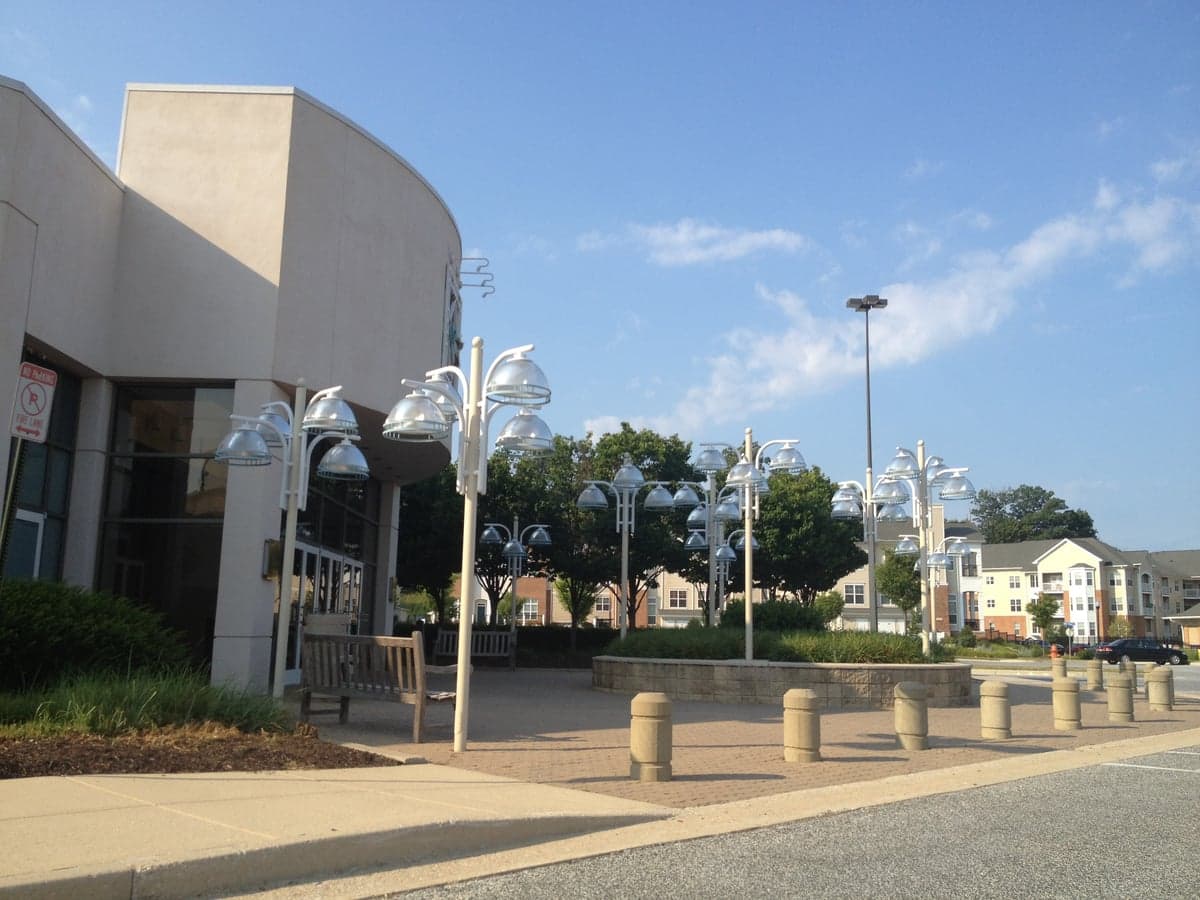
Photo: Wikipedia
Quality of Life in Owings Mills, MD
Above-average quality of iife. The area offers a reasonable cost of living, decent mobility, and a mix of neighborhood amenities.
What does Quality of Life tell us?
Quality of Life blends cost of living, nearby amenities, socioeconomic signals, and neighborhood character. City-level scores represent the whole municipality; individual neighborhoods can differ.
What does this tell us?
Quality of Life blends cost of living, nearby amenities, socioeconomic signals, and neighborhood character. City-level scores represent the whole municipality; individual neighborhoods can differ.
Cost of Living
41% above national average
The Real Cost of Living in Owings Mills, MD for 2026
| Tier | Individual | Family (4) |
|---|---|---|
| Survival | $29k | $54k |
| Comfortable | $65k | $96k |
| Luxury | $136k+ | $211k+ |
| Elite (Top 5%) | $160k+ | $248k+ |
98%
The Area Signal
A metric tracking the socioeconomic signals of the area.
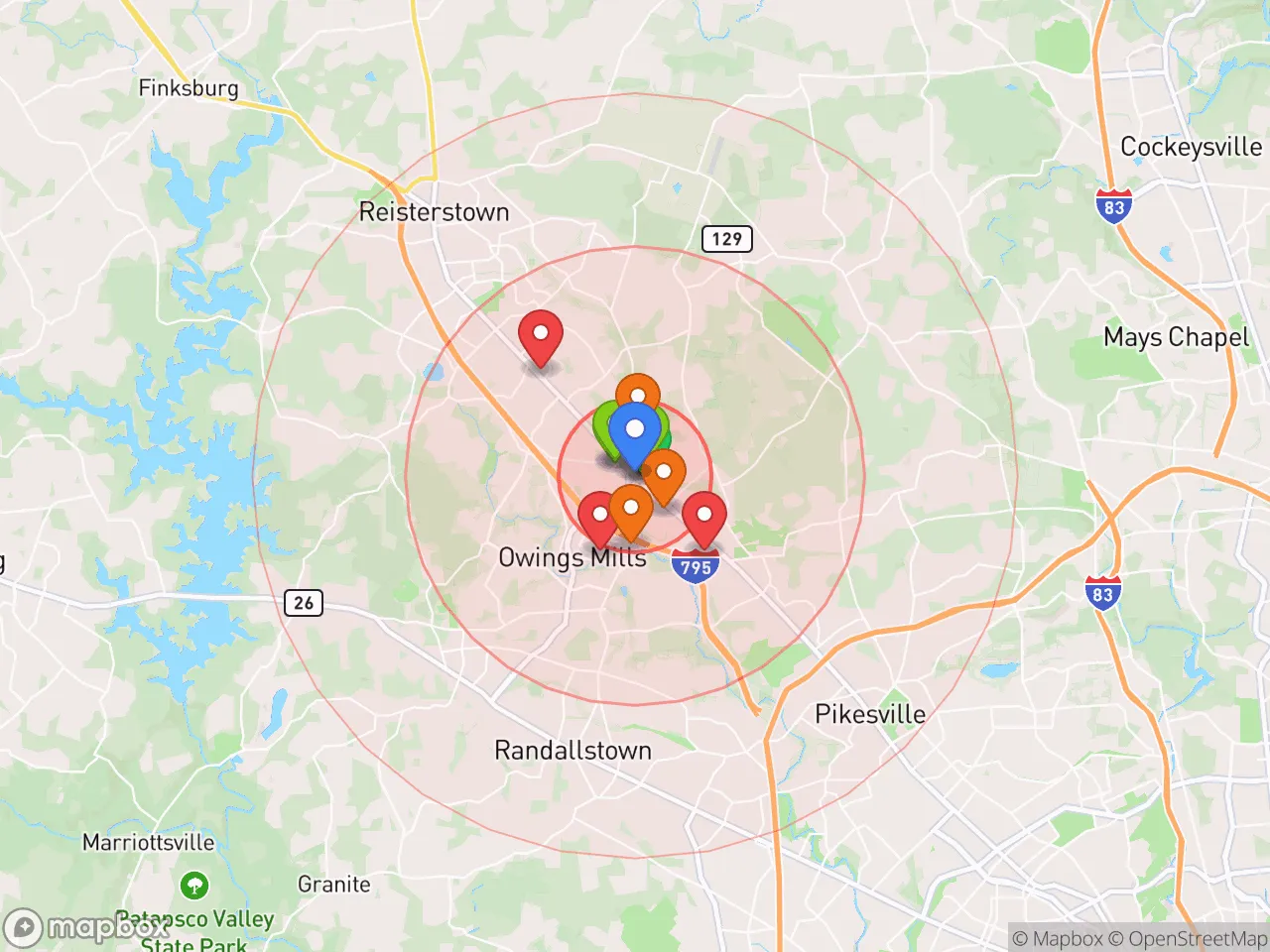
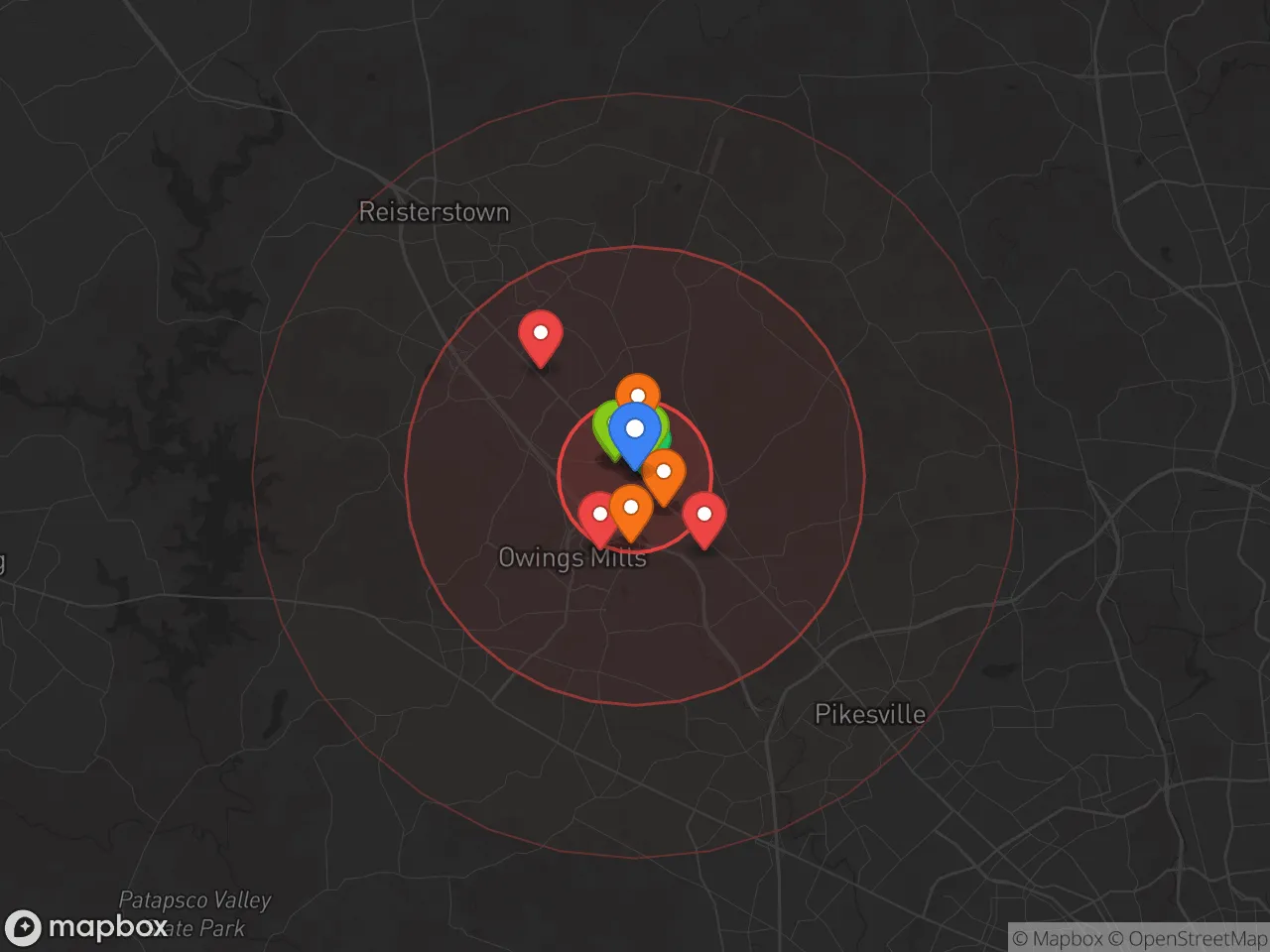
Hobbies
Explore the areaGroceries
0 within 10 miles
Gas
0 within 10 miles
Hospital
0 within 20 miles
Airport
BWI — Baltimore/Washington International Thurgood Marshall
Post Office
Critical Amenities
Quality-of-Life Analysis
Owings Mills is an affluent, established suburb in Baltimore County, Maryland, roughly 15 miles northwest of downtown Baltimore. The area’s cost of living index sits at 141 (100 = U.S. average), placing it well above the national norm and signaling a community of professionals, executives, and dual-income families who prioritize space, schools, and proximity to both Baltimore and the I-795 corridor. This is not a transient bedroom community; it is a long-term destination for those who work in the region’s healthcare, finance, and technology sectors.
Cost of living and housing affordability compared to Baltimore and Towson
The most striking affordability gap is between Owings Mills and its neighbors. The median home value here is $335,000, which is roughly $100,000 less than the median in nearby Towson and about $150,000 less than in Bethesda or Potomac. For renters, the median rent of $1,815 is a significant premium over Baltimore City’s median of roughly $1,400, but it buys substantially more square footage, newer construction, and access to the Owings Mills Metro SubwayLink station. The trade-off is transportation: the average commute runs 31.5 minutes, a figure that reflects the many residents who drive to jobs in Baltimore, Hunt Valley, or along the I-95 corridor. Property taxes in Baltimore County hover around 1.1% of assessed value, which is moderate for the region, but the overall cost of living means a household income of roughly $120,000 is needed to live comfortably without stretching the budget.
Schools, amenities, and the daily rhythm of life in Owings Mills
Daily life in Owings Mills revolves around a handful of anchors. The Owings Mills Town Center, anchored by a Wegmans and a Cinemark theater, functions as the commercial heart, while the nearby Metro Centre at Owings Mills offers retail and dining within walking distance of the transit station. The Baltimore County Public Schools system serves the area, with Franklin High School and Owings Mills High School being the primary public options; both have strong athletic programs and Advanced Placement offerings, though private school enrollment is also common among affluent families. For recreation, the Soldiers Delight Natural Environment Area provides over 1,900 acres of serpentine barrens and hiking trails, and the Meadowood Park offers sports fields and a dog park. The area’s rhythm is distinctly suburban: morning commutes to the Metro station, school drop-offs, and weekend errands at the Town Center. The presence of the Northwest Hospital and the LifeBridge Health system anchors a substantial healthcare employment base, which stabilizes the local economy and attracts medical professionals who want to live near their work.
Who thrives here? Owings Mills is best suited to families with school-aged children, healthcare and tech professionals, and commuters who work in Baltimore but want a detached home with a yard. Singles and young renters may find the nightlife thin and the car dependency frustrating, but for those seeking a safe, amenity-rich suburb with solid schools and a 30-minute rail link to the city, Owings Mills delivers a consistent, predictable quality of life that justifies its premium price tag.

Crime in Owings Mills, MD
Higher crime rates than 58% of comparable U.S. locations.
Violent CrimeViolent Crime Analysis
Property CrimeProperty Crime Analysis
Crime Analysis
Owings Mills, a suburban community in Baltimore County, Maryland, presents a mixed safety picture: its violent crime rate of 365 incidents per 100,000 residents is roughly on par with the national average, but its property crime rate of 1,852.7 per 100,000 runs noticeably higher than both state and national benchmarks. The community's proximity to Baltimore City, combined with the legal and prosecutorial environment in the Baltimore metropolitan area, shapes the day-to-day security reality for the roughly 35,000 residents who live in this unincorporated area.
Crime in context
When measured against Maryland's statewide violent crime rate of approximately 480 per 100,000, Owings Mills actually performs better, sitting about 24% below the state figure. However, the property crime rate tells a different story: at 1,852.7 per 100,000, it exceeds the national average of roughly 1,954 per 100,000 only modestly, but it runs well above the Maryland average of approximately 1,500 per 100,000. Theft from vehicles, package theft, and retail theft at the area's major shopping destinations—including the Owings Mills Mall redevelopment and the Metro Centre at Owings Mills—account for a significant share of these property offenses. Violent incidents, while less frequent, are not evenly distributed; they cluster near transit hubs and commercial corridors rather than in the established residential neighborhoods of Worthington Valley and Garrison.
What residents experience
Residents of Owings Mills navigate a justice system that, like much of the Baltimore metro region, operates under progressive prosecutorial policies. Baltimore County State's Attorney Scott Shellenberger has maintained a more moderate approach than his Baltimore City counterpart, but the broader regional trend toward diversion programs, reduced cash bail, and lighter sentencing for non-violent property offenders has a measurable effect on recidivism. Property crime in Owings Mills has shown a stubborn persistence since 2020, with organized retail theft rings and car break-ins frequently traced to offenders cycling through the regional court system. For families, this translates into practical precautions: security cameras, steering wheel locks, and garage-door discipline are common in the area's HOAs, and the Baltimore County Police Department's Owings Mills precinct (Precinct 4) has responded by increasing patrols around the Metro station and the Reisterstown Road corridor.
The community's safety experience is also shaped by its role as a regional employment and transit hub. The Owings Mills Metro stop on the Baltimore Metro SubwayLink connects directly to downtown Baltimore, which brings both economic vitality and, at times, crime spillover. Violent crime in Owings Mills is roughly 365 per 100,000—about 4% below the national average—but residents should understand that this figure masks meaningful neighborhood-level variation. The area west of I-795, including the newer developments near the Owings Mills Corporate Campus, reports significantly fewer incidents than the eastern sections closer to the Liberty Road corridor, where older apartment complexes and commercial strip centers see more frequent police activity.
For prospective residents weighing safety, the honest assessment is that Owings Mills offers a middle-ground security profile: better than Baltimore City itself, but not as insulated as the more distant exurbs of Carroll County. The combination of a large retail base, a regional transit connection, and a prosecutorial environment that prioritizes rehabilitation over incarceration means that property crime remains a persistent concern, while violent crime stays within a manageable range for a community of this size.
* Values derived from national, state, county, city and local statistics and may differ in a specific area. Last updated: 2026-11-03T19:57:22.000Z
Narrative content on this page is AI-generated and may contain mistakes. Verify any details that matter before acting on them.
ReloMaps may earn a commission from affiliate links at no extra cost to you.

