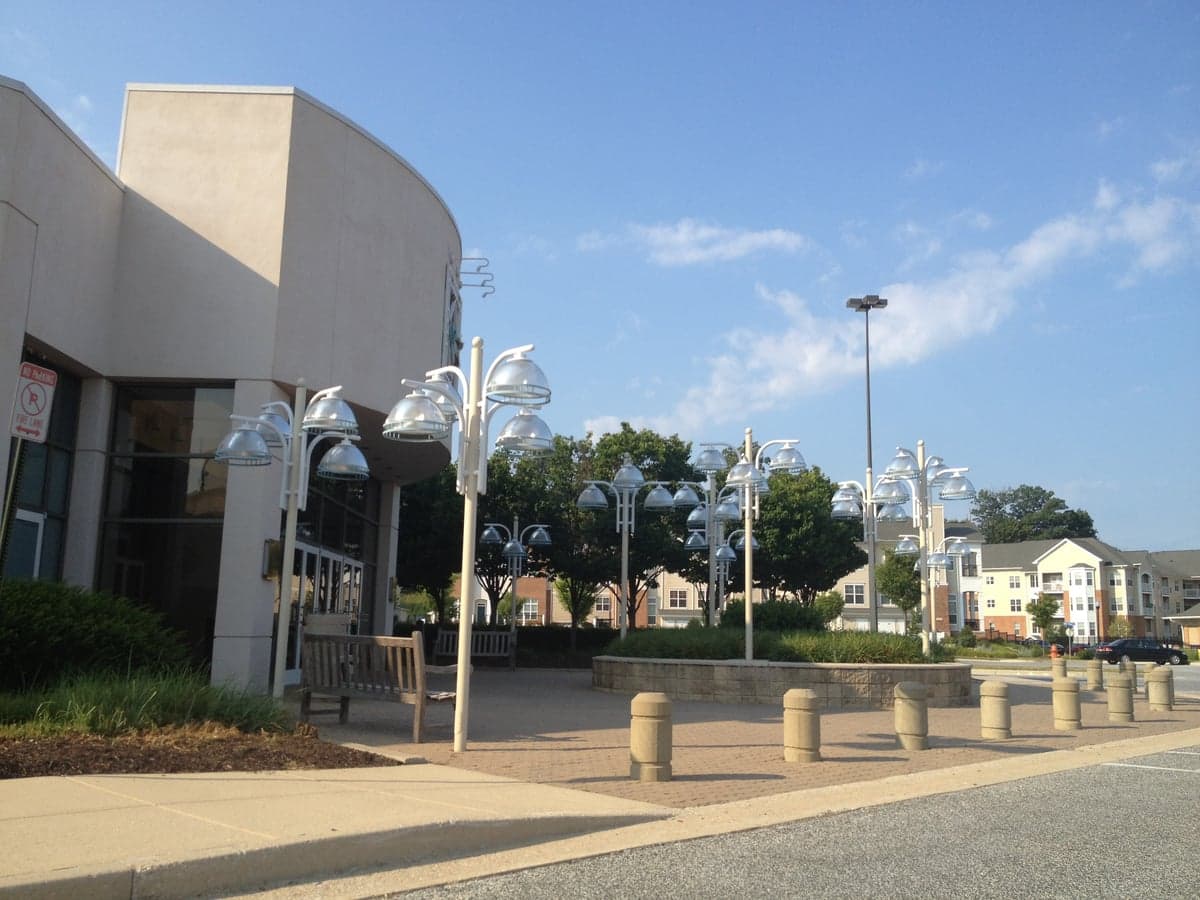
Photo: Wikipedia
Personal Sovereignty in Owings Mills, MD
Viable for self-reliance. Generally workable, though some barriers may limit total independence.
What does Personal Sovereignty tell us?
Personal Sovereignty measures your capacity for self-reliance and independence with minimal government friction. Higher scores mean fewer barriers between you and the way you want to live... but it assumes you have the space you need and good neighbors.
What does this tell us?
Personal Sovereignty measures your capacity for self-reliance and independence with minimal government friction. Higher scores mean fewer barriers between you and the way you want to live... but it assumes you have the space you need and good neighbors.
State Policy
Energy independence: Importer (18% of energy produced in-state)
Personal Liberty
Homesteading

Personal Liberty Analysis
Owings Mills, Maryland, sits in a state that consistently ranks among the most heavily regulated and taxed in the nation, which shapes the personal sovereignty landscape here in concrete ways. For the autonomy-minded individual, Baltimore County offers a mixed picture: strong legal protections for self-defense and parental rights on paper, but a high cost of entry for property ownership and a regulatory climate that leans interventionist. The practical reality is that personal freedom in Owings Mills is less about resisting government overreach and more about navigating a system that assumes a larger role in daily life than in most of the country.
How Maryland's tax burden and regulatory climate affect your financial independence
Maryland's tax posture is the single biggest constraint on personal sovereignty in Owings Mills. The state's income tax is a progressive structure with rates from 2% to 5.75%, and Baltimore County adds its own local income tax of 3.2% on top of that — one of the highest local rates in the state. Combined, a resident in the top bracket faces a marginal state and local income tax rate of 8.95%, before federal taxes. Property taxes in Baltimore County run about $1.10 per $100 of assessed value, which is moderate for the region, but home prices in Owings Mills average around $400,000–$450,000, meaning a typical annual property tax bill lands near $4,500–$5,000. The state also imposes a 6% sales tax on most goods, though groceries and prescription drugs are exempt.
Regulatory posture in Maryland is decidedly heavy-touch. The state has its own environmental regulations that often exceed federal standards, particularly around the Chesapeake Bay watershed, which affects property development and renovation permits in Baltimore County. Zoning in Owings Mills is largely suburban residential, with most lots between 0.25 and 0.5 acres in established neighborhoods like the Greenspring Valley area, though some larger parcels exist further west toward Reisterstown. The state's vehicle emissions testing program, energy efficiency mandates for new construction, and a business climate that ranks in the bottom third nationally for regulatory freedom all contribute to a system where the default assumption is that government approval is required for significant personal projects.
Self-defense rights and gun law specifics in Baltimore County
Maryland is a "may issue" state for concealed carry, but the Supreme Court's Bruen decision in 2022 forced the state to adopt a "shall issue" standard, meaning the Maryland State Police must now approve permits for applicants who meet objective criteria. The practical effect in Owings Mills is that concealed carry permits are now routinely issued to law-abiding residents, a significant shift from the pre-2022 era when permits were rarely granted without a demonstrated threat. The application process includes a 16-hour training course, a background check, and fingerprinting, with a typical processing time of 60–90 days.
However, Maryland's gun laws remain among the most restrictive in the country. The state bans so-called "assault weapons" by name and feature, caps magazine capacity at 10 rounds, and requires a seven-day waiting period for handgun purchases. Handgun purchases also require a state-issued Handgun Qualification License, which involves another background check, fingerprinting, and a separate training requirement. Open carry is generally prohibited in Maryland, and carrying in a vehicle requires a permit. Baltimore County has its own local ordinances that restrict discharge of firearms within county limits, so target shooting on private property is effectively limited to indoor ranges or clubs. For the self-defense-minded, the legal path is clear but expensive and time-consuming compared to states like Virginia or West Virginia.
Homesteading and off-grid viability: lot sizes, zoning, and practical limits
True homesteading in Owings Mills is largely impractical due to zoning and lot size constraints. The area is designated as a suburban growth zone under Baltimore County's master plan, with minimum lot sizes typically 20,000 square feet (about 0.46 acres) in most residential districts. Some older agricultural parcels in the western part of the county, near the Carroll County line, offer 2–5 acre lots, but these are increasingly rare and priced at a premium. Off-grid living is effectively illegal in Baltimore County, as the county requires connection to public water and sewer in most developed areas, and building codes mandate grid-tied electrical systems for new construction.
Chickens are permitted in Owings Mills residential zones with a county permit, but roosters are prohibited, and the coop must be at least 25 feet from neighboring structures. Beekeeping is allowed with registration, and vegetable gardening has no meaningful restrictions. Rainwater harvesting is legal but limited to 1,000 gallons of storage without a permit, and the water can only be used for irrigation, not potable purposes. Solar panels are permitted but subject to county review, and homeowners associations in many Owings Mills communities impose additional aesthetic restrictions that can limit panel placement or backyard structures. For those serious about self-reliance, the practical move is to look further west into Carroll County, where agricultural zoning allows for larger parcels, private wells, and septic systems — but that comes with a longer commute to Baltimore or Washington, D.C., employment centers.
Personal liberties: parental rights, medical autonomy, and free speech
Maryland's posture on parental rights is mixed. The state mandates school attendance until age 18, and homeschooling requires an annual notification to the local school system with a portfolio review or standardized testing requirement — more oversight than many states but less than others. Parents have the right to opt out of sex education and certain health screenings, and the state passed a law in 2023 requiring parental notification for any changes to a student's gender identity or pronouns in school, a notable shift toward parental authority. Medical autonomy is more constrained: Maryland has no religious exemption for vaccine mandates in schools, and the state's childhood vaccination requirements are among the strictest in the nation.
On medical freedom, Maryland allows medical cannabis use with a state-issued card but has not legalized recreational use. The state's health insurance mandate under the Affordable Care Act remains active, and there is no state-level protection for individuals who decline health insurance coverage. Free speech protections are robust under both the First Amendment and Maryland's Declaration of Rights, and Baltimore County has no local ordinances restricting political speech or signage beyond standard time-place-manner rules. Property rights are somewhat constrained by Maryland's use of "quick-take" eminent domain for transportation projects, and the state's agricultural preservation easements can permanently restrict development rights on rural land — a consideration for anyone buying larger parcels.
Compared to the broader Mid-Atlantic region, Owings Mills offers a moderate-to-restrictive sovereignty environment. It is more freedom-oriented than neighboring Montgomery County or Washington, D.C., particularly on gun rights and parental authority, but significantly less so than Virginia or West Virginia on taxes, regulation, and off-grid feasibility. The area's real advantage is institutional stability: property rights are well-defined, courts are reliable, and the legal system functions predictably. For a family that values personal autonomy but also wants access to strong schools, healthcare, and employment, Owings Mills is workable — but it requires accepting that the state will be a partner in many decisions, not a passive observer.

* Values derived from national, state, county, city and local statistics and may differ in a specific area. Last updated: 2026-11-03T19:57:22.000Z
Narrative content on this page is AI-generated and may contain mistakes. Verify any details that matter before acting on them.
ReloMaps may earn a commission from affiliate links at no extra cost to you.

