Photo: Wikipedia
Personal Sovereignty in Oriental, NC
Viable for self-reliance. Generally workable, though some barriers may limit total independence.
What does Personal Sovereignty tell us?
Personal Sovereignty measures your capacity for self-reliance and independence with minimal government friction. Higher scores mean fewer barriers between you and the way you want to live... but it assumes you have the space you need and good neighbors.
What does this tell us?
Personal Sovereignty measures your capacity for self-reliance and independence with minimal government friction. Higher scores mean fewer barriers between you and the way you want to live... but it assumes you have the space you need and good neighbors.
State Policy
Energy independence: Importer (15% of energy produced in-state)
Personal Liberty
Homesteading

Personal Liberty Analysis
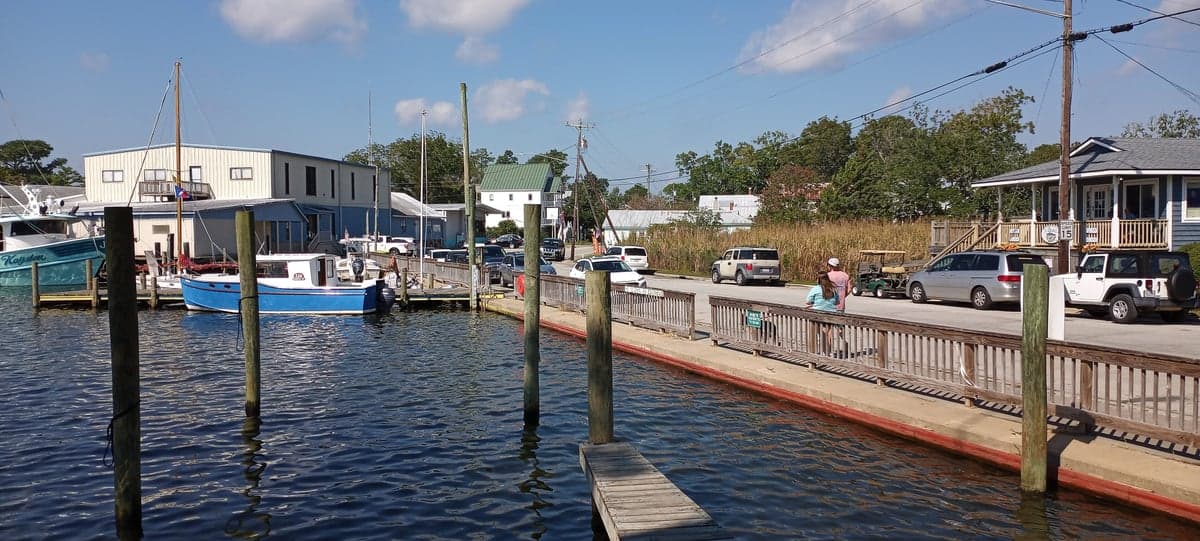
Oriental, North Carolina, offers a notably high degree of personal sovereignty, largely shaped by the state's preemption laws and a local culture that prizes self-reliance. As a small, unincorporated waterfront town in Pamlico County, residents experience a light-touch regulatory environment where local government interference in daily life is minimal, and the state's legal framework actively protects individual autonomy in areas like self-defense, property use, and parental rights. For a relocation audience prioritizing freedom, Oriental represents a pocket where state-level protections combine with a low-density, rural setting to create a genuinely independent lifestyle.
Tax burden and regulatory posture in Pamlico County
North Carolina's tax structure is moderately low overall, and Pamlico County keeps local levies restrained. The combined state and local sales tax rate in Oriental is 7%, with the state portion at 4.75% and the county adding 2.25%. Property taxes are the primary local revenue source, with Pamlico County's rate at approximately $0.585 per $100 of assessed value as of 2025, among the lower rates in coastal North Carolina. There is no municipal property tax in Oriental since it is an unincorporated community, meaning residents pay only county and state property taxes. The state's income tax is a flat 4.75% on all taxable income, with no local income tax. Regulatory posture is distinctly light-touch: Pamlico County has no countywide zoning ordinance for most unincorporated areas, including Oriental. This means that outside of state environmental regulations (such as coastal area management rules for waterfront property), residents face few local permitting hurdles for building, home businesses, or land use. The state's right-to-farm law further protects agricultural activities from nuisance lawsuits, reinforcing a hands-off approach to property use. For a sovereignty-minded individual, the absence of municipal zoning and the low property tax burden translate directly into greater control over one's land and finances.
Self-defense and gun law specifics in North Carolina
North Carolina is a strong Second Amendment state, and Oriental residents benefit from some of the most permissive firearm laws in the Southeast. The state is a shall-issue jurisdiction for concealed carry permits, meaning that if a resident meets objective criteria (age 21, no disqualifying criminal record, completion of a firearms safety course), the sheriff's office must issue the permit. There is no permit required to openly carry a handgun or long gun. In 2023, North Carolina enacted permitless concealed carry (also known as constitutional carry) for adults 21 and older who are legally allowed to possess a firearm, eliminating the previous requirement for a permit to carry a concealed handgun. Stand-your-ground laws are fully in effect: there is no duty to retreat before using deadly force in self-defense if you are lawfully present in any place. Castle doctrine protections extend to vehicles and occupied structures. Pamlico County's sheriff's office is known for a pro-Second Amendment stance, and local gun culture is strong. There are no county-level firearm-specific restrictions beyond state law. For a relocation reader, this means the legal framework fully supports the right to defend oneself, one's family, and one's property without bureaucratic delays or local interference.
Self-reliance and homesteading viability: lot sizes, zoning, and off-grid feasibility
Oriental's unincorporated status and Pamlico County's minimal zoning create a highly favorable environment for homesteading and off-grid living. Lot sizes vary widely, from small waterfront parcels (0.25–0.5 acres) to larger tracts of 5–20 acres inland. There is no countywide minimum lot size for residential use in unincorporated areas, though state septic system requirements (typically 1–2 acres for a conventional septic) effectively set a practical minimum. Off-grid feasibility is strong: there are no county or state laws prohibiting solar panels, rainwater collection, or composting toilets, provided they meet state health and building codes. The North Carolina Department of Health and Human Services regulates well water and septic systems, but these are straightforward permitting processes. Burning debris is allowed with a permit from the county fire marshal, and small-scale livestock (chickens, goats, bees) is generally unrestricted. The county does not enforce noise ordinances in rural areas, and there are no restrictions on home-based businesses like welding, woodworking, or small-scale food production. The primary constraint is coastal area management rules for properties within 575 feet of the water, which require a Coastal Area Management Act (CAMA) permit for any development or vegetation removal. For inland parcels, however, a homesteader can operate with near-total autonomy. This makes Oriental one of the more permissive locations on the North Carolina coast for self-reliant living.
Personal liberties: parental rights, medical autonomy, speech, and property
North Carolina's legal framework provides strong protections for personal liberties that align with a sovereignty-focused lifestyle. Parental rights are explicitly protected under state law: parents have the fundamental right to direct the upbringing, education, and medical care of their children, and the state's Parents' Bill of Rights (enacted in 2023) requires school districts to notify parents of any changes in a child's services or mental health, and prohibits instruction on gender identity and sexual orientation in K-4 classrooms. Homeschooling is straightforward: parents must file a notice of intent with the state, maintain attendance and immunization records, and administer a standardized test annually, but there is no curriculum approval or home inspection. Medical autonomy is generally respected: North Carolina does not have a state-level vaccine mandate for adults, and there are no restrictions on purchasing raw milk directly from farms (though retail sale is prohibited). Freedom of speech is fully protected under the First Amendment, and there are no local ordinances restricting political signs, public assembly, or expressive conduct. Property rights are robust: the state's eminent domain laws strictly limit takings to public use with just compensation, and there is no county-level rent control or landlord licensing. For a reader prioritizing personal sovereignty, Oriental's legal environment consistently favors individual choice over government oversight, with the notable exception of coastal environmental regulations that apply to waterfront properties.
Overall, Oriental, NC, ranks among the more sovereignty-friendly communities in the coastal Southeast, combining North Carolina's strong state-level protections for gun rights, parental authority, and property use with Pamlico County's minimal local regulation. The absence of municipal zoning, low property taxes, and permissive homesteading laws create an environment where self-reliance is not just tolerated but structurally supported. While the state's coastal management rules impose some constraints on waterfront development, inland parcels offer near-total autonomy. For a relocation reader who values personal freedom and independence, Oriental provides a legal and cultural foundation that allows individuals and families to live largely on their own terms, with fewer bureaucratic hurdles than most other areas of comparable natural beauty on the East Coast.

* Values derived from national, state, county, city and local statistics and may differ in a specific area. Last updated: 2026-10-25T18:03:31.000Z
Narrative content on this page is AI-generated and may contain mistakes. Verify any details that matter before acting on them.
ReloMaps may earn a commission from affiliate links at no extra cost to you.

