Photo: Wikipedia
Demographics of Oriental, NC
Affluence Level in Oriental, NC
An upper-middle-class area. Household wealth, education levels, and homeownership run ahead of national benchmarks.
People of Oriental, NC
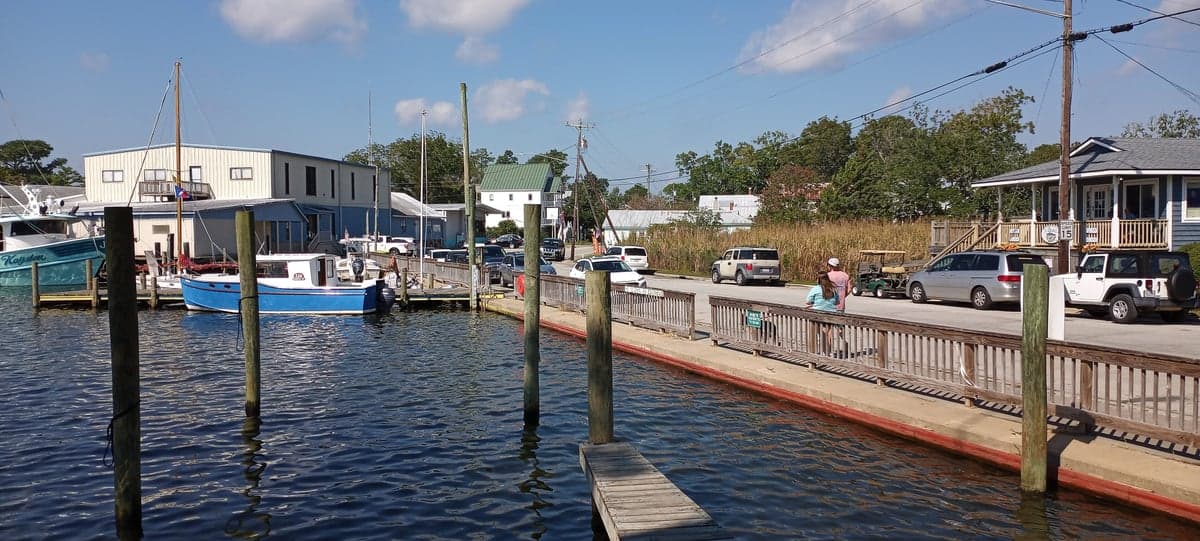
Oriental, North Carolina, is a tight-knit, predominantly white waterfront community of 930 residents where a strong sense of place is rooted in maritime tradition and a slow, deliberate pace of life. With a population that is 91.8% white and a notably high 52.6% of adults holding a college degree, the town’s character is defined by a blend of retired professionals, second-home owners, and a small but dedicated core of working watermen. The town’s identity is distinctly coastal and conservative-leaning, shaped more by its relationship to the Neuse River and Pamlico Sound than by any major urban influence.
How the city was settled and grew
Oriental’s human history begins not with a land grant or plantation, but with a single industry: commercial fishing. The town was incorporated in 1899, but its population grew slowly through the early 20th century as families—almost entirely of English, Scottish, and Irish descent—moved to the area to work the abundant waters for shrimp, crab, and finfish. The original settlement clustered around the waterfront along Hodges Street and Broad Street, where the first fish houses and general stores were built. These early residents were watermen and their families, and the neighborhood now known as Oriental’s Historic Waterfront District still contains many of the original late-19th and early-20th century homes, now largely renovated as vacation rentals and permanent residences. A second wave of growth came in the 1920s and 1930s, when a small number of families from the Outer Banks and Down East Carteret County moved inland to Oriental, settling along South Avenue and Church Street. These families brought a distinct maritime culture—spoken dialect, boat-building skills, and a reliance on the water—that remains a core part of the town’s identity. By 1950, the population hovered around 400, and the town was almost entirely white, with a handful of Black families living in the Freeman’s Creek area, a small historically Black settlement just outside the town limits that has since largely dispersed.
Modern era (post-1965)
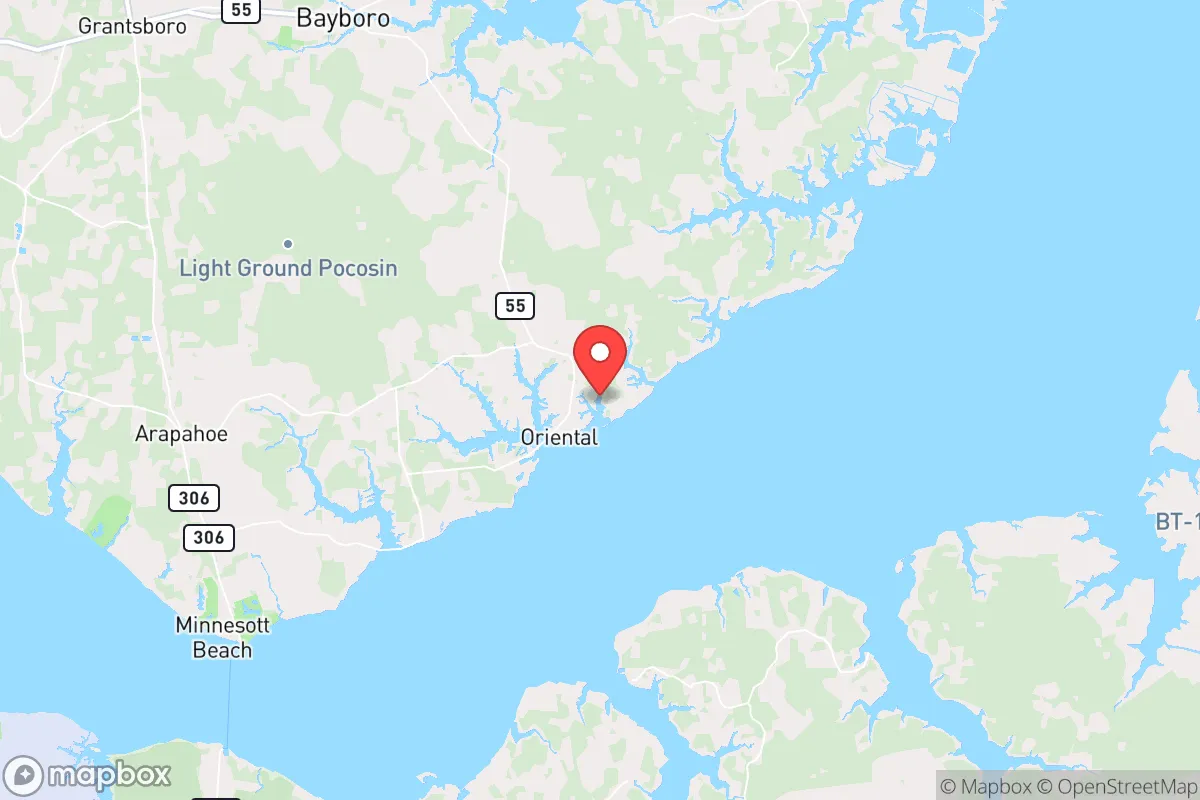
The most significant demographic shift in Oriental began in the 1970s and accelerated through the 1990s, driven not by immigration but by domestic in-migration of retirees and second-home buyers from the Northeast and Midwest. The 1965 Hart-Cellar Act had little direct effect here—Oriental’s foreign-born population today is just 3.1%—but the broader national trend of Sun Belt retirement migration reshaped the town. The construction of the Oriental Marina and the development of the Whortonsville Road corridor drew affluent boaters and seasonal residents, many of whom built homes in the Raccoon Creek and Green Creek subdivisions. These new arrivals were overwhelmingly white, college-educated, and politically moderate to conservative, and they transformed Oriental from a working fishing village into a hybrid community where watermen and wealthy retirees coexist. The Hispanic population, now 5.1%, grew slowly during this period, primarily as a result of labor demand in the region’s seafood processing plants and construction trades. These families settled not in Oriental proper but in the unincorporated areas along NC Highway 55 and in the Minnesott Beach area, where housing was more affordable. The Black population, now just 1.2%, declined steadily after the 1960s as younger generations left for larger cities and the Freeman’s Creek community faded. The East/Southeast Asian population (0.4%) is negligible and consists almost entirely of a few families connected to the marine trades or academic institutions in nearby New Bern.
The future
Oriental’s population is aging and slowly shrinking. The median age is well above the national average, and the town’s housing stock—dominated by waterfront properties and vacation homes—limits the influx of young families. The population is projected to remain overwhelmingly white, with the Hispanic share likely to grow modestly (to perhaps 7-8% by 2040) as service-sector and construction jobs continue to draw workers from outside the area. New residential development is concentrated in the North Shore and Camp Sea Gull areas, where larger lots and newer homes appeal to affluent retirees. There is no significant trend toward greater racial or ethnic diversity; the town’s cultural identity will likely remain that of a white, conservative-leaning, water-oriented enclave. The biggest demographic question is whether the town can attract enough younger residents—through remote work or local employment—to sustain its schools and volunteer fire department, or whether it will continue its trajectory toward an increasingly seasonal, retirement-heavy population.
For someone moving in now, Oriental offers a stable, safe, and deeply rooted community where the pace of life is dictated by the tides and the seasons. It is not a place of rapid change or growing diversity, but rather a place where tradition and a shared love of the water bind a small, educated, and civically engaged population. The trade-off is clear: you gain a beautiful, quiet coastal home, but you join a community that is more likely to be your parents’ age than your own.

* Values derived from national, state, county, city and local statistics and may differ in a specific area. Last updated: 2026-10-25T18:03:31.000Z
Narrative content on this page is AI-generated and may contain mistakes. Verify any details that matter before acting on them.
ReloMaps may earn a commission from affiliate links at no extra cost to you.

