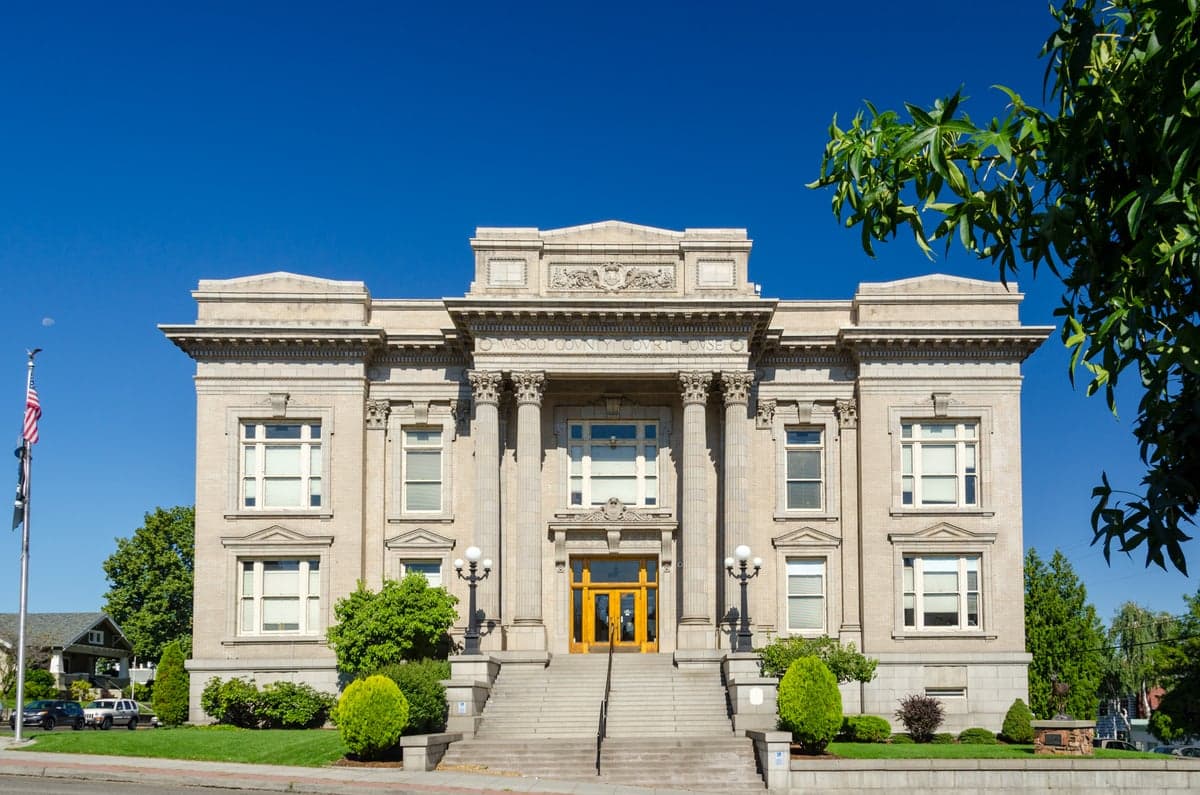
Photo: Wikipedia
Political ClimatePolitical Climate in Wasco County
Showing district-level results — no local-only data available.
Local Political AnalysisPolitical Analysis of Wasco County
Wasco County, Oregon, is a reliably Republican stronghold in a state that leans heavily Democratic, with a Cook PVI of R+14 compared to Oregon’s D+8. This isn’t a recent shift—the county has voted for the GOP presidential candidate in every election since 2000, often by double-digit margins, though the gap has narrowed slightly in recent cycles as the Portland exurbs creep eastward. The political center of gravity is The Dalles, the county seat and largest city, where you’ll find a more moderate, sometimes even liberal-leaning precinct around the historic downtown and the riverfront, while the rural outposts like Maupin, Dufur, and Mosier lean decisively red. The trajectory is one of slow, steady polarization: the county’s Republican base is aging and shrinking, but new arrivals from the Willamette Valley are often drawn to the area’s lower cost of living and outdoor lifestyle, not necessarily its politics, creating a subtle but real demographic shift.
How it compares
Compared to Oregon as a whole, Wasco County is a political outlier. The state’s D+8 PVI is driven by the massive Democratic margins in Multnomah County (Portland) and the Willamette Valley, while Wasco sits in the dry, conservative interior east of the Cascades. In the 2022 gubernatorial race, Republican Christine Drazan won Wasco County with 55% of the vote, while Democrat Tina Kotek took the state with 47%. The gap is even starker in presidential years: in 2020, Donald Trump won Wasco by 12 points, while Joe Biden carried Oregon by 16. The county’s rural precincts—like those around the farming communities of Boyd and Wamic—routinely vote 70%+ Republican, while The Dalles’ urban core, especially near the Columbia Gorge Community College and the hospital, can swing within 5 points of the statewide average. Mosier, a small town with a growing arts scene and a strong environmentalist streak, is the county’s most reliably blue precinct, often voting 60%+ Democratic.
What this means for residents
For conservative residents, Wasco County offers a political environment where their views are the norm, not the exception. Local government, from the county commission to the school board, is dominated by Republicans, and issues like property rights, Second Amendment access, and opposition to Portland-style land-use regulations are mainstream. For liberal residents, the experience is more of a cultural island—you’ll find like-minded neighbors in The Dalles’ older neighborhoods or Mosier, but you’ll also encounter plenty of Trump flags and “Don’t California My Oregon” bumper stickers. The practical impact is that policy debates are often less polarized than in the state legislature: the county’s small size (population ~26,000) means personal relationships still matter, and a well-liked Democrat can win a local seat if they focus on bread-and-butter issues like road maintenance, water rights, and wildfire preparedness. The biggest political friction point is land use—the county’s agricultural and timber heritage clashes with newer residents’ conservation priorities, especially around the Columbia River Gorge National Scenic Area.
Culturally, Wasco County feels more like a Western ranching community than a Pacific Northwest liberal enclave. The annual Wasco County Fair & Rodeo in Tygh Valley is a bigger deal than any political rally, and the local newspaper, the Columbia Gorge News, covers county commission meetings with the same gravity as high school football. The state’s Democratic leadership in Salem is often viewed with suspicion, especially on issues like wildfire management and water rights, but there’s a pragmatic streak—most residents, regardless of party, agree that the county’s economic future depends on balancing agriculture, tourism, and the growing tech sector in The Dalles (home to a Google data center). The political climate is stable, but the slow trickle of newcomers from the west is gradually shifting the county’s center of gravity, making it a place where the old guard and the new arrivals are learning to coexist, one county commission meeting at a time.

State Political ClimatePolitical Climate in Oregon
State Political AnalysisPolitical Environment in the State
Oregon is a reliably Democratic state at the presidential level, with a Cook PVI of D+8, but that label hides a deeply fractured political landscape. The state hasn't voted for a Republican presidential candidate since 1984, yet it has a long history of electing moderate Republican governors (most recently Kate Brown, a Democrat, but before that, Republicans like Vic Atiyeh and Tom McCall) and has a fiercely independent, often libertarian streak. Over the last 10-20 years, the state has shifted leftward on social and environmental policy, driven by the explosive growth of the Portland metro area, while rural and eastern counties have become more solidly Republican and, in some cases, openly resistant to state-level mandates.
Urban vs. rural divide
The political map of Oregon is a textbook case of the urban-rural chasm. The Portland metro area—Multnomah, Washington, and Clackamas counties—contains nearly half the state's population and is the engine of the Democratic majority. Multnomah County (Portland) routinely votes 75-80% Democratic, while Washington County (suburban Beaverton, Hillsboro) and Clackamas County (Oregon City, Lake Oswego) are more moderate but still solidly blue. The Willamette Valley, including Eugene (Lane County) and Corvallis (Benton County), is another deep-blue stronghold, driven by the University of Oregon and Oregon State University. In contrast, the rest of the state is deeply red. Central Oregon (Deschutes County, including Bend) is a notable swing area—Bend itself has grown rapidly with California transplants and leans Democratic, but the surrounding high desert counties are Republican. Eastern Oregon (Malheur, Harney, Baker counties) and Southern Oregon (Jackson County, including Medford, and Josephine County, including Grants Pass) are reliably Republican, often voting 65-70% for GOP candidates. The coastal counties (Tillamook, Lincoln, Coos) are more mixed, with a libertarian-leaning, resource-dependent base that sometimes votes for moderate Democrats but has shifted right in recent cycles.
Policy environment
Oregon's policy environment is a mix of progressive leadership and practical constraints. The state has no sales tax, which is a major draw for many, but it relies heavily on a progressive income tax (top marginal rate of 9.9%) and high property taxes (average effective rate around 0.93%, but can be higher in Portland). The regulatory posture is generally pro-environment, with strict land-use laws (the 1973 Senate Bill 100) that limit urban sprawl and protect farmland and forests. Education policy is a perennial battleground: Oregon ranks near the bottom nationally in graduation rates and test scores, despite above-average per-pupil spending. The state has a universal vote-by-mail system (since 1998), which is widely popular and considered a model for election integrity, though it has drawn criticism from some conservatives who worry about ballot harvesting. Healthcare is heavily regulated, with a state-run Medicaid expansion (the Oregon Health Plan) covering a large portion of the population. On election laws, Oregon automatically registers voters when they get a driver's license, and same-day voter registration is available.
Recent policy direction
Recent legislation shows a clear leftward trajectory, but with notable exceptions. On gun and self-defense law, Oregon passed Measure 114 in 2022, which requires a permit to purchase a firearm and bans magazines over 10 rounds. It is currently tied up in court, but it signals a sharp shift from the state's historically permissive gun culture. On parental and education rights, the state has moved toward more inclusive curriculum (including LGBTQ+ topics) and has a strong "opt-out" culture for standardized testing, but parental rights groups have pushed back, particularly in rural districts. On speech and privacy, Oregon has some of the strongest privacy laws in the nation (the Oregon Consumer Privacy Act), but also has a history of limiting certain types of speech (e.g., a 2017 law banning "conversion therapy" for minors). On medical and bodily autonomy, Oregon was the first state to legalize assisted suicide (the Death with Dignity Act, 1994) and has codified abortion rights into state law (the 2017 Reproductive Health Equity Act). On property rights, the land-use system is a double-edged sword: it protects natural areas but can make it very difficult to build new housing, contributing to the state's housing crisis. On taxation, a 2020 measure (M 110) decriminalized small amounts of hard drugs, but it was largely rolled back in 2024 due to public backlash over open drug use. On voting and ballot access, the state has expanded access (automatic registration, mail-in ballots) but has also seen controversies over ballot drop box security and signature verification.
Civil unrest & political movements
Oregon has a long history of political activism, from the 1934 West Coast Longshoremen's Strike to the 2020 Portland protests. The 2020 George Floyd protests in Portland were among the largest and most sustained in the nation, leading to nightly clashes between federal agents and protesters, which became a national flashpoint. The city's "autonomous zone" (the "Seattle-style" CHOP) was short-lived, but the protests left a lasting mark on local politics. On the right, the Oregon Republican Party has become more militant, with some rural counties (like Grant and Harney) passing "Second Amendment sanctuary" resolutions and threatening to secede to join Idaho (the "Greater Idaho" movement). This movement has gained traction in 11 eastern Oregon counties, with some holding advisory votes on the idea. Immigration politics are less heated than in border states, but Oregon has a sanctuary state law (1987) that limits local law enforcement cooperation with federal immigration authorities. Election integrity controversies have been relatively muted compared to other states, but the 2020 election saw some rural counties refuse to certify results, and there have been ongoing debates about the security of drop boxes.
Projection
Over the next 5-10 years, Oregon's political trajectory is likely to be one of continued polarization, but with a slow, steady leftward drift driven by demographic change. The Portland metro area will continue to grow, while rural counties will lose population, further entrenching the Democratic majority. However, the "Greater Idaho" movement and rural resistance to state mandates will likely intensify, leading to more legal battles and possibly a formal push for boundary changes. The housing crisis and homelessness will remain the dominant local political issues, and they could produce a backlash against progressive policies if they fail to deliver results. The 2024 rollback of drug decriminalization suggests that even in a blue state, voters have limits on how far they'll go. For a conservative relocator, the state will likely remain a difficult place to live if you prioritize low taxes, gun rights, or traditional social values. But if you're looking for a place with strong environmental protections, a vibrant outdoor culture, and a relatively tolerant social atmosphere, Oregon will continue to offer that—especially in the more moderate suburbs of Portland (like Beaverton or Lake Oswego) or in the swing areas of Bend.
For a new resident, the bottom line is this: Oregon is a state where your political experience will depend heavily on where you live. If you're a conservative, you can find a welcoming community in Grants Pass or Medford, but you'll be living under state laws that are increasingly at odds with your values. If you're a liberal, Portland and Eugene will feel like home, but you'll have to contend with high costs and a housing crisis. The state's future is one of managed conflict—a blue state with a loud, organized red minority that isn't going anywhere. Plan accordingly.
* Values derived from national, state, county, city and local statistics and may differ in a specific area. Last updated: 2026-07-18T10:18:01.000Z
Narrative content on this page is AI-generated and may contain mistakes. Verify any details that matter before acting on them.
ReloMaps may earn a commission from affiliate links at no extra cost to you.

