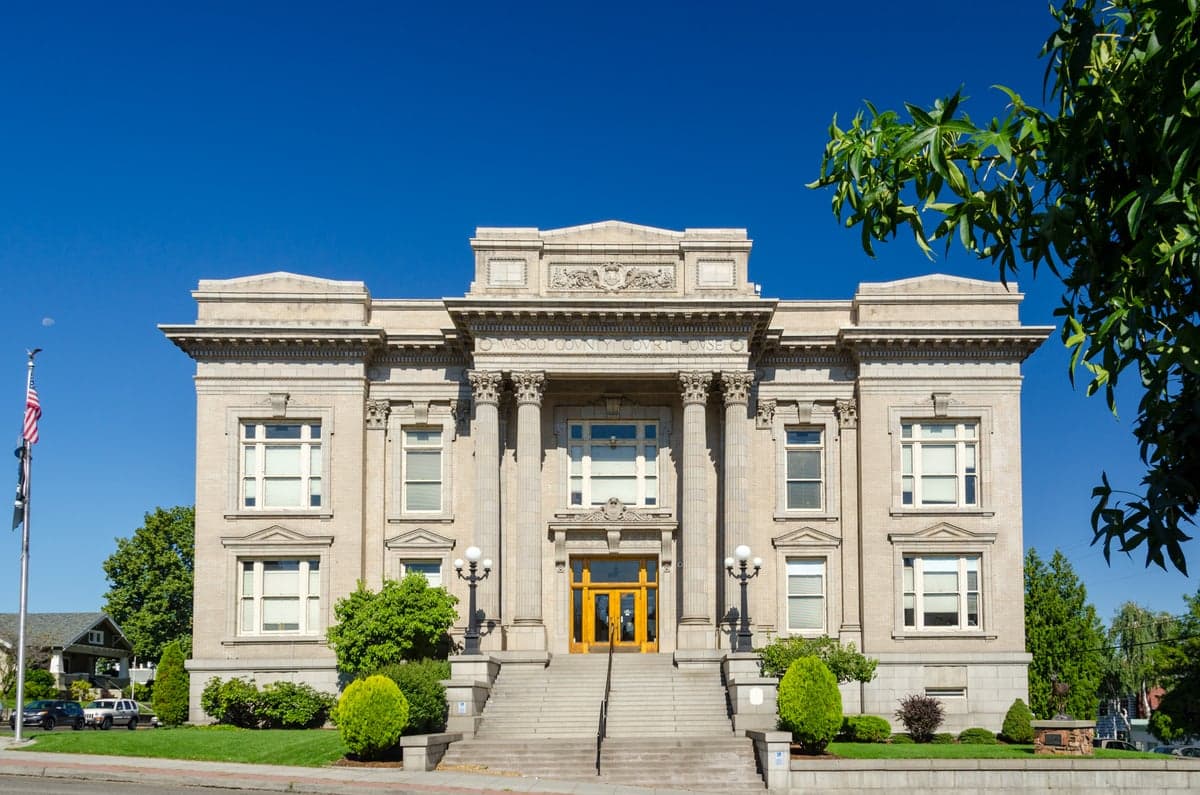
Photo: Wikipedia
Demographics of Wasco County
Affluence Level in Wasco County
A middle-class area roughly in line with national averages across income, home values, education, and employment.
People of Wasco County
Wasco County, Oregon, is home to 26,603 residents, a population shaped by a distinct blend of Native American heritage, pioneer settlement, and a growing Hispanic community. The county’s character is defined by its small-town, rural identity centered on the Columbia River Gorge, with a population that is 72.3% white, 19.8% Hispanic, and notably less diverse than Oregon’s urban centers. Its people are predominantly non-college-educated (78.2%), with a strong working-class ethos tied to agriculture, timber, and tourism, creating a conservative-leaning, family-oriented atmosphere that values self-reliance and community ties.
Settlement & growth (pre-1960)
Long before European contact, the area now known as Wasco County was home to the Wasco and Warm Springs tribes, who fished for salmon along the Columbia River and lived in permanent villages near present-day The Dalles. The Lewis and Clark Expedition passed through in 1805, noting the region’s importance as a Native trading hub. By the 1820s, British and French-Canadian fur trappers from the Hudson’s Bay Company established a presence, but significant American settlement did not begin until the 1840s, when the Oregon Trail brought waves of white pioneers to the area.
The first major wave of American settlers arrived in the 1840s and 1850s, drawn by the Donation Land Claim Act of 1850, which offered free land to white settlers. These pioneers were overwhelmingly of Scots-Irish and English descent, migrating from the Midwest and Upper South. They established farms and small communities, with The Dalles emerging as the county seat and a critical supply point for miners heading to the California and Idaho gold rushes. The town’s location at the end of the Oregon Trail’s overland route made it a bustling frontier hub, with a population that swelled to several thousand by the 1860s.
In the 1880s, the arrival of the railroad transformed the county. The Oregon Railroad and Navigation Company connected The Dalles to Portland and the East, spurring a second wave of settlement. This period saw an influx of German and Scandinavian immigrants, who took up farming in the fertile valleys around Dufur and Mosier. These groups established tight-knit agricultural communities, with German Lutherans and Swedish Methodists building churches that still stand today. The railroad also brought Chinese laborers, who worked on track construction and later settled in small enclaves in The Dalles, though their numbers declined sharply after the Chinese Exclusion Act of 1882.
By the early 20th century, the county’s economy shifted toward wheat farming and fruit orchards, particularly apples and cherries. The opening of the Columbia River Highway in the 1910s and the construction of The Dalles Dam in the 1950s further cemented the region’s role as a transportation and agricultural corridor. The dam, completed in 1957, flooded Native fishing sites and displaced the town of Celilo, a historic Native village, but also provided cheap hydroelectric power that attracted light industry. Throughout this period, the population remained overwhelmingly white and native-born, with small pockets of Hispanic farmworkers beginning to appear by the 1940s, drawn by seasonal agricultural labor.
Modern era (post-1965)
The 1965 Hart-Cellar Act had a modest impact on Wasco County compared to urban Oregon, but it did open the door for a gradual increase in Hispanic immigration. The county’s foreign-born population today stands at just 6.2%, well below the national average, but the Hispanic share has grown from under 5% in 1990 to nearly 20% today. This growth is driven primarily by Mexican immigrants and their descendants, who arrived in waves starting in the 1970s to work in the region’s fruit orchards, vineyards, and packing plants. Many settled in The Dalles, where a Hispanic enclave has formed around the city’s east side, and in smaller numbers in Maupin and Tygh Valley, where agricultural labor remains in demand.
Domestic migration since 1965 has been relatively slow. Unlike Oregon’s Willamette Valley, which saw an influx of Californians and coastal professionals, Wasco County has attracted mostly retirees and outdoor enthusiasts drawn to the Columbia River Gorge’s natural beauty. The county’s population grew by only about 10% between 1990 and 2020, a fraction of the state’s overall growth. This slow growth has preserved the county’s rural character but also limited economic diversification. The white population, while still the majority at 72.3%, has aged and declined slightly in absolute numbers as younger residents leave for college or jobs in Portland and Bend.
Suburbanization has been minimal. The Dalles, with about 16,000 residents, remains the only incorporated city of any size. New housing developments have crept outward along Highway 197 and toward Chenoweth, a census-designated place just west of The Dalles, but the county lacks the sprawling subdivisions seen in Oregon’s metro areas. The Black population remains tiny at 0.4%, and East/Southeast Asian communities (0.8%) are concentrated among a few families in The Dalles, often descendants of railroad workers or more recent professionals in healthcare and education. Indian-subcontinent residents are essentially absent at 0.0%.
The future
Wasco County is likely to become slightly more diverse over the next 10-20 years, but the pace will be slow. The Hispanic population is projected to grow from 19.8% to perhaps 25-30% by 2040, driven by higher birth rates and continued immigration from Mexico and Central America. These families are dispersing beyond The Dalles into smaller communities like Dufur and Mosier, where they are increasingly integrated into the local economy as business owners and year-round residents rather than seasonal laborers. The white population will continue to age and shrink, as outmigration of young adults offsets any in-migration of retirees.
The county’s cultural identity is evolving, but slowly. The conservative, rural ethos remains dominant, with local politics reflecting a mix of libertarian independence and social conservatism. However, the growing Hispanic presence is reshaping community life, with bilingual signage appearing in The Dalles and Spanish-language services expanding in schools and healthcare. The county is unlikely to become a destination for significant Asian or Black migration, given its limited job opportunities and lack of ethnic enclaves. Climate change may bring new residents from wildfire-prone areas of California, but this is speculative.
For someone moving in now, Wasco County offers a stable, family-oriented community with a strong sense of place, but it is not a place of rapid demographic change. The population is becoming more Hispanic, but the county will remain predominantly white and rural for the foreseeable future. The key question for newcomers is whether they value the area’s slow pace and tight-knit character over the diversity and economic dynamism of larger cities.

* Values derived from national, state, county, city and local statistics and may differ in a specific area. Last updated: 2026-07-18T10:18:01.000Z
Narrative content on this page is AI-generated and may contain mistakes. Verify any details that matter before acting on them.
ReloMaps may earn a commission from affiliate links at no extra cost to you.

