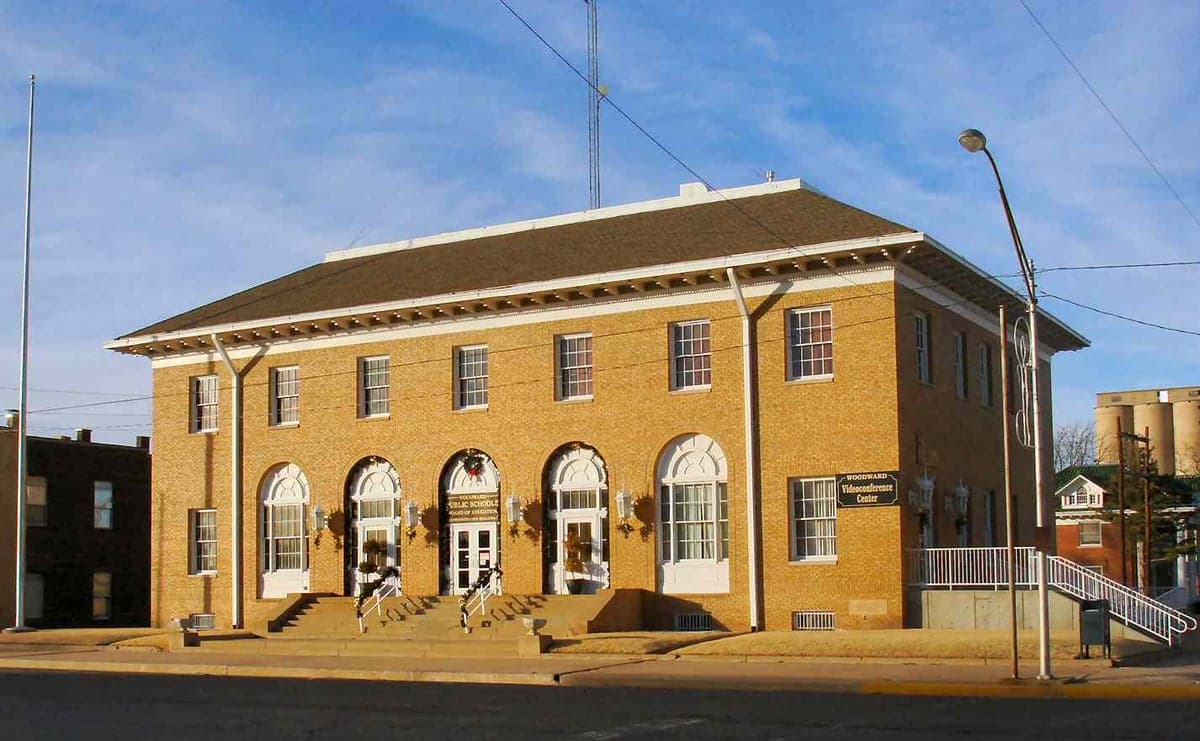
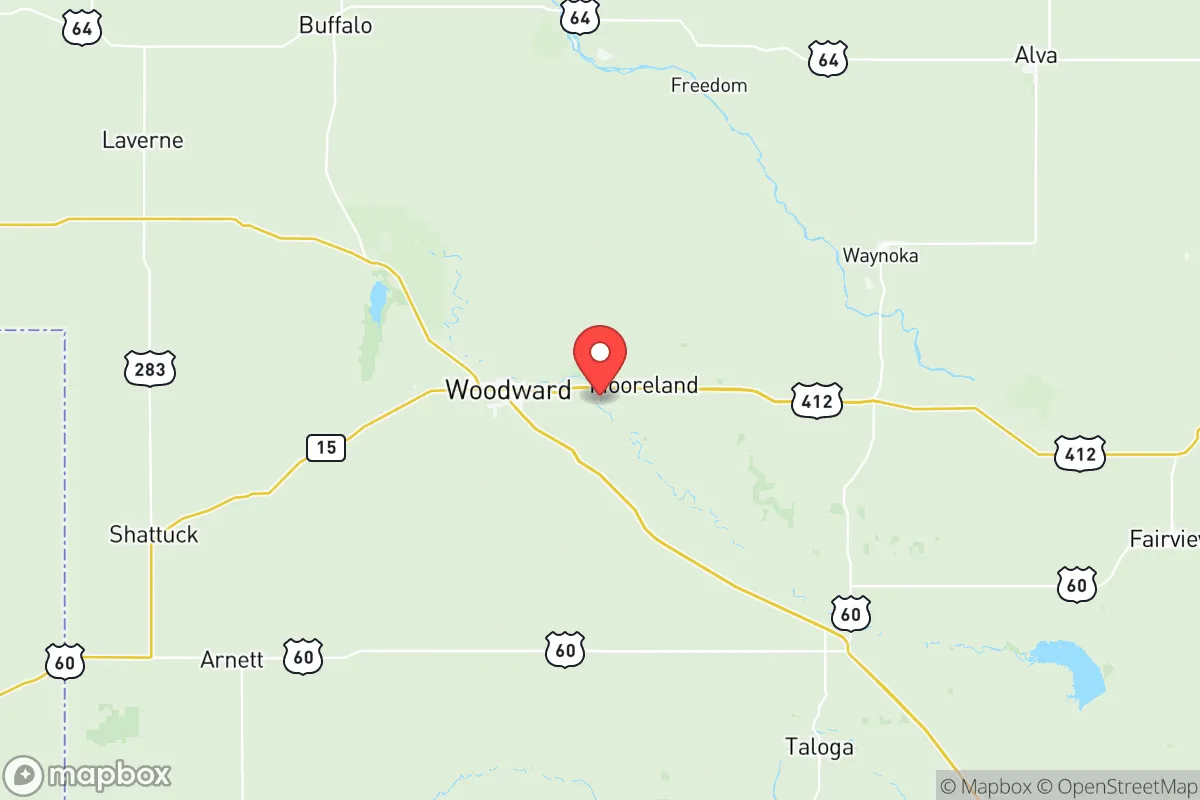
Photo: Wikipedia
Quality of Life in Woodward County
A livable area that tracks near national norms for affordability, walkability, and neighborhood health.
What does Quality of Life tell us?
Quality of Life measures an area by evaluating factors like cost of living, nearby amenities, country club access, airport proximity, socioeconomic signals and neighborhood character. For large states, this is a general average — quality of life can vary dramatically between metro areas, suburbs, and rural communities within the same state.
What does this tell us?
Quality of Life measures an area by evaluating factors like cost of living, nearby amenities, country club access, airport proximity, socioeconomic signals and neighborhood character. For large states, this is a general average — quality of life can vary dramatically between metro areas, suburbs, and rural communities within the same state.
Cost of Living
31% below national average
128%
The Real Cost of Living in Woodward County for 2026
| Tier | Individual | Family (4) |
|---|---|---|
| Survival | $14k | $25k |
| Comfortable | $35k | $51k |
| Luxury | $114k+ | $176k+ |
| Elite (Top 5%) | $134k+ | $208k+ |
Quality-of-Life Analysis
Woodward County, Oklahoma, offers a spectrum of quality-of-life options that range from the modest urban amenities of its county seat to the quiet self-sufficiency of its unincorporated plains communities. The county's character is defined by its position in the northwestern part of the state, where the economy is anchored by agriculture, energy production, and regional healthcare. People drawn to Woodward County typically fall into two camps: those seeking the convenience and social infrastructure of a small city, and those prioritizing land, privacy, and a slower pace in the surrounding rural areas. With a cost of living index of 69 — well below the national average of 100 — the county provides significant financial breathing room, though the trade-off comes in the form of fewer entertainment options and longer drives for specialized services.
Largest town(s) & population centers
The dominant population center is Woodward, the county seat and home to roughly 12,000 residents. Daily life in Woodward revolves around a functional downtown core with local restaurants, retail, and the Woodward Regional Hospital, which serves as a medical hub for the surrounding region. The town hosts Northwestern Oklahoma State University's Woodward campus, adding an educational dimension and a modest cultural calendar of community events. For families, the Woodward Public Schools system is the primary draw, offering a range of extracurricular activities uncommon in smaller districts. Commute times in the county average 22.9 minutes, a figure that reflects the ease of getting around Woodward itself as well as the longer drives required for those living on the outskirts. The median home value in the county is $178,000, and the median rent sits at $847, making homeownership attainable for many middle-income households.
Smaller towns & rural pockets
Beyond Woodward, the county contains a handful of smaller incorporated towns that offer a distinctly quieter lifestyle. Mooreland, about 10 miles east of Woodward, is a community of roughly 1,200 residents with its own school system and a strong agricultural identity. Fargo, located in the county's northern reaches near the Kansas border, is a tiny town of fewer than 400 people where daily life centers on farming, ranching, and the local grain elevator. Mutual, south of Woodward, and Sharon, to the west, are similarly small unincorporated communities where residents often commute into Woodward for work, groceries, and healthcare. These areas lack the retail and dining options of the county seat, but they offer larger lots, lower property prices, and a level of quiet that is increasingly hard to find in more populated parts of the state.
Cost & lifestyle range
The cost and lifestyle spread across Woodward County is straightforward but meaningful. At the higher end of the spectrum, Woodward itself commands a slight premium: newer subdivisions on the town's west side feature homes in the $200,000 to $250,000 range, and rental properties near the hospital or the high school tend toward the upper end of the county's median rent. At the lower end, rural properties in areas like Fargo or Mutual can be found for under $100,000, and rental options in those communities are scarce but inexpensive when available. The trade-off is clear: living in Woodward means paying more for housing but gaining access to schools, healthcare, and a social fabric of churches, civic clubs, and seasonal festivals. Living in the smaller towns or on rural acreage means a longer commute — sometimes 30 to 40 minutes one way — but a lower monthly housing cost and the ability to own land for gardening, livestock, or recreation.
Woodward County is best suited for people who value affordability, space, and a straightforward pace of life over urban convenience. Families who want a solid school system and a safe environment will find Woodward itself a practical choice, while those seeking a homesteading lifestyle or a low-cost retirement will gravitate toward the county's smaller communities. The county's low crime rates and strong sense of neighborly interdependence are consistent across the entire area, making it a reliable option for anyone comfortable with the trade-offs of rural Oklahoma living.

Crime in Woodward County
Crime rates similar to the national median for U.S. locations.
Violent CrimeViolent Crime Analysis
Property CrimeProperty Crime Analysis
Crime Analysis
Woodward County, Oklahoma, presents a crime profile that demands careful consideration from potential residents, with violent crime rates significantly exceeding both state and national averages. The county's overall violent crime rate stands at 409.6 incidents per 100,000 residents, while property crime occurs at a rate of 1,833.2 per 100,000. These figures place Woodward County in a concerning position relative to other Oklahoma counties, particularly when examining the specific dynamics within its principal communities of Woodward, Mooreland, and Sharon.
Crime in context
When compared to broader benchmarks, Woodward County's violent crime rate of 409.6 per 100,000 is substantially higher than the national average of approximately 380 per 100,000 and notably exceeds the Oklahoma state average of roughly 440 per 100,000. The property crime rate of 1,833.2 per 100,000 sits below the state average of approximately 2,500 per 100,000 but remains a concern for residents. The city of Woodward itself, as the county seat and largest population center, bears the brunt of these statistics, with law enforcement data indicating that the majority of reported incidents occur within its municipal boundaries. In contrast, smaller communities like Mooreland and Sharon report significantly fewer incidents, though their populations are too small to generate statistically reliable independent crime rates. The county's location along US-412 and US-270, major transportation corridors connecting to the Texas Panhandle and western Oklahoma, contributes to transient crime patterns that local law enforcement must constantly address.
What residents experience
For those living in Woodward County, the most pressing safety concerns revolve around property crimes, particularly burglary and motor vehicle theft, which occur with greater frequency than in more rural surrounding counties like Harper or Ellis. Residents of Woodward's older neighborhoods near downtown report higher instances of property crime, while newer developments on the city's east side experience fewer incidents. The county's judicial system, operating under District Attorney Christopher Boring of the 4th Judicial District, has maintained a generally conservative approach to prosecution, which provides some reassurance to residents concerned about progressive criminal justice policies that can lead to reduced sentences and earlier releases. However, the proximity to larger, more liberal jurisdictions in Oklahoma City and Tulsa means that regional crime trends occasionally spill over into Woodward County through the transportation network. Violent crime, while less common than property crime, tends to be concentrated in specific areas and often involves individuals known to one another rather than random attacks on residents.
Neighborhood-level variation
Safety conditions vary considerably across Woodward County's geography. The city of Woodward itself shows a clear divide between its western residential areas, which generally experience lower crime rates, and the central commercial corridor along Oklahoma Avenue, where property crime is more prevalent. Mooreland, located approximately 12 miles east of Woodward, offers a markedly safer environment with minimal violent crime and property crime rates that are a fraction of the county average. Sharon, the county's smallest incorporated town, reports virtually no violent crime and only occasional property incidents, making it an attractive option for those prioritizing safety above all else. Residents considering relocation should also note that the county's rural areas, particularly those north of the North Canadian River, benefit from natural isolation that deters criminal activity. The Woodward County Sheriff's Office maintains a visible presence throughout unincorporated areas, while the Woodward Police Department focuses its resources on the city's higher-crime zones, creating a layered approach to public safety that residents generally view as effective despite the elevated statistical rates.
* Values derived from national, state, county, city and local statistics and may differ in a specific area. Last updated: 2026-07-02T18:07:18.000Z
Narrative content on this page is AI-generated and may contain mistakes. Verify any details that matter before acting on them.
ReloMaps may earn a commission from affiliate links at no extra cost to you.

