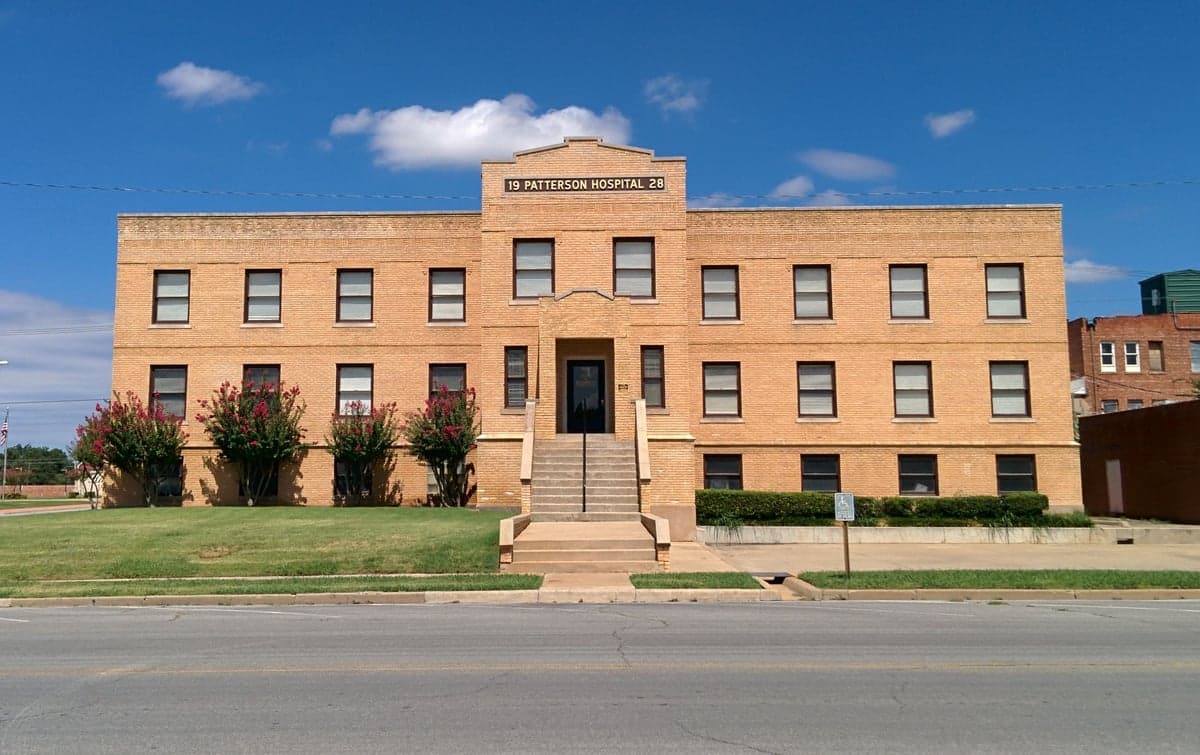
Photo: Wikipedia
Personal Sovereignty in Stephens County
Strong independent fundamentals that actively favor personal liberty and low regulation.
What does Personal Sovereignty tell us?
Personal Sovereignty measures your capacity for self-reliance and independence with minimal government friction. Higher scores mean fewer barriers between you and the way you want to live... but it assumes you have the space you need and good neighbors.
What does this tell us?
Personal Sovereignty measures your capacity for self-reliance and independence with minimal government friction. Higher scores mean fewer barriers between you and the way you want to live... but it assumes you have the space you need and good neighbors.
State Policy
Energy independence: Net exporter (180% of energy produced in-state)
Personal Liberty
Homesteading

Personal Liberty Analysis
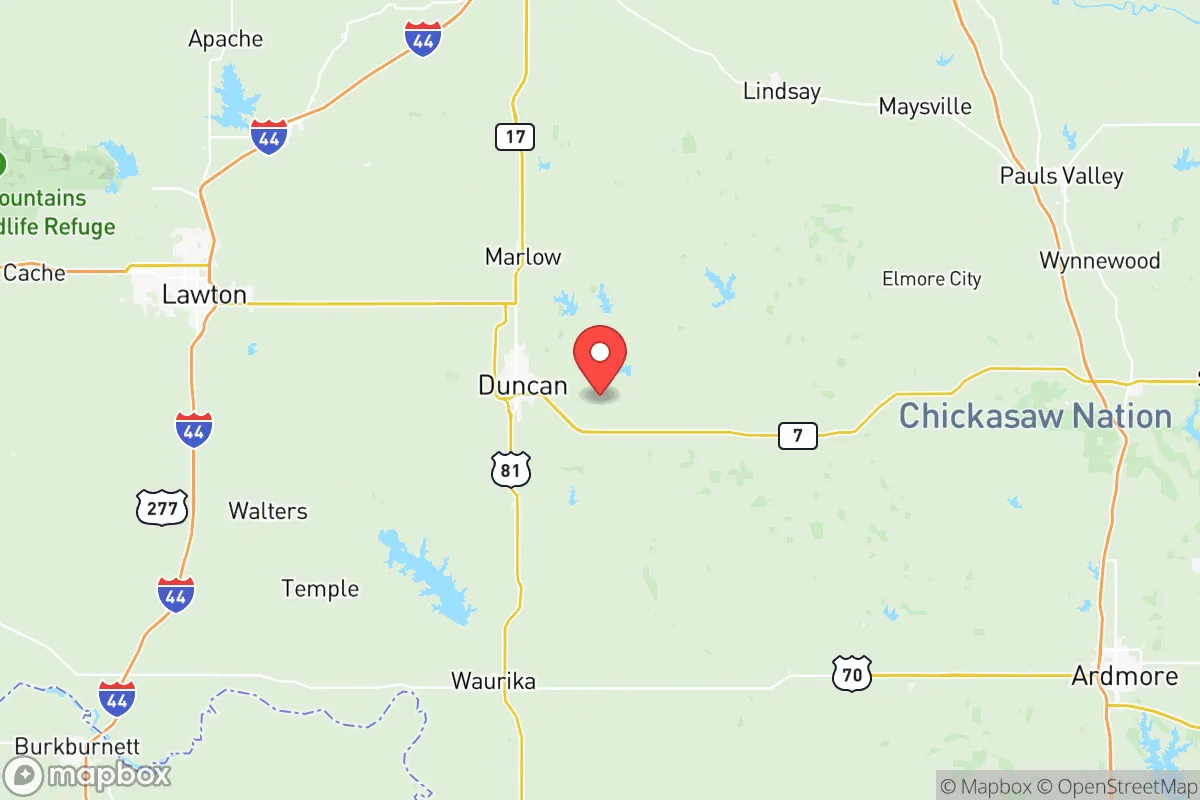
Stephens County, Oklahoma, offers a personal sovereignty environment that is markedly more permissive than much of the urbanized I-35 corridor, with local governance in Duncan, Comanche, and Marlow consistently deferring to state-level preemption on firearms, property rights, and taxation. The county’s regulatory posture is best described as light-touch, where the absence of county-level zoning in unincorporated areas and a low property tax rate create a baseline of autonomy that attracts individuals and families seeking to minimize government entanglement. For a relocation audience prioritizing personal freedom, the trade-off is clear: fewer services and amenities than a major metro, but significantly more latitude to live, work, and defend oneself without bureaucratic friction.
Tax burden and regulatory posture in Stephens County
Oklahoma’s state-level tax structure is already among the most favorable for personal sovereignty, and Stephens County amplifies that advantage. The county’s ad valorem property tax rate averages around 0.85% of assessed value, well below the national median, and there is no county-level income tax. The state’s 4.75% flat income tax and 4.5% sales tax (with local add-ons in Duncan and Marlow pushing the combined rate to roughly 9.5%) are the primary revenue sources. Crucially, Stephens County has no county-wide zoning ordinance for unincorporated areas, meaning that outside city limits in places like Bray, Velma, or Loco, residents face minimal regulatory hurdles for home-based businesses, livestock, or alternative housing. The city of Duncan does enforce a building code and zoning map, but its permitting process is streamlined compared to Oklahoma City or Tulsa. For a family or individual, the practical effect is that you can own land, build a home, and operate a small enterprise without navigating layers of county-level red tape—a direct expression of personal sovereignty.
Self-defense and gun law specifics in Stephens County
Oklahoma is a constitutional carry state, and Stephens County fully reflects that posture. No permit is required to carry a concealed or openly carried firearm for any law-abiding adult 21 or older (18 for military members). The county sheriff’s office in Duncan issues permits for those who want reciprocity with other states, but the process is administrative, not discretionary. Stand-your-ground and castle doctrine laws are fully in effect, with no duty to retreat in any place where the individual is lawfully present. Local gun culture is deeply embedded: the Duncan Gun Show is a regular event, and shooting ranges like the Stephens County Gun Club near Marlow are well-used. Law enforcement in Duncan, Comanche, and Marlow is generally supportive of armed self-defense, and there are no local ordinances restricting magazine capacity, firearm types, or storage requirements. For a reader prioritizing the right to self-defense, Stephens County offers one of the most permissive legal environments in the nation, with local practice matching state law.
Self-reliance and homesteading viability in Stephens County
The viability of homesteading and off-grid living varies significantly across the county’s geography. Unincorporated areas around Velma, Loco, and Bray offer the highest degree of self-reliance potential, with rural lots commonly available in 5- to 40-acre parcels at prices ranging from $1,500 to $3,000 per acre. There are no county-level restrictions on rainwater catchment, composting toilets, or solar panel installation in these areas. The city of Duncan, by contrast, requires connection to municipal water and sewer within city limits, and its building code mandates conventional septic systems and electrical hookups for new construction. However, the county’s rural water districts and electric cooperatives (like Duncan Electric Cooperative) do not restrict off-grid systems—you can legally disconnect from the grid if you own the land and meet basic health code requirements. The local climate (average 34 inches of rain annually) supports rainwater harvesting, and the growing season of roughly 220 days allows for substantial food production. For a family seeking to build a self-sufficient homestead, the areas outside Marlow and Comanche offer the best balance of affordable land, minimal regulation, and practical agricultural conditions.
Personal liberties in Stephens County: parental rights, medical autonomy, speech, and property
Stephens County operates within Oklahoma’s broader legal framework, which strongly emphasizes parental rights and medical autonomy. Oklahoma law explicitly recognizes parental rights as fundamental, and the state has no vaccine mandate for school attendance (though individual school districts may require certain immunizations). The county’s school boards in Duncan, Marlow, and Comanche have been responsive to parental input on curriculum and library materials, reflecting a community culture that values local control. Medical autonomy is similarly broad: there are no county-level restrictions on alternative or complementary medicine, and the state’s medical marijuana program (approved by voters in 2018) is fully operational, with dispensaries in Duncan and Marlow. Free speech protections are robust, with no local ordinances restricting political signage, public assembly, or expressive conduct beyond standard time-place-manner rules. Property rights are strongly protected under Oklahoma’s “right to farm” statute, which limits nuisance lawsuits against agricultural operations—a significant consideration for anyone buying rural land near existing farms. The county’s planning and zoning board in Duncan is the only local body with meaningful regulatory authority, and its decisions are subject to public hearing and appeal.
Overall, Stephens County ranks among the more sovereignty-friendly areas in Oklahoma, comparable to rural counties in the western part of the state but with better access to services in Duncan. The combination of constitutional carry, no county zoning in unincorporated areas, low property taxes, and strong parental and property rights creates an environment where personal autonomy is the default rather than the exception. For a family or individual moving from a heavily regulated state like California or New York, the shift in personal sovereignty will be immediately tangible—fewer permits, lower taxes, and a legal system that presumes individual competence rather than requiring government permission. The trade-off is that this freedom comes with fewer public services and a slower pace of life, but for those who prioritize self-reliance, Stephens County delivers a consistently light regulatory touch across nearly every dimension of personal sovereignty.

* Values derived from national, state, county, city and local statistics and may differ in a specific area. Last updated: 2026-06-16T21:47:32.000Z
Narrative content on this page is AI-generated and may contain mistakes. Verify any details that matter before acting on them.
ReloMaps may earn a commission from affiliate links at no extra cost to you.

