Photo: Wikipedia
Demographics of Stephens County
Affluence Level in Stephens County
A middle-class area roughly in line with national averages across income, home values, education, and employment.
People of Stephens County
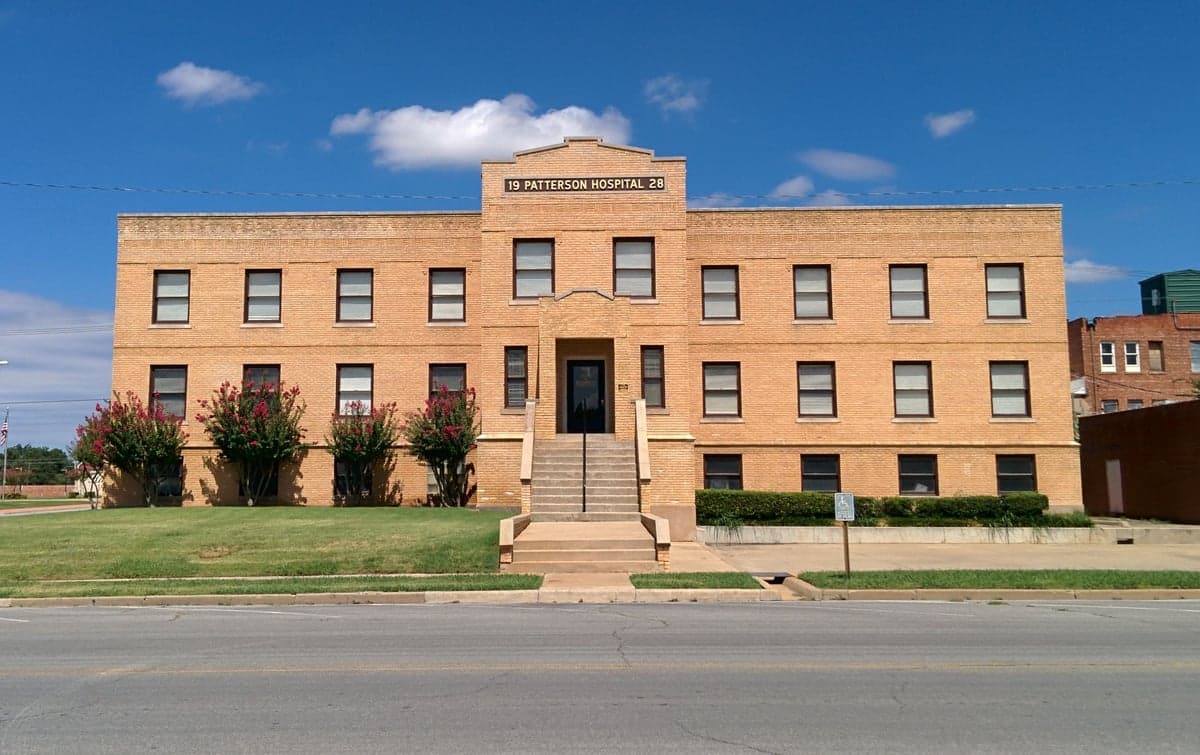
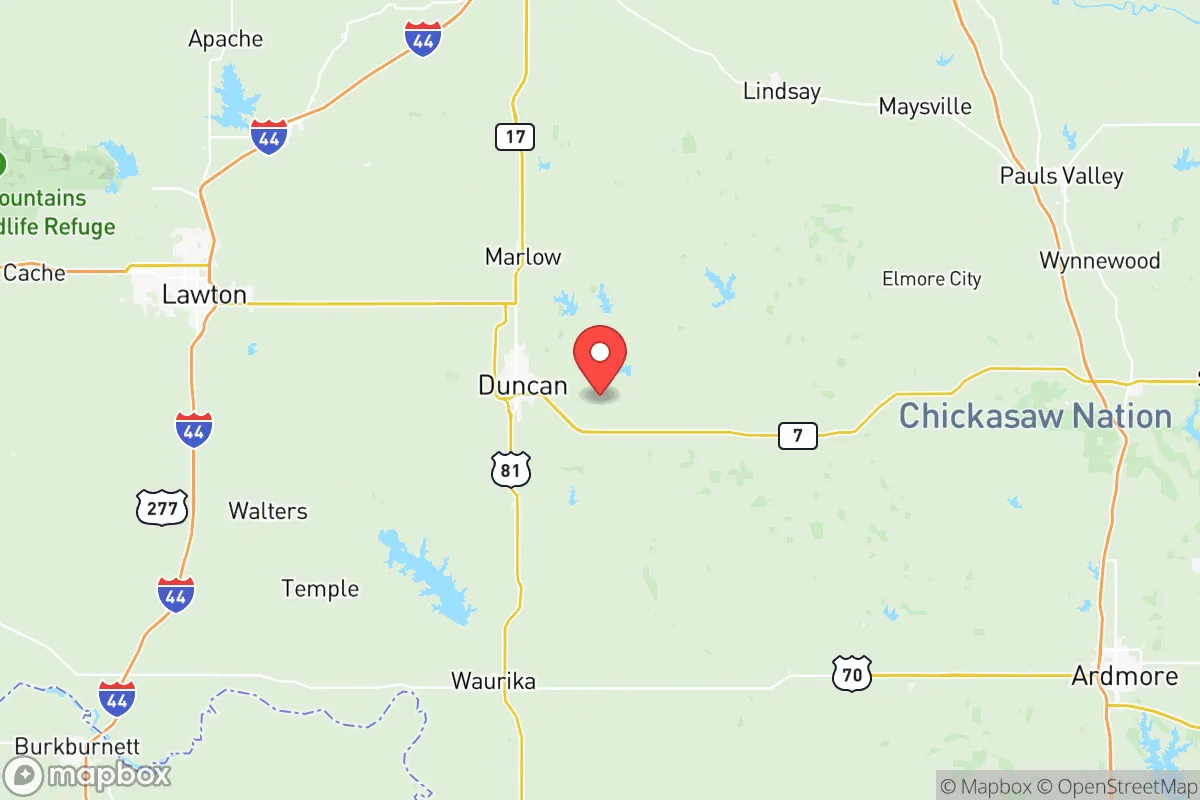
The people of Stephens County, Oklahoma today number 43,314, forming a predominantly white (78.1%) and politically conservative community centered on the county seat of Duncan. With a foreign-born population of just 1.5% and a college attainment rate of 19.5%, the county retains a distinctly rural, working-class character rooted in its oil and gas heritage, ranching traditions, and a population that is overwhelmingly native-born. The county's identity is shaped by its small-town, family-oriented culture, with a modest but growing Hispanic community (8.4%) and very small Black (1.4%) and East/Southeast Asian (0.5%) populations, reflecting limited recent immigration compared to urban Oklahoma.
Settlement & growth (pre-1960)
Before American settlement, the area now known as Stephens County was part of the traditional territory of the Wichita and Caddo peoples, who lived in semi-permanent villages along the Red River and its tributaries. The region was later claimed by Spain and then France as part of the Louisiana Purchase, but no permanent European settlements were established here during the colonial period. The area was designated as part of the Chickasaw Nation after the Trail of Tears in the 1830s, with the Chickasaw people establishing farms and ranches across what would become Stephens County. The first permanent non-Native settlers were primarily Chickasaw citizens, many of whom were of mixed European and Native ancestry, who operated cattle ranches and cotton farms along the creeks and rivers.
The major transformation began with the Land Run of 1901, when the former Chickasaw Nation lands were opened to non-Native settlement through a lottery system. This drew a wave of white settlers from Texas, Arkansas, and other parts of the South, predominantly of Scots-Irish and English ancestry, who were attracted by the promise of cheap land for cotton farming and cattle ranching. The town of Duncan was founded in 1892 as a Chickasaw settlement but exploded after the land run, becoming the county's commercial and political hub. Other communities like Marlow (founded 1898) and Comanche (founded 1898) grew as agricultural service centers, with cotton gins, grain elevators, and general stores serving the surrounding farm population.
The discovery of oil in the Healdton Field in 1913, just south of the county line, triggered a dramatic economic and demographic shift. The Duncan area became a center for oilfield supply and equipment manufacturing, with companies like Halliburton (founded in Duncan in 1919) driving population growth. This oil boom attracted a new wave of workers: white laborers from the South and Midwest, along with a small number of Black workers who came as roughnecks and roustabouts. The oil industry created a distinct class structure, with oil executives and engineers living in Duncan's nicer neighborhoods while roughnecks and field workers populated smaller communities like Bray and Loco. The Great Depression and Dust Bowl of the 1930s hit the county hard, but the oil industry provided a buffer, and the population remained relatively stable through the 1940s and 1950s as the county diversified into manufacturing and agriculture.
Modern era (post-1965)
The 1965 Hart-Cellar Act had minimal direct impact on Stephens County, as the area did not attract the large-scale immigration seen in urban Oklahoma or the Dallas-Fort Worth metroplex. The county's foreign-born population remains at just 1.5%, far below the national average, and the immigrant communities that do exist are small and dispersed. The most notable demographic shift since 1965 has been the growth of the Hispanic population, which rose from negligible levels in 1970 to 8.4% today. This growth is primarily driven by Mexican-American families who moved to the area for work in the oil fields, agriculture, and the service industry, with concentrations in Duncan and Marlow, where they work in construction, restaurants, and meatpacking.
The domestic migration pattern since the 1970s has been one of gradual population decline, as younger residents left for college and careers in Oklahoma City (about 80 miles north) and the Dallas-Fort Worth metroplex (about 100 miles southeast). The county's population peaked at around 45,000 in the 1980s and has since fluctuated with the boom-and-bust cycles of the oil industry. The Black population, which was never large, has declined from a small historical presence to just 1.4% today, as many Black families left for urban areas with more economic opportunities. The East/Southeast Asian population (0.5%) is tiny and consists mainly of a few families involved in the oil and gas industry or academia, with no distinct ethnic enclave. The Indian subcontinent population is effectively zero (0.0%).
Suburbanization has been limited, as the county lacks a major urban core. However, Duncan has seen some suburban-style development on its outskirts, with new housing subdivisions and retail centers catering to commuters who work in the oil fields or at the local hospital and schools. The communities of Velma and Loco have remained small, rural hamlets, while Comanche has maintained its identity as an agricultural and bedroom community for Duncan. The county's population is aging, with a median age of around 40, as younger adults continue to leave for urban areas.
The future
Stephens County is likely to continue its gradual population decline or stagnation over the next 10-20 years, as the oil and gas industry faces long-term uncertainty and the county struggles to attract new residents. The Hispanic population is expected to grow slowly, potentially reaching 12-15% by 2040, as families continue to move in for agricultural and service jobs, but this growth will not dramatically alter the county's overall demographic character. The white population will likely shrink slightly as older residents pass away and younger adults leave, while the Black and Asian populations are expected to remain very small, as the county lacks the economic diversity and cultural infrastructure to attract significant numbers of non-white residents.
The county's cultural identity will remain rooted in its conservative, rural, and oil-and-ranch heritage, with a strong sense of local pride centered on Duncan's Halliburton legacy and the annual Stephens County Free Fair. The biggest demographic challenge will be retaining young families and attracting new residents, as the county's low college attainment rate (19.5%) and limited high-skilled job opportunities make it difficult to compete with urban centers. However, the county's low cost of living, strong community ties, and outdoor recreation opportunities (hunting, fishing, and the nearby Wichita Mountains) may continue to draw a small number of retirees and remote workers seeking a quieter, more affordable lifestyle.
For someone moving in now, Stephens County offers a stable, family-oriented community with a strong sense of place and a low cost of living, but with limited diversity, a shrinking population, and an economy heavily dependent on the volatile oil and gas sector. The county is becoming more Hispanic but remains overwhelmingly white and native-born, and its future depends on whether it can diversify its economy enough to retain and attract the next generation of residents.

* Values derived from national, state, county, city and local statistics and may differ in a specific area. Last updated: 2026-06-16T21:47:32.000Z
Narrative content on this page is AI-generated and may contain mistakes. Verify any details that matter before acting on them.
ReloMaps may earn a commission from affiliate links at no extra cost to you.

