Political ClimatePolitical Climate in Mcclain County
Showing district-level results — no local-only data available.
Local Political AnalysisPolitical Analysis of Mcclain County
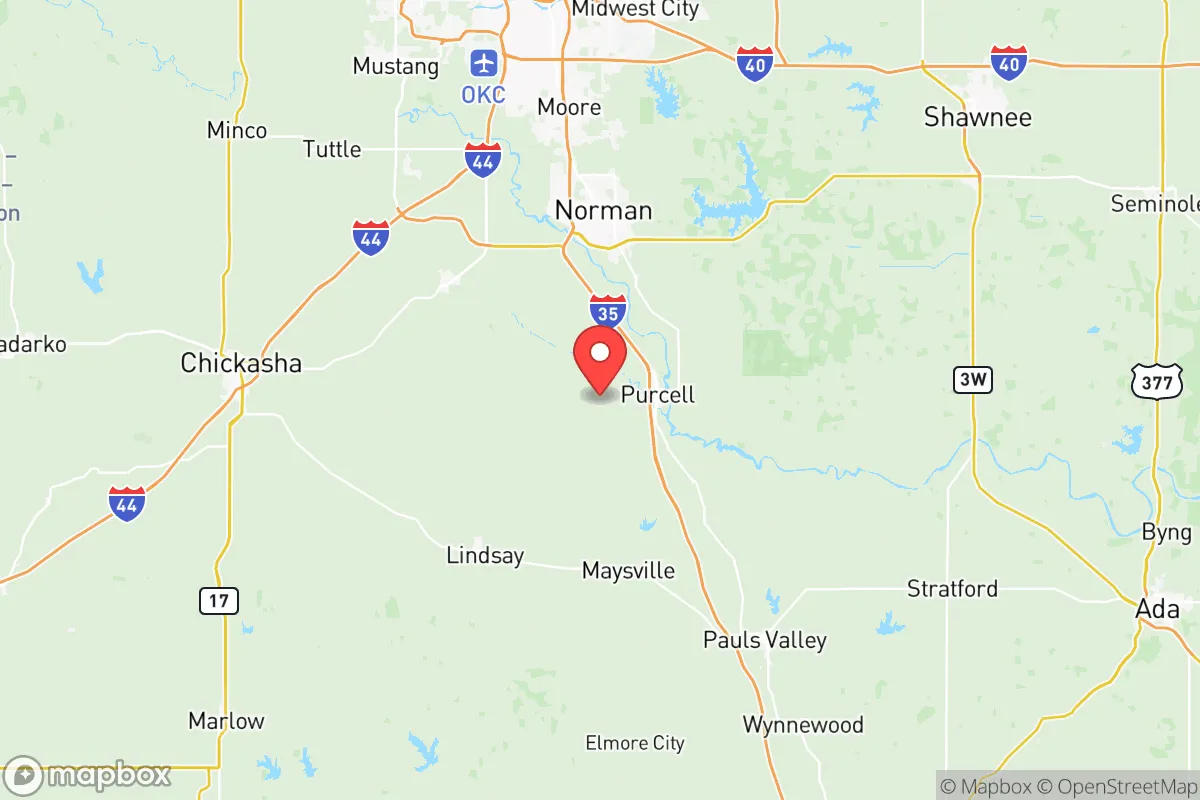
McClain County, Oklahoma, is a reliably conservative area with a Cook Partisan Voting Index (PVI) of R+17, making it slightly more Republican-leaning than the state of Oklahoma as a whole, which sits at R+18. This isn't a recent shift; the county has been a Republican stronghold for decades, and the margin has only widened in the last two presidential cycles. In 2024, Donald Trump carried McClain County by over 40 points, a reflection of the area's deep-rooted cultural and political conservatism.
How it compares
While the overall PVI numbers are close, the political texture of McClain County differs from the state average in a few key ways. The county is more uniformly Republican than the state, which includes the more competitive Oklahoma City metro area and the reliably Democratic strongholds in eastern Oklahoma. Within McClain County, the variation is mostly between shades of red. The town of Newcastle, a fast-growing suburb of Oklahoma City, tends to be the most moderate part of the county, with some precincts occasionally voting within 10 points of the state average. In contrast, Blanchard and Purcell are deeply conservative, often delivering margins of 70-80% for Republican candidates. The rural precincts around Goldsby and Cole are the most reliably red, with little to no Democratic presence. There are no towns in McClain County that lean blue; the closest thing to a swing precinct might be a few areas in Newcastle where independent and moderate Republican voters can make a race closer, but even there, a Democrat has not won a precinct since at least 2016.
What this means for residents
For conservative residents, McClain County is a comfortable environment where their views are the clear majority. Local elected officials, from county commissioners to school board members, are almost universally Republican. Policy debates tend to focus on growth management, property taxes, and maintaining rural character, rather than on partisan flashpoints. For liberal residents, the reality is different. They are a distinct minority, and political discussions can be isolating. However, the proximity to Oklahoma City (about 20 minutes from Newcastle) provides a nearby outlet for more diverse political and social communities. Many liberal-leaning residents in McClain County simply avoid local politics and engage civically in the city instead. The practical impact of the county's lean is visible in local policy: there is strong support for Second Amendment rights, limited zoning regulations, and a general skepticism of state-level mandates on local governance.
Culturally, McClain County feels like a blend of small-town Oklahoma and suburban expansion. The influx of families from Oklahoma City has brought some diversity of thought, but the county's identity remains rooted in its agricultural and oil-and-gas history. You'll see more "Keep It Rural" bumper stickers than "Coexist" ones. The local newspaper, the McClain County News, covers school sports and county commission meetings with little overt political commentary. The biggest cultural distinction from the state as a whole is the county's strong sense of localism—residents here are less concerned with national politics than with how a new housing development might affect traffic on Highway 62 or whether the school bond will pass. For anyone moving here, the key takeaway is that McClain County is a place where conservative values are the baseline, but daily life is more about community and practicality than political activism.

State Political ClimatePolitical Climate in Oklahoma
State Political AnalysisPolitical Environment in the State
Oklahoma is one of the most reliably Republican states in the country, with a Cook Partisan Voting Index of R+18, meaning it votes about 18 points more Republican than the national average. The state hasn’t voted for a Democratic presidential candidate since 1964, and that streak isn’t going anywhere. Over the last 20 years, the political center of gravity has shifted further right, driven by the collapse of the old Democratic coalition in rural areas and the rise of a deeply conservative, often populist Republican majority. What was once a state where conservative Democrats held sway in places like southeastern Oklahoma has become a solidly red, one-party state where the real political fights happen in Republican primaries.
Urban vs. rural divide
The political map of Oklahoma is starkly divided between its urban islands and the vast rural expanse. Oklahoma City and its suburbs, particularly Edmond and Yukon, are the engine of Republican power in the state, reliably delivering huge margins. Tulsa is also Republican-leaning, though its urban core and close-in suburbs like Broken Arrow are more consistently conservative than comparable cities in other states. The real Democratic strongholds are few and shrinking: Norman, home to the University of Oklahoma, is the most reliably blue city of any size, and Stillwater (Oklahoma State) leans left relative to the state. Rural Oklahoma, from the Panhandle down through Lawton and into the southeastern timber country, votes overwhelmingly Republican. The only counties that regularly go Democratic are Oklahoma County (OKC), Tulsa County, and Cleveland County (Norman), and even those have trended right in recent cycles. The rural-to-urban migration that’s hollowing out small towns has only reinforced the GOP’s dominance, as the remaining rural voters are among the most conservative in the nation.
Policy environment
Oklahoma’s policy environment is defined by low taxes, limited regulation, and a strong cultural conservatism. The state has a flat income tax rate of 4.75%, with ongoing legislative efforts to phase it out entirely. Property taxes are among the lowest in the country, and sales taxes are moderate but can spike locally. The regulatory posture is business-friendly, particularly for energy, agriculture, and aerospace. Education policy has been a flashpoint: the state has one of the most aggressive school voucher programs in the nation, allowing public funds to follow students to private and religious schools. Healthcare is a mixed bag — Oklahoma expanded Medicaid under a 2020 ballot initiative, but the system remains underfunded and rural hospitals are struggling. Election laws have tightened: voter ID is required, and the state has restricted mail-in voting and shortened early voting windows. On social issues, Oklahoma is among the most restrictive states in the country on abortion, with a near-total ban in effect since 2022, and it has passed multiple laws targeting transgender rights, including bans on transgender athletes in school sports and restrictions on gender-affirming care for minors.
Recent policy direction
The last few years have seen Oklahoma accelerate its conservative policy agenda across multiple fronts. On gun rights, the state enacted permitless carry in 2019, allowing any adult who can legally possess a firearm to carry it openly or concealed without a license. On education, the Parental Choice Tax Credit Act (2023) is one of the most expansive school choice programs in the country, offering up to $7,500 per child for private school tuition. On speech and religious liberty, the state has passed laws requiring the display of the Ten Commandments in public schools and banning “critical race theory” from classroom instruction. Privacy and surveillance are less of a front-burner issue, but the state has resisted federal surveillance programs in principle. On medical and bodily autonomy, the abortion ban is total with narrow exceptions, and the state has criminalized providing gender-affirming care to minors. Property rights are strongly protected, with a robust “right to farm” amendment and limited eminent domain authority. Taxation is trending downward: the legislature has passed multiple income tax cuts and is actively debating full elimination. Voting access has tightened, with stricter voter ID laws and a ban on private funding for election administration. For a relocator weighing these factors, Oklahoma offers a clear, consistent conservative policy environment with few surprises.
Civil unrest & political movements
Oklahoma has not seen the kind of large-scale civil unrest common in coastal states, but there have been notable flashpoints. The 2018 teacher walkout, which shut down schools for two weeks, was one of the largest labor actions in the state’s history and forced a significant teacher pay raise. On the right, the “Ten Commandments” movement and the push for school vouchers have mobilized evangelical voters, while the “Okie for Freedom” and “Oklahoma Freedom Caucus” factions have pushed for more aggressive conservative legislation. Immigration politics are less visible than in border states, but Oklahoma has passed laws targeting sanctuary cities and requiring law enforcement to cooperate with federal immigration authorities. There is no serious secession or nullification movement, though some rural counties have passed symbolic “Second Amendment sanctuary” resolutions. Election integrity controversies have been minimal compared to other states, but the 2020 and 2022 cycles saw increased scrutiny of mail-in voting, leading to the restrictions mentioned above. A new resident would find a politically engaged but generally orderly environment, with activism concentrated in the state capitol and in online forums rather than in street protests.
Projection
Over the next 5-10 years, Oklahoma is likely to become even more Republican and more conservative. In-migration is modest but growing, with people moving from California, Texas, and the Midwest, often drawn by low housing costs and the conservative policy environment. These newcomers tend to reinforce the state’s political lean rather than moderate it. The urban-rural divide will persist, but the rural vote will remain dominant in state politics due to the state’s legislative map. The biggest wildcard is the state’s budget: if oil and gas revenues decline, the tax cuts and voucher programs may face pressure, but the political will to raise taxes is virtually nonexistent. The Democratic Party will remain a minority force, concentrated in Norman, parts of OKC, and Tulsa’s urban core, with little chance of winning statewide office. Someone moving in now should expect a state that is firmly red, with a policy environment that will continue to prioritize low taxes, school choice, gun rights, and cultural conservatism. The only significant change might be a further tightening of abortion and transgender laws, and possibly a push for a state-level school voucher expansion.
For a new resident, the bottom line is straightforward: Oklahoma is a state where conservative values are not just dominant but are actively shaping policy in real time. If you’re looking for a place with low taxes, strong gun rights, school choice, and a government that reflects traditional social values, you’ll find a comfortable home here. If you’re on the left, you’ll be in a clear minority, but you’ll find like-minded communities in Norman, parts of Oklahoma City, and Tulsa’s urban core. The political climate is stable, predictable, and unlikely to shift meaningfully in the next decade. What you see is what you get.
* Values derived from national, state, county, city and local statistics and may differ in a specific area. Last updated: 2026-07-12T18:16:56.000Z
Narrative content on this page is AI-generated and may contain mistakes. Verify any details that matter before acting on them.
ReloMaps may earn a commission from affiliate links at no extra cost to you.

