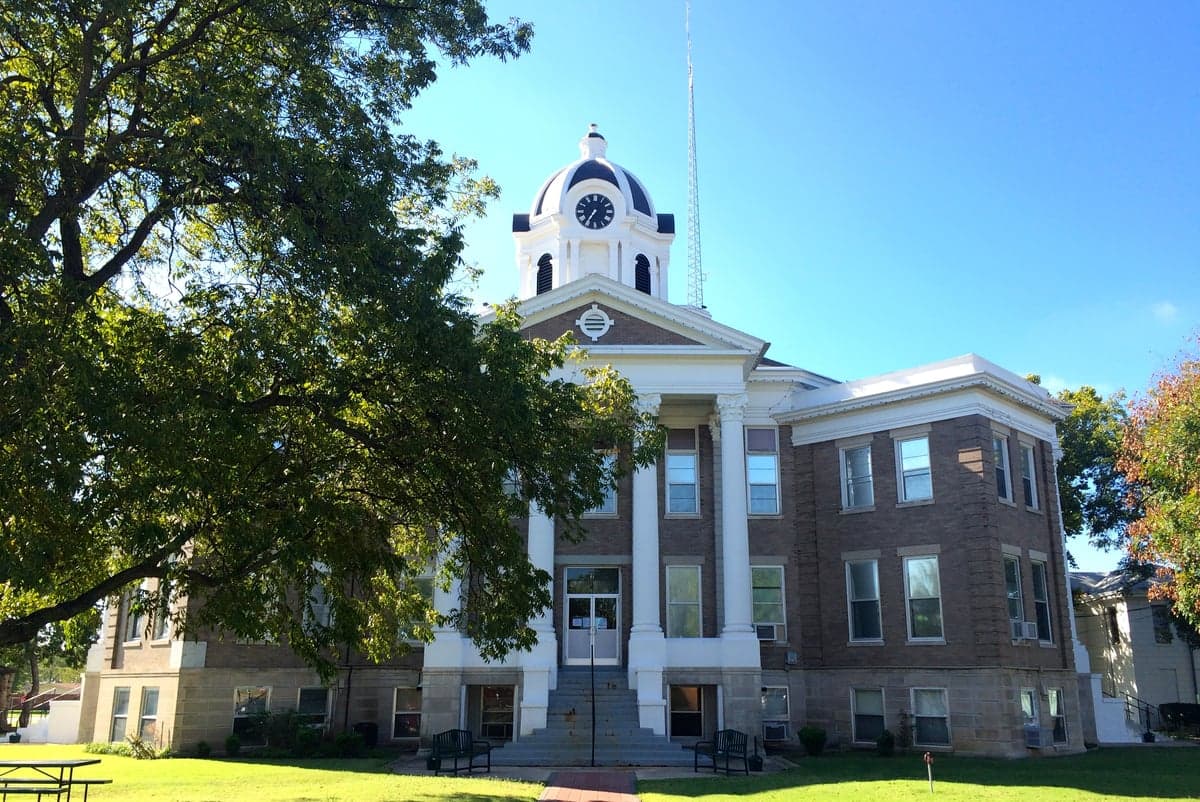
Photo: Wikipedia
Political ClimatePolitical Climate in Love County
Showing district-level results — no local-only data available.
Local Political AnalysisPolitical Analysis of Love County
Love County, Oklahoma, is a deeply conservative area that has become even more Republican in recent cycles, though it still shows a few subtle cracks of blue that make it slightly less monochrome than the state as a whole. The county’s Cook Partisan Voting Index (PVI) of R+17 is a hair less Republican than Oklahoma’s statewide R+18, a distinction that matters more in local races than presidential ones. In 2024, Donald Trump carried Love County with about 78% of the vote, but that still left a meaningful 22% for Kamala Harris—a share that’s concentrated in specific pockets. The long-term trajectory is clear: the county has been shifting rightward since the 1990s, but the pace has slowed in the last two cycles, with the Democratic vote share holding steady around 20-22% rather than eroding further.
How it compares
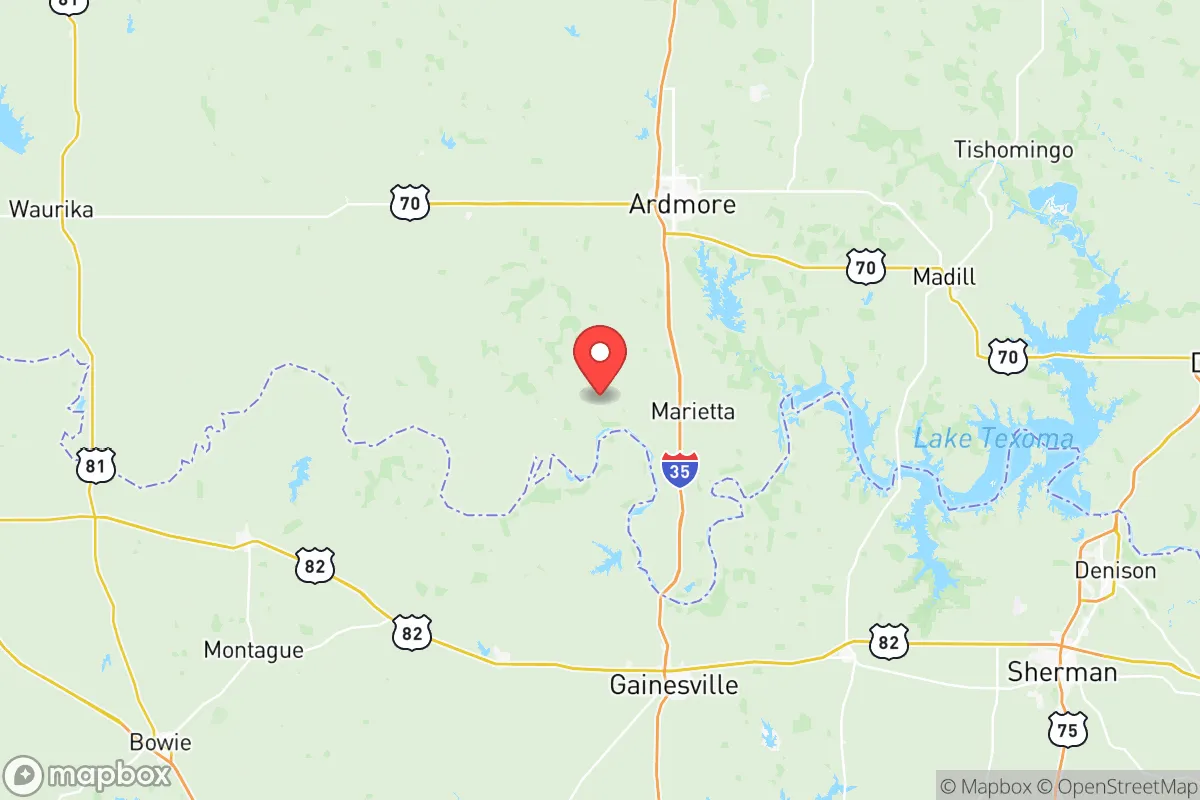
The one-point gap between Love County’s R+17 and Oklahoma’s R+18 is small but real, and it’s driven almost entirely by the county’s two largest towns. Marietta, the county seat and home to about 2,600 people, is the most reliably Republican precinct in the county, regularly delivering 80-85% of its vote to GOP candidates. Its economy is anchored by agriculture and a few small manufacturers, and the local culture is deeply tied to the Southern Baptist church and the county fairgrounds. Thackerville, on the other hand, is the county’s swing precinct—if you can call it that. With the WinStar World Casino and Resort employing thousands of people from across the region, Thackerville’s precinct has a more transient, service-industry workforce that leans slightly less Republican, often hitting 70-75% for the GOP rather than 80%+. The tiny unincorporated community of Burneyville, along the Red River, is the closest thing to a blue dot in the county, with Democratic votes occasionally reaching 30% in local elections, driven by a mix of older rural Democrats and a small number of Hispanic farmworkers. Still, no precinct in Love County has voted Democratic in a presidential race since 1996.
What this means for residents
For conservative residents, Love County is a comfortable place to live politically. The county commission, school board, and sheriff’s office are all reliably Republican, and the local GOP holds monthly meetings at the Marietta Community Center that draw 40-50 people. Taxes are low—the county’s millage rate is among the lowest in the state—and gun laws are permissive, with no county-level restrictions beyond state law. For liberal residents, the reality is more nuanced. They’re not a persecuted minority, but they are a small one. Marietta has a small but active Democratic club that meets at the public library, and its members report that most political disagreements are handled civilly, especially in person. The biggest practical difference is in representation: Love County’s state house and senate seats are held by Republicans who vote with the party line on nearly every issue, so progressive policy priorities—like expanding Medicaid or raising the minimum wage—have no local champions. That said, the county’s small size means most people know each other across party lines, and the local newspaper, the Love County News, still runs letters to the editor from both sides.
Culturally, Love County is distinct from the rest of Oklahoma in a few ways. The presence of the Chickasaw Nation, which operates the WinStar casino and provides significant funding for local schools and infrastructure, creates a unique political dynamic: tribal sovereignty is a bipartisan issue here, with both Republicans and Democrats supporting the tribe’s economic role. The county also has a small but visible Hispanic population—about 8% of residents—concentrated in the agricultural areas around Burneyville and along Highway 32. This community tends to vote Democratic when it votes, but turnout is low, and local politics largely ignore their concerns. Looking ahead, the county’s political future will likely stay red, but the margin may narrow slightly as Thackerville’s casino workforce grows and Marietta’s population ages. For now, Love County remains a place where the political temperature is warm but not boiling—a conservative stronghold with a few quiet exceptions.

State Political ClimatePolitical Climate in Oklahoma
State Political AnalysisPolitical Environment in the State
Oklahoma is about as solidly Republican as it gets, carrying a Cook PVI of R+18 and trending even further right over the past two decades. The dominant coalition is a blend of rural conservatives, evangelical voters, and energy/agriculture interests, though the two major metros—Oklahoma City and Tulsa—still hold enough moderate and Democratic-leaning voters to keep the state from being a total monolith. The shift has been gradual but unmistakable: in 2008, Barack Obama lost the state by 31 points; in 2024, the Republican margin was 34 points, with the biggest gains coming in exurban and rural precincts outside the I-35 corridor.
Urban vs. rural divide
The political map is a textbook case of metropolitan moderation versus deep-red hinterland. Oklahoma County, home to Oklahoma City, has flipped from reliably red to a genuine purple battleground—it voted for Trump in 2020 but by only 1.5 points, and the city itself is run by a moderate Democratic mayor. Suburbs like Edmond and Norman (home to the University of Oklahoma) lean right but are less conservative than the rest of the state; Norman actually has a history of electing Democratic city councilors and is the epicenter of the state's modest progressive activism. Tulsa County remains red, but the city of Tulsa itself is a shade of purple, with a Republican mayor who keeps a pragmatic distance from the GOP's most culture-war-heavy positions. Drive an hour in any direction from either metro, and you hit counties like Woodward, Woodward (or Texas County in the Panhandle) where Republican margins regularly exceed 50 points. The Panhandle—Guymon, Boise City—is Oklahoma's most conservative pocket, with a heavy agricultural and evangelical influence. Lawton, home to Fort Sill, is a military town that leans red but with a more transient, less ideological electorate.
Policy environment
Oklahoma's policy posture is defined by low taxes, light regulation, and a strong cultural conservatism. The state has a flat income tax rate of 4.75% (down from 5% in 2022, with further cuts scheduled), no estate tax, and a relatively low sales tax burden. The regulatory framework is built for the oil and gas industry—the Oklahoma Corporation Commission sets the tone, and the state preempts local fracking bans. Education policy has been a flashpoint: Oklahoma expanded school choice with a refundable tax credit for private school tuition (the Oklahoma Parental Choice Tax Credit Act of 2023), and the state was an early adopter of what critics call "anti-CRT" legislation (HB 1775, passed in 2021, restricts teaching that any individual is "inherently racist" based on race). Healthcare is a mixed bag: the state finally expanded Medicaid via a 2020 ballot initiative, taking effect in 2021, but it still ranks near the bottom in health outcomes. Election laws are moderately restrictive: voters must show a photo ID or an approved voter identification card, and absentee voting requires a notarized signature or a copy of ID. The state also passed a 2022 law (SB 440) that prohibits private funding of election administration, a response to controversy in other states.
Recent policy direction
Over the last three years, the legislature has moved aggressively on a cluster of cultural and liberty-related issues. Gun rights expanded dramatically: permitless carry (constitutional carry) became law in 2021, and the state does not require background checks for private sales. Parental and education rights saw HB 1775, plus a 2023 law (SB 1100) that bans transgender girls from participating in girls' school sports. Medical and bodily autonomy took a sharp turn after Dobbs: Oklahoma has a near-total abortion ban with no exceptions for rape or incest, enforced through a civil enforcement mechanism similar to Texas's SB 8. Property rights remain strong, especially for mineral owners—surface rights and oil/gas rights are distinct, and the state has a well-established legal framework for split estates. Taxation is on a downward trajectory: the 2023 rate cut was accompanied by a further trigger mechanism that could reduce the flat rate to 3.99% by 2027 if revenue targets are met. Voting and ballot access have tightened: the state purged inactive voters in 2023 and shortened the early voting window from 7 to 4 days in 2022 (SB 440 again). Speech and privacy have seen less action, though there is a 2023 law (HB 2690) that prohibits public universities from requiring diversity statements in hiring, and the state has no broad data privacy statute.
Civil unrest & political movements
Oklahoma has seen its share of political flashpoints, though large-scale unrest is rare. The 2020 protests after George Floyd's murder were centered in Tulsa, which also marked the centennial of the 1921 Tulsa Race Massacre—a deep historical wound that still stirs political debate. The state saw a significant teacher walkout in 2018, but that was more about funding than ideology. On the right, the "take back Oklahoma" movement within the state GOP has pushed for further rightward shifts, with primary challenges against incumbents. Immigration politics flared with HB 4156 (2023), which mirrors Texas's SB 4 and allows state law enforcement to arrest and detain people suspected of being in the country illegally; it's currently tied up in court. Election integrity controversies have been muted compared to states like Arizona, though a 2020 audit request in Oklahoma County fizzled. Sanctuary cities are illegal in Oklahoma—the state preempted local sanctuary policies in 2016. Visible flashpoints for a new resident: you'll see "Protect the Children" billboards and "We Stand for Life" signs in rural areas, and occasional competing demonstrations on the state capitol lawn. The atmosphere is generally civil, but the culture war is present in everyday conversation, especially in churches and civic groups.
Projection
Looking ahead to 2030-2035, Oklahoma's politics will likely stay deeply red, but with a subtle urbanizing twist. In-migration from Texas, California, and Colorado has brought new residents, most of whom are conservative but not necessarily as culturally homogeneous as the native population. The Oklahoma City metro is growing fast—Edmond, Yukon, Mustang are all booming—and those new arrivals tend to be more libertarian than traditionalist. That could push the state's GOP toward a more pro-business, less socially-interventionist stance over time, especially on issues like marijuana legalization (medical marijuana is already legal via a 2018 ballot initiative; recreational is debated). The Panhandle and rural counties are losing population, so their outsized political influence may slowly erode. The taxation trajectory is likely to continue downward, and the state will probably remain a permitless-carry, anti-abortion, school-choice-friendly environment. The biggest wildcard is the state's struggling education outcomes and healthcare access—if those remain poor, a future moderate coalition could emerge, but it's hard to see any genuine Democratic revival in the next decade. Someone moving in now should expect the political landscape to feel familiar: unabashedly conservative, with a live-and-let-live edge in the cities and a more rigid social conservatism in the small towns.
Bottom line for a new resident: if you want low taxes, minimal regulation, strong gun rights, and a government that prioritizes parental choice in education, you'll feel at home in Oklahoma. If you lean left, you'll find a handful of blue pockets in OKC, Norman, Tulsa, and Stillwater, but you'll be voting in a state where your vote is effectively a minority voice. The practical takeaway is that Oklahoma delivers on its political promises—for better or worse, you get what you vote for, and the state is not shy about it.
* Values derived from national, state, county, city and local statistics and may differ in a specific area. Last updated: 2026-07-26T22:54:30.000Z
Narrative content on this page is AI-generated and may contain mistakes. Verify any details that matter before acting on them.
ReloMaps may earn a commission from affiliate links at no extra cost to you.

