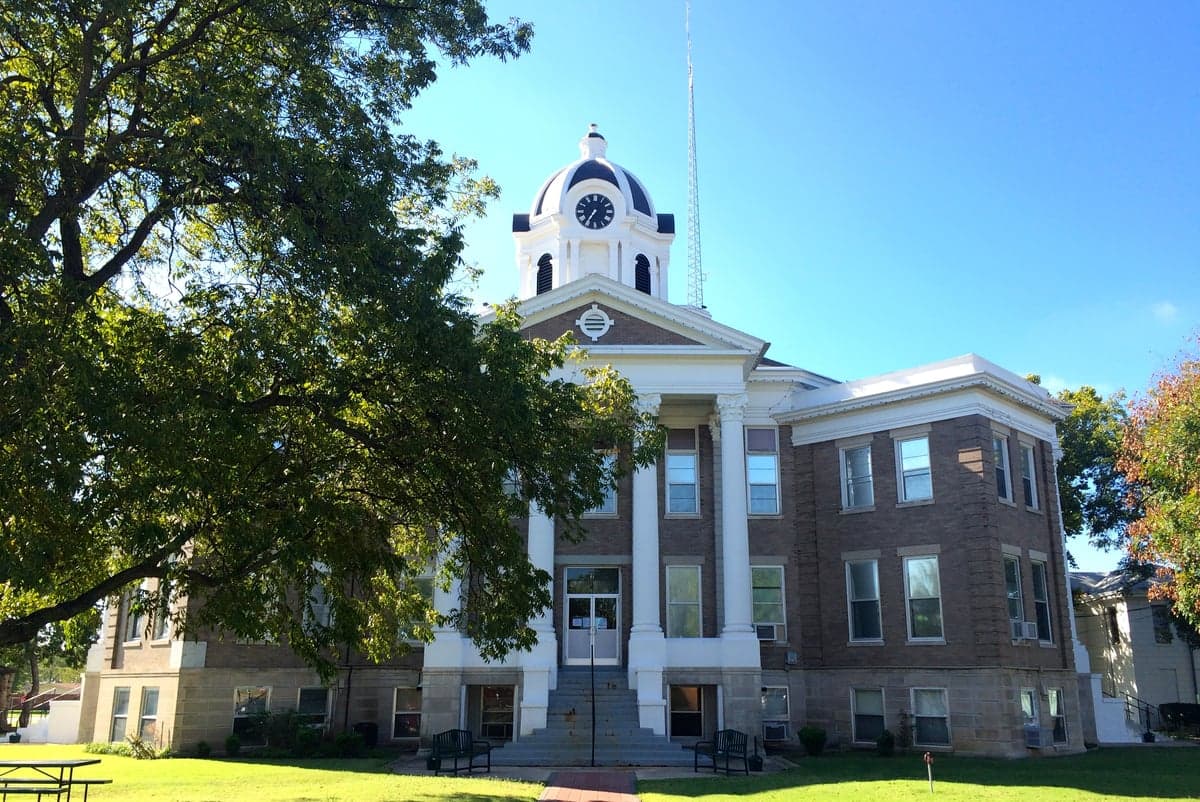
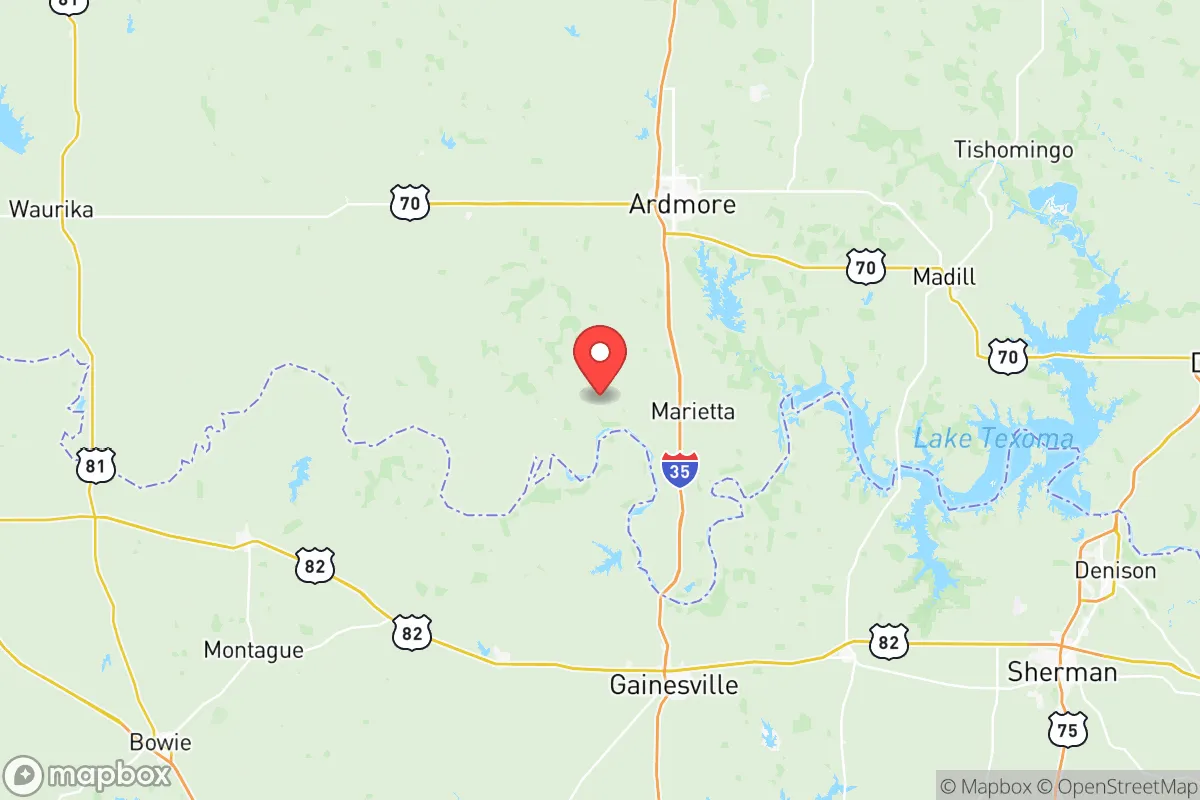
Photo: Wikipedia
Personal Sovereignty in Love County
Strong independent fundamentals that actively favor personal liberty and low regulation.
What does Personal Sovereignty tell us?
Personal Sovereignty measures your capacity for self-reliance and independence with minimal government friction. Higher scores mean fewer barriers between you and the way you want to live... but it assumes you have the space you need and good neighbors.
What does this tell us?
Personal Sovereignty measures your capacity for self-reliance and independence with minimal government friction. Higher scores mean fewer barriers between you and the way you want to live... but it assumes you have the space you need and good neighbors.
State Policy
Energy independence: Net exporter (180% of energy produced in-state)
Personal Liberty
Homesteading

Personal Liberty Analysis
Love County, Oklahoma, offers a notably high degree of personal sovereignty, anchored by Oklahoma’s strong state-level preemption laws and a deeply rural, low-regulation culture. For individuals and families prioritizing autonomy, the county presents an environment where local government interference in daily life is minimal, and state law consistently protects individual rights in areas from firearms to property use. This analysis examines the specific legal and practical frameworks that define personal freedom in Love County, with a focus on tax burden, self-defense law, homesteading viability, and personal liberties.
Tax burden and regulatory posture in Love County
Oklahoma’s overall tax burden is among the lowest in the nation, and Love County residents benefit directly from this. The state levies a flat income tax of 4.75% (as of 2026), with no local income tax, and the state sales tax is 4.5%. Love County adds a local sales tax of roughly 1.5%, bringing the combined rate in the county seat, Marietta, to about 6.0% — well below the national average. Property taxes are exceptionally low, with effective rates typically under 0.9% of assessed value, thanks to Oklahoma’s constitutional cap. The regulatory posture is equally light: there is no county-wide zoning in unincorporated Love County, meaning property use is governed primarily by state law and minimal health and safety codes. In towns like Thackerville and Burneyville, you will find no building permits required for most residential structures, no business license fees for home-based enterprises, and no county-level environmental regulations beyond basic septic system rules. This creates a “live and let live” atmosphere where starting a workshop, keeping livestock, or running a small business from home is straightforward and rarely requires government approval.
Self-defense and gun law specifics in Love County
Oklahoma is a constitutional carry state, and Love County fully reflects this. Since November 2019, any adult legally allowed to possess a firearm may carry it openly or concealed without a permit. The county sheriff’s office in Marietta issues permits for those who want reciprocity with other states, but there is no requirement to do so. Oklahoma law also provides strong Stand Your Ground protections, with no duty to retreat in any place where a person is lawfully present. Castle Doctrine extends to vehicles and workplaces. Local gun culture is pervasive: Marietta has multiple firearm retailers and a well-used shooting range, and Thackerville hosts a popular gun show twice a year. There are no county-level restrictions on magazine capacity, firearm types, or ammunition sales. The only notable limitation is that firearms are prohibited in certain state-owned buildings and on school grounds, but Love County’s rural nature means most land is unrestricted. For a reader prioritizing self-defense rights, Love County offers one of the most permissive legal environments in the United States, with no local ordinances that infringe on state preemption.
Self-reliance and homesteading viability in Love County
Love County’s regulatory landscape is exceptionally favorable for homesteading and off-grid living. In unincorporated areas, there are no county zoning laws, no minimum lot size requirements for residential use, and no restrictions on alternative energy systems. Residents in Burneyville and Overbrook routinely install solar panels, wind turbines, and rainwater catchment systems without permits. The county does require a septic system permit from the Oklahoma Department of Environmental Quality, but this is a straightforward process for standard gravity-fed systems. Well water is the norm for rural properties, and drilling a private well requires only a state-level permit costing around $100. Lot sizes vary widely: agricultural parcels of 10 to 40 acres are common near Leon and Courtney, while smaller 1- to 5-acre tracts are available closer to Marietta. There are no county-level restrictions on keeping chickens, goats, or even larger livestock on residential property outside town limits. The county’s agricultural extension office in Marietta offers free soil testing and workshops on sustainable farming. For those seeking true self-reliance, Love County’s lack of building codes, energy regulations, and land-use restrictions makes it one of the most homestead-friendly areas in southern Oklahoma.
Personal liberties in Love County: parental rights, medical autonomy, speech, and property
Oklahoma law provides strong protections for parental rights, and Love County’s local culture reinforces this. The state’s Parental Bill of Rights, enacted in 2022, guarantees parents the right to direct their children’s education, healthcare, and religious upbringing. In practice, this means families in Marietta and Thackerville can homeschool without state interference — no curriculum approval, no testing requirements, and no home visits. Medical autonomy is similarly broad: Oklahoma has no state-level vaccine mandate for adults, and the county’s rural healthcare system, centered on Mercy Hospital Love County in Marietta, respects patient choice in treatment decisions. Speech and assembly rights are fully protected under the First Amendment, and Love County has no local ordinances restricting political signs, public gatherings, or expressive conduct. Property rights are robust: Oklahoma’s “right to farm” law protects agricultural operations from nuisance lawsuits, and the county’s lack of zoning means property owners can use their land for virtually any lawful purpose. The only notable limitation is that the county enforces state-level setback requirements for structures near property lines, but these are minimal (typically 10 to 25 feet).
Overall, Love County ranks among the most sovereignty-friendly areas in Oklahoma for those prioritizing personal freedom. The combination of low taxes, no county zoning, constitutional carry, strong parental rights, and minimal regulation of homesteading creates an environment where individuals and families can live largely as they see fit. Compared to more regulated areas in Texas or Colorado, Love County offers a lighter governmental touch, particularly in unincorporated areas like Burneyville and Overbrook. For a reader who values autonomy over convenience, Love County represents a practical, legally sound choice for a self-directed life.

* Values derived from national, state, county, city and local statistics and may differ in a specific area. Last updated: 2026-07-26T22:54:30.000Z
Narrative content on this page is AI-generated and may contain mistakes. Verify any details that matter before acting on them.
ReloMaps may earn a commission from affiliate links at no extra cost to you.

