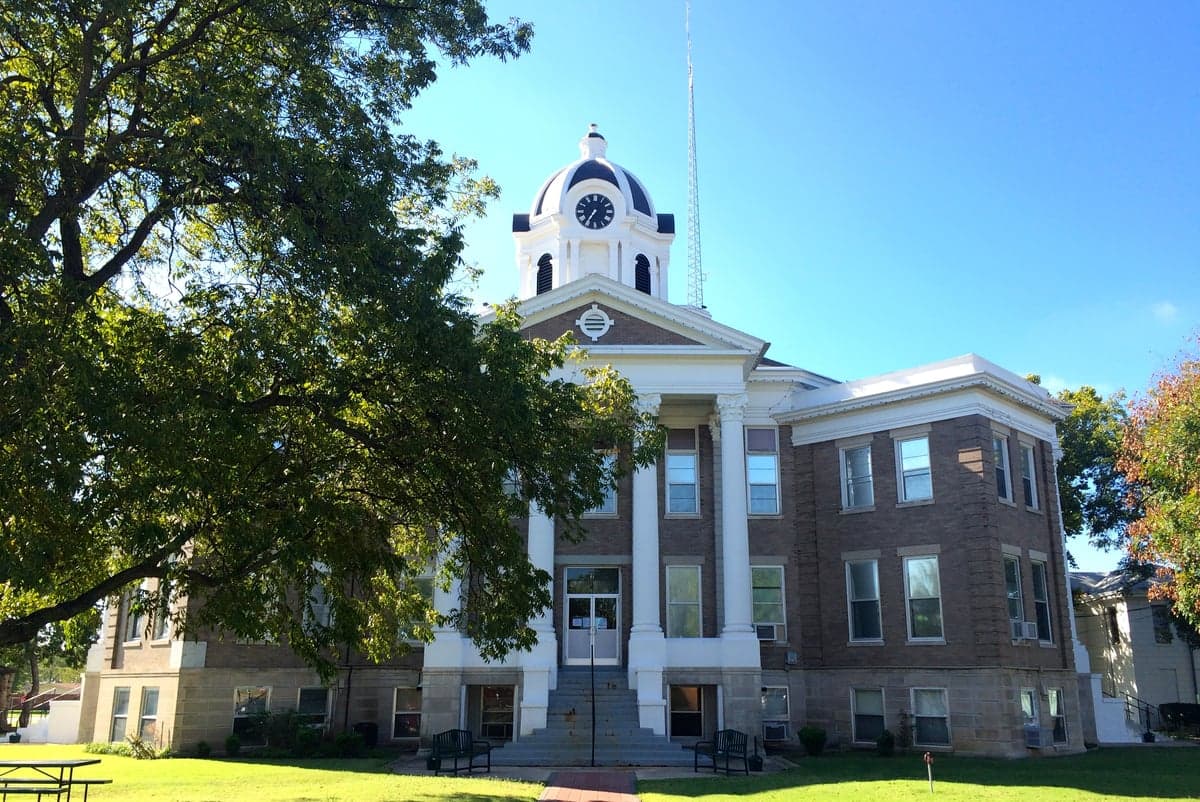
Photo: Wikipedia
Demographics of Love County
Affluence Level in Love County
A middle-class area roughly in line with national averages across income, home values, education, and employment.
People of Love County
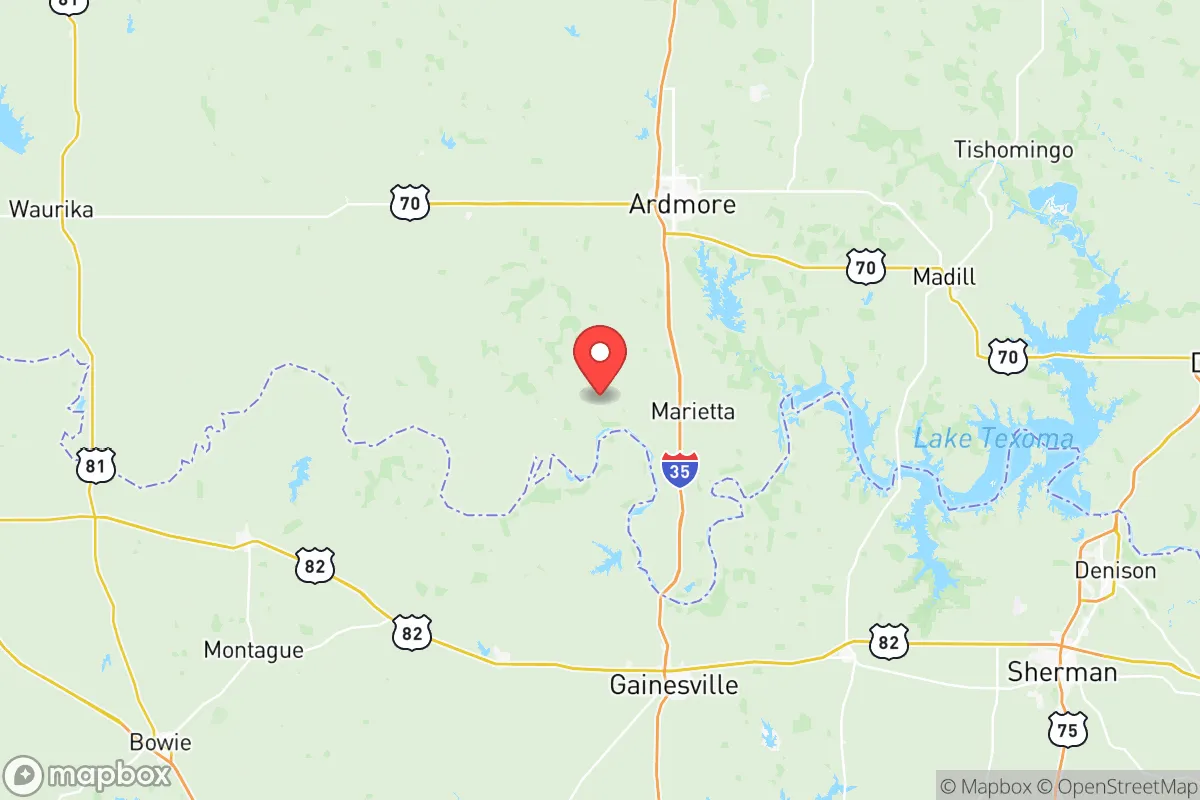
Love County, Oklahoma, is a rural, deeply conservative community of 10,196 residents where agricultural roots and Native American heritage meet a modern casino-driven economy. The population is overwhelmingly White (68.3%) with a significant and growing Hispanic minority (17.5%), while foreign-born residents make up just 2.9% of the county. With only 16.0% of adults holding a college degree, the county leans into blue-collar livelihoods—farming, ranching, and the massive WinStar World Casino in Thackerville—and its small towns like Marietta, Leon, and Burneyville retain a slow-paced, family-oriented character that attracts those seeking a quieter, lower-cost alternative to the Dallas-Fort Worth metro just south of the Red River.
Settlement & growth (pre-1960)
Before Anglo-American settlement, the land that became Love County was part of the vast Chickasaw Nation domain, established after the tribe’s forced removal from the Southeast in the 1830s. The Chickasaw adapted to the prairie environment, establishing farms and ranches, and their presence remains central to the county’s identity—the Chickasaw Nation owns the WinStar Casino, the largest employer in the region. There was no significant Spanish, French, or British colonial settlement in this area; the Red River boundary was surveyed after the Louisiana Purchase, and the land remained largely Chickasaw-controlled until the Dawes Act of 1887 broke up tribal holdings.
White settlement accelerated after 1887, when the Chickasaw allotment system opened surplus land to non-Native homesteaders. Cotton farmers arrived from Texas, Arkansas, and the Deep South, drawn by cheap land and the promise of single-crop agriculture. The town of Marietta (the county seat) was founded in 1887 and grew as a railroad stop on the Missouri, Kansas & Texas line. Neighboring communities like Thackerville (1888), Leon (1890), and Burneyville (1895) sprang up as trading posts for cotton gins, general stores, and blacksmiths. By the 1900 census, Love County’s population had reached 10,000, driven by White tenant farmers and a small number of African American sharecroppers (the 2020 Black share of 2.1% reflects the decline of that early community). The Dust Bowl of the 1930s hit hard, causing out-migration—many Okies from Love County joined the westward exodus to California—but ranching gradually replaced cotton as the economic backbone, and the county’s population stabilized around 7,000 by 1950.
Modern era (post-1965)
The 1965 Hart-Cellar Act had minimal direct impact on Love County, given its remoteness and lack of industrial draw. The foreign-born share today is only 2.9%, overwhelmingly from Mexico and Central America. These immigrants arrived in the 1980s and 1990s to work in the region’s expanding dairy and poultry operations—industries that replaced failed cotton farms. Small enclaves formed in Marietta and Thackerville, where Hispanic families now make up a visible portion of the workforce in construction, meatpacking, and casino service jobs. The county’s Hispanic population rose from roughly 5% in 1990 to 17.5% by 2020, a shift that has reshaped local schools and churches but not fundamentally altered the conservative political culture.
Domestic migration has been more influential. The opening of the WinStar World Casino in 1996 (owned by the Chickasaw Nation) transformed Thackerville from a drowsy crossroads into a regional entertainment hub, drawing thousands of daily visitors from Texas. The casino’s workforce includes both tribal members and local residents, and its tax revenue has funded infrastructure improvements in Marietta and elsewhere. Suburbanization has been limited—Love County remains too rural for Dallas-Fort Worth commuters, though some retirees from Texas have settled in Overbrook and Courtney. The East/Southeast Asian population (0.5%) and Indian subcontinent population (0.2%) are tiny, mostly consisting of professionals temporarily employed at the casino or in agricultural management.
The future
Love County’s population is projected to grow slowly, possibly reaching 11,000–11,500 by 2040, driven by Hispanic in-migration and the casino’s stabilizing effect. The White population is aging and declining slowly, while the Hispanic share is likely to rise toward 25% over the next two decades. No new immigrant enclaves are forming, as the county’s low foreign-born rate and lack of industrial diversity limit the draw for East/Southeast Asian or Indian subcontinent communities. The Chickasaw Nation will continue to be the dominant economic and cultural force—its sovereignty and gaming revenue provide a unique stability that buffers the county from the boom-bust cycles of rural Oklahoma. Culturally, Love County remains a place where conservative values, church attendance, and hunting/fishing are central, though the growing Hispanic population is gradually introducing bilingualism and new traditions in towns like Marietta and Leon.
For someone moving to Love County today, the area offers low housing costs, a strong sense of community, and proximity to the Dallas-Fort Worth metroplex (about an hour south), but with limited amenities, few professional jobs, and a deeply traditional social environment. The county is becoming slightly more diverse in ethnicity but not in ideology or lifestyle—making it an attractive move for those who value rural peace, conservative politics, and a slower pace of life.

* Values derived from national, state, county, city and local statistics and may differ in a specific area. Last updated: 2026-07-26T22:54:30.000Z
Narrative content on this page is AI-generated and may contain mistakes. Verify any details that matter before acting on them.
ReloMaps may earn a commission from affiliate links at no extra cost to you.

