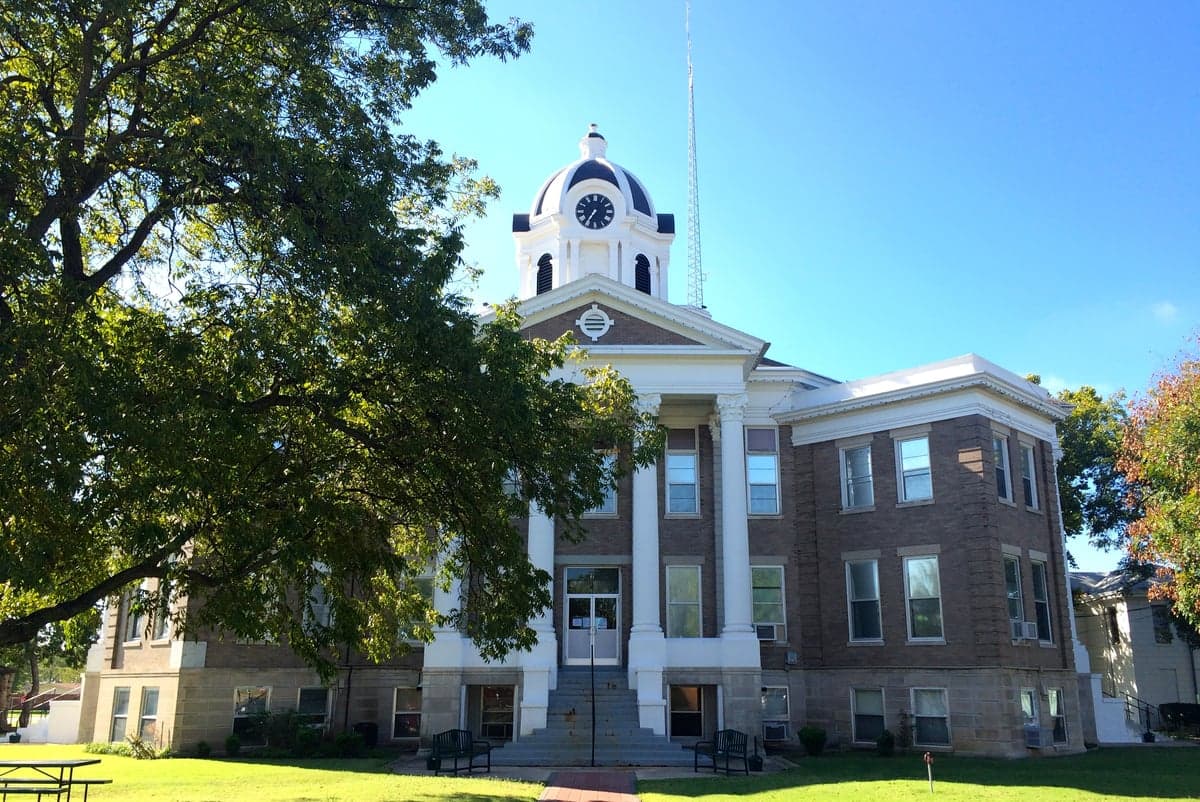
Photo: Wikipedia
Strategic Assessment of Love County
Workable tactical position. Some exposure to population density or targets, but generally defensible in a crisis.
What does the Strategic Assessment tell us?
Our Strategic Assessment grades tactical survivability of an area. Major population centers, military targets, fallout zones, natural disasters, and border exposure all drive risk — lower exposure means a more defensible position in a crisis.
This is heavily inspired by Joel Skousen's Strategic Relocation book. Highly recommended you checkout the book ($)What does this tell us?
Our Strategic Assessment grades tactical survivability of an area. Major population centers, military targets, fallout zones, natural disasters, and border exposure all drive risk — lower exposure means a more defensible position in a crisis.
This is heavily inspired by Joel Skousen's Strategic Relocation book. Highly recommended you checkout the book ($)Strategic Pillars

Key Distances
Strategic Assessment Analysis
Love County, Oklahoma, offers a blend of geographic isolation and strategic access that appeals to relocation-minded individuals and families prioritizing self-sufficiency and disaster readiness. Situated in south-central Oklahoma along the Red River, the county avoids the density and systemic vulnerabilities of larger metropolitan areas while still maintaining practical connections to essential resources. Its rural character, low population density, and agricultural base provide a foundation for resilience that is increasingly rare in the continental United States.
Geographic position and natural advantages for self-reliant living
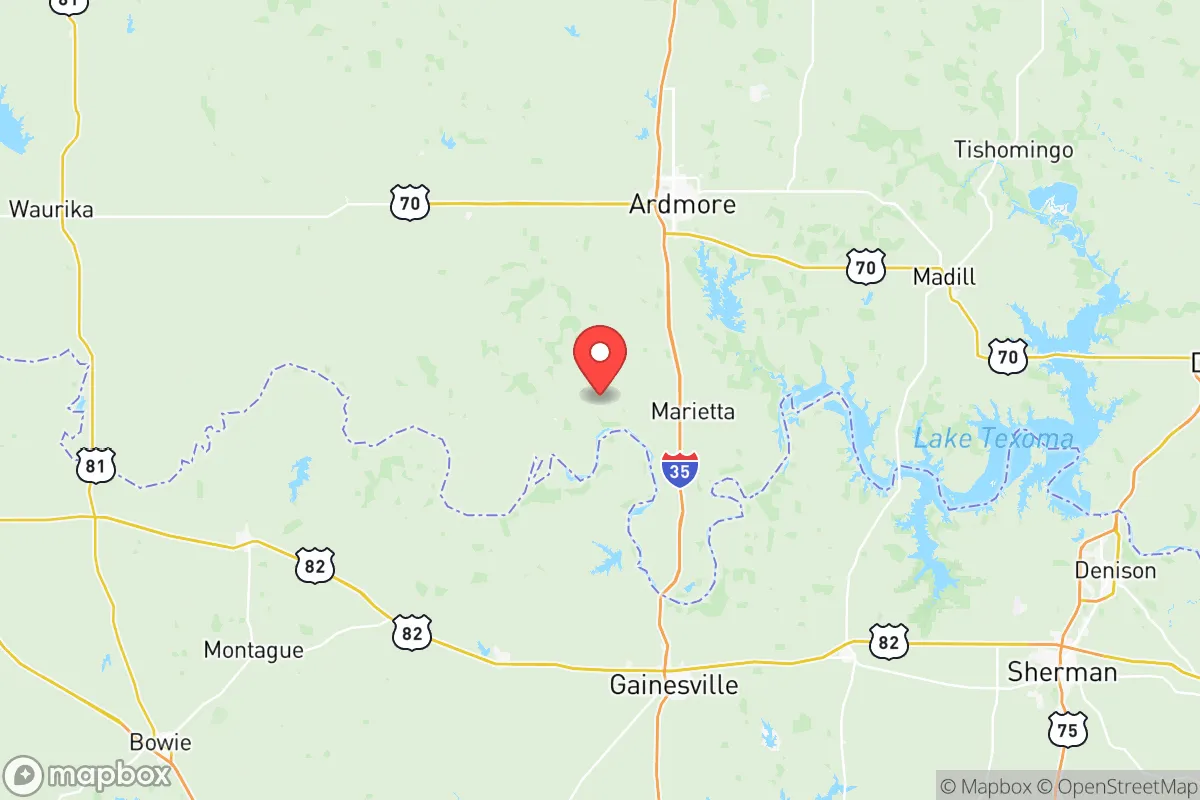
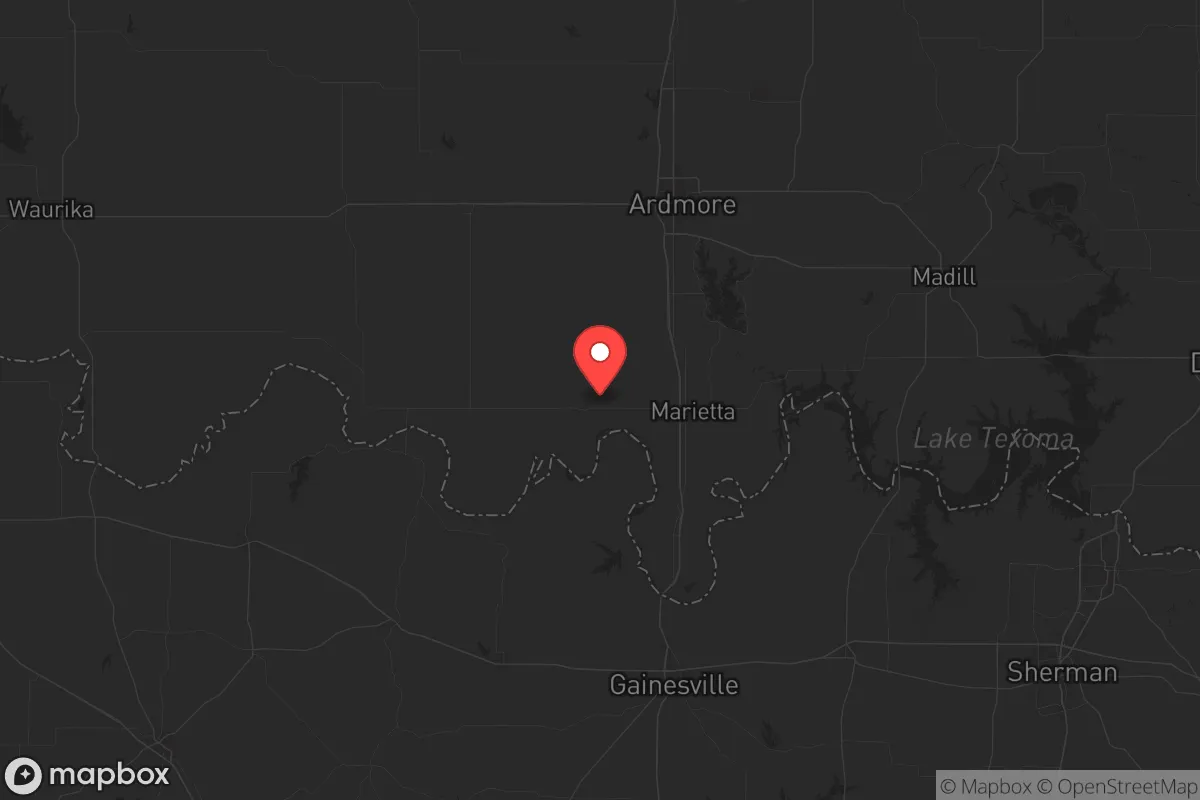
Love County's location on the southern edge of Oklahoma, just north of the Texas border, gives it a distinct set of natural advantages. The county seat of Marietta sits roughly 30 miles south of Ardmore and about 100 miles north of the Dallas-Fort Worth metroplex — close enough for supply runs or medical referrals, but far enough to avoid the cascading failure risks of a major urban center. The Red River forms the southern boundary, providing a natural water source and a buffer against southward threats. The terrain is gently rolling, part of the Cross Timbers region, with a mix of open pasture and hardwood forest. This landscape supports local agriculture, livestock grazing, and timber, all of which are critical for long-term self-sufficiency. The county's position along the I-35 corridor is a double-edged sword: it offers a highway for evacuation or resupply, but also a potential vector for movement in a crisis. However, the county's lack of significant industrial targets — no major refineries, military bases, or ports — reduces its attractiveness as a fallout or strategic strike location. Lake Murray State Park, just north of the county line in Carter County, adds a significant surface water resource, and the Red River itself, while not navigable by large vessels, provides a reliable riparian corridor for wildlife and water harvesting.
Risks, exposures, and proximity to fallout-relevant landmarks
No location is without risk, and Love County has its share. The most immediate natural threat is severe weather — tornadoes, hail, and flash flooding are common in the spring and early summer. The county lies in the heart of Tornado Alley, and although its rural geography means fewer structures are exposed, the risk of a direct hit on a homestead or small town like Thackerville or Burneyville is real. The open terrain offers little natural shielding from high winds. Flooding along the Red River and its tributaries, particularly the Washita River, is a periodic concern for low-lying properties. On the man-made risk side, the county's proximity to the Dallas-Fort Worth metroplex — a Tier 1 urban target in any large-scale conflict or terrorist scenario — means that fallout from a nuclear event or a major industrial accident at the Valero refinery in Ardmore (about 30 miles north) could drift into the area depending on wind patterns. The I-35 corridor itself is a high-value transportation artery; a disruption there could choke supply chains and bring transient populations through the county. However, Love County's lack of its own critical infrastructure — no major power plants, military installations, or chemical facilities — makes it a low-priority target. The county's biggest vulnerability is its dependence on external supply chains for fuel, medical supplies, and manufactured goods. In a prolonged grid-down scenario, the local economy (largely agriculture and small businesses) would struggle to support a sudden influx of evacuees from the north or south.
Practical resilience for a relocator: food, water, energy, and defensibility
For a household or small community serious about resilience, Love County offers several practical advantages. Food production is the strongest point: the county has a long growing season (Zone 7b/8a), good soil for row crops and pasture, and an existing agricultural infrastructure with grain elevators, livestock auctions, and local feed stores. Deer, turkey, and small game are abundant in the wooded areas, and the Red River provides opportunities for fishing. Water availability is generally good, with groundwater accessible via wells in much of the county, though yields vary. Surface water from creeks, ponds, and the Red River requires treatment but is plentiful. The county's main water provider, the Love County Water District, draws from the Arbuckle-Simpson aquifer, which is relatively stable. Energy independence is more challenging. The county is served by a mix of utilities (mostly rural electric cooperatives), and grid failures from storms are common. Solar and wind potential are moderate — the region gets about 220 sunny days per year, but summer heat and hail can damage panels. Wood heating is viable given the forest cover. Propane and diesel are available in Marietta, but supply could be disrupted. Defensibility is a mixed bag: the open farmland leaves properties exposed to observation, but the wooded creek bottoms and rural roads offer good concealment and multiple escape routes. The county's population of roughly 10,000 creates a tight-knit community where neighbors know each other, but it also means that law enforcement response times are long (the sheriff's office is small). The local medical facilities are limited to a clinic in Marietta; serious cases require a 30-minute drive to Ardmore or a 45-minute drive to Wichita Falls, Texas. For a family, the key is to choose a property with a reliable well, a defensible layout (e.g., a hilltop with good sight lines or a valley with limited access), and proximity to a small community hub like Thackerville or Burneyville for mutual support.
Overall, Love County presents a solid strategic option for relocators seeking a balance between isolation and access. Its lack of high-value targets, abundance of natural resources, and low population density make it a relatively resilient location in the face of natural disasters, economic collapse, or geopolitical instability. The trade-offs are real: severe weather threats, dependence on well water and septic systems, and limited emergency services. But for those who prepare accordingly — by hardening a home, stockpiling supplies, and building local relationships — Love County offers a defensible and sustainable base in the southern Plains. The key is to treat the location not as a guaranteed safe haven, but as a piece of land that rewards the effort you put into it. If you're willing to invest in on-site water, off-grid energy, and community ties, Love County can be a reliable long-term anchor.

* Values derived from national, state, county, city and local statistics and may differ in a specific area. Last updated: 2026-07-26T22:54:30.000Z
Narrative content on this page is AI-generated and may contain mistakes. Verify any details that matter before acting on them.
ReloMaps may earn a commission from affiliate links at no extra cost to you.

