Photo: Wikipedia
Political ClimatePolitical Climate in Cleveland County
Showing district-level results — no local-only data available.
Local Political AnalysisPolitical Analysis of Cleveland County
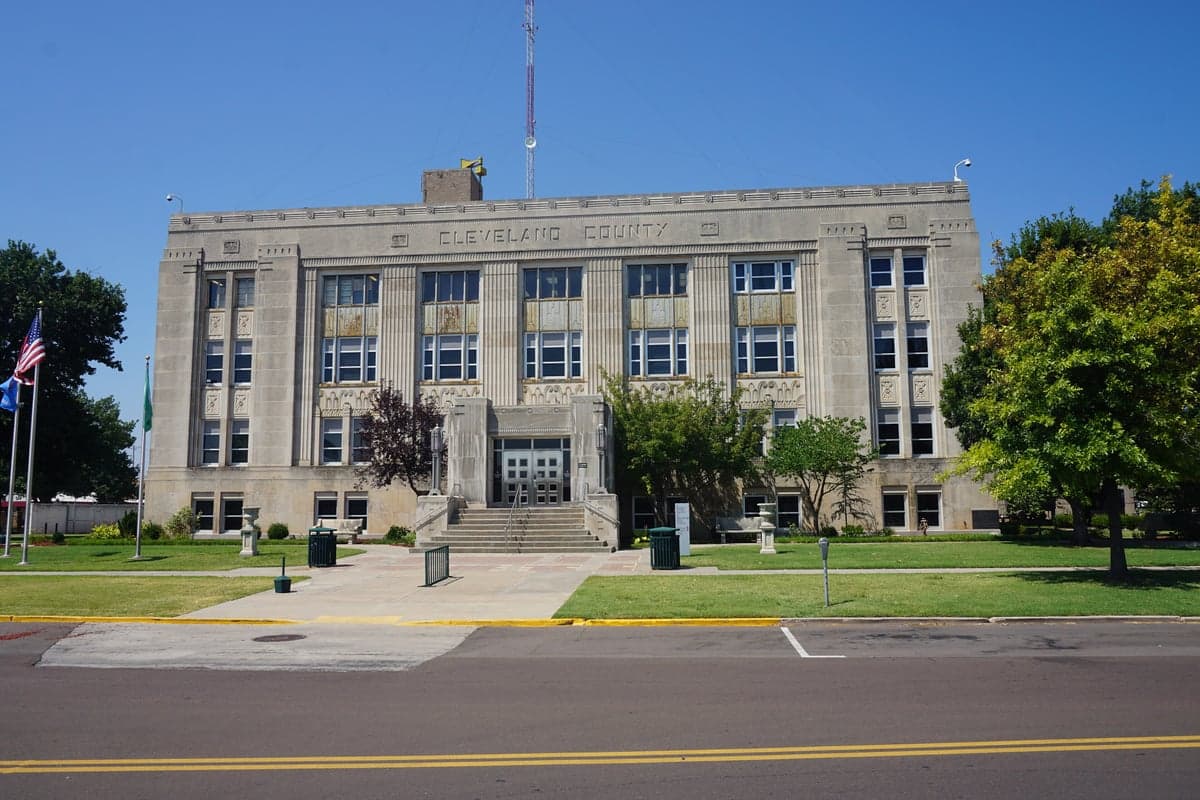
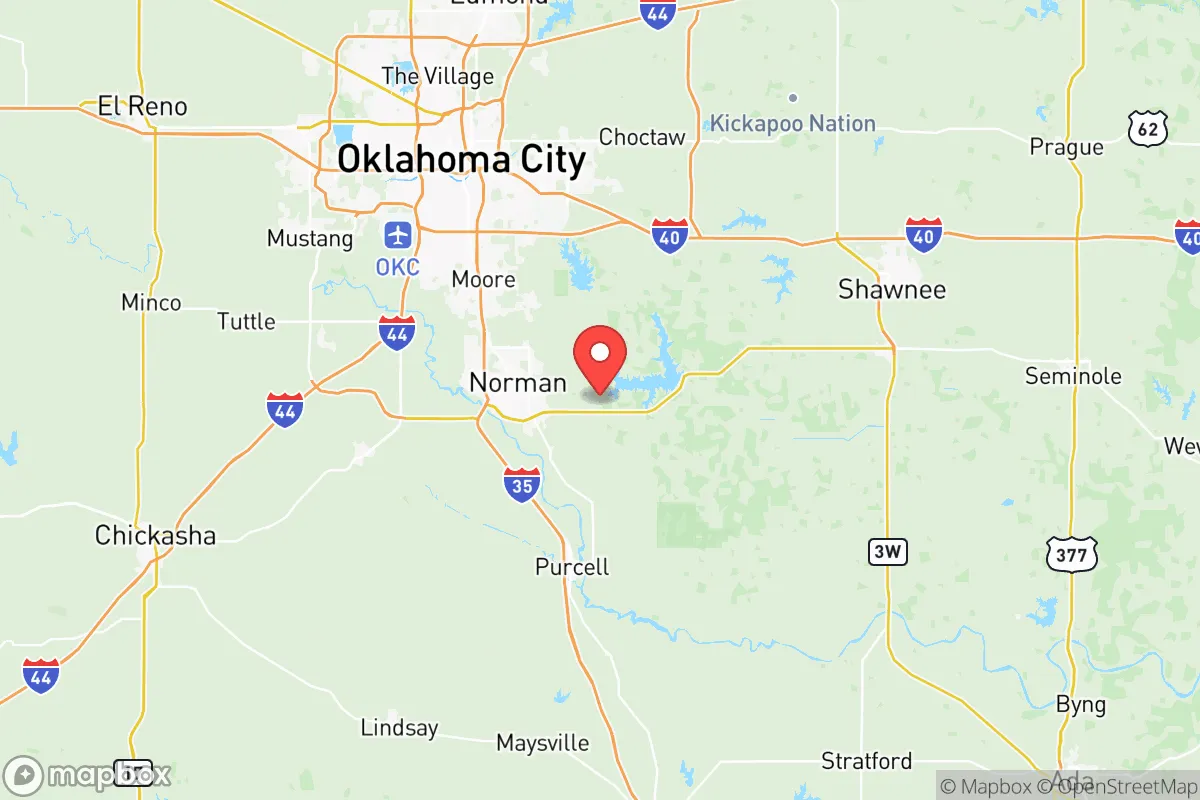
Cleveland County, anchored by Norman and stretching through Moore, Noble, and Lexington, is a fascinating political outlier in deep-red Oklahoma. While the county as a whole carries a Cook PVI of R+17—just one point less Republican than the state's R+18—that number hides a sharp urban-rural divide. Norman, home to the University of Oklahoma, has been a consistent blue dot in a crimson sea, voting for Democratic presidential candidates by double digits in recent cycles. Meanwhile, the county's southern and eastern precincts, particularly around Lexington and Slaughterville, vote as heavily Republican as any rural Oklahoma county. The county's overall trajectory is slowly shifting leftward, driven by Norman's growing population and the university's liberalizing influence, but it remains a solidly Republican county in statewide elections.
How it compares
Compared to Oklahoma as a whole, Cleveland County is slightly less Republican, but the difference is almost entirely attributable to Norman. Pull Norman out of the equation, and the rest of the county—Moore, Noble, and the unincorporated areas—votes R+25 or higher, making it more conservative than the state average. In the 2024 presidential race, Donald Trump carried Cleveland County with roughly 58% of the vote, compared to 66% statewide. The real contrast is within the county itself: Norman's precincts around Campus Corner and the University North Park area regularly go 60-70% Democratic, while precincts in Moore and Lexington hit 75-80% Republican. This makes Cleveland County one of the most politically polarized counties in the state, with a wider gap between its bluest and reddest precincts than almost anywhere else in Oklahoma.
What this means for residents
For conservative residents, especially in Moore and Noble, the county's politics feel comfortably aligned with state and national Republican priorities. Local offices—county commissioners, the sheriff, and most school boards—are held by Republicans, and conservative social values dominate public discourse in those communities. For liberal residents, particularly in Norman, the experience is different. They live in a city that consistently elects Democrats to the state legislature and has passed progressive local measures, like a 2023 resolution supporting LGBTQ+ rights. However, they are constantly reminded they are a blue island in a red state, with state-level policies on abortion, education, and taxation that often clash with Norman's city council votes. The practical effect is that Normanites often feel they are fighting a rear-guard action against the state capitol in Oklahoma City, just 20 miles north.
Culturally, the divide is visible in everyday life. Norman's downtown has a walkable, college-town vibe with independent bookstores, craft breweries, and a farmers' market that feels more Austin than Oklahoma. Moore, by contrast, is a classic suburban bedroom community with chain restaurants, megachurches, and a strong military presence from nearby Tinker Air Force Base. The county's political split means that state-level policy debates—over school vouchers, tribal gaming compacts, or marijuana regulation—play out differently in Norman versus Moore. A conservative family in Moore might cheer the state's 2024 school voucher expansion, while a liberal family in Norman might be organizing against it. That's the reality of living in Cleveland County: you get two very different Oklahomas in one county, and which one you experience depends entirely on which side of the Canadian River you call home.

State Political ClimatePolitical Climate in Oklahoma
State Political AnalysisPolitical Environment in the State
Oklahoma is one of the most reliably Republican states in the country, with a Cook Partisan Voting Index of R+18, meaning it votes about 18 points more Republican than the national average in presidential elections. The state hasn't voted for a Democratic presidential candidate since Lyndon B. Johnson in 1964, and every statewide elected office is held by a Republican. Over the last 10-20 years, the shift has been dramatic — Oklahoma was already red, but it has deepened into a deep crimson, driven by the collapse of the old Democratic coalition in rural areas and the exodus of moderate Democrats from the legislature. What was once a state with a strong populist Democratic tradition in places like southeastern Oklahoma and the old oil patch towns has become uniformly conservative, with the only real political action now happening in Republican primaries.
Urban vs. rural divide
The political map of Oklahoma is starkly divided between its two major urban centers and the vast rural expanse. Oklahoma City and its suburbs, particularly Edmond and Yukon, are reliably Republican, though the city proper has trended slightly more competitive in recent cycles — Joe Biden won 44% of the Oklahoma County vote in 2020, up from Hillary Clinton's 38% in 2016. Tulsa is similar, with the city itself becoming more purple while the surrounding suburbs like Broken Arrow and Jenks remain deeply red. The real engine of Republican dominance is rural Oklahoma — counties like Texas County in the Panhandle, Cimarron County, and Greer County routinely deliver 80-85% of the vote to Republican candidates. The southeastern corner of the state, once a Democratic stronghold in the era of blue-dog Democrats, has flipped hard: counties like Pushmataha and McCurtain now vote Republican by 40-point margins. The only reliably Democratic areas are a handful of precincts in central Oklahoma City and north Tulsa, plus the few remaining tribal-heavy precincts in the eastern part of the state, but these are too small to shift the statewide balance.
Policy environment
Oklahoma's policy environment is aggressively conservative across the board. The state has a flat income tax rate of 4.75%, which has been gradually reduced from over 6% a decade ago, with further cuts planned. There is no state estate tax. The regulatory posture is light-touch, particularly for oil and gas, agriculture, and construction — permitting is fast, and environmental review is minimal. Education policy has been a flashpoint: the state has one of the most expansive school voucher programs in the country, allowing public funds to follow students to private and religious schools. Healthcare is a perennial struggle — Oklahoma did not expand Medicaid under the Affordable Care Act until voters approved a ballot initiative in 2020, and the system remains strained, with rural hospital closures a persistent issue. Election laws have tightened: voter ID is required, absentee ballot drop boxes were restricted in 2022, and the state has purged voter rolls aggressively. Abortion is banned at conception with no exceptions for rape or incest, only to save the mother's life. Gun laws are among the most permissive in the nation — permitless carry was enacted in 2019, and there is no waiting period or universal background check for private sales.
Recent policy direction
The last five years have seen Oklahoma accelerate its conservative policy agenda. In 2022, the legislature passed one of the strictest abortion bans in the country, HB 4327, which took effect immediately after the Dobbs decision and includes no exceptions for rape or incest. On education, HB 1775 was passed in 2021 to ban the teaching of certain concepts related to race and gender in public schools, and the state has since expanded its school choice programs. Gun laws were further loosened with the passage of permitless carry in 2019, and in 2023, the legislature passed a bill allowing teachers to carry firearms on school grounds with minimal training. On the privacy and surveillance front, Oklahoma passed a law in 2023 restricting the use of facial recognition technology by law enforcement, a rare bipartisan move. Property rights remain strong — the state has no statewide zoning code, and mineral rights are fiercely protected, a major consideration for anyone buying land in oil and gas country. Voting access has been tightened: in 2022, the legislature passed SB 440, which eliminated the use of private funding for election administration and restricted the use of absentee ballot drop boxes. The overall direction is toward fewer restrictions on gun ownership and school choice, tighter controls on abortion and classroom content, and lower taxes.
Civil unrest & political movements
Oklahoma has seen its share of political flashpoints, though large-scale civil unrest is rare. The most visible recent movement was the 2018 teacher walkout, which shut down schools across the state for two weeks and drew national attention — it was one of the largest labor actions in the state's history and led to a $6,000 average teacher pay raise, though many activists felt it fell short. On the right, the "Ten Commandments" movement has been persistent: in 2024, the state installed a Ten Commandments monument on the Capitol grounds, and there have been ongoing legal battles over a proposed publicly funded religious charter school, St. Isidore of Seville Catholic Virtual School, which would be the first of its kind in the nation. Immigration politics are less heated than in border states, but Oklahoma has passed laws requiring local law enforcement to cooperate with federal immigration authorities, and there have been occasional protests in Oklahoma City and Tulsa over detention center conditions. Election integrity controversies flared after 2020, with the state's Republican leadership conducting a forensic audit of the 2020 election results in Canadian County and Grady County, though no widespread fraud was found. There is a small but vocal secessionist movement among some tribal nations, particularly the Cherokee and Choctaw, following the McGirt v. Oklahoma Supreme Court decision in 2020, which affirmed that much of eastern Oklahoma remains tribal land — this has created ongoing jurisdictional friction but not active unrest.
Projection
Over the next 5-10 years, Oklahoma is likely to remain deeply Republican, but the nature of that conservatism may shift. In-migration is modest but growing, particularly to the Oklahoma City metro and the Tulsa area, driven by lower cost of living and a business-friendly climate. These newcomers tend to be more moderate than the rural base, which could slowly nudge the suburbs toward the center. The Democratic Party is unlikely to become competitive statewide, but the margin of Republican dominance could narrow slightly in urban counties. The bigger question is internal Republican dynamics: the party is split between a pragmatic, business-friendly wing centered in Edmond and Broken Arrow and a more populist, culture-war-focused wing that dominates rural areas and the legislature. This tension will play out in primaries and could produce more unpredictable policy swings. The tribal sovereignty issue, following McGirt, will continue to create legal and political friction, particularly around criminal jurisdiction and taxation in eastern Oklahoma. Anyone moving in now should expect the state to remain a conservative policy laboratory — lower taxes, expanded school choice, and tight abortion restrictions are here to stay, but the culture war battles may intensify before they settle.
For a new resident, the bottom line is straightforward: Oklahoma is a state where conservative policy preferences are the default and will remain so for the foreseeable future. If you align with that, you'll find a low-tax, lightly regulated environment with strong gun rights and school choice. If you don't, you'll face a political climate that is actively hostile to your views on most social and economic issues, though you'll find like-minded communities in the urban cores of Oklahoma City and Tulsa. The practical takeaway is that your vote in Republican primaries will matter far more than your vote in the general election, and the most consequential political decisions — on taxes, education, and abortion — are being made at the state level, not the local one.
* Values derived from national, state, county, city and local statistics and may differ in a specific area. Last updated: 2026-07-27T14:29:30.000Z
Narrative content on this page is AI-generated and may contain mistakes. Verify any details that matter before acting on them.
ReloMaps may earn a commission from affiliate links at no extra cost to you.

