Photo: Wikipedia
Political ClimatePolitical Climate in Portage County
Showing district-level results — no local-only data available.
Local Political AnalysisPolitical Analysis of Portage County
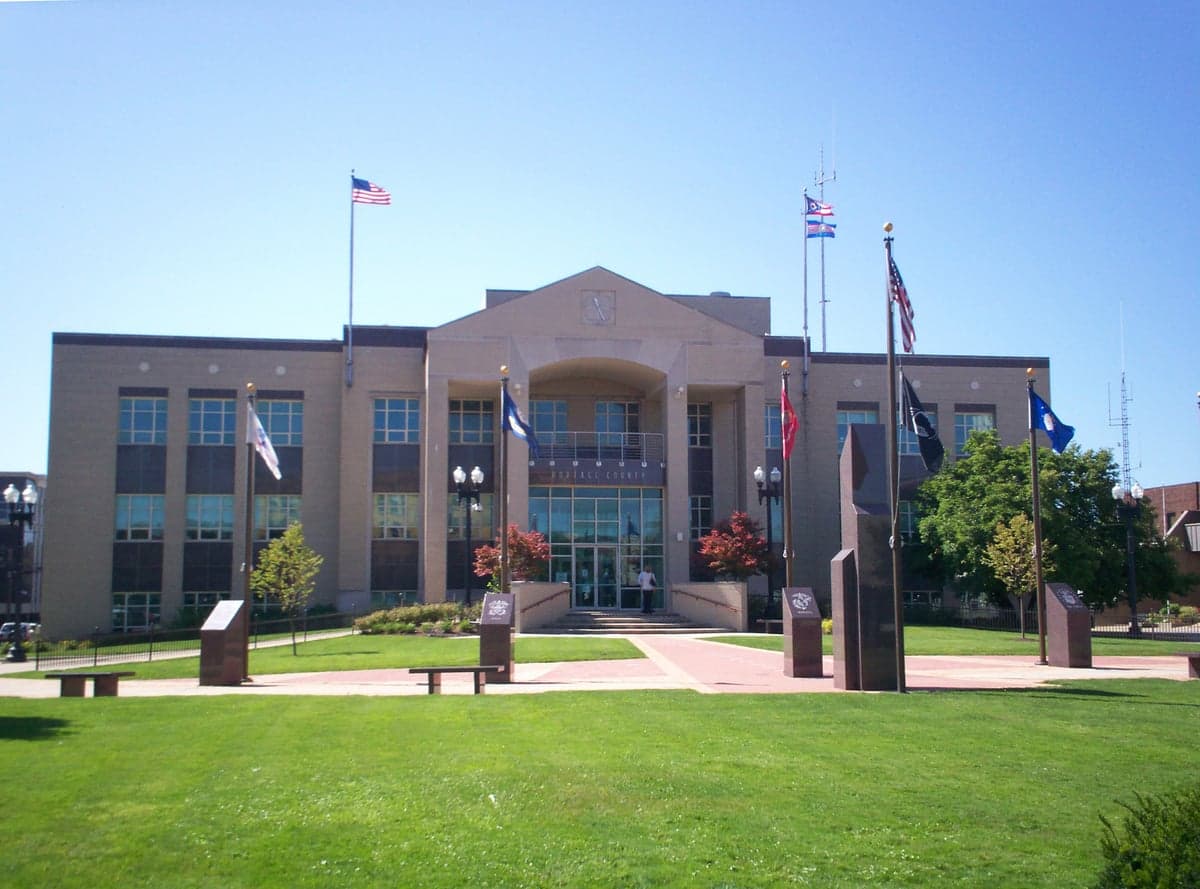
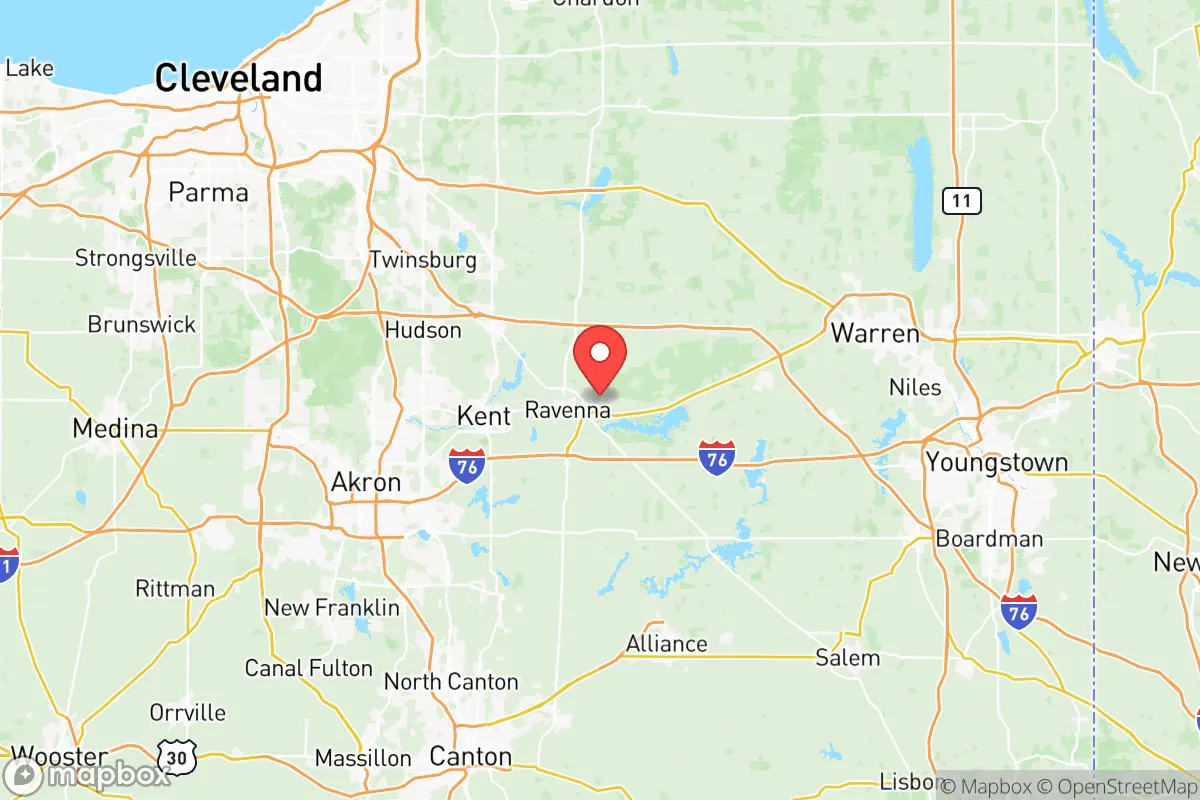
Portage County, Ohio, has shifted rightward in recent years, now carrying a Cook Partisan Voting Index (PVI) of R+9, meaning it votes about nine points more Republican than the national average. This makes it noticeably more conservative than Ohio as a whole, which sits at R+5. The county's trajectory is a story of suburban and rural realignment, with the once-reliable Democratic strongholds in places like Kent and Ravenna shrinking as the exurban and agricultural precincts around Streetsboro, Mantua, and Hiram pull the county steadily redder.
How it compares
Portage County's R+9 PVI is a full four points more Republican than Ohio's statewide R+5, a gap that reflects the county's unique blend of demographics. The state's overall lean is driven by the deep-red rural counties in the west and south, balanced by blue urban cores like Cleveland, Columbus, and Cincinnati. Portage, however, lacks a major blue city. Kent, home to Kent State University, is the county's most liberal pocket, consistently voting Democratic by double digits in presidential and state races. Ravenna, the county seat, is a swing area that has trended right, while Streetsboro and Aurora are reliably Republican, fueled by growth from Cleveland exurbanites. Towns like Mantua and Hiram are deeply red, with precincts often voting 70%+ Republican. This internal split means the county's overall lean is a compromise between a shrinking college-town base and a growing conservative exurban and rural population.
What this means for residents
For conservative residents, the R+9 lean means their votes carry weight in local races, with Republicans dominating county commission seats, the sheriff's office, and most township trustees. Republican candidates typically win Portage by margins of 55-60% in statewide contests, making it a reliable base for GOP campaigns. For liberal residents, the reality is more challenging. While Kent provides a progressive bubble with its own city council and school board dynamics, countywide offices are out of reach. Democratic candidates rarely break 45% in countywide elections, and the party's influence is largely confined to Kent and a few precincts in Ravenna. This means that policy debates—on zoning, school funding, and infrastructure—are often framed from a conservative perspective, though the county's growing diversity (especially in the Kent area) keeps some issues like housing affordability and public transit on the table.
Culturally, Portage County feels like a microcosm of Ohio's broader divide. The Kent State campus and its surrounding arts scene create a distinctly liberal enclave, with coffee shops, bike lanes, and a vocal activist community. Drive ten miles south to Mantua or Hiram, and you'll find gun shops, Trump signs, and a strong agricultural identity. Property taxes are a perennial flashpoint, with conservative voters pushing for cuts while liberal residents advocate for school funding increases. The county's growth—especially along the Route 14 corridor near Streetsboro—has brought new residents from Cuyahoga and Summit counties, many of whom are fiscally conservative but socially moderate, blurring the old party lines. In practice, this means that while the county votes red, local governance often requires coalition-building, especially on issues like economic development and road maintenance that cross ideological lines. The near-term future likely sees Portage staying R+9 to R+10, as exurban growth continues to outpace the college-town vote, but the cultural tension between Kent and the rest of the county will remain the defining political story.

State Political ClimatePolitical Climate in Ohio
State Political AnalysisPolitical Environment in the State
Ohio has shifted from a quintessential purple swing state to a solidly Republican-leaning one, carrying a Cook PVI of R+5. Over the past 20 years, the state has moved decisively rightward, driven by the collapse of union-era Democratic dominance in the industrial north and the rise of a more conservative, rural, and exurban electorate. While Democrats can still win statewide in a perfect storm (like Sherrod Brown), the GOP now controls every statewide office, both legislative chambers, and the state supreme court, making the trajectory clear: Ohio is a red state that occasionally flirts with purple, but no longer reliably swings.
Urban vs. rural divide
The political map of Ohio is a textbook case of the urban-rural chasm. The three Cs — Cleveland, Columbus, and Cincinnati — are Democratic strongholds, with Cuyahoga County (Cleveland) delivering margins of 60-70% for Democrats. Columbus, fueled by Ohio State University and a growing tech sector, has become a reliably blue anchor. Cincinnati’s Hamilton County has trended left in recent cycles, but its suburbs like West Chester and Mason remain competitive or lean red. Meanwhile, the vast rural and Appalachian counties in the southeast and the farmlands of the northwest vote Republican by 70-80% margins. The real story is the exurbs and small cities: places like Delaware (north of Columbus) and Medina (between Cleveland and Akron) have flipped hard red, while formerly Democratic strongholds in the Mahoning Valley (Youngstown) and the Ohio River towns have trended Republican as union loyalty gave way to cultural conservatism. The I-71 corridor from Cincinnati to Cleveland is the state’s political spine, with the urban cores blue and everything else red.
Policy environment
Ohio’s policy environment is broadly conservative, with a low-tax, low-regulation posture. The state has a flat income tax rate of 3.5% (phased down from higher rates in recent years), and sales tax is around 5.75% plus local add-ons. Property taxes are moderate but vary widely by district. The state is a right-to-work state in practice (though not by law), and union power has been significantly curtailed since the 2011 fight over Senate Bill 5. Education policy is a battleground: school choice is robust, with a large voucher program (EdChoice) and a growing number of charter schools, but public school funding has been ruled unconstitutional multiple times and remains a contentious issue. Healthcare is mixed — Ohio expanded Medicaid under the Affordable Care Act, but the state has also imposed work requirements and other restrictions. Election laws have been tightened: voter ID is now required, drop boxes are limited to one per county, and early voting windows have been narrowed. The state also has a Republican-drawn congressional map that has been repeatedly challenged in court but remains in effect.
Recent policy direction
Ohio’s recent legislative agenda has been aggressively conservative. In 2023, the state passed a near-total abortion ban (the "Heartbeat Bill") after the Dobbs decision, with no exceptions for rape or incest — though a 2023 ballot initiative enshrined abortion rights in the state constitution, creating a direct conflict between the legislature and the voters. On guns, Ohio became a permitless carry state in 2022, allowing any adult to carry a concealed firearm without a license. The "Stand Your Ground" law was also expanded. On education, the state passed the "Parents’ Bill of Rights" (2023), requiring schools to notify parents of curriculum changes and allowing them to opt children out of certain materials. On speech and privacy, Ohio has banned transgender athletes from female sports and restricted gender-affirming care for minors. On property rights, the state has limited local control over zoning and fracking, favoring energy development. On taxes, the income tax rate has been cut repeatedly, with a goal of eventual elimination. On voting, the state passed a law in 2023 requiring a photo ID for all in-person voting and limiting absentee ballot requests. The overall direction is toward more individual liberty in some areas (guns, taxes) and more government intervention in others (abortion, transgender rights, education).
Civil unrest & political movements
Ohio has seen its share of political flashpoints. The 2020 protests in Columbus and Cincinnati over the murder of George Floyd were large but largely peaceful, though there were instances of property damage and clashes with police. The 2023 abortion rights ballot initiative saw massive grassroots organizing on both sides, with the "Yes on Issue 1" campaign outspending opponents and winning by 13 points — a clear sign that the electorate is more moderate than the legislature on social issues. Immigration politics have been relatively quiet, though there have been localized tensions in communities like Springfield (Clark County) over refugee resettlement and in Dayton over immigrant labor. Election integrity controversies have been minimal compared to other states, though the 2020 and 2022 cycles saw some Republican-led audits and calls for tighter rules. The "Ohio Freedom Alliance" and other grassroots groups have pushed for more direct democracy, while the "Buckeye Firearms Association" remains a powerful lobbying force. Overall, the state is not a hotbed of civil unrest, but the cultural divide is real and visible in the contrast between the urban cores and the rural/exurban areas.
Projection
Over the next 5-10 years, Ohio is likely to become more Republican, not less. The demographic trends are clear: the urban cores are aging and losing population, while the exurbs and rural areas are growing. In-migration is modest, and most new arrivals are from other Midwestern states, not from the coasts. The Democratic Party’s base is shrinking and becoming more concentrated in Columbus and Cleveland, while the GOP continues to consolidate the rest of the state. The 2024 election results (Trump winning by 11 points) suggest that the R+5 PVI may actually understate the current reality. However, the 2023 abortion rights vote shows that the electorate is not uniformly conservative on social issues, and there may be limits to how far the legislature can push. A new resident moving in now should expect a state where Republican dominance is the norm, but where ballot initiatives and local elections can still produce surprises. The political climate will remain polarized, but the center of gravity will continue to shift rightward.
For a new resident, the bottom line is this: Ohio is a red state with a conservative policy agenda, but it is not a monolith. If you are a conservative, you will find a welcoming environment with low taxes, strong gun rights, and a legislature that shares your values. If you are a liberal, you will find vibrant urban communities and a robust civil society, but you will be swimming against the tide in statewide elections. The state offers a relatively affordable cost of living and a stable economy, but the political climate is increasingly one-sided. Choose your county carefully — the difference between living in Columbus and living in rural Darke County is the difference between a blue island and a red ocean.
* Values derived from national, state, county, city and local statistics and may differ in a specific area. Last updated: 2026-07-02T07:54:56.000Z
Narrative content on this page is AI-generated and may contain mistakes. Verify any details that matter before acting on them.
ReloMaps may earn a commission from affiliate links at no extra cost to you.

