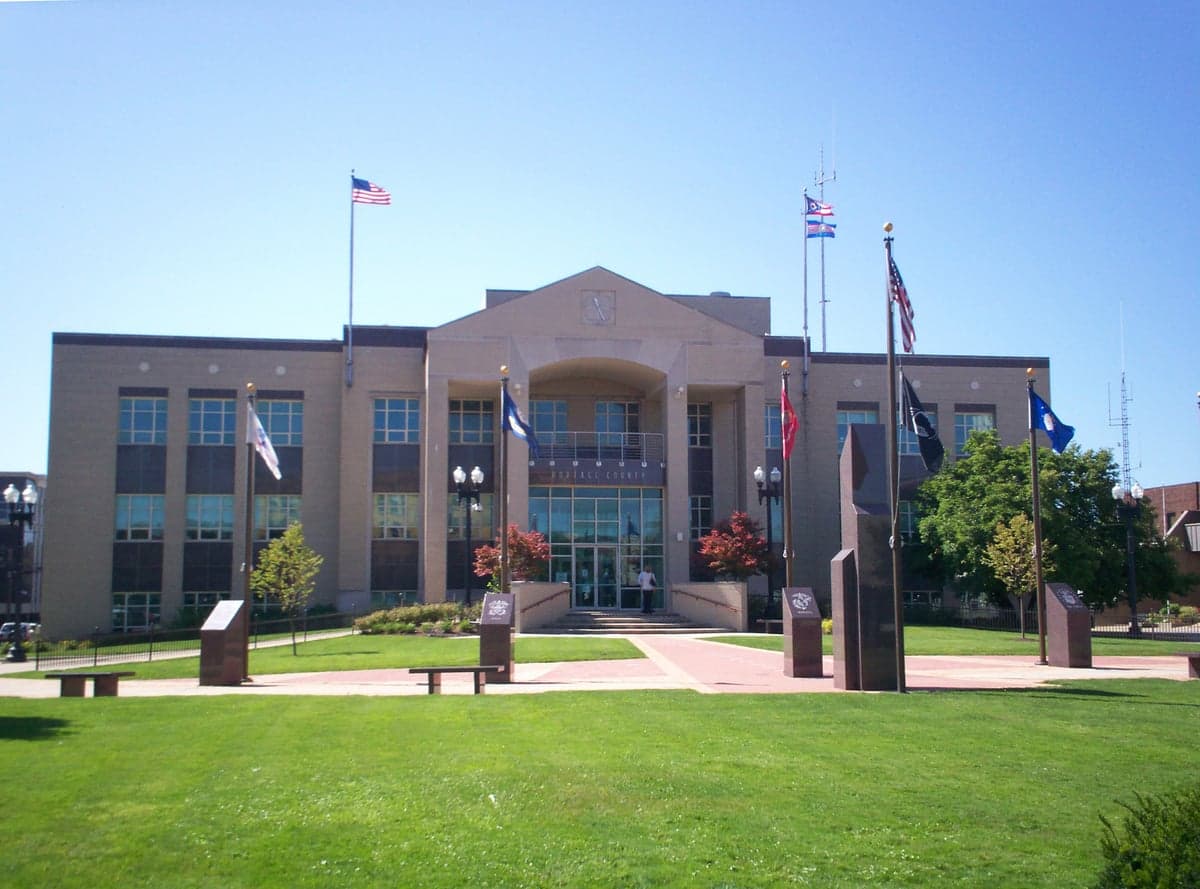
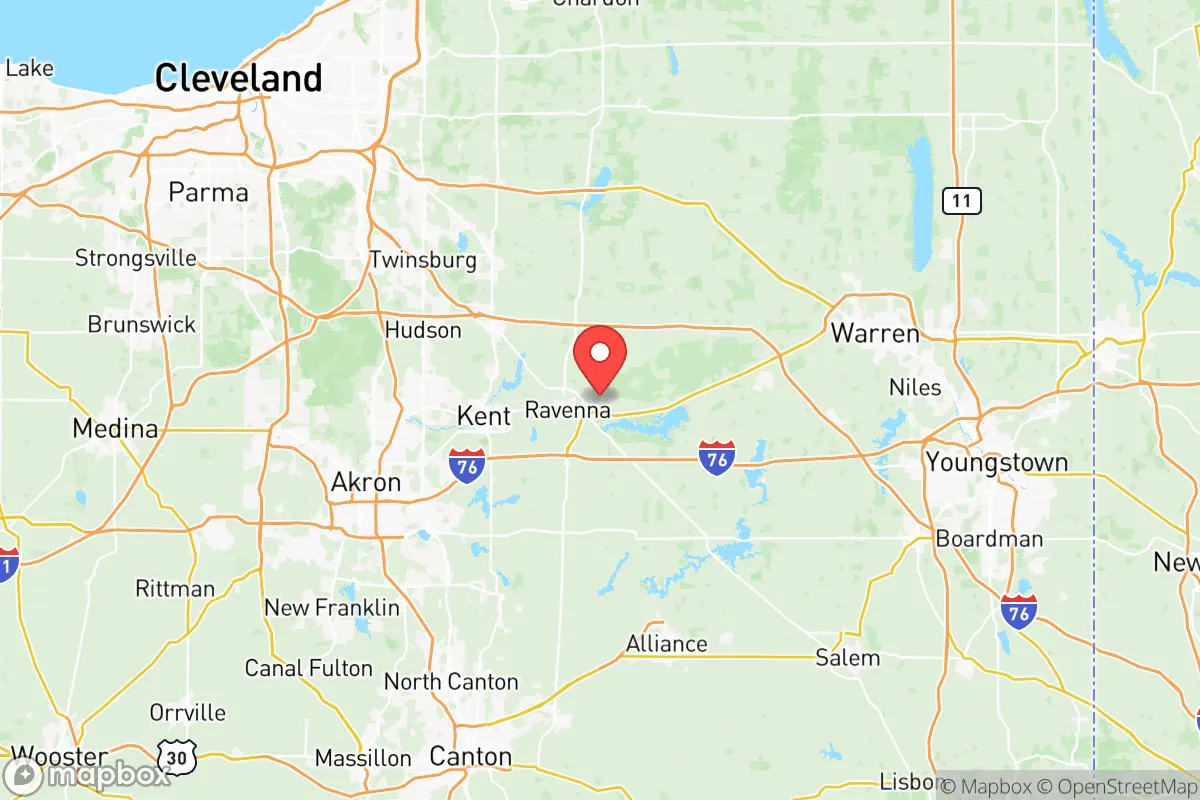
Photo: Wikipedia
Personal Sovereignty in Portage County
Viable for self-reliance. Generally workable, though some barriers may limit total independence.
What does Personal Sovereignty tell us?
Personal Sovereignty measures your capacity for self-reliance and independence with minimal government friction. Higher scores mean fewer barriers between you and the way you want to live... but it assumes you have the space you need and good neighbors.
What does this tell us?
Personal Sovereignty measures your capacity for self-reliance and independence with minimal government friction. Higher scores mean fewer barriers between you and the way you want to live... but it assumes you have the space you need and good neighbors.
State Policy
Energy independence: Importer (40% of energy produced in-state)
Personal Liberty
Homesteading

Personal Liberty Analysis
Portage County, Ohio, offers a notably high degree of personal sovereignty relative to many Northeast Ohio suburbs, blending a rural and small-town character with a legal framework that generally favors individual autonomy. The county’s regulatory posture is lighter than in neighboring Summit County (Akron) or Cuyahoga County (Cleveland), and its tax burden is moderate, making it a viable option for those seeking independence without the extremes of more remote rural areas. While Ohio’s state-level preemptions on firearms and property rights provide a baseline of liberty, local enforcement and zoning in towns like Kent, Ravenna, and Mantua create meaningful differences in how that sovereignty feels day-to-day.
Tax burden and regulatory posture in Portage County
Ohio’s state income tax is a flat 3.5% as of 2026, and Portage County’s sales tax rate is 7.25% (state 5.75% plus county 1.5%), which is competitive with surrounding counties. Property taxes are the primary local burden: the effective rate in Portage County averages roughly 1.8% of assessed home value, slightly above the state median but lower than in Cuyahoga County (2.1%) or Summit County (2.0%). The county’s regulatory environment is generally permissive for small businesses and residential property owners. Building codes follow the Ohio Residential Code, and there is no county-wide rental inspection program, though the city of Kent enforces its own rental registration and inspection requirements, which are more stringent than in unincorporated areas or smaller towns like Garrettsville or Windham. Zoning is handled at the township level in most of the county, meaning a property in Freedom Township or Hiram Township will face fewer restrictions than one within the Kent city limits. For a reader prioritizing low regulatory overhead, the unincorporated townships and villages like Mantua and Shalersville are the most favorable areas.
Self-defense and gun law specifics in Portage County
Ohio is a constitutional carry state as of 2022, meaning no permit is required to carry a concealed handgun for anyone legally allowed to possess a firearm. Portage County’s Sheriff’s Office issues concealed carry permits for reciprocity purposes, and the process is straightforward with no local restrictions beyond state law. The county does not have any local ordinances that restrict firearm possession or storage, and there are no “sensitive places” designations beyond those defined by state statute (schools, courthouses, airports). Open carry is legal without a permit. Gun ranges are available in the area, including the Portage County Wildlife Club in Ravenna and the Grand River Gun Club in Hiram. The local culture is generally gun-friendly, particularly in the rural townships and villages like Mantua and Garrettsville, where hunting and sport shooting are common. In Kent, home to Kent State University, the cultural attitude is more mixed, but legal restrictions are no different than elsewhere in the county. For a reader concerned with self-defense rights, Portage County presents no meaningful barriers beyond state law.
Self-reliance and homesteading viability in Portage County
Homesteading and off-grid living are feasible in Portage County, but viability varies sharply by location. Minimum lot sizes in unincorporated townships are generally 1 to 3 acres, with some areas like Hiram Township and Freedom Township requiring 3 acres for a single-family home. In villages like Mantua and Garrettsville, lot sizes can be as small as 0.5 acres, but these areas still permit gardens, small livestock (chickens, rabbits), and rainwater collection without special permits. Off-grid energy systems (solar panels, wind turbines) are allowed under Ohio law, but must comply with the Ohio Building Code and local zoning. In practice, installing a grid-tied solar system is straightforward, while full off-grid electrical independence may require a variance in some townships. Rainwater collection is legal for outdoor use, and composting toilets are permitted under the Ohio Plumbing Code if they meet NSF/ANSI Standard 41. The county does not have a blanket ban on accessory dwelling units, but townships like Ravenna Township and Shalersville Township have specific setback and size requirements. For a reader seeking maximum self-reliance, the rural townships north of Ravenna and east of Kent offer the best combination of large lots, permissive zoning, and low density. The city of Kent and the village of Windham have more restrictive codes that make serious homesteading impractical.
Personal liberties in Portage County: parental rights, medical autonomy, speech, and property
Ohio law provides strong protections for parental rights, including the Parental Rights in Education Act (2023), which requires schools to notify parents of any curriculum involving sexuality or gender identity and to obtain parental consent for student surveys. Portage County school districts, including Field Local, Crestwood Local, and James A. Garfield Local, generally comply with these requirements, though enforcement varies. Medical autonomy is governed by state law: Ohio does not have a vaccine mandate for adults, and the state’s 2023 law prohibits employers from requiring COVID-19 vaccination as a condition of employment. Homeschooling is legal and lightly regulated, requiring only an annual notification and a brief assessment. Free speech is protected under the Ohio Constitution and the First Amendment; Portage County has no local ordinances restricting public speech or assembly beyond standard time-place-manner rules. Property rights are strong, with Ohio’s “takings” law requiring just compensation for regulatory takings, and the county’s zoning boards generally defer to property owners in disputes. For a reader prioritizing personal liberties, Portage County’s legal environment is favorable, with the caveat that local enforcement in Kent can be more proactive on noise, signage, and land use than in the rural townships.
Overall, Portage County ranks as a moderately high-sovereignty area within Ohio, offering a balance of personal freedom and practical infrastructure that is hard to find in more urbanized counties. The tax burden is manageable, gun laws are permissive, and homesteading is viable in the right location. The key variable is location within the county: the rural townships and small villages like Mantua, Garrettsville, and Hiram provide the greatest autonomy, while Kent and Ravenna impose more local regulation. For a reader comparing Portage County to other parts of Ohio, it sits between the heavy regulation of Cuyahoga County and the near-total freedom of more remote counties like Holmes or Coshocton. It is a practical choice for those who want independence without isolation.

* Values derived from national, state, county, city and local statistics and may differ in a specific area. Last updated: 2026-07-02T07:54:56.000Z
Narrative content on this page is AI-generated and may contain mistakes. Verify any details that matter before acting on them.
ReloMaps may earn a commission from affiliate links at no extra cost to you.

