Photo: Wikipedia
Demographics of Portage County
Affluence Level in Portage County
A middle-class area roughly in line with national averages across income, home values, education, and employment.
People of Portage County
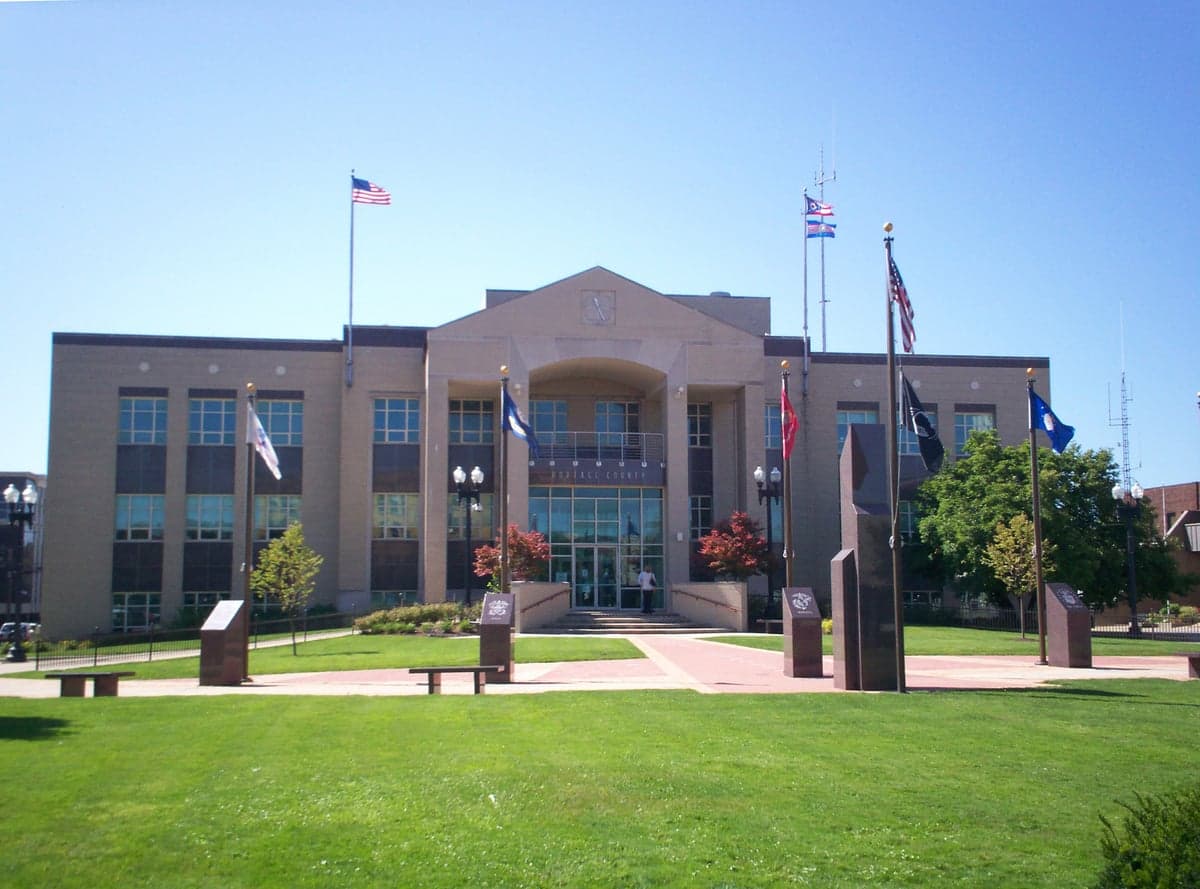
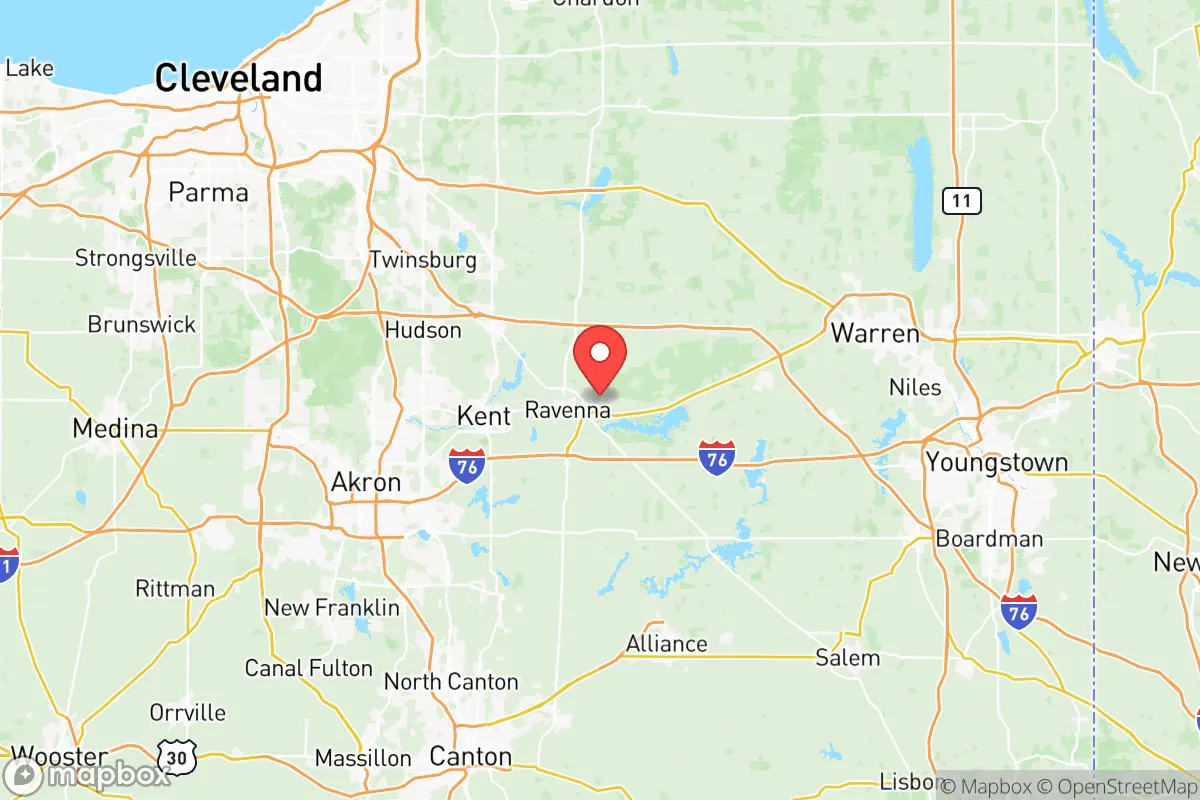
The people of Portage County, Ohio today number 161,421, forming a community that is predominantly white (86.8%) with a notably low foreign-born population of just 1.8%. This is a county shaped by its position in the Rust Belt transition zone, blending small-town and rural character with the academic influence of Kent State University, and its population is older and less diverse than the national average. Distinctive identity markers include a strong sense of local history, a reliance on manufacturing and healthcare employment, and a political landscape that leans conservative outside the college town of Kent itself.
Settlement & growth (pre-1960)
Before American settlement, the area now known as Portage County was the homeland of several Native American nations, primarily the Erie people until the mid-17th century, followed by the Iroquois Confederacy and later the Wyandot, Delaware, and Shawnee. The region was a contested borderland during the French and Indian War, and the name "Portage" itself refers to the critical portage path between the Cuyahoga and Tuscarawas rivers, a route used for centuries by Native peoples and later by European fur traders. The Treaty of Greenville in 1795 opened the area to American settlement, and the Connecticut Land Company began surveying the Western Reserve, which included Portage County.
The first major wave of American settlers arrived between 1800 and 1820, primarily from New England and New York. These were largely of English and Scots-Irish descent, drawn by the promise of cheap land in the Connecticut Western Reserve. They founded the county's earliest towns, including Ravenna (established 1799, becoming the county seat in 1808), Hiram (settled 1802), and Mantua (settled 1798). These settlers brought with them a Congregationalist and Presbyterian religious tradition, a commitment to education, and an abolitionist streak that would later make the county a stop on the Underground Railroad.
A second, smaller wave of German immigrants arrived in the mid-19th century, particularly between 1830 and 1860. They settled in agricultural areas and small villages, with a notable concentration in Streetsboro and the southern part of the county around Deerfield. These German families established Lutheran and Catholic churches, and their descendants remain a visible part of the county's cultural fabric today. The Pennsylvania Dutch (German) also trickled in from the south, adding to the mix.
The industrial era, from roughly 1870 to 1920, brought a different kind of growth. The discovery of coal and the expansion of railroads spurred the development of manufacturing towns. Kent, originally a mill town, grew rapidly as a railroad hub and manufacturing center, attracting a wave of immigrants from Southern and Eastern Europe. Italian, Polish, and Slovak laborers arrived to work in the railroad yards, foundries, and paper mills. Ravenna also saw an influx of these groups, who formed distinct ethnic neighborhoods around the city's industrial core. This period also saw the founding of the Kent State Normal School in 1910, which would later become Kent State University, a major employer and cultural force.
The Great Migration of African Americans from the South reached Portage County in modest numbers, primarily between 1940 and 1960. Black families moved to Kent and Ravenna for industrial jobs, particularly in the rubber and steel plants that dotted the region. However, the county's Black population remained small compared to neighboring Summit and Cuyahoga counties, where larger industrial centers like Akron and Cleveland offered more employment. The post-World War II era saw suburbanization begin, with Streetsboro and Aurora experiencing growth as bedroom communities for Akron and Cleveland commuters.
Modern era (post-1965)
The 1965 Hart-Cellar Act had a minimal direct impact on Portage County's demographics, as the county's foreign-born population remains very low at 1.8%. Unlike major metropolitan areas, the county did not see large waves of new immigrant communities. The most significant demographic shift since 1965 has been domestic: the decline of manufacturing and the rise of the university as the county's economic anchor.
The student population at Kent State University has brought a transient, younger, and more diverse element to the county. The university attracts a small but steady number of international students, primarily from East and Southeast Asia (0.7% of the county population) and the Indian subcontinent (1.0%). These groups tend to concentrate in Kent itself, near the campus, and their presence is largely tied to academic programs and temporary work visas. The county's Hispanic population, at 2.2%, has grown slowly, with families settling in Ravenna and Streetsboro for work in agriculture, landscaping, and light manufacturing.
Suburbanization accelerated after 1970, with Aurora transforming from a rural village into an affluent commuter suburb, attracting families from Akron and Cleveland. Streetsboro grew rapidly as a retail and logistics hub along the Ohio Turnpike. Meanwhile, the county's rural townships—such as Shalersville and Freedom—have seen slow growth and an aging population, as younger residents move toward the county's urbanized corridor along the I-76 and SR 43 corridors. The county's Black population (4.6%) remains concentrated in Kent and Ravenna, with little dispersion into the rural townships.
The future
Portage County's population is projected to remain relatively stable or experience slight decline over the next 10-20 years, mirroring broader trends in Northeast Ohio. The county is becoming slightly more diverse, but at a very slow pace. The Hispanic and East/Southeast Asian populations are expected to grow modestly, driven by university-related migration and low-wage labor in logistics and agriculture. The Indian subcontinent population may also increase if Kent State continues to recruit international graduate students.
The county's cultural identity is likely to remain bifurcated: the university corridor in Kent will continue to be more liberal, younger, and more diverse, while the rest of the county—particularly the rural townships and smaller towns like Hiram and Garrettsville—will remain predominantly white, older, and more conservative. The biggest demographic challenge is the aging of the native-born white population, which will put pressure on local services and the tax base. New residential development is concentrating in Aurora and Streetsboro, where land is available and commuter access is strong, while the county's historic industrial cores in Ravenna and Kent face population stagnation or loss.
For someone moving in now, Portage County offers a stable, low-cost, and safe environment with a strong sense of local history and community. The trade-off is limited diversity, a slow-growth economy outside of healthcare and education, and a cultural landscape that values tradition over rapid change. It is a place where the past is still very present, and where the future will likely look much like the present, only older and slightly more varied.

* Values derived from national, state, county, city and local statistics and may differ in a specific area. Last updated: 2026-07-02T07:54:56.000Z
Narrative content on this page is AI-generated and may contain mistakes. Verify any details that matter before acting on them.
ReloMaps may earn a commission from affiliate links at no extra cost to you.

