
Photo: Wikipedia
Personal Sovereignty in Franklin County
Viable for self-reliance. Generally workable, though some barriers may limit total independence.
What does Personal Sovereignty tell us?
Personal Sovereignty measures your capacity for self-reliance and independence with minimal government friction. Higher scores mean fewer barriers between you and the way you want to live... but it assumes you have the space you need and good neighbors.
What does this tell us?
Personal Sovereignty measures your capacity for self-reliance and independence with minimal government friction. Higher scores mean fewer barriers between you and the way you want to live... but it assumes you have the space you need and good neighbors.
State Policy
Energy independence: Importer (40% of energy produced in-state)
Personal Liberty
Homesteading

Personal Liberty Analysis
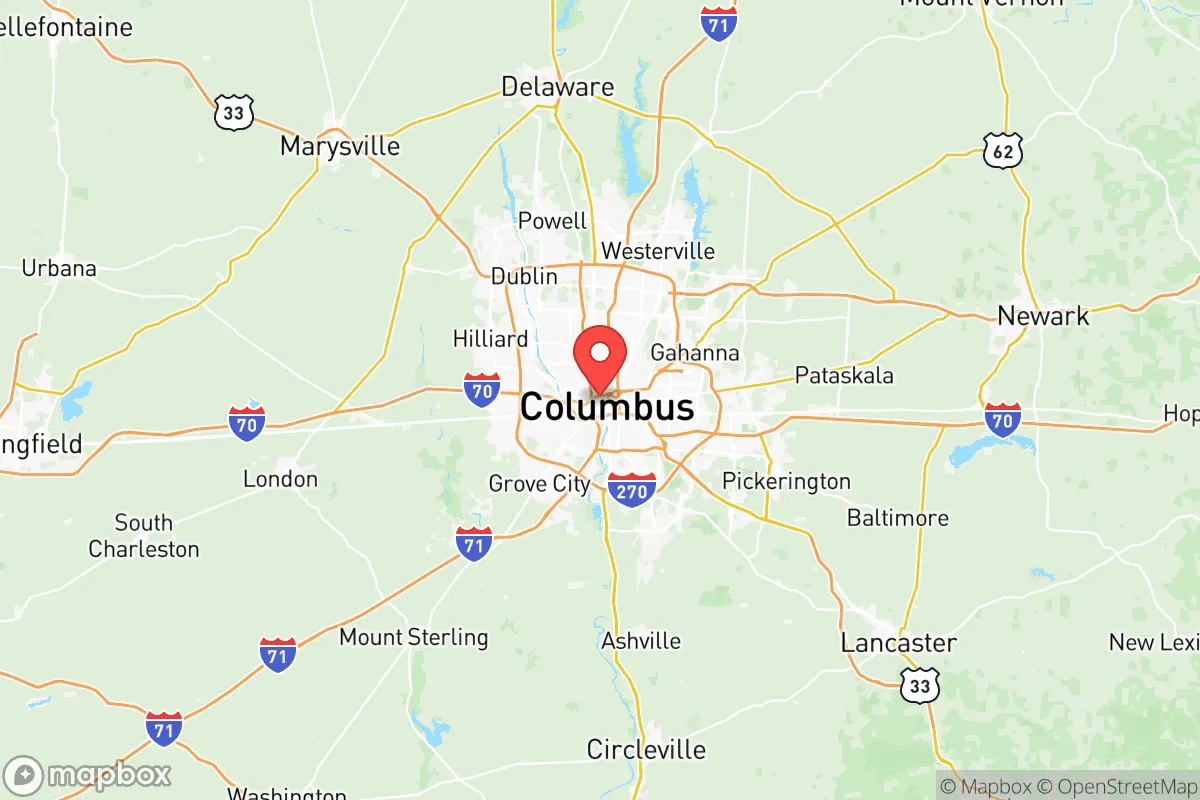
Franklin County, Ohio, presents a mixed personal sovereignty environment where state-level protections for gun rights and parental authority coexist with a moderately active county regulatory structure and a notable tax burden. For individuals and families prioritizing autonomy, the county's urban core of Columbus offers a different experience than its more rural townships and suburbs, where self-reliance and homesteading become more feasible. The overall autonomy picture is one of balance: Ohio law provides a solid floor for personal liberties, but local ordinances and the cost of government in Franklin County create headwinds that residents must navigate strategically.
Tax burden and regulatory posture in Franklin County
Franklin County's tax and regulatory environment is heavier than in many surrounding Ohio counties, driven largely by the presence of Columbus. The combined state and local sales tax rate in Franklin County is 8.0% as of 2026, which is on the higher end for Ohio. Property taxes are also significant; the effective property tax rate in Franklin County is approximately 2.1% of assessed home value, which is above the state average of 1.6%. This is a key consideration for homeowners. The regulatory posture varies by jurisdiction: Columbus has a more active code enforcement and zoning regime, while townships like Plain Township and Madison Township maintain a lighter touch, with fewer business licensing hurdles and less aggressive land-use restrictions. For a self-reliant individual, choosing a township over the city can meaningfully reduce bureaucratic friction.
Self-defense and gun law specifics in Franklin County
Ohio is a constitutional carry state, meaning that as of 2022, no permit is required for law-abiding adults to carry a concealed handgun. This applies uniformly across Franklin County. The county does not impose additional local gun restrictions beyond state law, which is a significant advantage for those prioritizing self-defense. However, Columbus has been a focal point for local gun safety ordinances in the past, though state preemption laws generally prevent cities from enacting stricter regulations than the state. The practical result is that gun owners in Worthington, Dublin, or Grove City enjoy the same legal framework as those in rural areas. Stand-your-ground laws are in effect, and there is no duty to retreat in places where a person is lawfully present. For a family concerned with home defense, the legal environment is favorable and consistent across the county.
Self-reliance and homesteading viability in Franklin County
Homesteading and off-grid living are viable in Franklin County, but feasibility depends heavily on location. The county's more rural townships, such as Brown Township and Clinton Township, offer larger lot sizes—often 1 to 5 acres—where raising chickens, keeping bees, and maintaining substantial gardens are permitted without special permits. In contrast, Columbus and its inner-ring suburbs like Bexley and Upper Arlington have stricter zoning that limits agricultural activities and may require permits for structures like sheds or greenhouses. Off-grid feasibility is limited by building codes that mandate grid connection for new construction in most areas, though some rural parcels allow for well water and septic systems. The county's soil quality is generally good for gardening, and the growing season is moderate. For a family seeking a self-reliant lifestyle, targeting a township outside the urban core is essential.
Personal liberties in Franklin County
Personal liberties in Franklin County are shaped by a mix of state-level protections and local policy. Parental rights are strongly protected under Ohio law, with statutes that affirm parents' authority over their children's education, healthcare, and upbringing. School choice is robust, with charter schools, private schools, and homeschooling all legal and accessible. Medical autonomy is generally respected, though vaccine mandates have been a point of local debate in Columbus public schools. Free speech and property rights are protected under the Ohio and U.S. Constitutions, and the county does not have notable local ordinances that infringe on these. Property rights are generally strong, though eminent domain has been used for development projects in Columbus. For a family that values the ability to make independent decisions about their children's education and healthcare, Franklin County offers a legal environment that is supportive, though vigilance is warranted in the urban core.
Overall, Franklin County offers a moderate level of personal sovereignty relative to other metropolitan areas in the Midwest. It is more freedom-oriented than counties in states like Illinois or New York, but less so than rural counties in Texas or Florida. The key for a freedom-minded individual or family is to choose a location within the county—such as a township like Madison Township or Brown Township—that aligns with their priorities for lower taxes, lighter regulation, and greater homesteading potential. With strategic choices, Franklin County can be a viable place to exercise personal autonomy while still having access to the economic opportunities of a major city.

* Values derived from national, state, county, city and local statistics and may differ in a specific area. Last updated: 2026-07-12T14:38:37.000Z
Narrative content on this page is AI-generated and may contain mistakes. Verify any details that matter before acting on them.
ReloMaps may earn a commission from affiliate links at no extra cost to you.

