Photo: Wikipedia
Demographics of Franklin County
Affluence Level in Franklin County
A middle-class area roughly in line with national averages across income, home values, education, and employment.
People of Franklin County
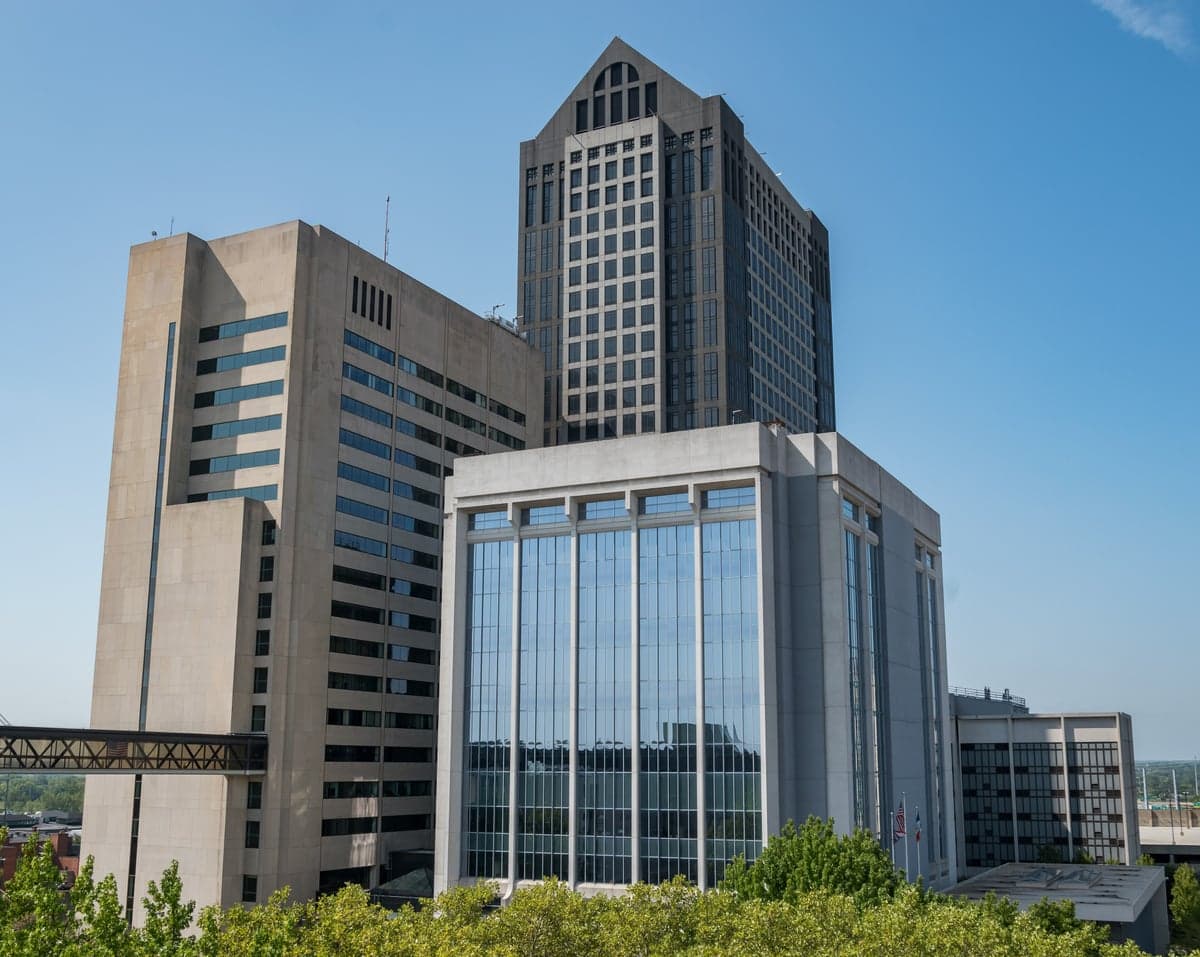
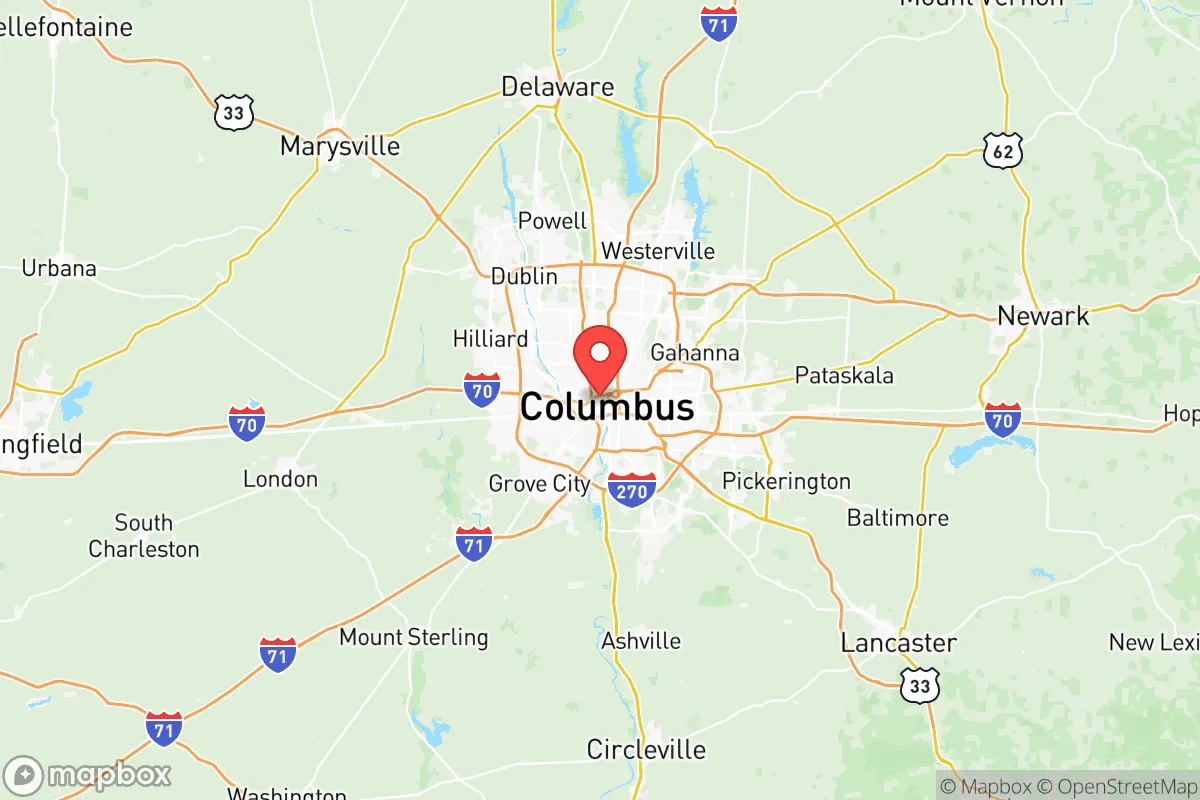
Franklin County, Ohio, is a dynamic, majority-minority urban core of 1.3 million residents, defined by its role as the state capital and a major Midwestern hub for government, education, and healthcare. The county is notably more diverse than the state average, with a population that is 59.1% White, 22.8% Black, 7.1% Hispanic, and a growing combined Asian and Indian community of 5.3%. Its character is a blend of a historically industrial and government-driven city, Columbus, surrounded by rapidly diversifying suburbs that are attracting both domestic migrants and new international arrivals.
Settlement & growth (pre-1960)
Before American settlement, the area that is now Franklin County was part of the Ohio Country, a contested region used for hunting and warfare by the Shawnee, Wyandot, and Delaware (Lenape) nations. The first permanent American settlement was established in 1797 at Franklinton, founded by Lucas Sullivant on the west bank of the Scioto River. This area, now part of Columbus's west side, was the county's initial population center. The county was formally organized in 1803, the same year Ohio became a state.
The single most transformative event for the county's population was the 1812 decision to establish the state capital at the newly platted city of Columbus, directly across the Scioto from Franklinton. This political decision drove the first major wave of settlement: government officials, lawyers, and merchants from the eastern states, particularly New England and the Mid-Atlantic. The National Road (U.S. Route 40) reached Columbus in the 1830s, and the arrival of the Ohio and Erie Canal and later railroads cemented the city as a transportation and commercial hub. This period saw an influx of German immigrants, who settled in neighborhoods like German Village (south of downtown) and the near south side, establishing breweries, bakeries, and churches that left a lasting cultural imprint.
The late 19th and early 20th centuries brought a second major wave: Southern and Eastern European immigrants, including Italians, Poles, and Greeks, who found work in the city's growing manufacturing and railroad industries. These groups concentrated in neighborhoods like the Short North and Italian Village just north of downtown. Simultaneously, the Great Migration of African Americans from the rural South began in earnest during and after World War I, drawn by industrial jobs at factories like the Jeffrey Manufacturing Company and the Columbus Coated Fabrics plant. The Black population settled primarily on the near east side, creating a vibrant community in areas like King-Lincoln Bronzeville, which became a cultural and commercial hub. By 1960, Franklin County was a predominantly White, native-born population with a significant Black minority (around 16%) and a small but established European ethnic enclave structure.
Modern era (post-1965)
The 1965 Hart-Cellar Act fundamentally reshaped Franklin County's demographics, though the effects were initially slower than in coastal cities. The most significant post-1965 change has been the dramatic growth of the county's Hispanic and Asian populations, driven by both international immigration and domestic migration. The Hispanic population, now 7.1% of the county, is predominantly of Mexican and Puerto Rican origin, with a growing number of Central American immigrants. The primary concentration is on the west side of Columbus, particularly in the neighborhoods of Hilltop and Westland, as well as in the suburb of Lincoln Village.
The Asian and Indian populations, while smaller in total share, have grown rapidly since the 1990s, fueled by the expansion of The Ohio State University and the high-tech and healthcare sectors. East and Southeast Asian communities (2.7% of the county), including Chinese, Korean, and Vietnamese residents, have concentrated in the northwest suburbs, particularly Dublin and Westerville, drawn by top-rated schools and tech jobs. The Indian subcontinent population (2.6%) has followed a similar pattern, with a strong presence in Dublin, Hilliard, and New Albany, where many work in IT, finance, and medicine. The Somali refugee community, a more recent and distinctive addition, has established a significant enclave in the Northeast Side and the suburb of Gahanna, transforming parts of the county into a hub for East African culture.
Domestically, the post-1965 era has been defined by suburbanization and a shift from a manufacturing to a service and knowledge economy. White flight from Columbus city limits accelerated in the 1970s and 1980s, pushing population growth into suburbs like Westerville, Grove City, and Reynoldsburg. However, since the 2000s, there has been a notable reversal, with significant reinvestment and population growth in the urban core, particularly in the Short North, Brewery District, and Franklinton, attracting young professionals and empty-nesters. The county's foreign-born population, while still modest at 6.4%, is growing and is a key driver of the area's increasing diversity.
The future
Franklin County is projected to become more diverse and more educated over the next 10-20 years. The White population share is expected to continue its gradual decline, while the Hispanic, Asian, and Indian populations will grow at above-average rates, driven by both international immigration and higher birth rates. The Black population share is likely to remain stable or grow slightly, with continued migration from other parts of Ohio and the Midwest. The county's foreign-born share is expected to rise toward 10-12%, approaching the national average, as the region's economy continues to attract skilled immigrants to the healthcare and tech sectors.
Geographically, the most significant trend is the continued diversification of the suburbs. While Dublin and New Albany will remain magnets for Asian and Indian professionals, suburbs like Grove City and Canal Winchester are seeing rapid growth in Hispanic and Black populations. The urban core will continue to attract a mix of young, college-educated residents of all backgrounds, while the older, inner-ring suburbs will face the challenge of aging infrastructure and shifting demographics. The county's cultural identity is evolving from a predominantly White, Midwestern, government-and-insurance town into a more polyglot, globally connected metropolitan area, though it remains less diverse than major coastal cities.
For someone moving to Franklin County now, the region offers a stable, growing economy with a lower cost of living than the national average, and a population that is becoming increasingly varied in background and perspective. The key choice is between the revitalized, walkable urban neighborhoods of Columbus and the diverse, family-oriented suburbs, each offering a different slice of the county's evolving demographic mosaic. The area is becoming a more typical American melting pot, shedding its older, more homogeneous identity for a future that is younger, more international, and more dynamic.

* Values derived from national, state, county, city and local statistics and may differ in a specific area. Last updated: 2026-07-12T14:38:37.000Z
Narrative content on this page is AI-generated and may contain mistakes. Verify any details that matter before acting on them.
ReloMaps may earn a commission from affiliate links at no extra cost to you.

