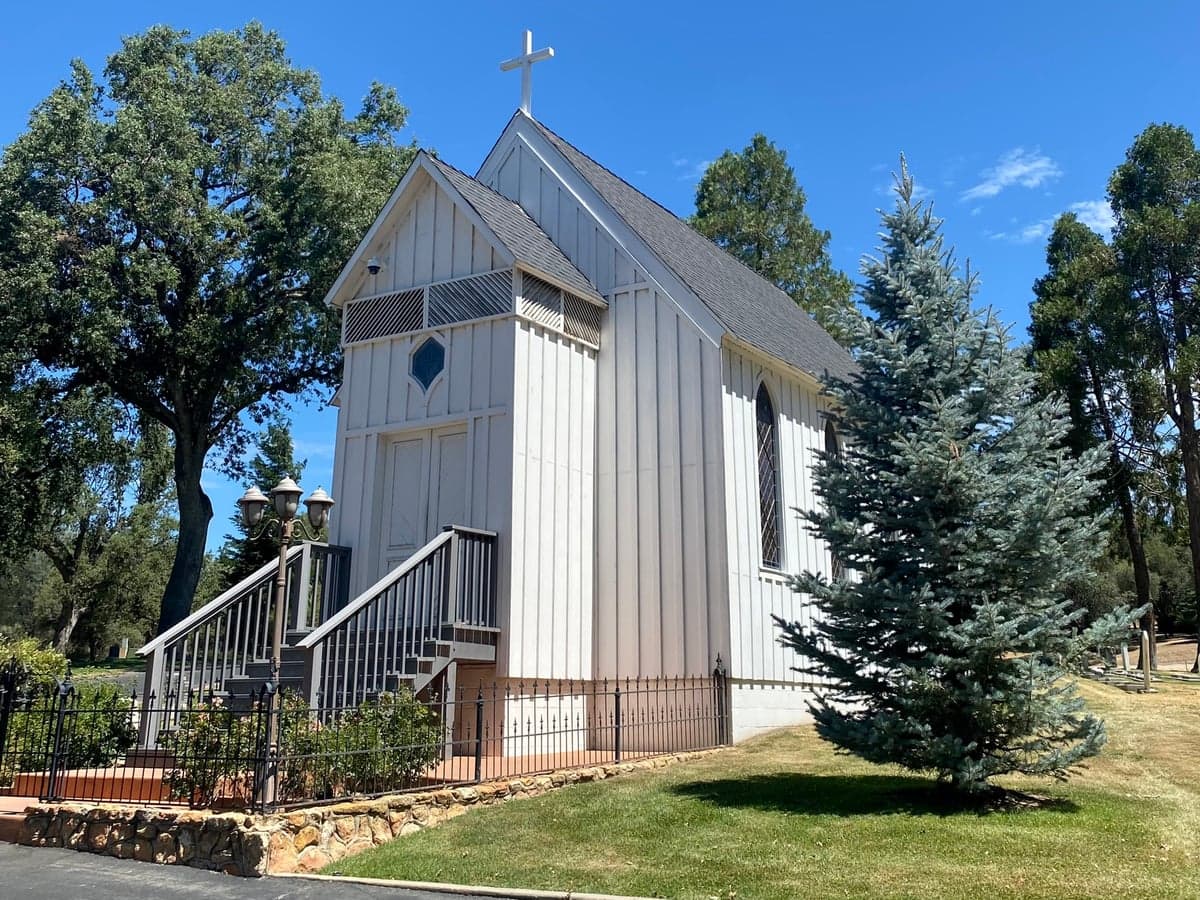
Photo: Wikipedia
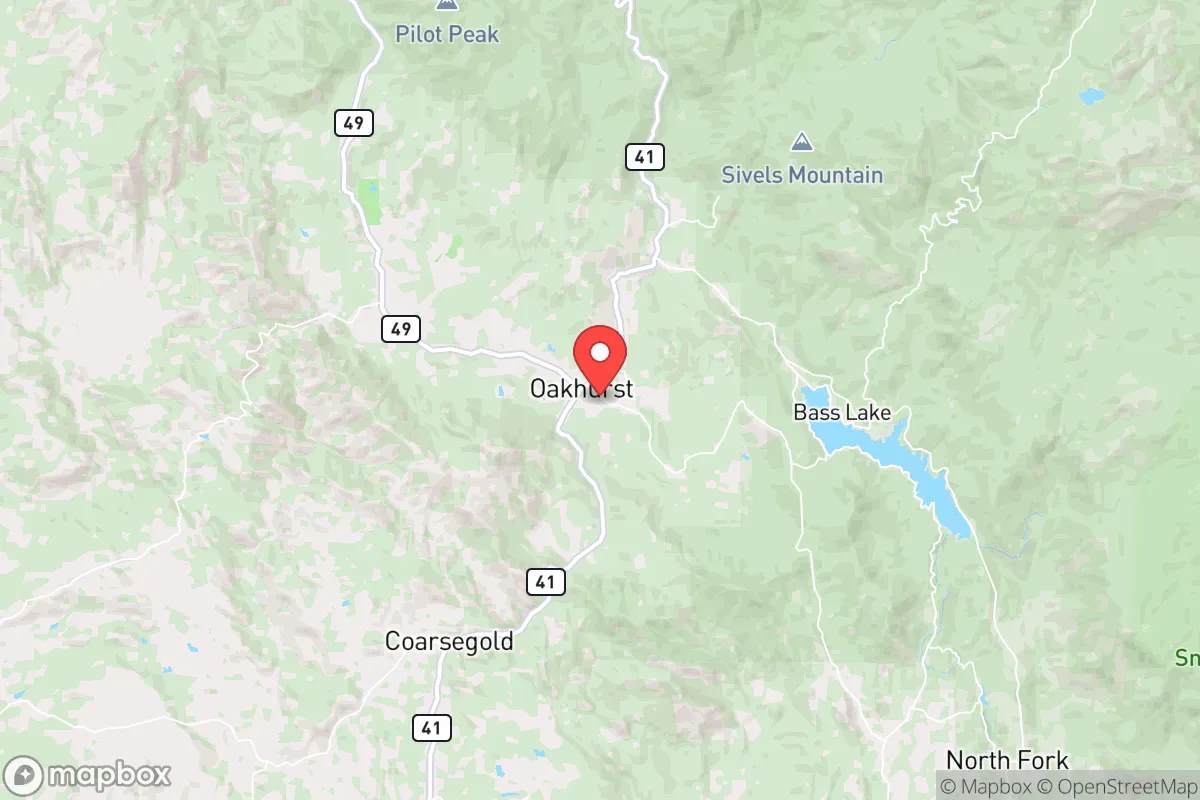
Personal Sovereignty in Oakhurst, CA
Viable for self-reliance. Generally workable, though some barriers may limit total independence.
What does Personal Sovereignty tell us?
Personal Sovereignty measures your capacity for self-reliance and independence with minimal government friction. Higher scores mean fewer barriers between you and the way you want to live... but it assumes you have the space you need and good neighbors.
What does this tell us?
Personal Sovereignty measures your capacity for self-reliance and independence with minimal government friction. Higher scores mean fewer barriers between you and the way you want to live... but it assumes you have the space you need and good neighbors.
State Policy
Energy independence: Importer (33% of energy produced in-state)
Personal Liberty
Homesteading

Personal Liberty Analysis
Oakhurst, California, offers a nuanced personal sovereignty environment that balances the freedoms of rural mountain living with the regulatory realities of being in one of the nation's most governed states. For individuals and families prioritizing independence, this Madera County foothill community provides meaningful autonomy in daily life—particularly around property use and self-reliance—while operating under California's statewide tax, gun, and health mandates. The key for a freedom-minded relocator is understanding where local conditions amplify personal choice and where state law imposes constraints.
Tax burden and regulatory posture in Madera County
California's tax structure is among the heaviest in the U.S., and Oakhurst residents are fully subject to it. The state's top marginal income tax rate reaches 13.3%, and the base sales tax rate in Madera County is 7.25% (with local add-ons bringing it to roughly 8.5% in unincorporated areas). Property taxes, however, are a relative bright spot due to Proposition 13: annual assessments are capped at 1% of the purchase price plus a 2% yearly increase, meaning long-term homeowners face predictable, low tax growth. For a new buyer, expect roughly 1.1% to 1.2% of the home's value annually. The regulatory posture at the county level is notably lighter than in coastal California. Madera County's zoning code allows for agricultural and residential uses on parcels as small as 1 acre without special permits, and the county planning department is known for practical, non-adversarial enforcement. There is no county-level rent control, no local plastic bag ban, and no municipal utility that restricts rainwater collection—all of which contrast with cities like San Francisco or Los Angeles. The main regulatory friction comes from state-level environmental quality (CEQA) reviews for any significant construction or business expansion, which can add months and thousands in consultant fees.
Self-defense and gun law specifics in California
California's firearm laws are among the strictest nationally, and Oakhurst residents must comply fully. The state requires a 10-day waiting period and a Firearm Safety Certificate for all purchases, with a background check through the California Department of Justice. Semi-automatic rifles with "assault weapon" features (pistol grips, flash suppressors, detachable magazines) are banned for new purchases, and magazines are limited to 10 rounds. Concealed carry permits (CCW) are issued by the Madera County Sheriff's Office, which operates under "may-issue" discretion but has a reputation for being reasonably accommodating compared to coastal counties. As of 2026, the sheriff's office reports an approval rate of approximately 85% for applicants who complete the required training course and demonstrate good cause (self-defense is accepted). Open carry of handguns is prohibited, and long guns may only be carried unloaded. For self-defense in the home, shotguns and handguns remain legal and common. The practical effect for Oakhurst residents is that gun ownership is possible but requires more paperwork, cost, and waiting than in most other states. The community's rural character means many households still keep firearms for wildlife protection and personal security, but the legal framework demands careful compliance.
Self-reliance and homesteading viability: lot sizes, zoning, and off-grid feasibility
Oakhurst's zoning and geography make it a strong candidate for homesteading and off-grid living, within California's regulatory boundaries. The predominant zoning in the surrounding unincorporated areas is AE-20 (Agricultural Exclusive, 20-acre minimum) and RM (Rural Mountain, 1- to 5-acre minimums). In the Oakhurst community plan area, many residential lots range from 0.5 to 5 acres, with a significant number of parcels between 1 and 3 acres available for under $100,000. Raising chickens, goats, and small livestock is permitted on parcels of 1 acre or more without a conditional use permit. Beekeeping is allowed on lots as small as 0.5 acres. Off-grid feasibility is high in terms of solar: the Sierra Nevada foothills receive 5.5 to 6.0 peak sun hours per day, making photovoltaic systems highly effective. However, California's building code requires that any habitable structure be connected to an approved wastewater system (septic or sewer) and meet Title 24 energy standards. Rainwater collection for outdoor use is unrestricted, but indoor potable use requires a permit and treatment system. Well drilling is common and typically yields adequate water at depths of 100 to 300 feet, though costs run $15,000 to $30,000. The county does not enforce a minimum square footage for dwellings, so tiny homes and cabins on foundations are permissible if they meet septic and electrical codes. The main constraint for full off-grid independence is that California law requires grid interconnection for any solar system over 10 kW unless you pay for a separate "off-grid" permit, which adds complexity. Overall, Oakhurst offers genuine homesteading potential for those willing to navigate state energy and wastewater rules.
Personal liberties: parental rights, medical autonomy, speech, and property
California's legal environment significantly shapes personal liberties in Oakhurst. Parental rights are protected under state law for educational decisions—parents can homeschool under a private school affidavit or enroll in public charter schools—but the state mandates vaccination for school attendance (medical exemptions only, no personal belief exemptions). The California Healthy Youth Act requires comprehensive sex education in public schools, which some families find conflicts with their values; private and homeschool options avoid this. Medical autonomy is constrained by California's universal healthcare mandates: residents must maintain health insurance or face a tax penalty, and the state has strict vaccine requirements for healthcare workers and schoolchildren. However, alternative medicine and naturopathic care are legal and available in the region, with several holistic practitioners in Oakhurst and nearby Bass Lake. Free speech is robustly protected under the California Constitution, which explicitly guarantees the right to speak on private property open to the public (e.g., shopping centers), and there are no local ordinances restricting political signage beyond standard size limits. Property rights are a mixed picture: Proposition 13 protects against tax spikes, but California's Coastal Commission and environmental regulations can restrict development on sensitive land (e.g., near streams or steep slopes). The county's general plan allows for accessory dwelling units (ADUs) by right on most residential lots, enabling multi-generational living or rental income without discretionary review. There is no countywide rent control, and short-term rentals (Airbnb) are permitted with a business license in unincorporated areas, though Oakhurst's community plan discourages them in residential zones.
Compared to other rural foothill communities in California, Oakhurst offers a moderate-to-high level of personal sovereignty for a freedom-oriented household. The tax and gun laws are undeniably state-level constraints, but the county's light touch on zoning, the feasibility of homesteading on 1-5 acre parcels, and the sheriff's reasonable CCW issuance create a local environment where self-reliance is practical. For someone weighing Oakhurst against a Nevada or Texas alternative, the trade-off is clear: you accept California's higher taxes and tighter gun and health mandates in exchange for a Mediterranean climate, Sierra Nevada access, and a community where property rights and rural autonomy are still respected at the county level. It is not a libertarian haven, but it is one of the more freedom-compatible options within California's regulatory framework.

* Values derived from national, state, county, city and local statistics and may differ in a specific area. Last updated: 2026-10-21T10:39:02.000Z
Narrative content on this page is AI-generated and may contain mistakes. Verify any details that matter before acting on them.
ReloMaps may earn a commission from affiliate links at no extra cost to you.

