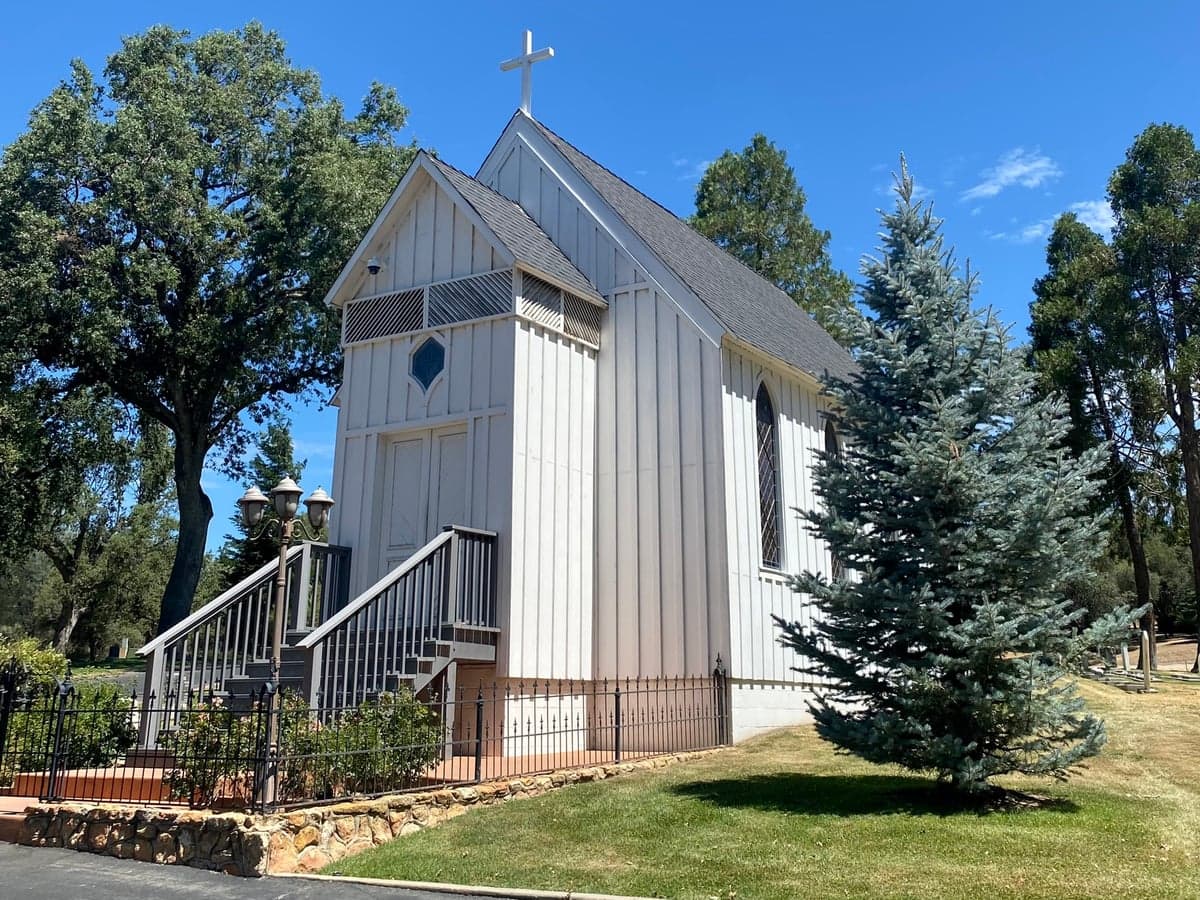
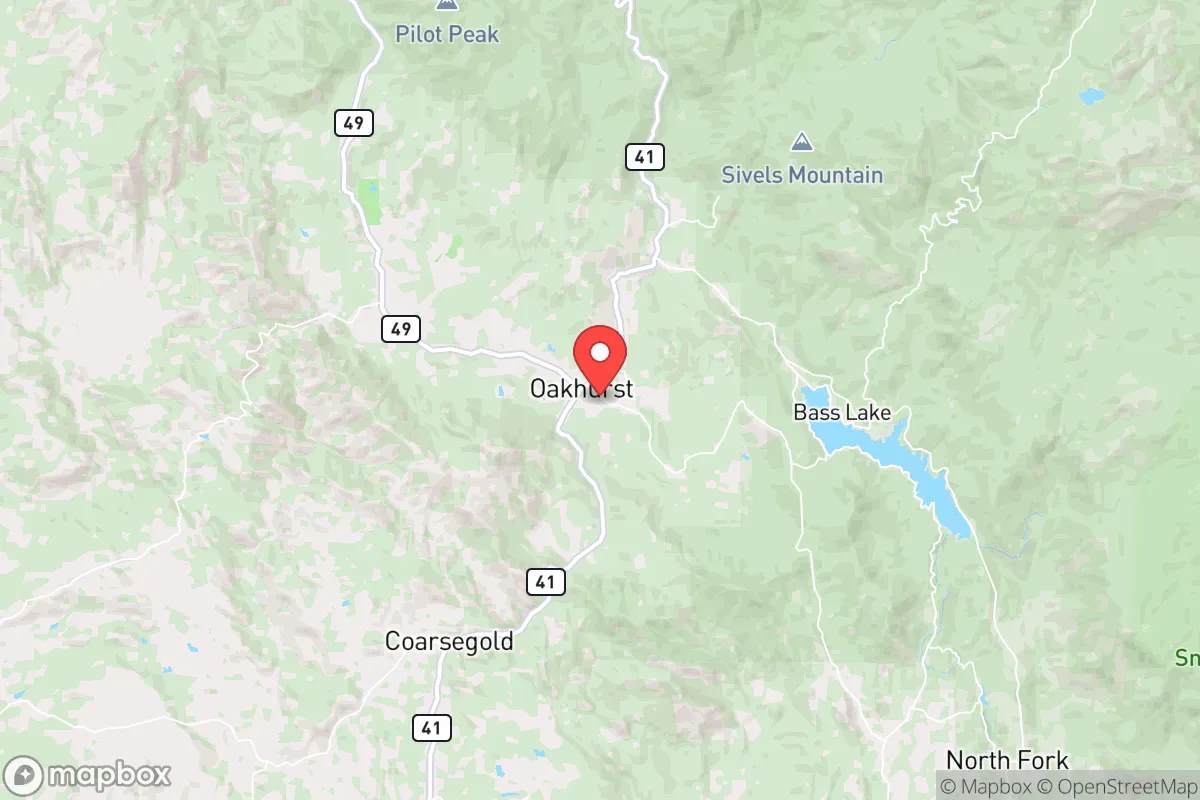
Photo: Wikipedia
Demographics of Oakhurst, CA
Affluence Level in Oakhurst, CA
A middle-class area roughly in line with national averages across income, home values, education, and employment.
People of Oakhurst, CA
Today, Oakhurst, California is a small, predominantly white community of 4,956 residents, where 82.6% of the population identifies as white alone. The town’s character is defined by its role as a gateway to Yosemite National Park, with a lower-than-average foreign-born population of 3.1% and a modest college attainment rate of 25.4%. Its identity is rooted in a blend of longtime Sierra Nevada foothill families and more recent retirees and remote workers drawn by the area’s natural beauty and relative affordability compared to the Central Valley.
How the city was settled and grew
Oakhurst’s human history begins with the Southern Sierra Miwok people, who inhabited the region for centuries before European contact. The first significant wave of non-Native settlement came during the California Gold Rush of the 1850s, when miners and prospectors established small camps along the Fresno River. The town’s original name, Fresno Flats, reflected this early mining economy. By the 1870s, the area transitioned to logging and agriculture, with the Madera Sugar Pine Lumber Company driving a second wave of European-American settlers, many of whom were of English, German, and Irish descent. These early residents built homes in what is now the Historic Fresno Flats district, centered around today’s Road 426 and School Road, where several original structures remain as part of the Fresno Flats Historic Park. A third wave arrived in the early 20th century as the Yosemite Valley Railroad connected the area to the Central Valley, bringing tourists and service-industry workers. The town was officially renamed Oakhurst in 1912 to avoid postal confusion, and the Junction area—where Highway 41 meets Road 426—became the commercial and residential hub for this growing population of railroad workers and innkeepers.
Modern era (post-1965)
After the 1965 Hart-Cellar Act, Oakhurst saw minimal immigration-driven change, consistent with its current foreign-born share of just 3.1%. The major demographic shift of the modern era has been domestic in-migration, beginning in the 1970s and accelerating through the 1990s, as Californians from the Los Angeles and San Francisco Bay areas sought second homes or retirement properties near Yosemite. This wave was predominantly white and middle-to-upper income, settling in newer subdivisions like Whispering Pines and Ponderosa Pines, located along the hillsides east of Highway 41. The Hispanic population, now at 11.8%, grew steadily from the 1980s onward, driven by workers in the hospitality, construction, and landscaping sectors that support the tourism economy. These families concentrated in the Oakhurst Village area near the intersection of Highway 41 and Road 426, where more affordable rental housing and mobile home parks are located. The East/Southeast Asian population remains very small at 0.7%, and the Black population at 0.5%, reflecting the area’s limited economic diversity and lack of major employers outside tourism and small-scale retail. The Indian subcontinent population is effectively zero (0.0%). The Yosemite Springs Park neighborhood, a gated community developed in the 2000s, attracted a mix of retirees and remote workers, further reinforcing the white, older demographic profile.
The future
Oakhurst’s population is projected to grow slowly, with the Madera County general plan anticipating modest infill development rather than large-scale subdivisions. The town is becoming slightly more diverse, driven by a gradual increase in the Hispanic share, which is expected to approach 15-18% over the next decade as younger families move in for service-sector jobs. The white population, while still dominant, is aging, with a median age above the state average. Newer residential construction is concentrated in the Oak Creek Estates area, a master-planned community on the town’s southern edge that is attracting a mix of families and retirees, but remains overwhelmingly white. The foreign-born share is unlikely to rise significantly given the lack of industrial or agricultural employment that typically draws immigrants. The cultural identity of Oakhurst is likely to remain that of a conservative-leaning, outdoor-recreation-oriented foothill town, with the main demographic tension being between longtime local families and newer, wealthier transplants from coastal California.
For someone moving to Oakhurst now, the town offers a stable, predominantly white community with a strong tourism-based economy and a growing Hispanic minority. The population is aging slowly, but new construction in areas like Oak Creek Estates is attracting younger families. The area’s cultural identity is rooted in its Yosemite gateway role and conservative values, making it a fit for those seeking a quiet, nature-focused lifestyle with limited ethnic diversity and a low foreign-born presence.

* Values derived from national, state, county, city and local statistics and may differ in a specific area. Last updated: 2026-10-21T10:39:02.000Z
Narrative content on this page is AI-generated and may contain mistakes. Verify any details that matter before acting on them.
ReloMaps may earn a commission from affiliate links at no extra cost to you.

