Photo: Wikipedia
Strategic Assessment of Northville, MI
Multiple tactical vulnerabilities. Population density, target proximity, or disaster risk are likely compounding. A retreat property and exit planning is required.
What does the Strategic Assessment tell us?
Our Strategic Assessment grades tactical survivability of an area. Major population centers, military targets, fallout zones, natural disasters, and border exposure all drive risk — lower exposure means a more defensible position in a crisis.
This is heavily inspired by Joel Skousen's Strategic Relocation book. Highly recommended you checkout the book ($)What does this tell us?
Our Strategic Assessment grades tactical survivability of an area. Major population centers, military targets, fallout zones, natural disasters, and border exposure all drive risk — lower exposure means a more defensible position in a crisis.
This is heavily inspired by Joel Skousen's Strategic Relocation book. Highly recommended you checkout the book ($)Strategic Pillars

Key Distances
Regional Safe Places
Below is our recommended "safe zones" in Michigan and the surrounding area based on our strategic heuristics. For most people, it's unrealistic to live in a “safe zone” full-time due to work, family or other personal reasons. They tend to be more rural. However, many of these areas are perfect for second homes and retreat properties that double as a vacation home or even a short-term rental.


Important Note: For informational purposes only. This does not mean nothing bad ever happens in the green zones. Please use common sense. This is based on public data and modeled with AI. We tried to take a conservative approach but mistakes happen. We update this regularly as new information becomes available.
Solar Generator Recommendations
Backup power matters more here than in safer locations. We've picked three solar generators across budgets and capacity tiers — start with the budget unit if you only need a few essentials, or step up if you want to run a fridge and HVAC for days at a time.

Jackery Portable Power Station Explorer 300
Budget OptionPower on the Go: Weighing only 11 lbs, it's convenient to set up and store with book-sized foldable solar panels

BLUETTI Portable Power Station AC180
Designed for both indoor and outdoor scenarios, AC180 is highly capable as it has a robost capacity and continuous output power.

EF ECOFLOW DELTA Pro Ultra Power Station
Upgraded PickEcoFlow DELTA Pro Ultra is a whole-home energy system designed to grow with your family. Integrated with the Smart Home Panel 2, it scales to meet your evolving energy needs — keeping your home powered, intelligent, and secure through every stage of life.
We earn a commission, at no additional cost to you.
Strategic Assessment Analysis
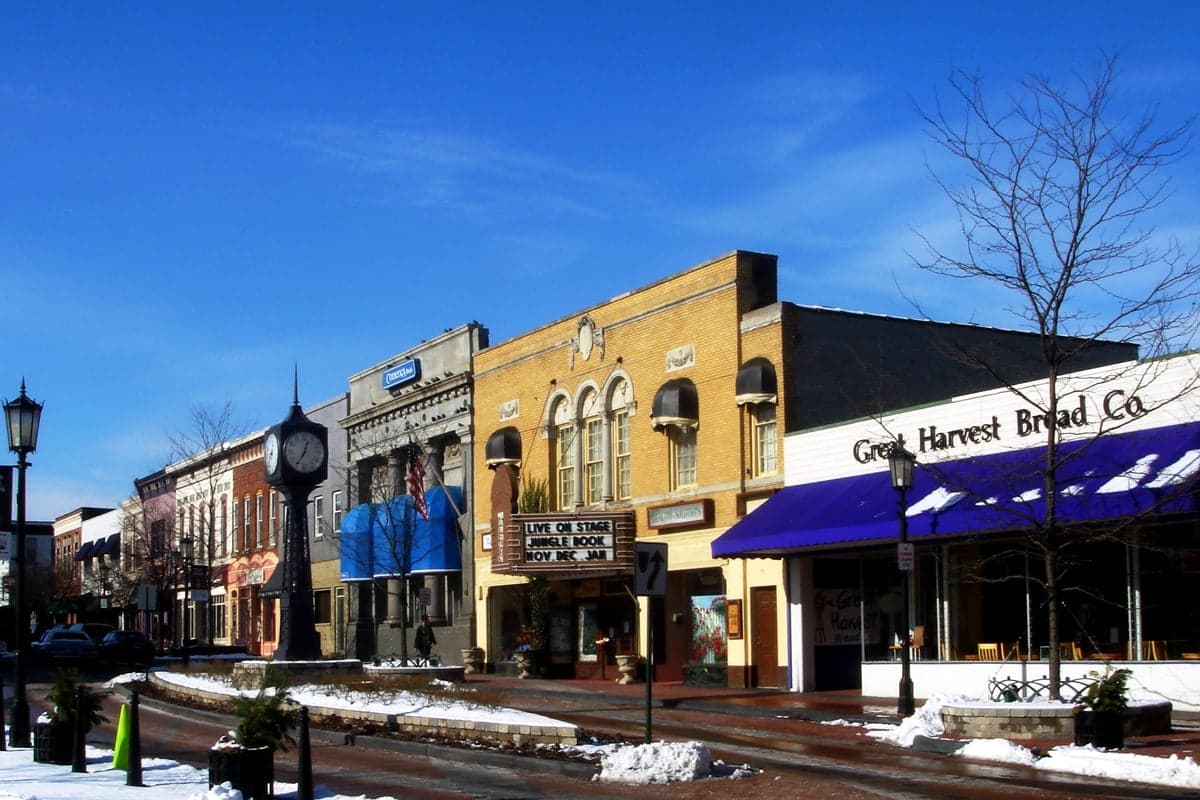
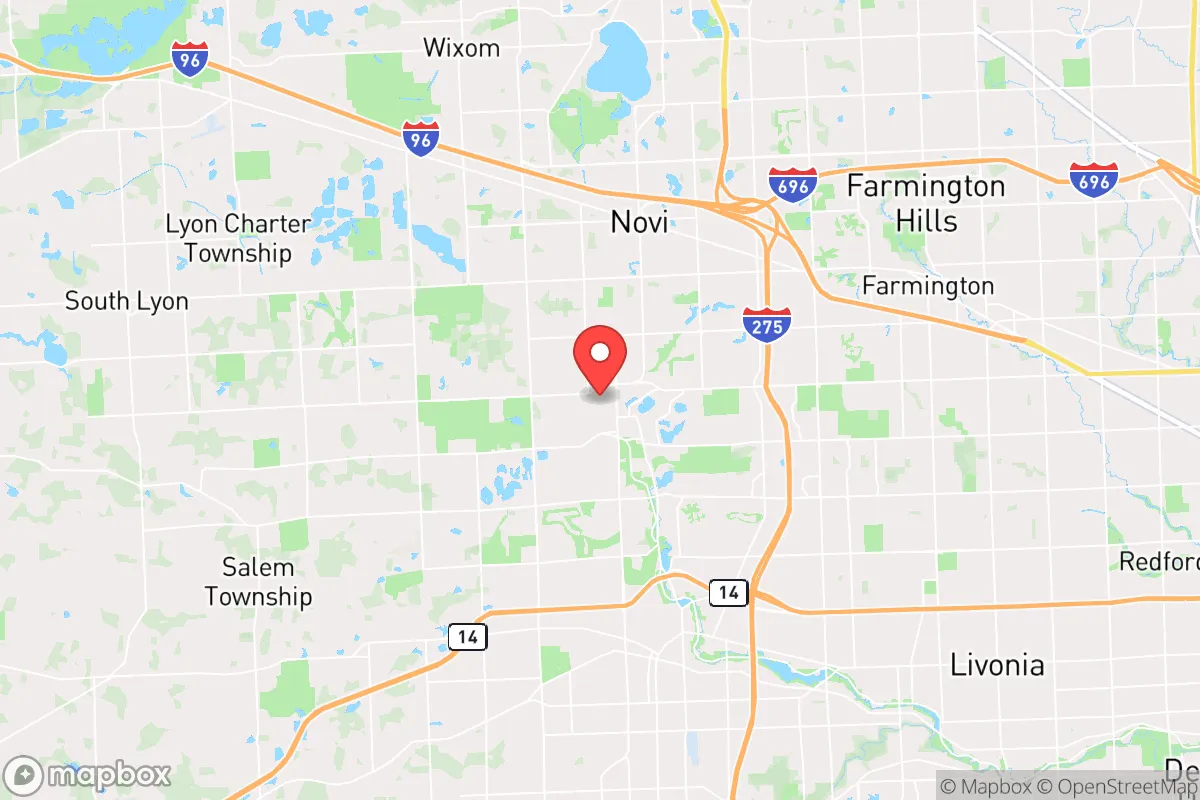
Northville, Michigan, offers a surprisingly strong strategic position for a relocator prioritizing resilience and self-sufficiency, balancing proximity to Detroit’s economic engine with a defensible, resource-rich geography. Its location in southeast Michigan, roughly 25 miles northwest of downtown Detroit, places it on the edge of the suburban sprawl, where the transition to more rural, agricultural land begins. This positioning gives Northville a distinct advantage: it is close enough to major employment centers and infrastructure to maintain economic stability, yet far enough from the most concentrated urban risks to offer a buffer against the cascading failures that can follow a major disruption.
Geographic position and natural advantages for self-sufficiency
Northville sits in a region defined by the Huron River watershed, with the river itself flowing through the city’s southern edge. This water source is a critical asset for long-term resilience, providing a potential supplementary water supply beyond municipal systems. The area’s topography is gently rolling, with well-drained soils that support both agriculture and natural vegetation. The city is surrounded by a mix of farmland, state recreation areas, and suburban developments, creating a patchwork of land uses that can buffer against total isolation. The presence of Maybury State Park and Proud Lake Recreation Area within a short drive offers not only recreational opportunities but also potential foraging, hunting, and timber resources in a prolonged emergency. The region’s climate is temperate, with four distinct seasons, which allows for year-round food production in protected settings but also requires planning for winter heating and snow removal. The lack of major floodplains or seismic activity in this part of Michigan reduces natural disaster risk, though heavy snow and ice storms are annual considerations.
Risks, exposures, and proximity to fallout-relevant landmarks
The primary strategic vulnerability for Northville is its proximity to the Detroit metropolitan area, a dense urban and industrial corridor that includes multiple potential targets for man-made disasters. Detroit Metropolitan Wayne County Airport (DTW) is roughly 15 miles southeast, and the city lies within the fallout shadow of several major infrastructure nodes, including the Ford River Rouge Complex in Dearborn and the Detroit-Windsor Tunnel and Ambassador Bridge crossings. These are high-value targets for any state-level adversary. Additionally, the Fermi 2 nuclear power plant in Newport, about 30 miles south-southeast, presents a low-probability but high-consequence risk; prevailing winds from the south could carry fallout toward Northville in a worst-case scenario. The city itself is not a primary target, but its location within the 50-mile radius of these assets means that a major event could disrupt supply chains, power grids, and transportation for weeks. The I-275 and M-14 corridors, which run near Northville, are likely evacuation routes that could become choked in a crisis. On the positive side, the city’s position on the western edge of the suburban ring means it is less exposed to the immediate blast effects of a downtown Detroit event, and the surrounding farmland offers a natural buffer against urban chaos.
Practical resilience for a relocator: food, water, energy, and defensibility
For a relocator serious about self-sufficiency, Northville’s practical resilience is mixed but workable. The city has a robust municipal water system sourced from the Detroit River via the Great Lakes Water Authority, but this system is vulnerable to contamination or pressure loss during a grid-down scenario. Private wells are common in the more rural areas just outside city limits, and properties with acreage in nearby townships like Salem or Lyon offer the best option for independent water access. The soil quality in the region is good for gardening, with a growing season from roughly May to October; cold frames and hoop houses can extend this significantly. Local farmers’ markets and Calder Dairy, a regional producer, provide local food sources that could be bartered or purchased in a partial disruption. Energy resilience is a challenge: the grid is reliable day-to-day but is part of the larger DTE Energy system, which has experienced notable outages during storms. Solar panels with battery storage are a viable investment here, as the region receives about 4.5 peak sun hours per day in summer, though winter production drops. Natural gas is widely available for heating, but a backup wood stove or propane system is advisable. Defensibility is moderate: Northville is a compact, walkable city with a historic downtown, but its suburban layout means many homes are on standard lots with neighbors close by. Properties on the city’s western and northern edges, where lots are larger and roads are less trafficked, offer better security. The local police and fire departments are well-funded and responsive, but in a widespread event, they would be stretched thin. The community is generally affluent and educated, which can foster cooperative preparedness networks, but also means that competition for resources could be higher than in more rural areas.
The overall strategic picture for Northville is one of calculated trade-offs. It offers a solid base for a relocator who wants to stay connected to the economic opportunities of southeast Michigan while building a resilient lifestyle. The key is to treat the city as a hub rather than a fortress: use its access to farmland, water, and community resources, but plan for the reality that a major event in Detroit or at the Fermi plant would create significant pressure. For a family or individual willing to invest in a well, solar, and a defensible property on the outskirts, Northville provides a rare combination of suburban convenience and rural-adjacent resilience. It is not a remote bunker, but it is a smart, defensible position for those who understand that true preparedness is about community, redundancy, and location—and Northville scores well on all three.

* Values derived from national, state, county, city and local statistics and may differ in a specific area. Last updated: 2026-10-05T03:53:27.000Z
Narrative content on this page is AI-generated and may contain mistakes. Verify any details that matter before acting on them.
ReloMaps may earn a commission from affiliate links at no extra cost to you.

