Photo: Wikipedia
Political ClimatePolitical Climate in Northville, MI
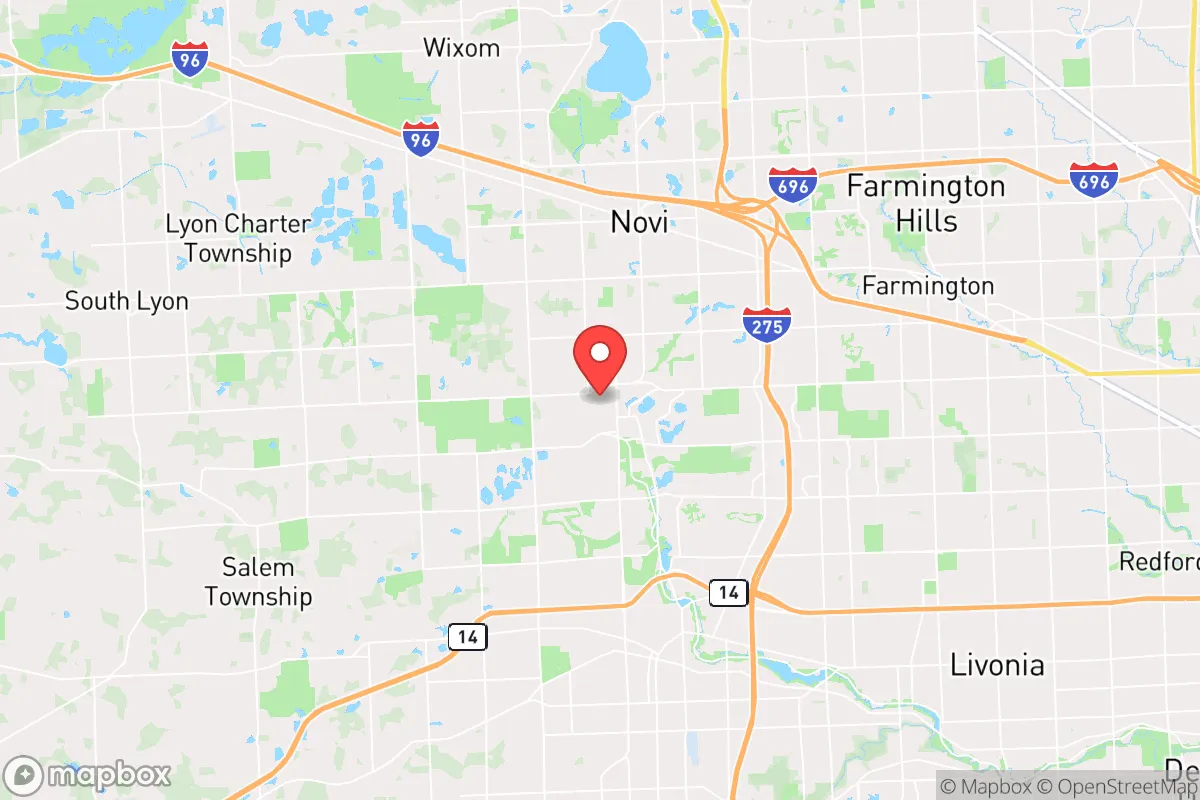
District shown is the primary district for this city’s centroid. Cities may span multiple districts.
Local Political AnalysisPolitical Analysis of Northville, MI
Northville, Michigan, leans decisively Democratic, with a Cook Partisan Voting Index (PVI) of D+12, meaning the area votes about 12 points more Democratic than the national average. This is a significant shift from even a decade ago, when the city was more of a swing area, and it stands in stark contrast to the state of Michigan as a whole, which has a Cook PVI of EVEN—perfectly balanced between the two parties. The trajectory here has been a steady march leftward, driven largely by an influx of professionals and families from the Ann Arbor and Detroit metro areas who prioritize education, environmental policy, and social services.
How it compares
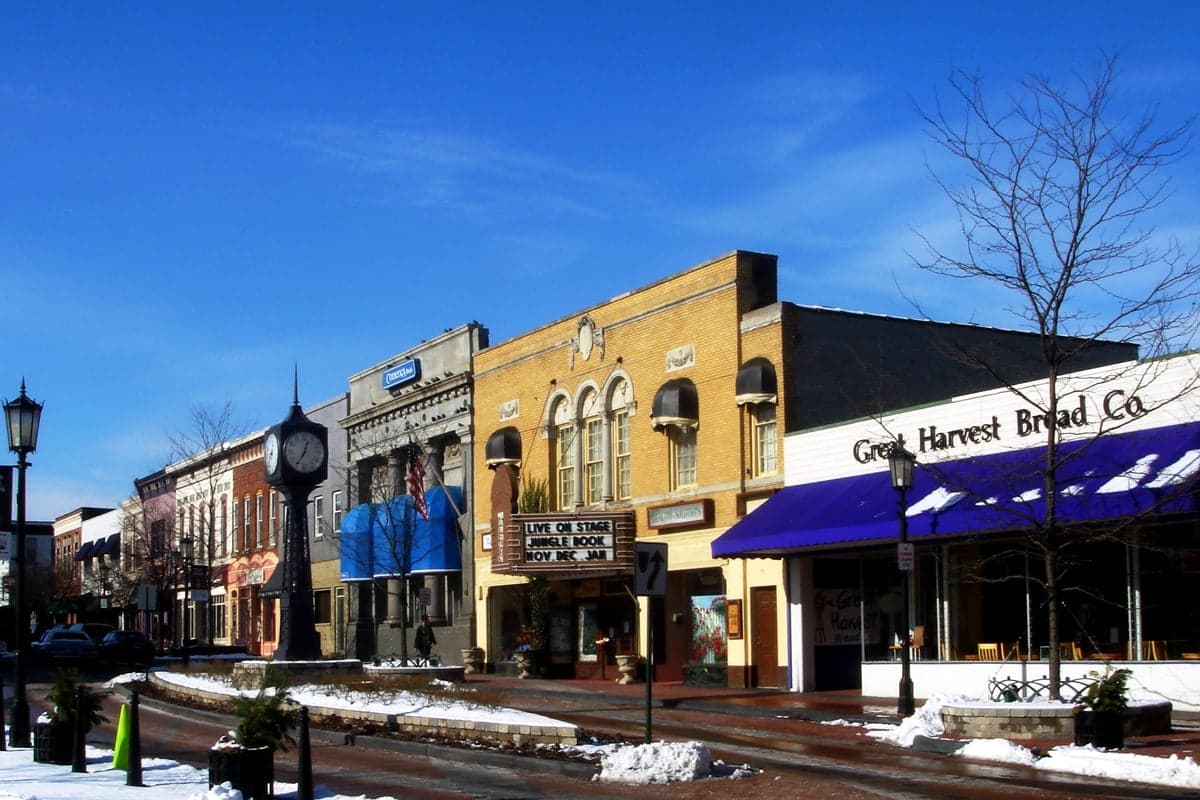
To understand Northville's political climate, you have to look at its neighbors. Head west a few miles to Novi or north to Farmington Hills, and you'll find similar Democratic leanings, though not as pronounced. But drive just 10 minutes south to Livonia or east to Plymouth, and the political landscape flips—those areas are more conservative, often voting Republican in local and state races. Northville's D+12 rating puts it in a league with Ann Arbor (D+28) and Royal Oak (D+15), but it's not as uniformly liberal as those cities. The city's small-town feel and historic downtown attract a mix of voters, including moderate Republicans who feel increasingly out of step with the national party. The surrounding state of Michigan, with its EVEN rating, is a true battleground—think of it as the political equivalent of a 50-50 coin flip in presidential elections. Northville, by contrast, is a safe bet for Democrats in most races, though local contests can still be competitive.
What this means for residents
For liberal residents, Northville is a comfortable place to live. You'll find strong support for public schools, environmental initiatives like the city's tree preservation ordinance, and social programs. The city council and school board are reliably Democratic, so progressive policies on housing, transit, and sustainability tend to move forward without much drama. For conservative residents, it's a different story. You're likely in the minority, but not isolated—there are still plenty of neighbors who share your views, especially on fiscal issues like property taxes. The challenge is that your voice can get drowned out in local elections, and you may feel the city's cultural and policy direction doesn't always reflect your values. That said, Northville's small size and active civic life mean that personal relationships and community involvement can still give you influence, even if the numbers aren't on your side.
Culturally, Northville's Democratic lean shows up in its embrace of diversity and inclusion initiatives, like the city's annual Pride celebration and its support for refugee resettlement programs through local churches. Policy-wise, the city has been a leader in renewable energy, with a goal of 100% clean electricity for municipal operations by 2030. This contrasts with more conservative neighboring towns like Livonia, which have been slower to adopt such measures. For both liberals and conservatives, the key takeaway is that Northville's political climate is stable and predictable—a D+12 rating isn't going to flip overnight. If you're moving here, you can expect a community that values education, environmental stewardship, and a high quality of life, but you'll also need to accept that the political winds blow consistently in one direction. It's a place where you can engage, disagree, and still find common ground over a coffee at the Northville Coffeehouse—just don't expect to change the city's overall political trajectory anytime soon.

State Political ClimatePolitical Climate in Michigan
State Political AnalysisPolitical Environment in the State
Michigan is the ultimate swing state, carrying a Cook PVI of EVEN and flipping from Trump in 2016 to Biden by 154,000 votes in 2020, then back to Trump in 2024 by roughly 80,000 votes. The state’s political identity is a three-way tug-of-war between the heavily Democratic, union-heavy southeast (Detroit, Ann Arbor), the reliably Republican western and northern Lower Peninsula (Grand Rapids, Traverse City), and the ancestrally blue but increasingly red-leaning working-class suburbs and exurbs (Macomb County, parts of Oakland County). Over the last 20 years, the old “blue wall” has cracked: Democrats lost their lock on white working-class voters in places like Macomb and Bay County, while Republicans have struggled to hold the affluent, college-educated suburbs of Oakland County that once voted for George W. Bush. The result is a state that feels like it’s holding its breath, with every election a coin flip.
Urban vs. rural divide
The political map of Michigan is a study in stark contrasts. Wayne County (Detroit) and Washtenaw County (Ann Arbor) are the Democratic engine, delivering margins of 300,000+ votes that Democrats need to offset the rest of the state. Detroit’s Black population and Ann Arbor’s university community form the core of the party’s base. On the other side, Ottawa County (Holland) and Kent County (Grand Rapids) are the Republican anchor, with Grand Rapids’ Dutch Reformed and evangelical heritage producing some of the most consistent conservative turnout in the Midwest. The real battleground is the suburban ring: Macomb County (north of Detroit) is the poster child for the white working-class shift — it voted for Obama twice, then Trump twice, then narrowly for Trump again in 2024. Oakland County (Bloomfield Hills, Royal Oak) is the opposite story: it was reliably Republican in the 2000s, but has trended blue as college-educated voters and professionals moved in, giving Biden a 14-point win there in 2020. Up north, Traverse City and the Leelanau Peninsula are a rare mix — tourist-heavy and purple, with local elections often split between pro-environment Democrats and libertarian-leaning Republicans. The rural Upper Peninsula (Marquette, Houghton) is ancestrally Democratic but culturally conservative, and has been drifting red on guns and mining issues.
Policy environment
Michigan’s policy landscape is a patchwork that reflects its swing-state status. Taxes are moderate: a flat 4.25% individual income tax (down from 4.35% in 2023 via automatic triggers), a 6% sales tax, and property taxes that average about 1.5% of home value, though they vary wildly by local millage rates. The state has no estate tax and no tax on Social Security benefits — a plus for retirees. Regulatory posture is mixed: Michigan is a right-to-work state (the 2012 law was repealed by Democrats in 2023, but a 2024 ballot initiative reinstated it via a 58% vote). The state has a robust environmental regulatory framework, especially around Great Lakes water quality and PFAS contamination, which can slow industrial projects. Education policy is a flashpoint: the state has a universal school choice system (charter schools and inter-district open enrollment), but Detroit’s public schools remain under state oversight. Healthcare is expansive — Michigan expanded Medicaid under the Affordable Care Act, and the state runs a popular health insurance marketplace. Election laws are moderately accessible: no-excuse absentee voting was approved by voters in 2018 via Proposal 3, and same-day voter registration is available. Voter ID is required at the polls, but a signed affidavit can substitute for a photo ID.
Recent policy direction
The last few years have seen Michigan swing hard in both directions, depending on which party held the trifecta. Under Democratic control (2023-2024), the legislature passed a repeal of the 1931 abortion ban (codifying Roe-era protections), expanded the Elliott-Larsen Civil Rights Act to include sexual orientation and gender identity, and enacted a “red flag” gun law (extreme risk protection orders). They also repealed the “right-to-work” law and reinstated prevailing wage for construction projects. On the gun front, Michigan now has universal background checks for all firearm sales (passed in 2023) and a safe storage law, but open carry is still legal without a permit, and concealed carry requires a license (shall-issue). Parental and education rights are contested: the state does not have a “parental bill of rights” law, but a 2024 ballot measure to require parental notification for sex ed and library materials failed. Property rights are generally strong — Michigan is a “Dillon’s Rule” state, meaning local governments have only powers expressly granted by the state, which limits local zoning fights. Privacy and surveillance are relatively lax: there is no comprehensive state data privacy law, and law enforcement can access cell phone location data with a warrant. Medical and bodily autonomy is fully protected for abortion, but the state has not legalized physician-assisted suicide. Voting and ballot access remain a flashpoint: the 2024 election saw a failed attempt to require photo ID for absentee ballots, and the state’s independent redistricting commission (created by 2018 ballot measure) has drawn maps that are widely seen as fair, but both parties have sued over them.
Civil unrest & political movements
Michigan has been a national hotspot for political activism. The 2020 Whitmer kidnapping plot (involving militia members from the Wolverine Watchmen) put the state’s far-right under a national spotlight, and the “Operation Gridlock” protests at the state capitol in April 2020 (where armed protesters entered the building over COVID-19 restrictions) became a symbol of the pandemic-era culture war. On the left, the “Stand Up for Science” and “Rise Up for Reproductive Rights” rallies in Lansing have drawn thousands. Immigration politics are relatively quiet — Michigan is not a border state, but Detroit has a small sanctuary city policy (the city does not cooperate with ICE detainers for non-violent offenders). Election integrity controversies have been persistent: the 2020 election saw Trump’s legal team file multiple lawsuits in Michigan (all dismissed), and the 2024 election saw a Republican-led push for hand-counting of ballots in rural counties like Antrim and Missaukee. Secession rhetoric is mostly a joke, but the “Upper Peninsula for Statehood” movement has a small online following. The most visible flashpoint for a new resident would be the constant yard sign wars in suburban neighborhoods — in Macomb County, you’ll see Trump flags next to “Fuck Biden” flags, while in Ann Arbor, “In This House We Believe” signs are ubiquitous.
Projection
Over the next 5-10 years, Michigan is likely to remain a true battleground, but the demographic trends favor Democrats slightly. In-migration is modest — the state’s population grew by only 0.2% from 2020 to 2024, but the people moving in are disproportionately college-educated and coming from high-cost states like Illinois and California, settling in Ann Arbor, Grand Rapids, and Traverse City. The suburban shift in Oakland County and Kent County (Grand Rapids) is accelerating: both counties are becoming more diverse and more educated, which tends to push them left. Meanwhile, the rural exodus continues — the Upper Peninsula and northern Lower Peninsula are losing population, which reduces the Republican base. However, the working-class white vote in Macomb, Bay, and Saginaw counties may continue to drift right, especially on cultural issues like guns and transgender rights. The wild card is automotive electrification: the transition to EVs is creating new jobs in the battery belt (around Lansing and Flint), but also threatening traditional auto jobs in the southeast. If the EV transition creates more high-skill jobs than it destroys, the Democratic coalition could solidify. If it hollows out the middle class, expect more Trump-style populism. A new resident moving in now should expect a state where the governor’s race and Senate races will be decided by 1-2 points for the foreseeable future, and where the policy pendulum will swing with every election cycle.
For a new resident, the bottom line is that Michigan offers a genuine swing-state experience — your vote actually matters, but the political environment is intensely polarized and can change rapidly. If you’re conservative, you’ll find strong communities in Grand Rapids, Holland, and the rural thumb, but you’ll be living under a state government that may flip between parties every two years. If you’re liberal, you’ll feel at home in Ann Arbor, Detroit, and the college towns, but you’ll need to accept that statewide policy can reverse with a single election. The practical takeaway: choose your county carefully — the difference between living in Oakland County (blue-leaning, high taxes, good schools) and Macomb County (purple-leaning, lower taxes, more conservative culture) is bigger than the difference between many states. And be prepared for the weather — both political and meteorological — to change without warning.
* Values derived from national, state, county, city and local statistics and may differ in a specific area. Last updated: 2026-10-05T03:53:27.000Z
Narrative content on this page is AI-generated and may contain mistakes. Verify any details that matter before acting on them.
ReloMaps may earn a commission from affiliate links at no extra cost to you.

