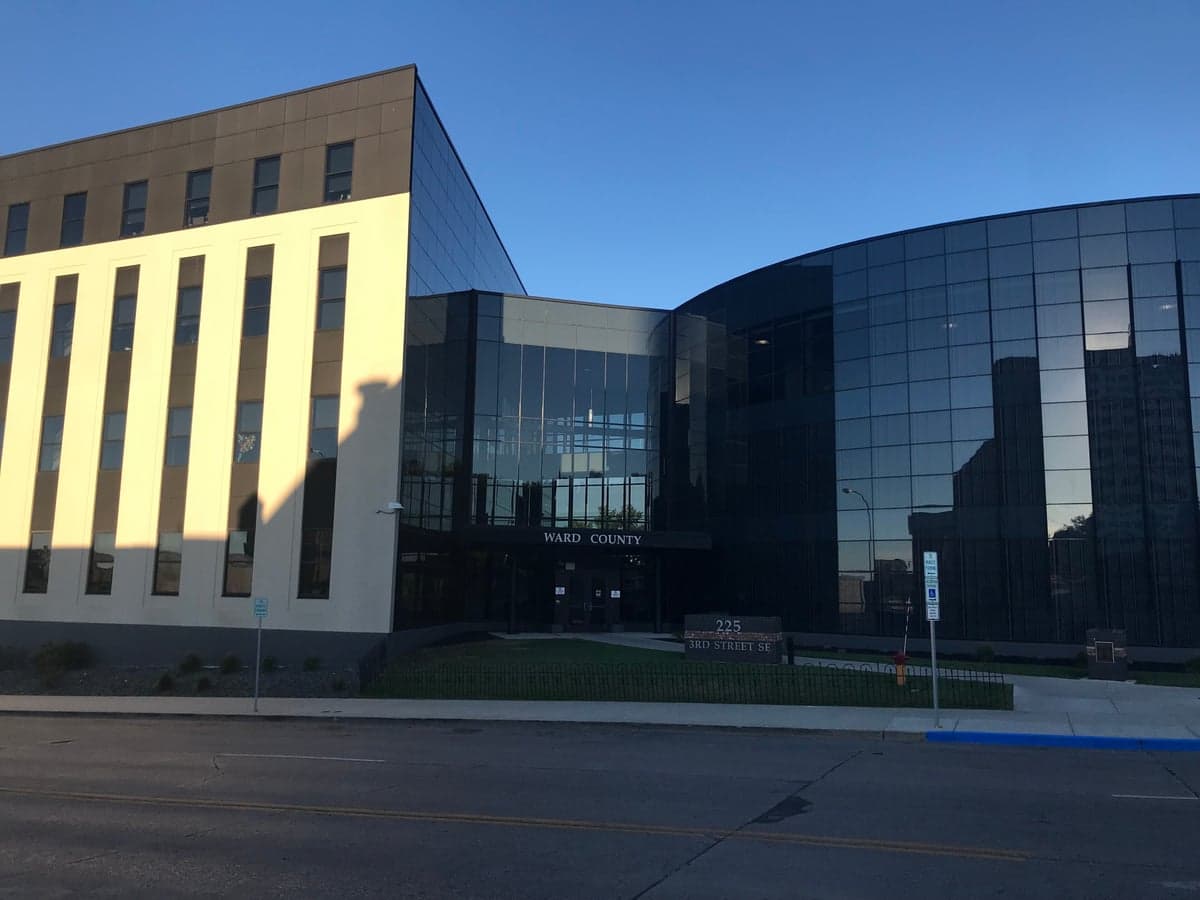
Photo: Wikipedia
Political ClimatePolitical Climate in Ward County
Showing state-level results — no local-only data available.
Local Political AnalysisPolitical Analysis of Ward County
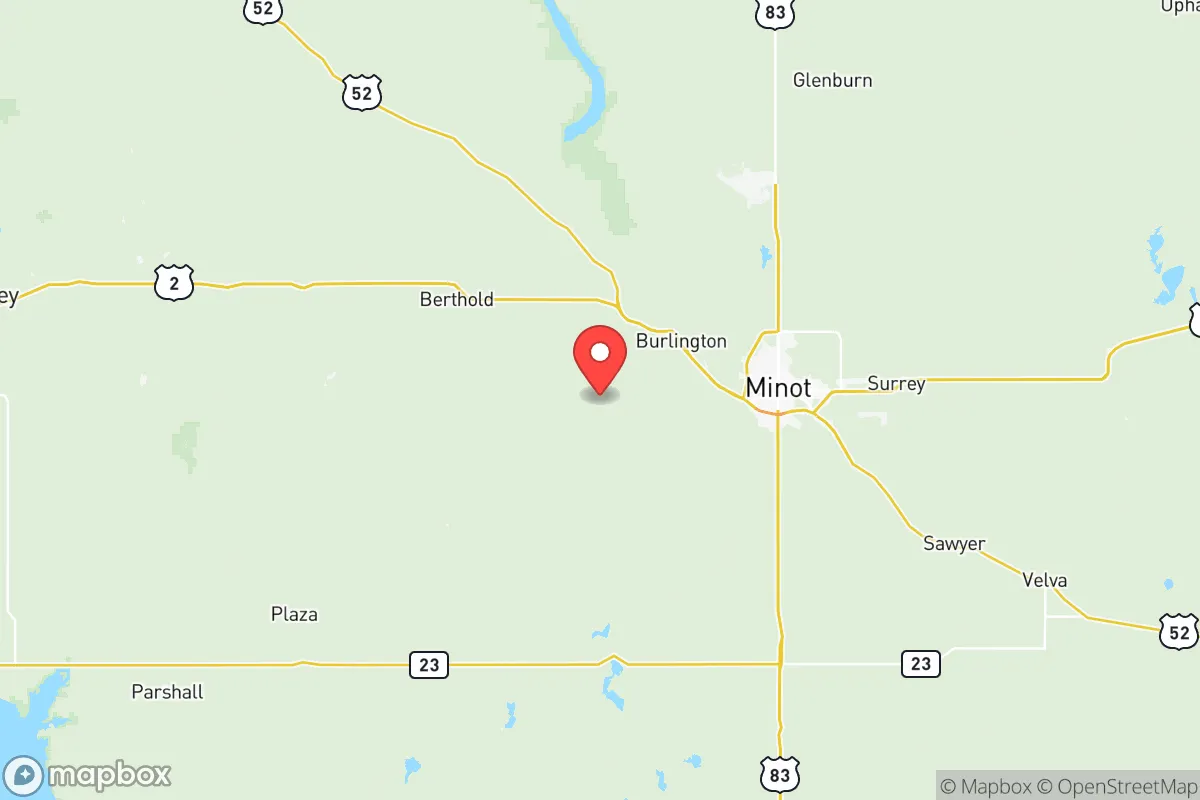
Ward County, anchored by Minot, is a reliably Republican stronghold with a Cook PVI of R+18, meaning it votes about 18 points more Republican than the national average. In the 2024 presidential election, Donald Trump carried the county with roughly 70% of the vote, a margin that has held steady since 2016. The county's political trajectory is one of deepening conservatism, driven by a strong agricultural base, a significant energy sector presence, and a population that values limited government and individual liberty. While the county is overwhelmingly red, there are subtle variations between its communities that reflect different local economies and demographics.
How it compares
Ward County is significantly more Republican than North Dakota as a whole, which itself is a deep red state. The state's Cook PVI is not publicly calculated, but in 2024, Trump won North Dakota by about 20 points, making Ward County's R+18 lean slightly more conservative than the state average. Within Ward County, the political geography is not uniform. Minot, the county seat and largest city, is the most moderate area, with some precincts near the Minot Air Force Base and the downtown core occasionally voting within 10 points of the national average. In contrast, Burlington and Kenmare are reliably deep red, often delivering 75-80% of their votes to Republican candidates. The rural townships, like those around Des Lacs and Donnybrook, are even more conservative, with Republican margins frequently exceeding 85%. The swing precincts are virtually nonexistent; the closest thing to a competitive area is the Minot State University campus, where younger voters and faculty sometimes produce a slightly more balanced vote, but even there, Republicans typically win by a comfortable margin.
What this means for residents
For conservative residents, Ward County is a comfortable and affirming environment. Local elected offices, from the county commission to the state legislature, are overwhelmingly held by Republicans, meaning conservative policy priorities on taxes, energy development, and gun rights are the default. The local culture strongly supports the Second Amendment, and property taxes are a perennial political issue, with candidates regularly promising to keep them low. For liberal residents, the reality is different. While they are not actively suppressed, they are a distinct minority. Democratic candidates rarely campaign in the county, and progressive viewpoints on issues like climate change or social spending are often met with polite dismissal or outright opposition. There is no active local Democratic Party infrastructure, so liberal residents often find their political engagement limited to national online communities or occasional trips to Fargo or Bismarck for events. Socially, most residents avoid political discussions in casual settings to maintain harmony, as the political divide is understood but rarely debated in public.
Culturally, Ward County stands apart from the rest of North Dakota in a few key ways. The presence of the Minot Air Force Base brings a transient, more diverse population that slightly moderates the county's politics compared to the deeply rural counties to the west. The base also makes the county more sensitive to federal defense spending and national security issues, which can sometimes create a more pragmatic, less ideological strain of conservatism. Additionally, the county's reliance on oil and agriculture means that policy debates often center on resource extraction and land use, with a strong local preference for minimal regulation. This creates a distinct political culture where the primary concern is economic opportunity rather than the social issues that dominate national headlines. For anyone moving here, understanding that the political conversation is grounded in local economics and community self-reliance is key to fitting in, regardless of your personal leanings.

State Political ClimatePolitical Climate in North Dakota
State Political AnalysisPolitical Environment in the State
North Dakota has been a reliably Republican state for decades, with a partisan lean that has only deepened in recent years. In the 2024 presidential election, Donald Trump won the state by a margin of over 30 points, a shift from the roughly 20-point margins seen in the early 2000s. The dominant political coalition is a blend of rural agricultural interests, energy sector workers from the Bakken oil fields, and a growing conservative suburban base in the state's few metro areas. Over the last 10-20 years, the state has moved from a moderate, pragmatic conservatism—embodied by figures like former Senator Kent Conrad—to a more hardline, culturally conservative posture, driven by in-migration from other states and a nationalized political environment.
Urban vs. rural divide
The political map of North Dakota is starkly divided between its sparse urban centers and its vast rural expanse. The state's largest city, Fargo, in Cass County, is the most competitive area politically. While Cass County still leans Republican, it does so by a narrower margin—often around 10-15 points—thanks to a mix of North Dakota State University faculty, healthcare workers, and a growing population of younger professionals. In contrast, Bismarck and Mandan in Burleigh and Morton counties are deeply conservative, routinely voting Republican by 30-40 points, driven by state government employees, energy industry workers, and a strong evangelical presence. The oil boomtowns of Williston and Watford City in the northwest are among the most Republican areas in the state, with margins exceeding 50 points in some precincts, reflecting a transient workforce that leans heavily libertarian and pro-energy. The rural counties along the Missouri River and the Red River Valley are uniformly red, with the notable exception of Grand Forks, home to the University of North Dakota, which occasionally produces a few more Democratic-leaning precincts, though the city itself remains solidly Republican overall. The only reliably blue areas are a handful of Native American reservations, such as the Turtle Mountain Band of Chippewa near Belcourt and the Standing Rock Sioux Reservation south of Fort Yates, which vote overwhelmingly Democratic but have little statewide influence due to low population density.
Policy environment
North Dakota's policy environment is defined by a low-tax, low-regulation approach that appeals to conservative relocators. The state has no state income tax (a flat tax was eliminated in phases through 2023), and property taxes are among the lowest in the nation, though they vary by county. Sales tax is capped at 8% in most areas, with many rural counties below 6%. The regulatory posture is business-friendly, with minimal zoning restrictions outside of Fargo and Bismarck, and a right-to-work law that limits union power. Education policy is decentralized, with local school boards holding significant authority; there is a robust school choice movement, including a 2023 law expanding charter schools and a voucher-like program for special needs students. Healthcare is a mixed bag: the state expanded Medicaid under the Affordable Care Act in 2013, a decision that remains controversial among conservatives, but the system is strained by a shortage of providers in rural areas. Election laws are among the most restrictive in the nation: North Dakota requires a valid ID with a residential address to vote, and there is no same-day registration. The state also has a strict voter ID law that was upheld in 2020, and mail-in voting is limited to absentee ballots with an excuse. The state's political culture is heavily influenced by the energy sector, with oil and coal interests wielding significant lobbying power in Bismarck.
Recent policy direction
Recent legislation in North Dakota points toward a sharpening of conservative priorities across multiple fronts. On gun rights, the state passed a constitutional carry law in 2017, allowing permitless concealed carry, and in 2023, it enacted a "Second Amendment Preservation Act" that prohibits state enforcement of certain federal gun laws. Self-defense laws are broad, with a "stand your ground" statute that has no duty to retreat. On parental and education rights, the 2023 legislative session saw the passage of a "Parents' Bill of Rights" that requires schools to notify parents of curriculum changes and allows them to opt their children out of sex education. The state also banned transgender girls from participating in K-12 girls' sports in 2021, and in 2023, it passed a law restricting gender-affirming care for minors. On speech and privacy, North Dakota has no broad privacy law, but it does have a data breach notification statute. Medical and bodily autonomy is heavily restricted: abortion is banned at all stages of pregnancy, with exceptions only for rape, incest, and to save the mother's life, following a trigger law that took effect after the Dobbs decision. Property rights are strong, with a 2021 law limiting eminent domain for carbon pipeline projects, a flashpoint in the ongoing debate over the Summit Carbon Solutions pipeline. On taxation, the state has moved aggressively to cut income taxes, with a 2023 law reducing the top rate from 2.9% to 1.95% and aiming for full elimination by 2027. Voting and ballot access remain restrictive, with no early voting and a requirement that absentee ballots be notarized or witnessed.
Civil unrest & political movements
North Dakota has seen its share of political flashpoints, most notably the Standing Rock protests in 2016-2017, where thousands of activists from across the country gathered near the reservation to oppose the Dakota Access Pipeline. The protests resulted in mass arrests, clashes with law enforcement, and a lasting legacy of tension between the state government and Native American communities. On the right, the state has seen a rise in organized conservative activism, particularly around the "constitutional sheriff" movement and anti-federal land management groups. In 2021, a group of ranchers and activists in Medora staged a protest against the U.S. Forest Service over grazing fees, drawing national attention. Immigration politics are relatively quiet, as North Dakota has a very small foreign-born population (around 4%), but there have been local debates over refugee resettlement in Fargo, with some conservative groups opposing it. There is no sanctuary city policy anywhere in the state. Election integrity controversies have been minimal, though the 2020 election saw a brief dispute over the counting of absentee ballots in Burleigh County, which was resolved without major incident. Secession or nullification rhetoric is rare, though the "Second Amendment Preservation Act" passed in 2023 is a form of nullification. A new resident would notice that political signs and bumper stickers are common, especially in rural areas, but open political confrontation is rare outside of social media.
Projection
Over the next 5-10 years, North Dakota's political trajectory is likely to continue its rightward shift, driven by demographic changes and in-migration patterns. The state is experiencing slow but steady population growth, concentrated in the Fargo metro area and the oil patch around Williston. These newcomers tend to be younger, more educated, and more culturally conservative than the aging rural population they are replacing. The energy sector will remain a dominant force, with the state likely to continue resisting federal climate regulations and pushing for expanded oil and gas development. The growing suburban population in Fargo and Bismarck may moderate some of the state's more extreme positions on social issues, but the overall trend is toward a more uniform conservatism. The Democratic Party in North Dakota is in a state of near-collapse, with no statewide elected officials and a shrinking base in the cities. A relocator moving in now should expect to find a state where conservative values are deeply embedded in law and culture, but where there is still room for pragmatic debate on issues like energy policy and education funding. The political climate is stable, with little risk of sudden shifts, but the state's small population means that national trends can have outsized local effects.
For a new resident, the bottom line is that North Dakota offers a political environment that is overwhelmingly conservative, with low taxes, strong gun rights, and a government that is responsive to the energy and agricultural industries. If you align with these values, you will find a welcoming community and a state that actively works to preserve its way of life. If you are more liberal, you will find a small but resilient community in Fargo and Grand Forks, but you should expect to be in the minority on most issues. The state's political reality is not hostile, but it is unapologetically conservative, and that is unlikely to change in the foreseeable future.
* Values derived from national, state, county, city and local statistics and may differ in a specific area. Last updated: 2026-06-16T07:31:55.000Z
Narrative content on this page is AI-generated and may contain mistakes. Verify any details that matter before acting on them.
ReloMaps may earn a commission from affiliate links at no extra cost to you.

