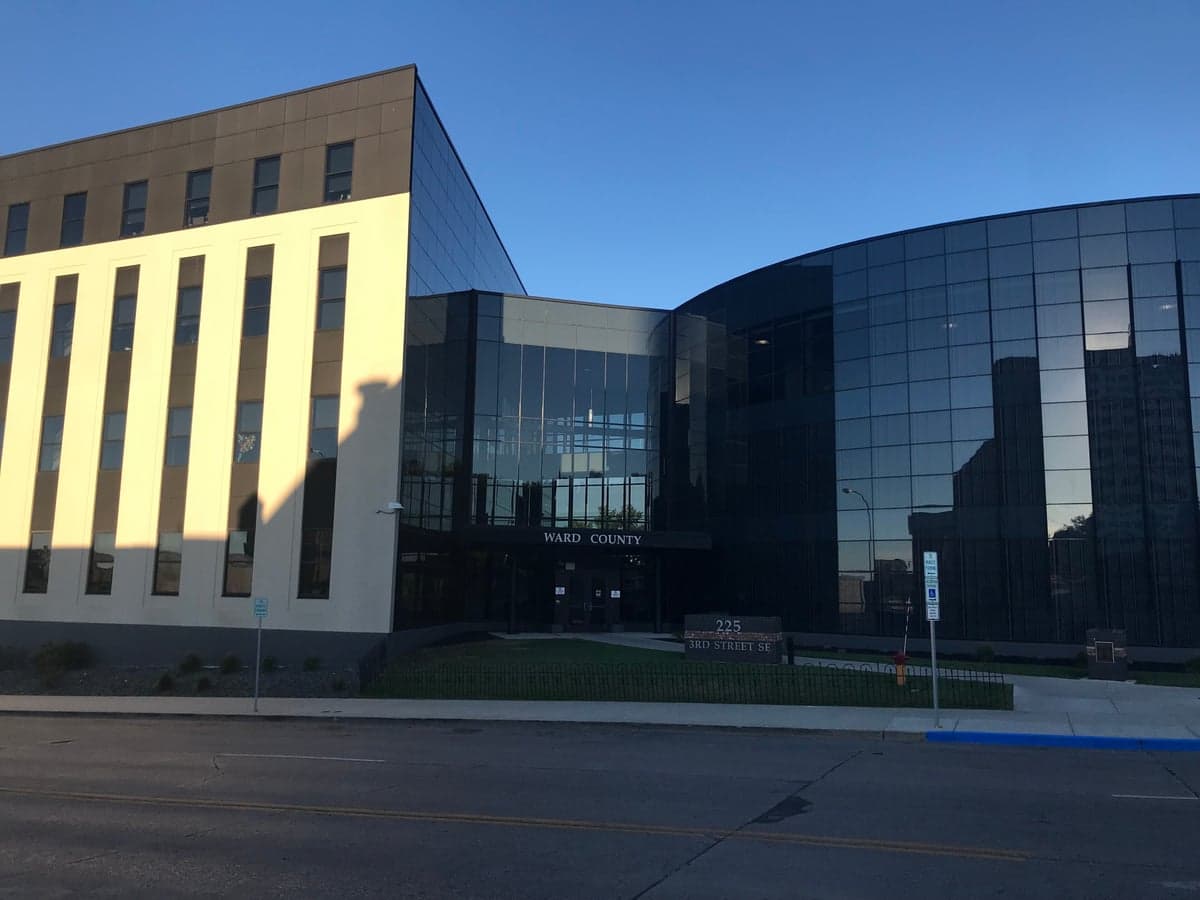
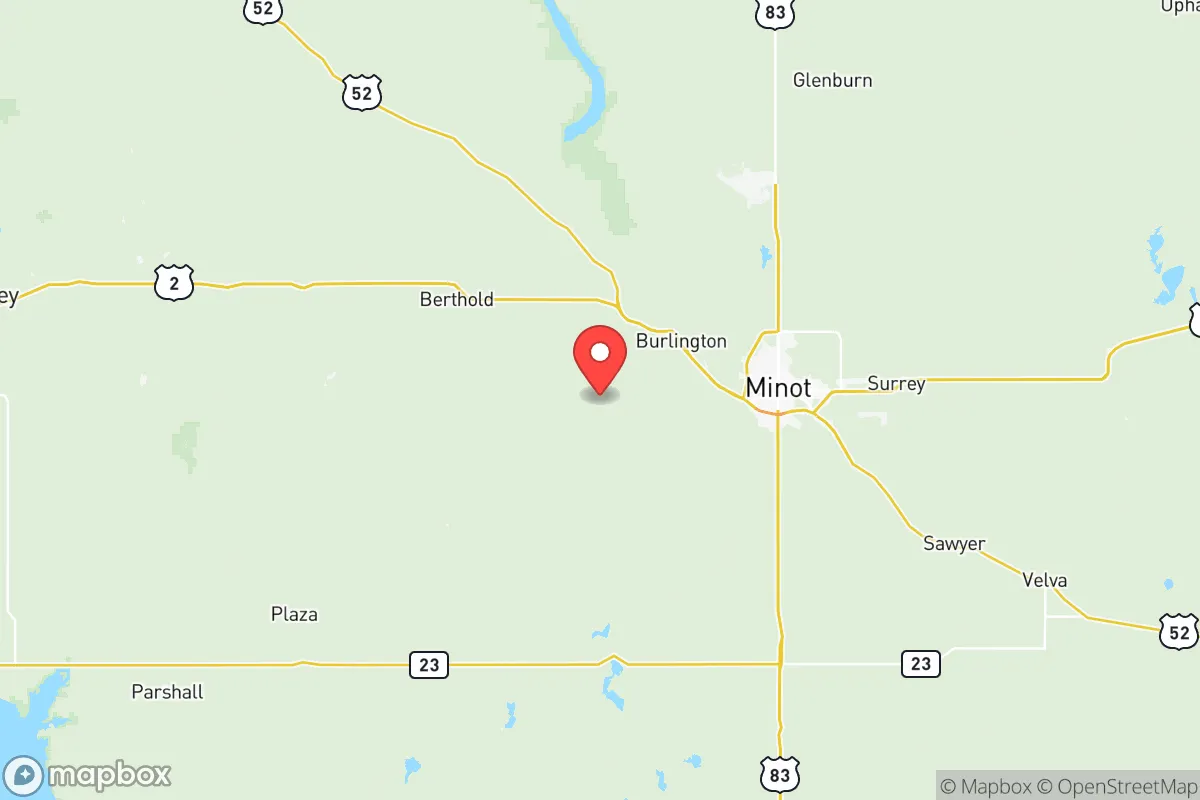
Photo: Wikipedia
Demographics of Ward County
Affluence Level in Ward County
A middle-class area roughly in line with national averages across income, home values, education, and employment.
People of Ward County
The people of Ward County, North Dakota today number 69,232, forming a predominantly white (80.9%) population with a modest but growing Hispanic (6.9%) and Black (3.9%) presence, concentrated heavily in the county seat of Minot. The county’s identity is shaped by its deep Scandinavian and German roots, a strong military and aviation presence tied to Minot Air Force Base, and a recent oil-driven influx that has added economic volatility and demographic diversity. With a foreign-born share of just 2.3%, Ward County remains less diverse than the national average, but its population is younger and more family-oriented than much of rural North Dakota, anchored by the regional hub of Minot and smaller communities like Burlington, Kenmare, and Bowbells.
Settlement & growth (pre-1960)
Before American settlement, the area now known as Ward County was part of the traditional territory of the Mandan, Hidatsa, and Arikara (Three Affiliated Tribes), who lived in earth-lodge villages along the Missouri River to the south. The county itself was created by the Dakota Territory legislature in 1885 and named after a territorial legislator, but sustained European-American settlement began only after the arrival of the Great Northern Railway in 1886. The railroad pushed through the fertile Souris River Valley, and the town of Minot—nicknamed the “Magic City”—sprang up almost overnight as a rail hub and agricultural supply center.
The first major wave of settlers were Norwegian and German immigrants who arrived between 1885 and 1910, drawn by the Homestead Act’s promise of 160 acres of prairie land. These groups established farming communities across the county, with Norwegians clustering in the northern and western townships around Kenmare and Bowbells, while Germans from Russia—many fleeing conscription and land shortages in the Volga region—settled in the southern part of the county near Burlington and Des Lacs. A smaller but notable group of Irish and Canadian immigrants also arrived during this period, often working as railroad laborers before taking up homesteads. By 1910, Ward County’s population had surged to over 19,000, almost entirely white and foreign-born or first-generation.
The Dust Bowl and Great Depression of the 1930s hit the county hard, causing a population decline as farmers abandoned marginal land. However, the 1950s brought a transformative event: the construction of Minot Air Force Base, which opened in 1957 as a Strategic Air Command installation. The base brought thousands of military personnel and their families from across the United States, injecting a more diverse, transient population into the county. This single facility would come to define Ward County’s modern economy and demographic character, anchoring the population around Minot and the adjacent communities of Surrey and Logan.
Modern era (post-1965)
The 1965 Hart-Cellar Act had a limited direct impact on Ward County compared to coastal urban areas, as the county’s foreign-born population remains just 2.3% today. However, the post-1965 period saw significant domestic migration that reshaped the county’s demographics. The most dramatic shift came with the North Dakota oil boom, which began in earnest around 2008 with the development of the Bakken shale formation. Ward County, sitting on the eastern edge of the Bakken play, experienced a surge of workers from across the United States—particularly from Texas, Oklahoma, and the Rust Belt states of Michigan and Ohio. These oil-field workers, predominantly white and male, concentrated in Minot and the smaller towns of Berthold and Donnybrook, straining housing and infrastructure.
The oil boom also brought the county’s first significant Hispanic and Black populations. Hispanic residents, now 6.9% of the county, arrived primarily as construction and service workers from Texas, California, and Mexico, settling in Minot’s south side and in mobile-home parks near the oil fields. The Black population, now 3.9%, grew largely from military families assigned to Minot Air Force Base, as well as some oil-field workers from the Gulf Coast. East and Southeast Asian communities (1.3%) are almost entirely tied to the base, with Filipino and Korean families forming small but stable enclaves in Minot. The Indian subcontinent population (0.1%) is negligible, consisting of a handful of professionals in healthcare and higher education at Minot State University.
Suburbanization has been modest but noticeable. Burlington, just west of Minot, has grown as a bedroom community for base personnel and oil workers, while Surrey to the southeast has attracted families seeking newer housing and lower property taxes. The county’s college-educated share stands at 29.7%, reflecting the presence of Minot State University and the base’s technical workforce, but this is below the national average of roughly 33%.
The future
Ward County’s population is projected to remain stable or grow slowly, driven by the twin anchors of the Air Force base and the Bakken oil fields—both subject to federal budget cycles and global energy prices. The county is becoming slightly more diverse, with the Hispanic and Black shares expected to increase gradually as military rotations and oil-field labor patterns continue. However, the foreign-born share is unlikely to rise dramatically, as the county lacks the chain-migration networks and urban job diversity that attract immigrants to larger metro areas.
The most significant demographic trend is the aging of the white population, particularly in the rural townships outside Minot. Kenmare, Bowbells, and Donnybrook have seen steady population loss since the 1980s, as young people leave for college and jobs in larger cities. Minot itself is growing, but at a slower pace than during the boom years of 2010–2015. The county’s cultural identity is evolving from a purely Scandinavian-German farming community toward a more mixed, blue-collar, military-and-energy economy—a shift that has created some tension between longtime residents and newcomers, but also a pragmatic, work-oriented ethos.
For someone moving in now, Ward County offers a low-crime, family-oriented environment with a strong sense of community in Minot and its suburbs, but with limited ethnic diversity and a climate of economic boom-and-bust tied to oil. The county is becoming more like a small-scale version of the Texas Panhandle than a traditional Great Plains farming region—conservative, hardworking, and increasingly accustomed to a transient workforce. The next decade will likely see continued slow growth in Minot and Burlington, while the outlying towns continue to shrink, reinforcing the county’s role as a regional hub rather than a collection of independent farming communities.

* Values derived from national, state, county, city and local statistics and may differ in a specific area. Last updated: 2026-06-16T07:31:55.000Z
Narrative content on this page is AI-generated and may contain mistakes. Verify any details that matter before acting on them.
ReloMaps may earn a commission from affiliate links at no extra cost to you.

