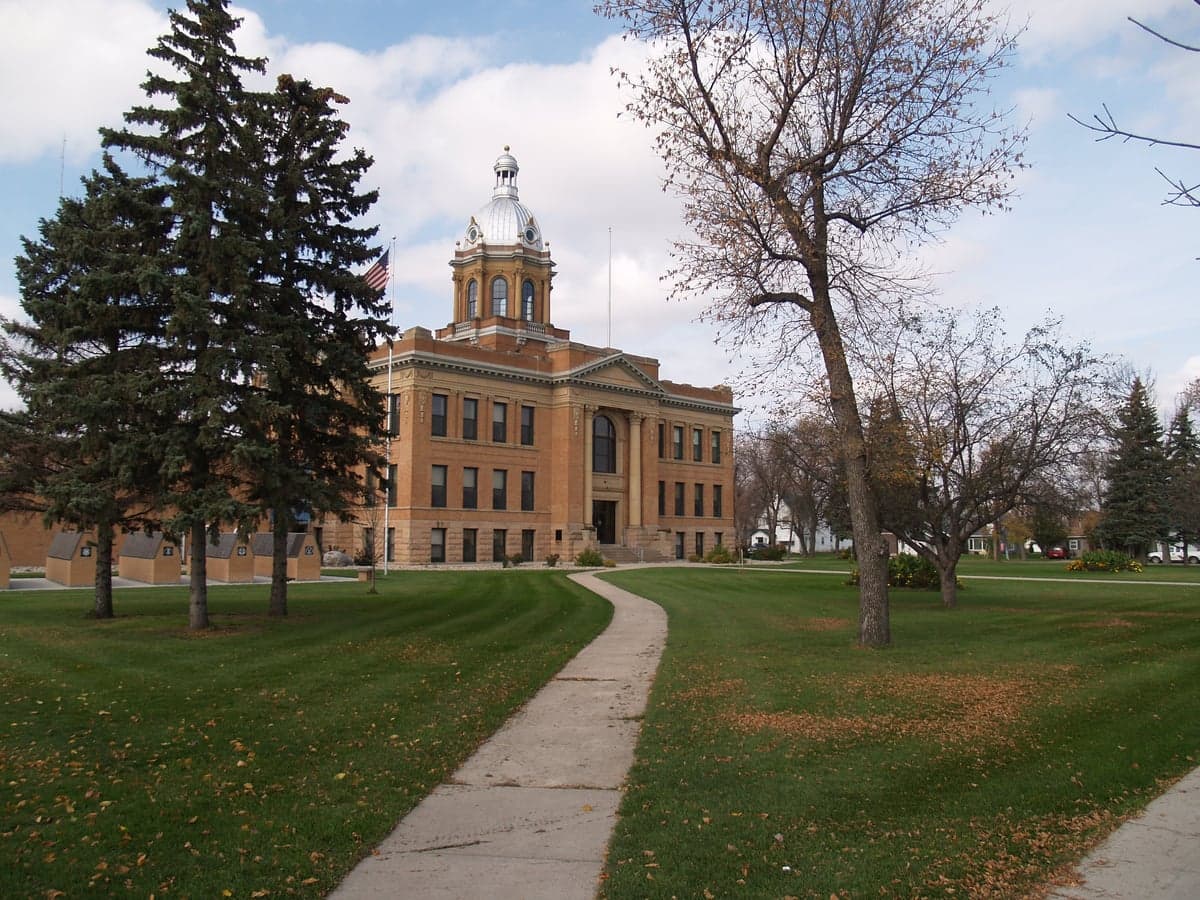
Photo: Wikipedia
Personal Sovereignty in Traill County
Strong independent fundamentals that actively favor personal liberty and low regulation.
What does Personal Sovereignty tell us?
Personal Sovereignty measures your capacity for self-reliance and independence with minimal government friction. Higher scores mean fewer barriers between you and the way you want to live... but it assumes you have the space you need and good neighbors.
What does this tell us?
Personal Sovereignty measures your capacity for self-reliance and independence with minimal government friction. Higher scores mean fewer barriers between you and the way you want to live... but it assumes you have the space you need and good neighbors.
State Policy
Energy independence: Net exporter (500% of energy produced in-state)
Personal Liberty
Homesteading

Personal Liberty Analysis
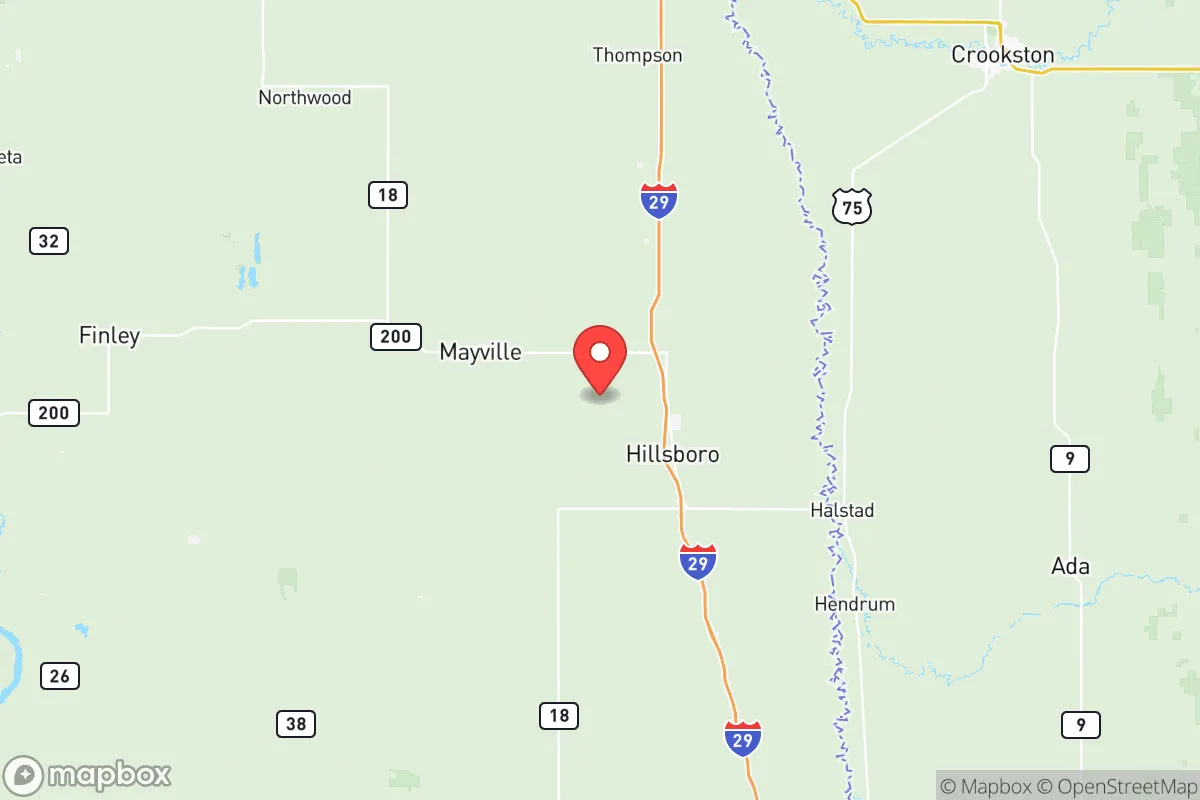
Traill County, North Dakota, offers one of the strongest personal sovereignty environments in the Upper Midwest, anchored by the state's limited government philosophy and the county's rural, agricultural character. Residents and prospective movers find a notably light regulatory touch across taxation, self-defense law, and land use, with local enforcement that generally defers to individual judgment. The county's small towns—Hillsboro, Mayville, Portland, and Hatton—each reflect this freedom-oriented culture, though the degree of homesteading feasibility and off-grid acceptance varies slightly between incorporated areas and unincorporated farmland.
Tax burden and regulatory climate: How Traill County compares to other regions
North Dakota imposes no statewide property tax on owner-occupied primary residences, though cities, counties, and school districts levy local property taxes. In Traill County, the effective property tax rate on agricultural and residential land hovers around 1.2% of market value, notably lower than Minnesota's metro counties but slightly above South Dakota's floor. The state's income tax is a flat 2.9% on most income, with no city or county add-ons. Sales tax in Traill County is 6.5%—split between the state's 5% and local options—compared to 7.5% in Grand Forks County to the north. Business regulation is minimal: no general business license is required at the county level, and zoning in unincorporated areas is largely confined to agricultural performance standards. Hillsboro, the county seat, maintains a basic building code for new construction but does not mandate inspections for owner-built structures on existing lots. Mayville and Portland have slightly more structured zoning for residential subdivisions, but both towns allow accessory dwelling units and home-based businesses by right, reflecting a permissive regulatory posture that favors self-employment and small-scale enterprise.
Self-defense rights and gun law specifics in Traill County
North Dakota is a constitutional carry state: residents and legal non-residents may carry a concealed firearm without a permit statewide, and Traill County Sherriff's Office issues permits for reciprocity with other states upon request. Open carry is legal without a license. There are no county-level firearm restrictions beyond state statutes, meaning no local ordinances in Hillsboro, Mayville, Portland, or Hatton limit magazine capacity, ban specific firearm types, or impose waiting periods. The state preempts all local firearm regulation, so city councils in Traill County cannot pass stricter measures than state law—a key protection for gun owners. Stand-your-ground and castle-doctrine principles are codified in state law, and there is no duty to retreat in any place where lawful presence is established. The county's rural nature means law enforcement response times can stretch to 20-30 minutes in outlying areas, making personal firearm ownership a practical self-defense consideration for many residents. Gun ranges and hunting access are abundant: the Hillsboro Rifle and Pistol Club and numerous public-land hunting areas along the Goose River and Sheyenne River corridors provide practical training and recreation without restrictive permitting.
Self-reliance and homesteading viability: Lot sizes, zoning, and off-grid feasibility
Traill County's agricultural zoning and sparse population make it one of the most homestead-friendly locations in the Red River Valley. Unincorporated parcels outside city limits have no minimum lot size for agricultural use, though 40-acre splits are common for smaller hobby farms. Within city limits, lot sizes vary: Hillsboro allows 5,000-square-foot residential lots with no minimum dwelling square footage, while Mayville's historic district requires at least 1,000 square feet of living space. Off-grid living is legally feasible but requires attention to state and county health codes. Wells are permitted for any parcel over one acre, with a required water quality test. Composting toilets and greywater systems are allowed as alternative sanitation if approved by the Traill County Environmental Health Department, which has a reputation for pragmatic, case-by-case review rather than blanket prohibition. Solar panels and wind turbines (under 100 feet) require only a standard building permit, not a conditional use permit, in unincorporated areas. Portland and Hatton have adopted the state's uniform building code but exempt agricultural outbuildings and owner-built primary residences from inspection, provided the owner signs a waiver acknowledging they will not sell the home for five years. Rainwater collection is unrestricted, and there are no county ordinances limiting backyard chickens, rabbits, or goats. For those seeking maximum self-reliance, the stretch between Mayville and Blanchard offers affordable 10- to 40-acre raw land parcels at $1,500–$3,000 per acre, with no homeowners' association restrictions—a decisive advantage over suburban subdivisions in nearby Cass County.
Personal liberties in practice: Parental rights, medical autonomy, speech, and property
North Dakota's legal framework reinforces personal liberties in several domains relevant to relocation decisions. Parental rights are explicitly protected under state law, with a 2019 statute affirming parents' fundamental right to direct their children's education, healthcare, and moral upbringing. Traill County public schools—Hillsboro High School and Mayville-Portland High School—allow parents to opt children out of any curriculum or activity without penalty. Medical autonomy is similarly broad: there is no state vaccine mandate for adults or children, and the county health department does not impose mask mandates or quarantine orders beyond state directives. During public health emergencies, the Traill County Commission has consistently voted against local health orders, deferring to individual responsibility. Free speech and assembly are protected without county-level restrictions; the courthouse lawn in Hillsboro has been a regular site for political gatherings and protests of all stripes without incident. Property rights are reinforced by North Dakota's prohibition on eminent domain for private economic development, a statute that protects rural landowners from forced sale for corporate projects. Mineral rights transfers are common in the region, and surface owners retain the right to negotiate separately—relevant given the Bakken shale play's influence on western North Dakota land values, though Traill County has no active oil production.
On balance, Traill County offers a sovereignty profile that aligns closely with the self-reliant, small-government values of its residents. Compared to neighboring Cass County (home to Fargo), property taxes are roughly 20% lower, zoning is far less restrictive, and firearm access is identical but political and cultural friction is virtually absent. Against western North Dakota counties like McKenzie, Traill trades away oil wealth for lower population density and more predictable land-use rules. For single individuals and families who rank tax burden, gun rights, homesteading feasibility, and personal liberties above proximity to urban amenities, Traill County consistently delivers one of the lightest-touch governance environments in the region—and a rare combination of legal protection and practical permissiveness that enables genuine self-directed living.

* Values derived from national, state, county, city and local statistics and may differ in a specific area. Last updated: 2026-07-07T01:14:34.000Z
Narrative content on this page is AI-generated and may contain mistakes. Verify any details that matter before acting on them.
ReloMaps may earn a commission from affiliate links at no extra cost to you.

