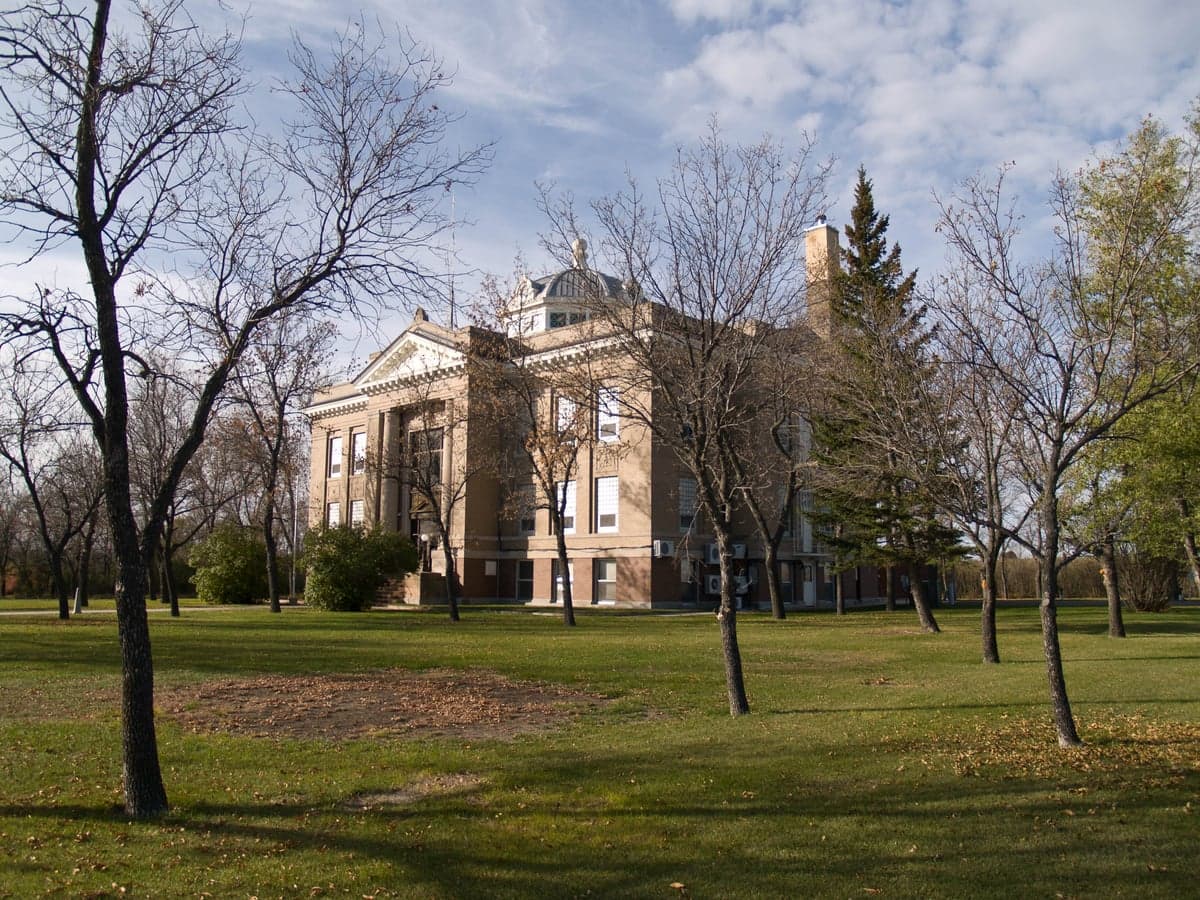
Photo: Wikipedia
Quality of Life in Mountrail County
A livable area that tracks near national norms for affordability, walkability, and neighborhood health.
What does Quality of Life tell us?
Quality of Life measures an area by evaluating factors like cost of living, nearby amenities, country club access, airport proximity, socioeconomic signals and neighborhood character. For large states, this is a general average — quality of life can vary dramatically between metro areas, suburbs, and rural communities within the same state.
What does this tell us?
Quality of Life measures an area by evaluating factors like cost of living, nearby amenities, country club access, airport proximity, socioeconomic signals and neighborhood character. For large states, this is a general average — quality of life can vary dramatically between metro areas, suburbs, and rural communities within the same state.
Cost of Living
24% below national average
128%
The Real Cost of Living in Mountrail County for 2026
| Tier | Individual | Family (4) |
|---|---|---|
| Survival | $14k | $26k |
| Comfortable | $43k | $63k |
| Luxury | $136k+ | $211k+ |
| Elite (Top 5%) | $160k+ | $249k+ |
Quality-of-Life Analysis
Mountrail County, North Dakota, offers a distinct quality-of-life spectrum that ranges from the energy-industry hub of Stanley to the quiet, agricultural hamlets of Ross and Palermo, with the county seat of New Town serving as a key midpoint. The county’s character is shaped by the Bakken oil boom, which has injected economic vitality and a transient workforce into its larger towns, while its eastern and southern stretches remain deeply rooted in farming, ranching, and a slower pace of life. This creates a living environment where a roughneck, a schoolteacher, and a retired farmer can all find a suitable niche, but the daily experience—from commute times to grocery options—varies dramatically depending on whether one lives in a bustling oil-patch town or a remote rural pocket.
Largest town(s) & population centers
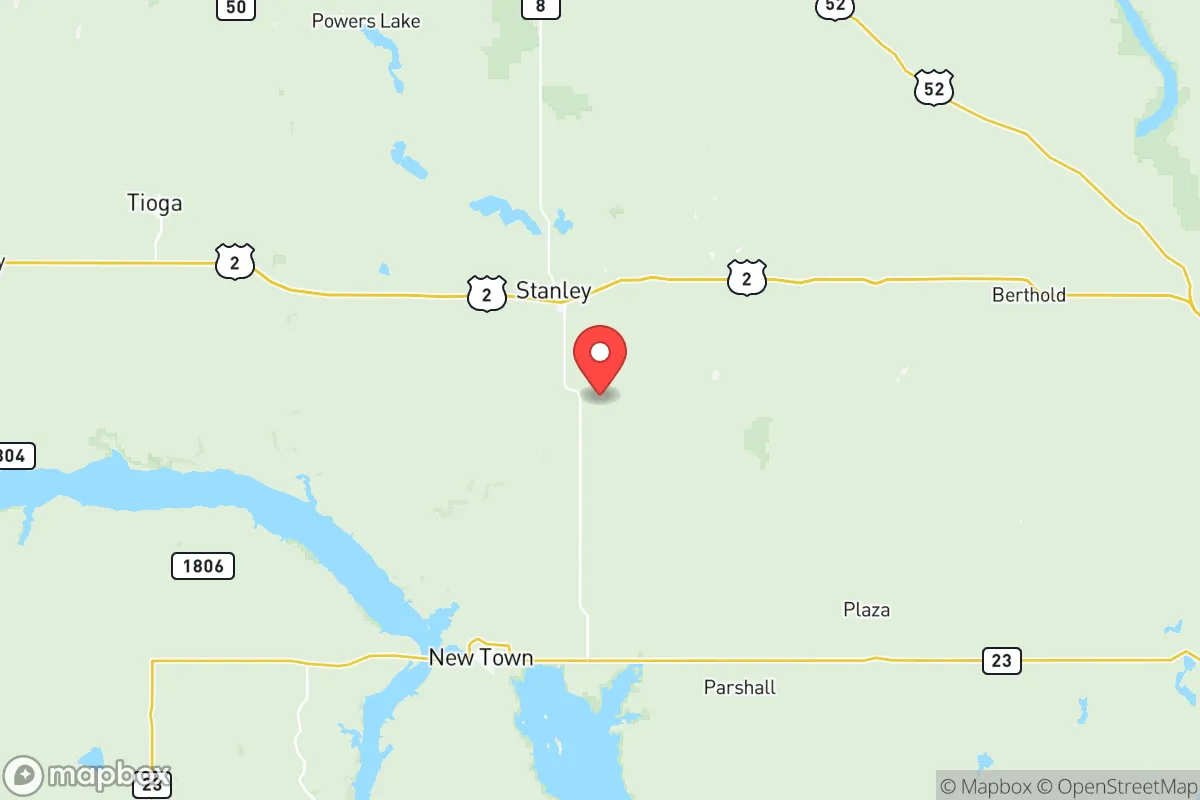
Stanley, the county's largest city with roughly 2,900 residents, is the commercial and industrial heart of Mountrail County. Daily life here is defined by the oil and gas industry; the streets see heavy truck traffic, and the local economy revolves around support services, equipment yards, and man camps. Housing is relatively tight, with a median home value of $222,200 and a median rent of $864, reflecting demand from workers. Amenities include a well-stocked grocery store, several fast-food chains, a hospital, and the county courthouse. New Town, with a population near 2,400, sits on the shores of Lake Sakakawea and offers a slightly different rhythm. It is the administrative and educational center for the Fort Berthold Indian Reservation (Three Affiliated Tribes) and hosts a tribal college and a large casino resort. Life in New Town blends reservation governance, tourism (fishing and boating on the lake), and oil-field service work. Both towns have a cost of living index of 76, well below the national average, but Stanley feels more like a classic boomtown, while New Town has a more settled, community-oriented feel tied to the lake and tribal institutions.
Smaller towns & rural pockets
Outside the two main hubs, Mountrail County is dotted with small towns and unincorporated places that offer a radically different pace. Ross, a tiny farming community with a population under 100, has a grain elevator, a church, and little else—residents drive 20 minutes to Stanley for most errands. Palermo is even smaller, essentially a crossroads with a handful of homes and a post office. Parshall, located on the reservation, has roughly 900 residents and serves as a local service center for the surrounding rural and tribal population, with a school, a few stores, and a strong sense of isolation. The rural pockets between these towns are vast stretches of wheat fields, cattle pastures, and rolling hills, where the nearest neighbor might be a mile away. The average commute across the county is just 19.9 minutes, but that figure masks the reality for rural residents who may drive 30-40 minutes to reach a grocery store or a clinic. These areas are best suited for those who value privacy, land ownership, and self-sufficiency over convenience.
Cost & lifestyle range
The cost of living in Mountrail County is uniformly low by national standards (index of 76), but the lifestyle range is wide. At one end, Stanley and New Town represent the highest concentration of rental options and newer housing stock, including apartments and modular homes built for oil workers. These towns offer the most amenities—restaurants, bars, retail, and healthcare—but also come with noise, traffic, and a transient population. At the other end, Ross and Palermo offer the lowest housing costs (often older farmhouses on large lots) and the quietest living, but require long drives for everything beyond basic supplies. The median home value of $222,200 is a bargain compared to the national median, but in the remote areas, a fixer-upper on acreage can be found for under $150,000. Renters in Stanley pay a median of $864, while in the smaller towns, rental inventory is nearly nonexistent. The lifestyle choice here is essentially between the convenience and bustle of an oil-patch town and the solitude and self-reliance of the rural plains.
Mountrail County is best suited for individuals and families who work in the energy sector, agriculture, or tribal government and who are comfortable with a remote, weather-intense environment. People who thrive here are those who value a low cost of living, wide-open spaces, and a strong sense of local community—whether that community is the oil-field network in Stanley, the tribal and lake-oriented culture in New Town, or the tight-knit farming circles in Ross. It is less ideal for those seeking urban amenities, diverse dining, or a mild climate. The county offers a genuine, if rugged, quality of life for those who are prepared to embrace its extremes.

Crime in Mountrail County
Generally safer than 65% of comparable U.S. locations.
Violent CrimeViolent Crime Analysis
Property CrimeProperty Crime Analysis
Crime Analysis
Mountrail County, North Dakota, presents a mixed safety profile where property crime rates significantly exceed state and national averages, while violent crime remains below the national benchmark. The county's 2024 reported violent crime rate of 234.1 per 100,000 residents is notably lower than the U.S. average of 380 per 100,000, but property crime at 1,467.8 per 100,000 runs well above both the North Dakota state rate (1,250 per 100,000) and the national figure (1,954 per 100,000). This divergence means residents in communities like Stanley, New Town, and Parshall face a higher likelihood of theft, burglary, and vehicle break-ins than the typical North Dakotan, though the risk of violent victimization is comparatively modest.
Crime in context
When placed against state and national data, Mountrail County's violent crime rate of 234.1 per 100,000 is roughly 38% lower than the U.S. average but sits slightly above North Dakota's statewide rate of 210 per 100,000. The county's property crime rate of 1,467.8 per 100,000 is 17% higher than the state average but still below the national figure. These numbers reflect the county's position as part of North Dakota's oil-producing Bakken region, where transient worker populations and higher cash flows in towns like Stanley and Tioga can drive property offenses. The Northwest Judicial District, which covers Mountrail County and is based in Williston (Williams County), handles felony prosecutions; the district's approach to sentencing has historically been more conservative than urban counterparts, which may help contain violent crime but does not fully address property crime trends tied to economic cycles.
What residents experience
For daily life in Mountrail County, the practical safety concern is property crime rather than personal violence. Residents in Stanley, the county seat and largest town, report occasional vehicle break-ins and theft from construction sites, particularly during the summer drilling season. New Town, located on the Fort Berthold Reservation, sees a mix of jurisdictional challenges between tribal and county law enforcement, which can complicate response times for property incidents. Parshall and Ross, smaller communities, experience lower overall crime but are not immune to the region's property crime patterns. Violent incidents—typically assaults or domestic disturbances—are concentrated in areas with higher population turnover, such as temporary worker housing near oil fields. The Mountrail County Sheriff's Office and the Stanley Police Department maintain visible patrols, but the county's vast geography (over 1,900 square miles) means response times in remote areas can exceed 20 minutes.
Neighborhood-level variation is pronounced. In Stanley, the newer subdivisions near the high school and the medical center tend to have fewer reported incidents than older downtown blocks or the industrial corridor along Highway 2. New Town's residential areas closer to Lake Sakakawea see less property crime than the commercial strip near the Four Bears Casino. Tioga, a smaller oil-service hub, has a reputation for transient-related theft but low violent crime. The county's rural farmsteads and ranch properties, particularly those off paved roads, report the lowest crime rates overall, though they face higher risk of agricultural equipment theft. For prospective residents, choosing a home in a well-established neighborhood with active neighborhood watch programs—common in Stanley's newer developments—offers the best balance of safety and community oversight.
* Values derived from national, state, county, city and local statistics and may differ in a specific area. Last updated: 2026-06-16T22:39:29.000Z
Narrative content on this page is AI-generated and may contain mistakes. Verify any details that matter before acting on them.
ReloMaps may earn a commission from affiliate links at no extra cost to you.

