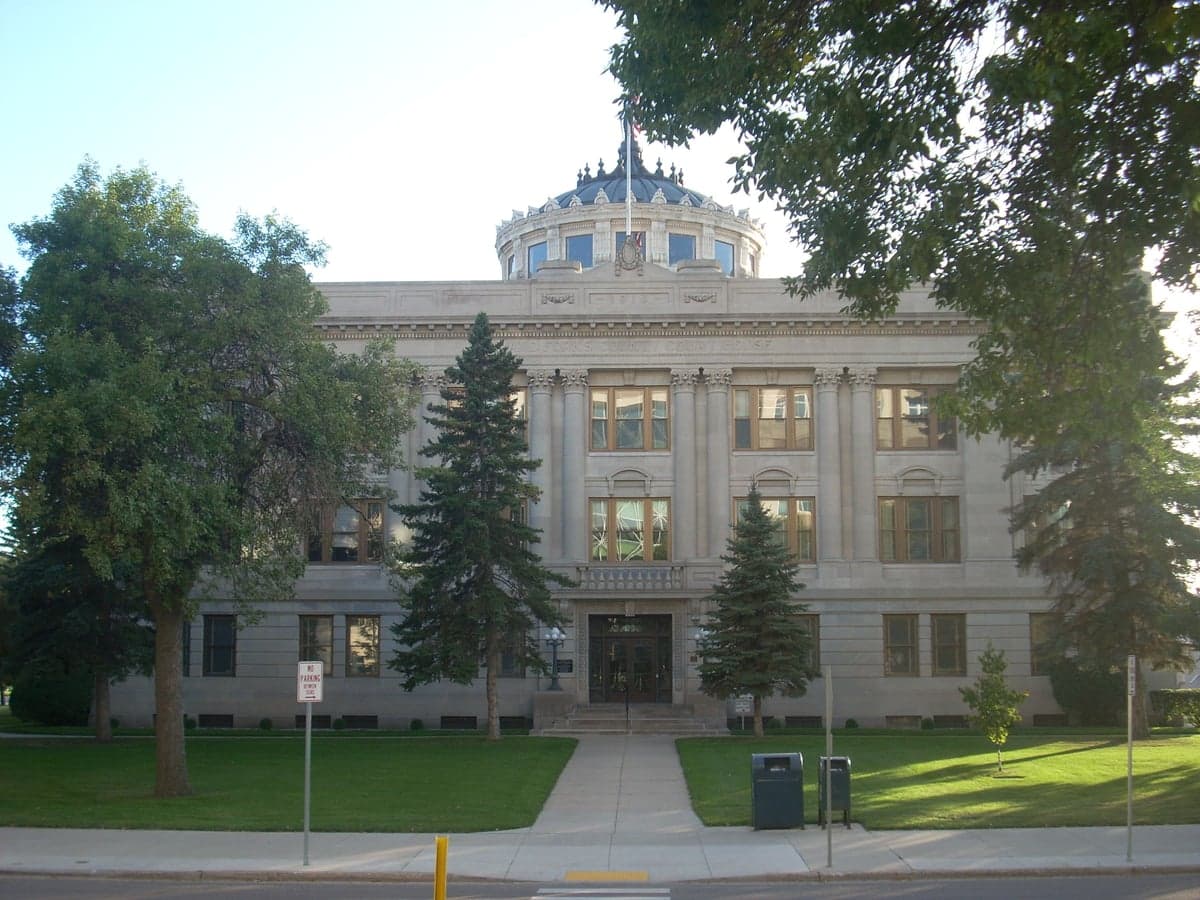
Photo: Wikipedia
Quality of Life in Grand Forks County
A livable area that tracks near national norms for affordability, walkability, and neighborhood health.
What does Quality of Life tell us?
Quality of Life measures an area by evaluating factors like cost of living, nearby amenities, country club access, airport proximity, socioeconomic signals and neighborhood character. For large states, this is a general average — quality of life can vary dramatically between metro areas, suburbs, and rural communities within the same state.
What does this tell us?
Quality of Life measures an area by evaluating factors like cost of living, nearby amenities, country club access, airport proximity, socioeconomic signals and neighborhood character. For large states, this is a general average — quality of life can vary dramatically between metro areas, suburbs, and rural communities within the same state.
Cost of Living
15% below national average
98%
The Real Cost of Living in Grand Forks County for 2026
| Tier | Individual | Family (4) |
|---|---|---|
| Survival | $15k | $29k |
| Comfortable | $47k | $70k |
| Luxury | $124k+ | $192k+ |
| Elite (Top 5%) | $147k+ | $227k+ |
Quality-of-Life Analysis
Grand Forks County offers a spectrum of living environments that range from the urban core of its largest city to quiet, unincorporated crossroads and open farmland. The county’s character is shaped by the Red River Valley’s flat, fertile expanse, and the people drawn to its different parts vary accordingly: professionals and students cluster in Grand Forks for its jobs and university life, while families seeking lower housing costs and acreage settle in smaller communities like Thompson or Mekinock, and farmers or commuters occupy the rural townships that dot the landscape. With a cost-of-living index of 85 (well below the national average of 100), the county provides affordable options across this entire spectrum.
Largest town(s) & population centers
The dominant population center is Grand Forks, home to roughly 55,000 residents and the county seat. Daily life here revolves around the University of North Dakota (UND), which anchors the south end of the city and drives a youthful, transient population alongside a stable base of healthcare and education workers. The city offers a full range of amenities: a regional hospital (Altru Health System), a downtown with restaurants and bars along DeMers Avenue, and the Columbia Mall retail corridor. Commute times are short — the county average is just under 16 minutes — so even residents living in the city’s outer neighborhoods can reach downtown or UND in under 20 minutes. The only other incorporated city in the county is Thompson, a bedroom community of about 1,200 people located 10 miles south of Grand Forks. Thompson offers a quieter, small-town feel with its own K-12 school system and a handful of local businesses, but most residents commute north for work and shopping.
Smaller towns & rural pockets
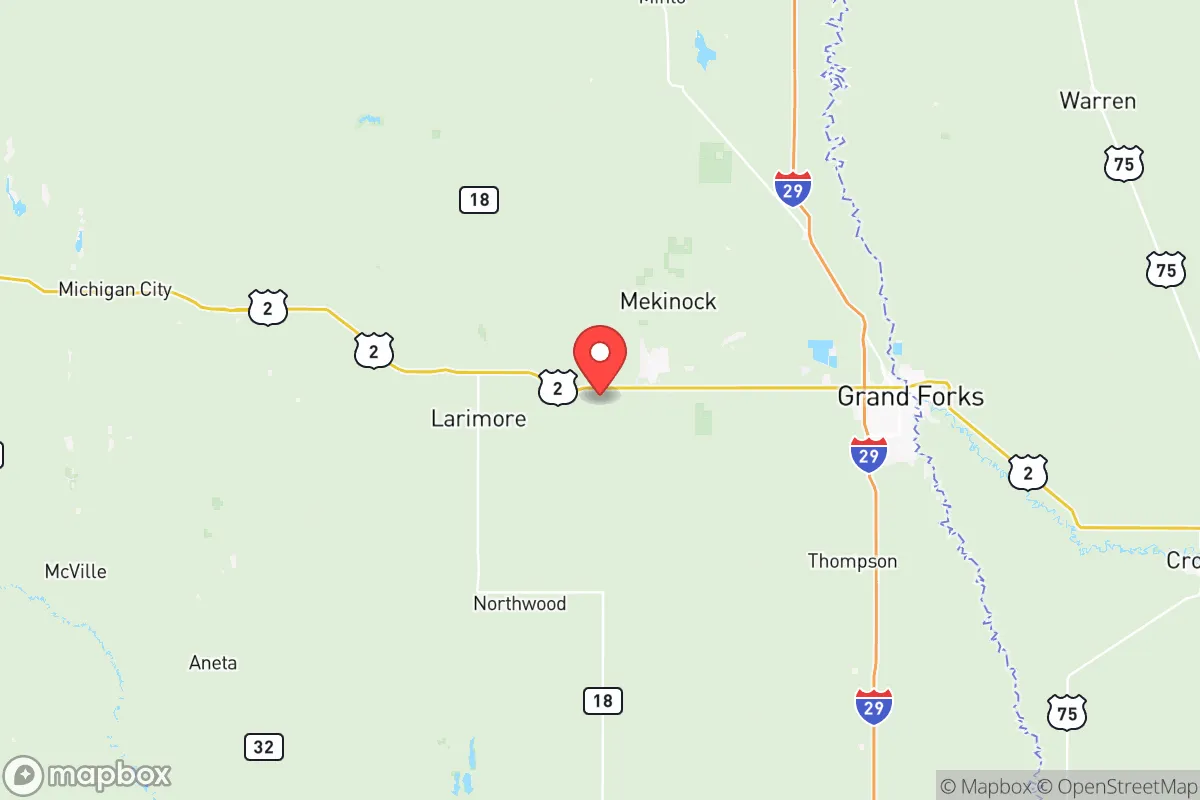
Beyond the two incorporated cities, Grand Forks County contains several unincorporated communities and townships that define its rural character. Mekinock, located along the Red River north of Grand Forks, is a tiny hamlet known for its historic church and proximity to the river for fishing and boating. Northwood, though technically in Grand Forks County’s southern tip, is a small town of about 950 people that functions as a service hub for surrounding farms. Other named places include Emerado (population roughly 400), Gilby, and Arvilla, each consisting of a few dozen homes, a grain elevator, and little else. The rural townships — such as Brenna, Fertile, and Walle — are sparsely populated, with residents living on farmsteads or acreages and commuting to Grand Forks for most needs. These areas offer true isolation, with no streetlights, no sidewalks, and the nearest grocery store often 15–20 minutes away.
Cost & lifestyle range
The cost of living varies noticeably across the county, though it remains low by national standards. At the low end, rural townships and unincorporated areas like Emerado or Gilby offer the cheapest housing: older farmhouses or mobile homes on large lots can sell for under $150,000, and the median county home value of $244,200 is already 30% below the national median. Renters find the best deals in these same areas, with the county median rent of $971 per month often dropping to $700–$800 for a two-bedroom in a small town. At the high end, Grand Forks itself has pricier neighborhoods — particularly near the university (the University Park area) and along the river in the South Belmont district, where homes can exceed $400,000. Thompson also commands a premium for its newer subdivisions and school district, with median home values closer to $280,000. Lifestyle differences are stark: a family in Thompson can walk to the local park and school, while a resident in rural Brenna Township may drive 20 minutes to the nearest gas station. Amenities like dining, entertainment, and healthcare are concentrated almost entirely in Grand Forks, so rural living requires a willingness to drive for most services.
This county works best for people who value affordability and short commutes, and who are comfortable with a clear trade-off between urban convenience and rural space. Professionals and retirees who want walkable neighborhoods and cultural amenities will gravitate to Grand Forks, while those seeking acreage, lower taxes, and a slower pace will find their niche in Thompson, Mekinock, or the surrounding townships. The county’s low cost of living and compact geography make it possible to live in a quiet rural pocket while still reaching a city job in under 20 minutes — a balance that few metro areas in the Upper Midwest can match.

Crime in Grand Forks County
Generally safer than 65% of comparable U.S. locations.
Violent CrimeViolent Crime Analysis
Property CrimeProperty Crime Analysis
Crime Analysis
Grand Forks County, anchored by the city of Grand Forks and extending into smaller communities like Thompson, Manvel, and Northwood, presents a mixed safety profile. The county's violent crime rate of 234.1 per 100,000 residents is notably lower than the national average, while its property crime rate of 1,467.8 per 100,000 sits slightly above the national median. This combination means residents generally face a low risk of violent victimization but should remain vigilant against theft and burglary, particularly in more densely populated areas.
Crime in context
Compared to statewide North Dakota averages, Grand Forks County's violent crime rate is roughly on par with the state's figure of approximately 230 per 100,000, though it is significantly lower than the national rate of about 380 per 100,000. The property crime rate, however, is elevated relative to the state average of roughly 1,200 per 100,000, driven largely by larceny-theft and vehicle break-ins. The county's judicial district, which includes the city of Grand Forks, operates under a state-level court system that has not adopted the progressive prosecutorial policies seen in some larger metropolitan areas. This means offenders in Grand Forks County face more consistent sentencing, which helps keep recidivism rates lower than in jurisdictions with lenient bail and diversion programs. The contrast is stark when compared to counties in states like Minnesota or Washington, where progressive district attorneys have been linked to rising property crime cycles.
What residents experience
Daily life in Grand Forks County is shaped by the sharp divide between the urban core and the rural periphery. The city of Grand Forks, home to the University of North Dakota, sees the bulk of reported property crime, with thefts from vehicles and bicycles concentrated near campus and downtown. Neighborhoods near the Columbia Mall and along South Washington Street also report higher incident volumes. In contrast, the small towns of Thompson and Manvel experience very low crime rates, with violent incidents being rare. Northwood, the county's southernmost town, has a negligible crime rate, though its distance from Grand Forks means residents rely on local law enforcement with limited resources. The county sheriff's office maintains a visible presence in unincorporated areas, and the Grand Forks Police Department has implemented community policing strategies that have helped keep violent crime from spiking despite the city's student population.
Neighborhood-level variation is significant. The areas around the University of North Dakota campus and the downtown core have the highest property crime density, while the established residential districts near the Grand Forks Air Force Base and the western suburbs of the city are markedly safer. The county's judicial approach, which avoids the progressive reforms seen in places like Fargo's Cass County, means that property crime offenders are more likely to face jail time, creating a deterrent effect. For families and retirees, the safest choice is to live in the outlying towns or the quieter residential corridors of Grand Forks itself, avoiding the high-traffic commercial zones where opportunistic theft is most common. Overall, Grand Forks County offers a level of safety that is competitive with other Midwestern counties of similar size, provided residents take standard precautions against property crime.
* Values derived from national, state, county, city and local statistics and may differ in a specific area. Last updated: 2026-07-10T08:12:10.000Z
Narrative content on this page is AI-generated and may contain mistakes. Verify any details that matter before acting on them.
ReloMaps may earn a commission from affiliate links at no extra cost to you.

