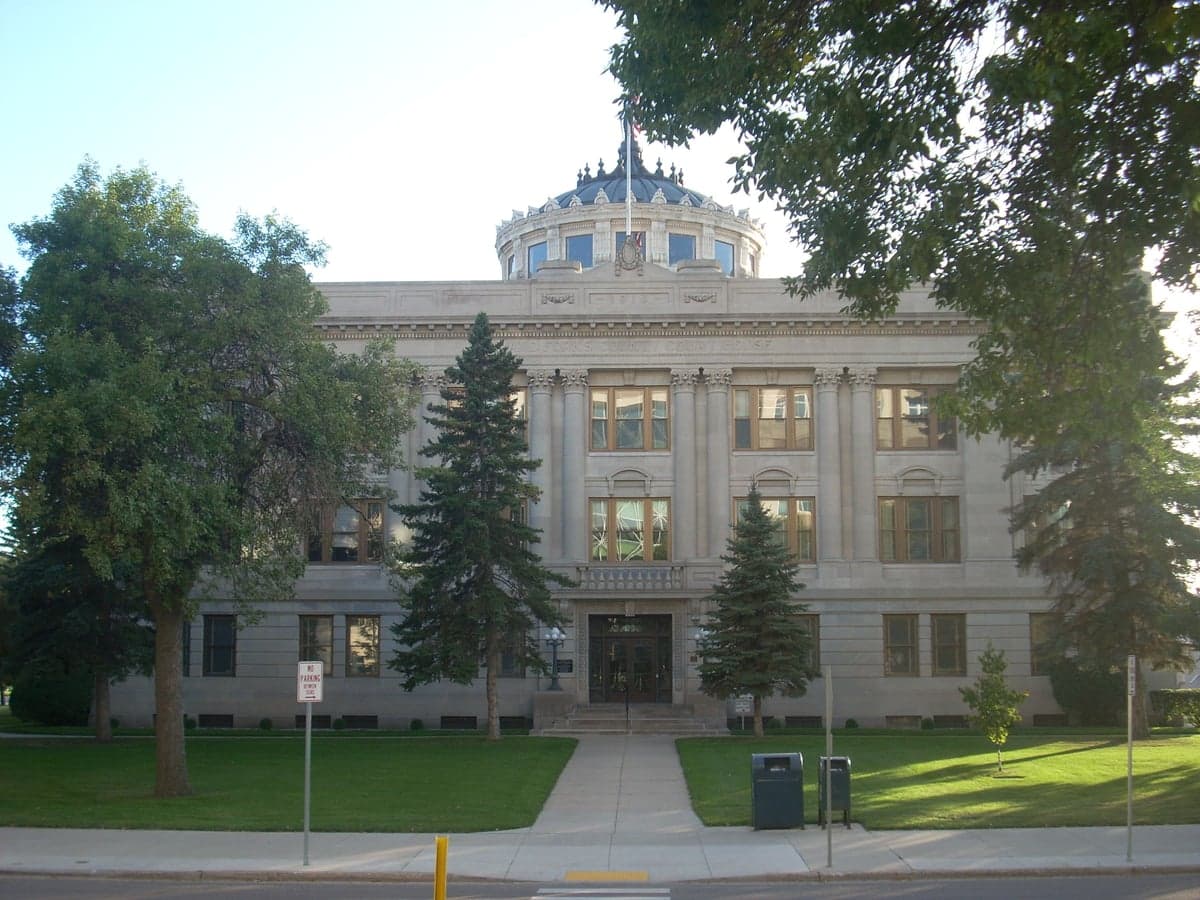
Photo: Wikipedia
Personal Sovereignty in Grand Forks County
Viable for self-reliance. Generally workable, though some barriers may limit total independence.
What does Personal Sovereignty tell us?
Personal Sovereignty measures your capacity for self-reliance and independence with minimal government friction. Higher scores mean fewer barriers between you and the way you want to live... but it assumes you have the space you need and good neighbors.
What does this tell us?
Personal Sovereignty measures your capacity for self-reliance and independence with minimal government friction. Higher scores mean fewer barriers between you and the way you want to live... but it assumes you have the space you need and good neighbors.
State Policy
Energy independence: Net exporter (500% of energy produced in-state)
Personal Liberty
Homesteading

Personal Liberty Analysis
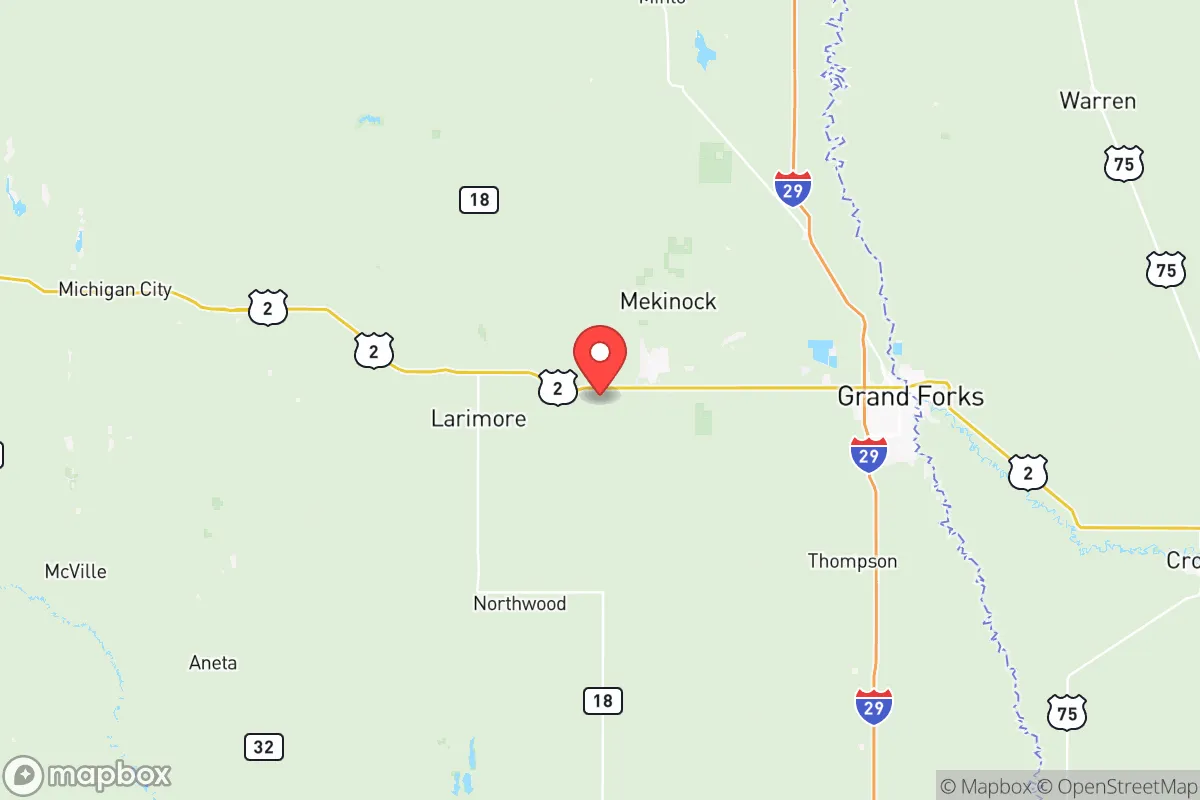
Grand Forks County, North Dakota, offers a personal sovereignty environment that leans heavily on state-level protections for individual rights, with a local regulatory touch that is generally light but varies between the urban core of Grand Forks and the surrounding rural townships. The county’s autonomy profile is defined by North Dakota’s strong constitutional protections for gun rights, a low tax burden, and a permissive approach to property use, though residents in the city of Grand Forks face more zoning and code enforcement than those in outlying communities like Thompson, Mekinock, or Arvilla. For a relocation audience prioritizing personal freedom, the area presents a solid, middle-of-the-pack sovereignty score relative to the Upper Midwest, with notable strengths in self-defense law and homesteading viability, but with some municipal-level constraints that require careful location selection.
Tax burden and regulatory posture in Grand Forks County
North Dakota’s tax structure is among the most favorable for personal sovereignty in the region, and Grand Forks County reflects this. There is no state income tax, and the county’s property tax rate is moderate, with the average effective rate around 1.1% of assessed value, slightly below the national average. The city of Grand Forks imposes a 1.5% city sales tax on top of the state’s 5% rate, bringing the total to 6.5% in the urban core, but unincorporated areas and smaller towns like Gilby and Reynolds have no city sales tax, offering a small but meaningful savings for self-reliant households. Regulatory posture is business-friendly at the state level, with North Dakota ranking in the top 10 for regulatory freedom according to the Mercatus Center. However, Grand Forks city government enforces a building code and zoning ordinances that can be restrictive for those wanting to build unconventional structures or run home-based businesses. In contrast, townships like Mekinock and Arvilla have minimal zoning, allowing for more flexibility in land use, though they still fall under county-level health and safety codes. The county’s approach is best described as pragmatic: light-touch on most economic activities, but with enough municipal oversight in Grand Forks to feel bureaucratic to those accustomed to rural Montana or South Dakota.
Self-defense and gun law specifics in Grand Forks County
North Dakota is a constitutional carry state, meaning no permit is required to carry a concealed firearm for residents 21 and older, and Grand Forks County fully adheres to this law. The county sheriff’s office issues permits for those who want reciprocity with other states, and the process is straightforward, with a typical turnaround of under 30 days. Stand-your-ground laws apply statewide, with no duty to retreat in any place where a person has a legal right to be. Grand Forks city has a more restrictive ordinance regarding discharging firearms within city limits, which is generally prohibited except at approved ranges, but this is standard for urban areas. In contrast, rural townships like Thompson and Mekinock allow target shooting on private property with reasonable safety precautions, and hunting is common throughout the county. The gun culture is strong but not militant; the county has a high rate of firearm ownership, estimated at over 50% of households, and local gun shops and ranges are well-supported. For a relocation reader, the key takeaway is that Grand Forks County offers some of the strongest self-defense protections in the Upper Midwest, with the only meaningful limitation being the city’s discharge ordinance, which is easily avoided by living in the surrounding townships.
Self-reliance and homesteading viability in Grand Forks County
Homesteading and off-grid living are viable in Grand Forks County, but feasibility depends heavily on location. The county’s agricultural zoning in townships like Mekinock, Arvilla, and Gilby allows for large lot sizes, typically 5 to 40 acres, with minimal restrictions on livestock, gardening, and alternative structures. Off-grid systems, such as solar panels and rainwater collection, are legal statewide, though North Dakota’s net metering policy is less favorable than some states, and the county requires a permit for any electrical work. The city of Grand Forks has strict building codes that effectively prohibit off-grid living within city limits, including requirements for grid-tied electrical and municipal water connections. However, in unincorporated areas, residents can drill private wells and install septic systems with county health department approval, which is a straightforward process. The growing season is short, around 120 days, but the fertile Red River Valley soil is excellent for crops and gardens. For those seeking true self-reliance, towns like Thompson and Reynolds offer the best balance of affordable land (prices around $3,000–$5,000 per acre for raw land) and regulatory freedom, while Grand Forks itself is better suited for those who want urban amenities with a homesteading lifestyle on the outskirts.
Personal liberties in Grand Forks County: parental rights, medical autonomy, speech, and property
Parental rights are strongly protected in North Dakota, with state law affirming parents’ authority over their children’s education, healthcare, and religious upbringing. Grand Forks County has a mix of public, private, and homeschool options, with homeschooling requiring only a simple notification to the local school district, and no standardized testing mandates. Medical autonomy is moderate: North Dakota has not expanded Medicaid under the Affordable Care Act, and the state has some of the most restrictive abortion laws in the nation, which aligns with a conservative-leaning audience. However, vaccine mandates are minimal, and there are no state-level mask or lockdown requirements that would override personal choice. Free speech is robust, with no notable local ordinances restricting expression, and the University of North Dakota in Grand Forks provides a generally tolerant environment for diverse viewpoints. Property rights are well-protected, with North Dakota having a strong right-to-farm law that limits nuisance lawsuits against agricultural operations, and the county’s eminent domain use is rare. The main constraint on property liberty is in Grand Forks city, where historic preservation and zoning can limit what homeowners can do with their land. Overall, Grand Forks County scores high on personal liberties for a conservative audience, particularly in parental rights and property use, with medical autonomy being the only area where state-level restrictions may feel limiting to some.
Compared to other areas in the Upper Midwest, Grand Forks County offers a solid, above-average personal sovereignty environment, particularly for those who prioritize gun rights, low taxes, and homesteading flexibility. The county’s main trade-off is between the convenience and services of Grand Forks city and the greater autonomy found in townships like Mekinock, Arvilla, and Thompson. For a relocation reader seeking a balance of personal freedom and community infrastructure, the county’s rural townships provide a compelling option, while the city itself remains a reasonable choice for those who accept moderate municipal oversight in exchange for urban amenities. The overall sovereignty profile is competitive with rural Minnesota and Wisconsin, but with a notably lighter tax burden and stronger self-defense laws, making Grand Forks County a strong candidate for conservative-leaning individuals and families prioritizing independence.

* Values derived from national, state, county, city and local statistics and may differ in a specific area. Last updated: 2026-07-10T08:12:10.000Z
Narrative content on this page is AI-generated and may contain mistakes. Verify any details that matter before acting on them.
ReloMaps may earn a commission from affiliate links at no extra cost to you.

