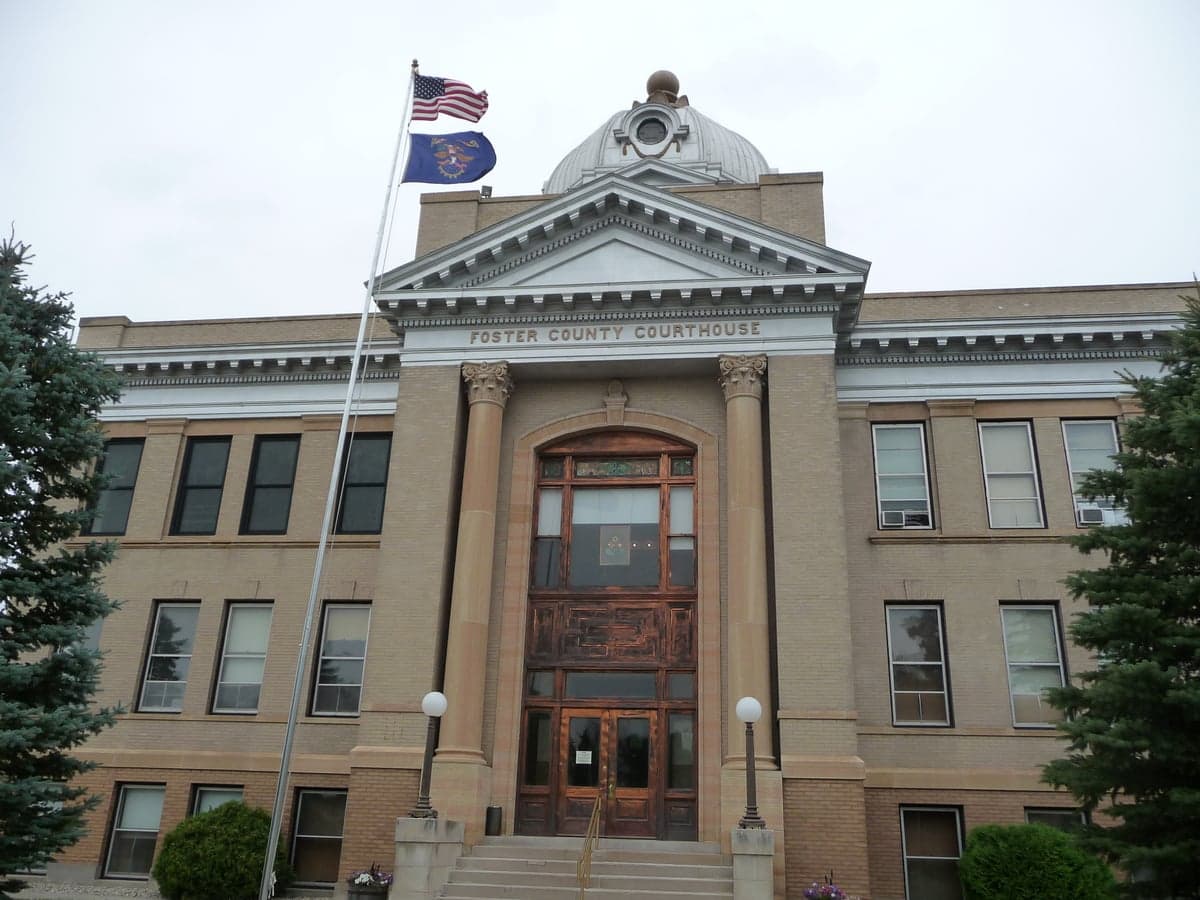
Photo: Wikipedia
Quality of Life in Foster County
A livable area that tracks near national norms for affordability, walkability, and neighborhood health.
What does Quality of Life tell us?
Quality of Life measures an area by evaluating factors like cost of living, nearby amenities, country club access, airport proximity, socioeconomic signals and neighborhood character. For large states, this is a general average — quality of life can vary dramatically between metro areas, suburbs, and rural communities within the same state.
What does this tell us?
Quality of Life measures an area by evaluating factors like cost of living, nearby amenities, country club access, airport proximity, socioeconomic signals and neighborhood character. For large states, this is a general average — quality of life can vary dramatically between metro areas, suburbs, and rural communities within the same state.
Cost of Living
38% below national average
179%
The Real Cost of Living in Foster County for 2026
| Tier | Individual | Family (4) |
|---|---|---|
| Survival | $12k | $23k |
| Comfortable | $32k | $46k |
| Luxury | $116k+ | $180k+ |
| Elite (Top 5%) | $136k+ | $211k+ |
Quality-of-Life Analysis
Foster County, North Dakota offers a spectrum of quality-of-life options that range from the modest commercial hub of Carrington to the quiet, unincorporated prairie settlements of Barlow, Bordulac, and Juanita. The county’s character is defined by its agricultural roots and low population density, drawing people who value a slower pace, affordable housing, and close-knit communities. Residents typically fall into two groups: those who need the daily conveniences and employment base of Carrington, and those who seek the solitude and wide-open spaces of the county’s smaller towns and rural townships.
Largest town(s) & population centers
Carrington is the county seat and by far the largest population center, home to roughly 2,000 of the county’s 3,300 residents. Daily life here revolves around a compact downtown with grocery stores, a hospital (CHI St. Alexius Health Carrington), and a handful of local restaurants and shops. The town serves as the regional employment hub, anchored by the Dakota Growers Pasta Company plant and the Carrington Research Extension Center. Commuting is minimal — the average commute across the county is just under 14 minutes — so most residents live within a short drive of work, school, and errands. Carrington’s public schools serve the entire county, and the town offers basic amenities like a public library, a golf course, and seasonal community events such as the Foster County Fair. For those who want walkable streets and neighbors within sight, Carrington is the clear choice.
Smaller towns & rural pockets
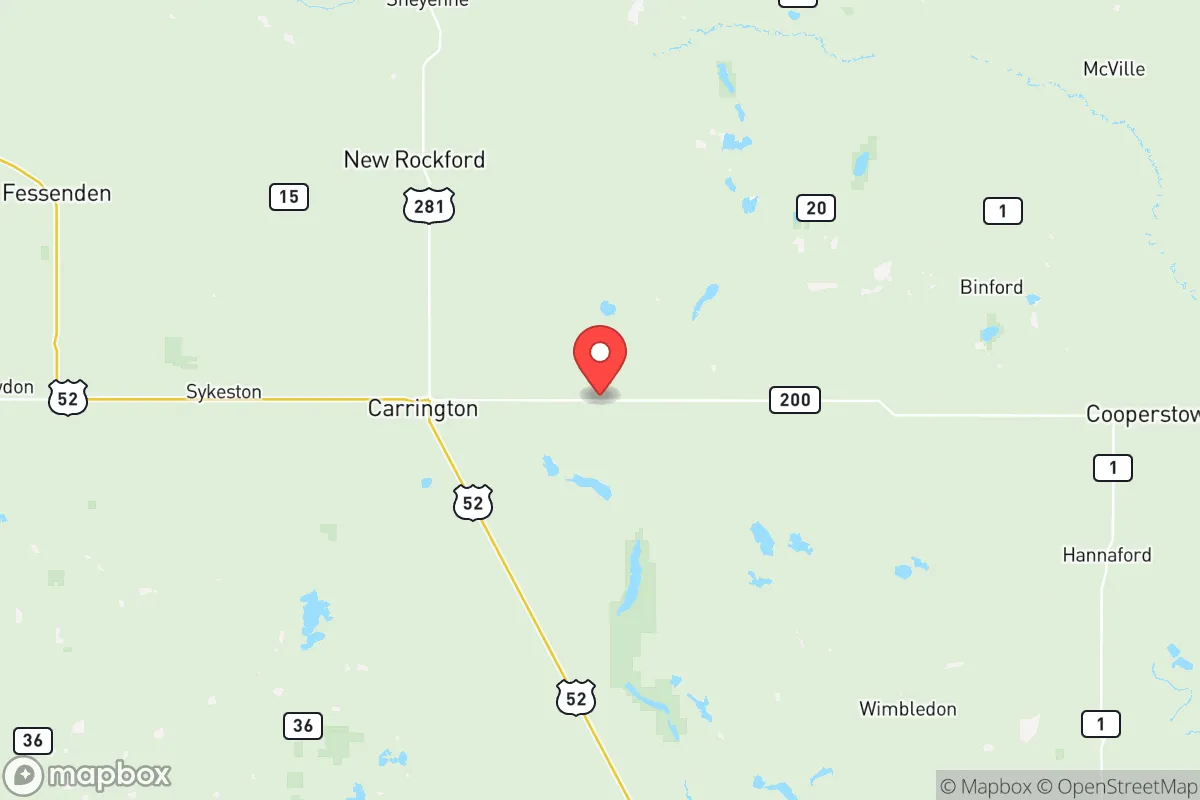
Outside Carrington, the county is dotted with unincorporated communities and small towns that offer a radically different lifestyle. Barlow, located about 10 miles west of Carrington, is a tiny crossroads with a handful of homes and no commercial services. Bordulac, roughly 12 miles east, is similarly sparse — a few houses clustered near the railroad tracks, surrounded by wheat and sunflower fields. Juanita, in the county’s northern tier, is even more remote, with fewer than a dozen occupied structures and no retail or public facilities. These areas attract people who prioritize privacy, land ownership, and a complete escape from noise and traffic. Residents here typically commute to Carrington or work in agriculture, and they rely on the county’s gravel roads and state highways for access to supplies and services.
Cost & lifestyle range
The cost of living in Foster County is dramatically lower than the national average, with a composite cost-of-living index of 62 (100 = U.S. average). The median home value is $162,800, and median rent is just $756 per month. At the lower end of the spectrum, a small house or mobile home on a rural parcel near Bordulac or Juanita can be purchased for well under $100,000, offering the lowest possible housing costs in the region. At the higher end, newer or renovated homes in Carrington’s established neighborhoods typically sell in the $200,000–$250,000 range, still far below national medians. The trade-off is clear: Carrington provides sidewalks, a hospital, and a school system, while the rural pockets offer land and silence but require driving for every errand. Utility costs and property taxes are moderate, and there is no local income tax, which further stretches household budgets.
Foster County is best suited for people who value affordability, space, and a predictable, low-stress daily routine. Families with school-age children tend to settle in Carrington for the schools and activities, while retirees and remote workers often choose the rural townships for the lower cost and greater privacy. Anyone who needs urban amenities, frequent dining variety, or a robust job market beyond agriculture and manufacturing will find the county too limited. But for those whose definition of quality of life includes a short commute, a mortgage under $1,000 per month, and the ability to see the stars at night, Foster County delivers a consistent, grounded experience across its entire geographic range.

Crime in Foster County
Generally safer than 65% of comparable U.S. locations.
Violent CrimeViolent Crime Analysis
Property CrimeProperty Crime Analysis
Crime Analysis
Foster County, North Dakota, reports a violent crime rate of 234.1 incidents per 100,000 residents and a property crime rate of 1,467.8 per 100,000, placing it in a moderate safety tier relative to state averages. The county’s largest population center, Carrington, serves as the economic and judicial hub, while smaller communities like Glenfield, Grace City, and Barlow experience significantly lower incident volumes due to sparse populations. Overall, Foster County presents a mixed safety picture where property offenses dominate and violent crime, though below national medians, warrants attention from prospective residents.
Crime in context
Foster County’s violent crime rate of 234.1 per 100,000 sits roughly 30% below the national average of 380 per 100,000 but aligns closely with North Dakota’s statewide rate of approximately 240 per 100,000. Property crime at 1,467.8 per 100,000 exceeds the state average of 1,250 per 100,000, driven largely by theft and burglary in Carrington, the county seat. By comparison, neighboring Stutsman County (Jamestown) reports a property crime rate near 1,800 per 100,000, while rural Wells County posts rates below 1,000 per 100,000. The disparity reflects Carrington’s role as a regional retail and agricultural service center, which attracts transient traffic and associated property offenses. Violent incidents are rare in outlying towns like Glenfield and Grace City, where year-round populations hover below 100 and police coverage relies on county sheriff response rather than dedicated municipal departments.
What residents experience
Daily life in Foster County involves low exposure to violent crime, though property theft—particularly from vehicles and farm outbuildings—is a recurring nuisance. Carrington residents report occasional vandalism and unlocked-vehicle thefts, especially during harvest season when seasonal workers pass through. The county’s judicial system, overseen by the Southeast Judicial District based in Jamestown, applies North Dakota’s conservative sentencing guidelines; prosecution rates for property crimes remain above 80%, and plea deals for repeat offenders are less common than in urban districts. However, residents express concern about the district’s progressive-leaning policies on pretrial release, which have led to early returns of known property offenders in Carrington. The Foster County Sheriff’s Office, with a staff of eight sworn deputies, prioritizes visible patrols along U.S. Highway 281 and State Highway 200, the main corridors through the county. In contrast, towns like Barlow and Melville see sheriff presence only a few times per week, relying on neighborly watchfulness as the primary deterrent.
Neighborhood-level variation
Safety varies sharply between Carrington’s core and its rural outskirts. Within Carrington, the area around the Dakota Growers Pasta plant and the industrial park sees higher theft reports, while the residential neighborhoods west of Main Street near the Carrington Golf Course experience near-zero violent crime. Glenfield and Grace City report fewer than five total crimes per year, making them among the safest locales in the county. The unincorporated community of Barlow, with fewer than 30 residents, has recorded no violent crime in the past decade. Prospective residents should note that property crime risk correlates with proximity to major highways; homes along Highway 281 north of Carrington face elevated burglary odds compared to interior gravel-road properties. The Foster County Commission has declined to adopt a countywide property crime task force, instead funding additional lighting and camera grants for Carrington businesses—a decision that leaves rural homeowners largely self-reliant for security.
* Values derived from national, state, county, city and local statistics and may differ in a specific area. Last updated: 2026-10-10T16:29:24.000Z
Narrative content on this page is AI-generated and may contain mistakes. Verify any details that matter before acting on them.
ReloMaps may earn a commission from affiliate links at no extra cost to you.

