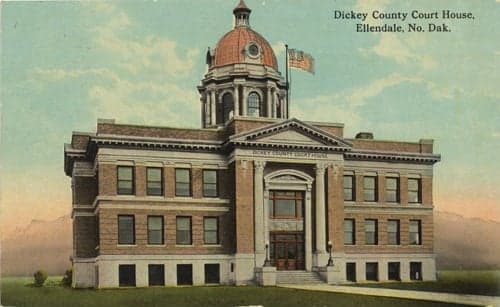
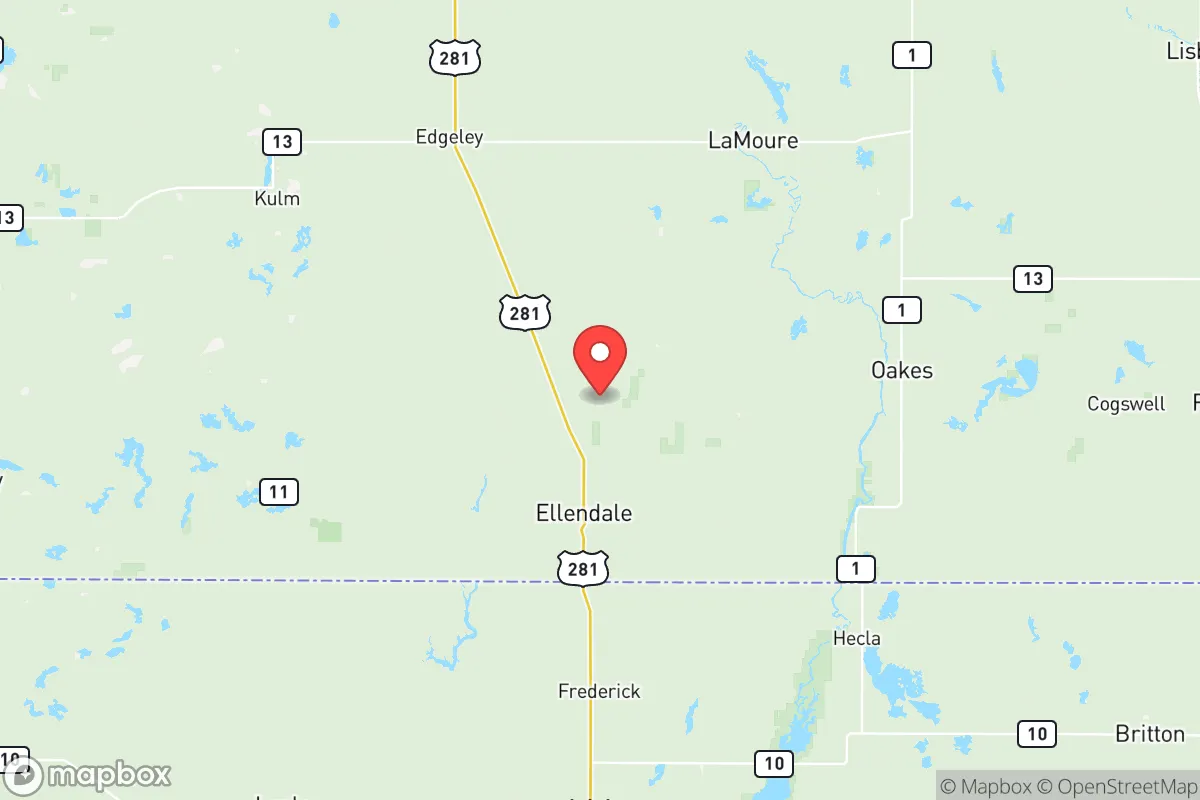
Photo: Wikipedia
Quality of Life in Dickey County
A livable area that tracks near national norms for affordability, walkability, and neighborhood health.
What does Quality of Life tell us?
Quality of Life measures an area by evaluating factors like cost of living, nearby amenities, country club access, airport proximity, socioeconomic signals and neighborhood character. For large states, this is a general average — quality of life can vary dramatically between metro areas, suburbs, and rural communities within the same state.
What does this tell us?
Quality of Life measures an area by evaluating factors like cost of living, nearby amenities, country club access, airport proximity, socioeconomic signals and neighborhood character. For large states, this is a general average — quality of life can vary dramatically between metro areas, suburbs, and rural communities within the same state.
Cost of Living
38% below national average
132%
The Real Cost of Living in Dickey County for 2026
| Tier | Individual | Family (4) |
|---|---|---|
| Survival | $12k | $22k |
| Comfortable | $32k | $48k |
| Luxury | $114k+ | $177k+ |
| Elite (Top 5%) | $169k+ | $262k+ |
Quality-of-Life Analysis
Dickey County, North Dakota, offers a distinct quality-of-life spectrum that ranges from the modest commercial hub of Oakes to the quiet, unincorporated crossroads of Ludden and the wide-open farmsteads of the surrounding prairie. The county’s overall cost of living index sits at a remarkably low 62 (100 is the U.S. average), with a median home value of $167,100 and a median rent of $749, making it one of the most affordable places in the state. This economic reality attracts a mix of agricultural workers, railroad employees, and remote professionals seeking a low-stress, low-cost lifestyle, though the amenities and social density vary sharply between the county’s few population centers and its deeply rural pockets.
Largest town(s) & population centers
Oakes is the county’s largest city and primary service center, home to roughly 1,800 residents. Daily life here revolves around a compact downtown with a grocery store, hardware store, a handful of restaurants, and the Oakes Community Hospital, which provides essential healthcare. The city is a hub for the surrounding agricultural region and hosts a significant presence of the Dakota, Minnesota & Eastern Railroad. The Oakes Public School system serves the majority of the county’s K-12 students, and the town offers a public swimming pool, a golf course, and a city park system that supports youth sports leagues. For those seeking the most amenities within Dickey County, Oakes is the clear choice, with a walkable core and a commute time averaging just under 17 minutes countywide.
Ellendale, the county seat, is the second-largest population center with about 1,300 residents. It is home to the Dickey County Courthouse and a small campus of the North Dakota State College of Science (NDSCS), which brings a modest student population and some cultural events to the area. Ellendale’s downtown is smaller than Oakes’s, but it offers a pharmacy, a grocery store, and a few local eateries. The town’s character is quieter and more government- and education-oriented than Oakes’s railroad-and-agriculture vibe. Both towns provide the basic necessities of daily life, but residents typically drive to larger cities like Aberdeen, South Dakota (about 60 miles south) or Fargo (about 100 miles east) for major shopping, specialized medical care, or entertainment.
Smaller towns & rural pockets
Beyond Oakes and Ellendale, the county’s population thins dramatically. Forbes, a small town of roughly 50 residents, sits in the northern part of the county and offers little more than a grain elevator and a handful of homes. Fullerton and Ludden are unincorporated communities that function primarily as residential crossroads for farm families. In these pockets, daily life is defined by long views of open fields, gravel roads, and a complete reliance on personal vehicles. There are no grocery stores, gas stations, or schools in these hamlets; residents drive 15 to 25 minutes to Oakes or Ellendale for every errand. The trade-off is profound privacy, very low land costs, and a lifestyle deeply connected to the land. The average commute of 16.6 minutes across the county reflects the fact that most rural residents work within the county itself, either on farms, at the railroad, or in the towns’ service industries.
Cost & lifestyle range
The cost of living is uniformly low across Dickey County, but the trade-offs between town and country are significant. In Oakes, a median home value of $167,100 buys a well-maintained three-bedroom house on a city lot with access to municipal water, sewer, and high-speed internet. Renters in Oakes pay a median of $749 per month, often for apartments or duplexes near downtown. In Ellendale, home prices are slightly lower, with some older homes available for under $120,000, though the housing stock is older and less varied. At the rural extreme, in areas around Forbes or Ludden, a buyer can acquire a farmhouse on several acres for well under $100,000, but must budget for well and septic maintenance, propane heating, and potentially limited internet options (though Starlink has improved connectivity in recent years). The lifestyle range is therefore a choice between walkable, service-rich small-town living in Oakes or Ellendale and the solitude and self-sufficiency of the open countryside.
Who thrives in Dickey County? The county is best suited for individuals and families who prioritize affordability, safety, and a slower pace over urban amenities and career diversity. It works well for agricultural workers, railroad employees, remote professionals who can tolerate moderate internet speeds, and retirees on fixed incomes who want a low-cost, low-crime environment. Those who need frequent cultural events, specialized healthcare, or a wide job market will find the county limiting, but for anyone seeking a quiet, affordable, and community-oriented life on the Northern Plains, Dickey County delivers a clear and consistent value proposition.

Crime in Dickey County
Generally safer than 65% of comparable U.S. locations.
Violent CrimeViolent Crime Analysis
Property CrimeProperty Crime Analysis
Crime Analysis
Dickey County, North Dakota, presents a mixed safety profile, with property crime rates that significantly exceed state averages while violent crime remains below the national benchmark. The county, anchored by the city of Oakes and including the smaller communities of Ellendale, Fullerton, and Ludden, recorded a violent crime rate of 234.1 per 100,000 residents and a property crime rate of 1,467.8 per 100,000 in the most recent reporting period. These figures place the county in a complex position for prospective residents weighing rural safety against statistical realities.
Crime in context
Dickey County's violent crime rate of 234.1 per 100,000 sits below the national average of approximately 380 per 100,000, offering a meaningful safety advantage over many urban and suburban areas across the United States. However, the county's property crime rate of 1,467.8 per 100,000 exceeds the North Dakota state average of roughly 1,200 per 100,000, indicating that theft, burglary, and motor vehicle theft occur at a higher frequency than in many neighboring counties. This disparity between violent and property crime is common in rural agricultural regions, where sparse populations can suppress violent incidents but dispersed property and limited law enforcement coverage create opportunities for theft. The county falls within the Southeast Judicial District, which covers a broad rural area and operates with a conservative judicial philosophy that prioritizes public safety and accountability for offenders.
What residents experience
For those living in Dickey County, the practical safety experience varies notably by location. Oakes, the county's largest city with roughly 1,800 residents, tends to concentrate a disproportionate share of reported property crimes, including thefts from vehicles and farm equipment, due to its role as a regional commercial hub. Ellendale, home to the county seat and a small liberal arts college, reports fewer property incidents but has seen periodic spikes in alcohol-related disturbances and minor assaults. The unincorporated areas and smaller towns like Fullerton and Ludden generally experience very low crime volumes, though the vast distances between properties make them vulnerable to isolated thefts of agricultural supplies and machinery. Residents commonly report that violent crime is rare and typically involves individuals known to one another rather than random attacks on strangers. The county's law enforcement presence is thin, with the Dickey County Sheriff's Office covering over 1,100 square miles, meaning response times in remote areas can exceed 20 minutes.
Neighborhood-level variation
Neighborhood-level safety within Dickey County is shaped more by proximity to commercial corridors and major highways than by distinct urban districts. Properties along Highway 281, which runs through Oakes and connects to Interstate 94, experience higher rates of transient-related theft and vehicle break-ins than homes on quiet residential streets. The area around the Oakes industrial park and grain elevators sees elevated property crime due to the concentration of valuable equipment and materials. In contrast, the residential neighborhoods of Ellendale near the Trinity Bible College campus maintain a notably safer profile, bolstered by campus security patrols and a tight-knit community watch presence. For those considering a move to Dickey County, the safest housing choices are typically in the outer residential blocks of Oakes or in the smaller communities of Fullerton and Ludden, where population density is lowest and neighbor familiarity is highest. Prospective residents should prioritize properties with secure outbuildings and visible lighting, as rural property crime prevention relies heavily on individual precautions rather than dense police coverage.
* Values derived from national, state, county, city and local statistics and may differ in a specific area. Last updated: 2026-07-13T16:51:03.000Z
Narrative content on this page is AI-generated and may contain mistakes. Verify any details that matter before acting on them.
ReloMaps may earn a commission from affiliate links at no extra cost to you.

