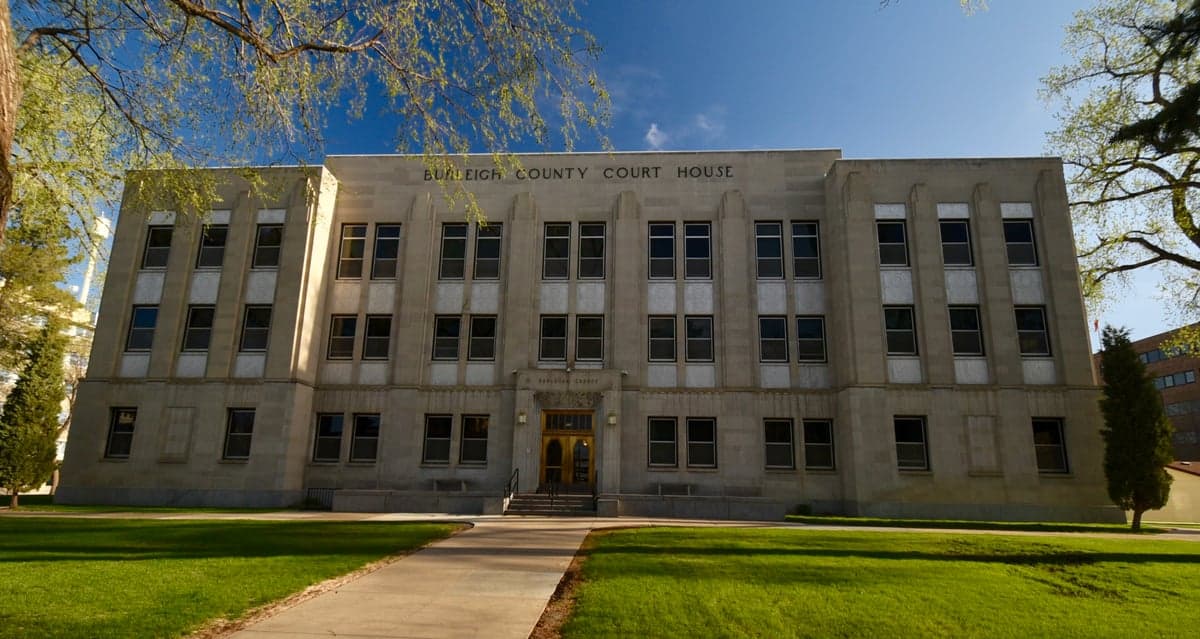
Photo: Wikipedia
Demographics of Burleigh County
Affluence Level in Burleigh County
A middle-class area roughly in line with national averages across income, home values, education, and employment.
People of Burleigh County
Today, Burleigh County, North Dakota, is home to roughly 99,000 residents, a population that is overwhelmingly white (85.7%) and native-born (only 1.8% foreign-born), with a notably high educational attainment—38.7% hold a college degree. The county’s character is shaped by its role as the state capital’s home, anchored by Bismarck, which gives the area a stable, government-employer-driven economy and a distinctly Midwestern, family-oriented culture. While the population is less diverse than the national average, the county has seen modest growth in Hispanic (3.3%) and Black (1.8%) communities in recent decades, though it remains one of the least ethnically diverse counties in the region. The people here are defined by a blend of Scandinavian and German pioneer heritage, a strong work ethic tied to agriculture and energy, and a political landscape that leans conservative.
Settlement & growth (pre-1960)
The area now known as Burleigh County was originally the territory of the Mandan, Hidatsa, and Arikara (Three Affiliated Tribes), who established semi-permanent earth-lodge villages along the Missouri River. The first European contact came with French fur traders in the 18th century, but significant American settlement did not begin until after the 1851 Treaty of Fort Laramie and the subsequent establishment of Fort Abraham Lincoln in 1872. The arrival of the Northern Pacific Railway in 1873 was the true catalyst, transforming the region from a frontier outpost into a viable agricultural settlement zone.
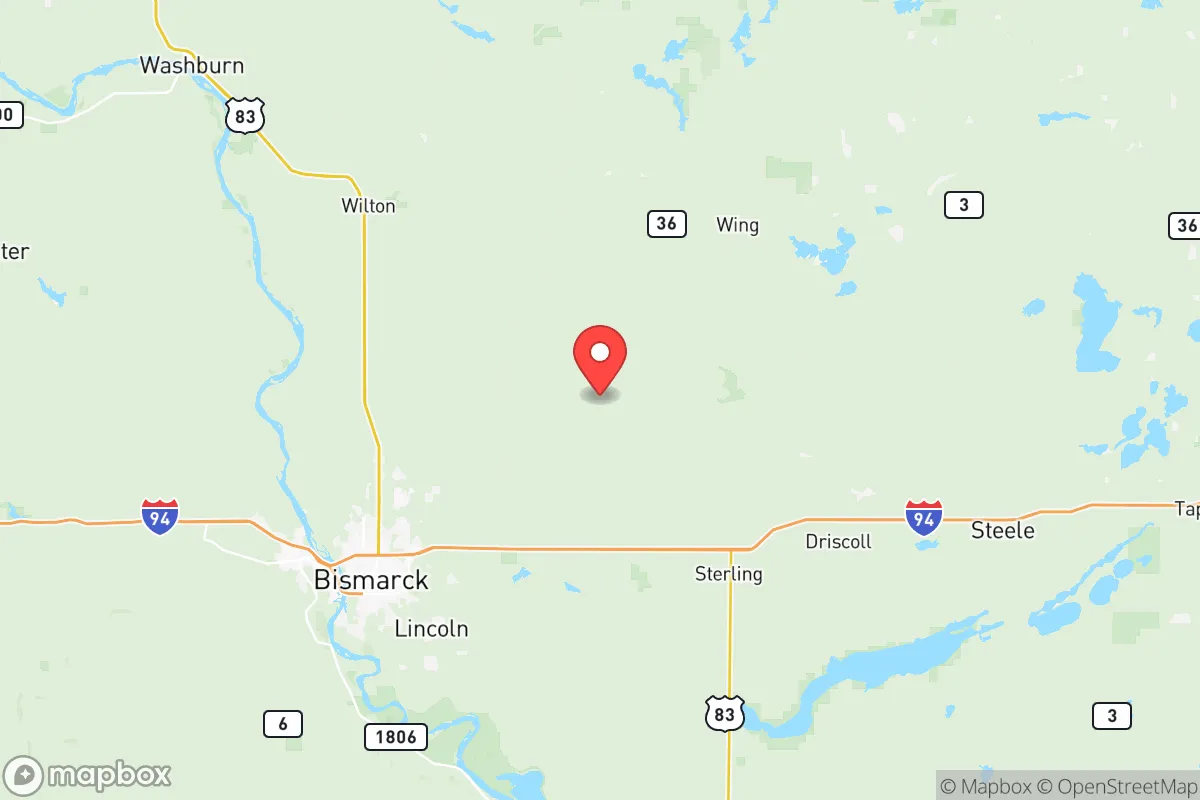
The first major wave of settlers were German-Russian immigrants, who began arriving in the 1880s and 1890s, drawn by the promise of cheap, fertile land under the Homestead Act. These families, who had previously lived in Russia’s Volga region, brought with them a strong tradition of wheat farming and a tight-knit, religious community structure. They concentrated in the southern and western parts of the county, founding towns like Wing and Sterling, where their descendants remain a significant cultural presence today. A second, concurrent wave consisted of Norwegian and Swedish immigrants, who settled in the northern and eastern townships, establishing communities like Regan and Menoken. These Scandinavian settlers were instrumental in building the region’s Lutheran churches and cooperative grain elevators.
The city of Bismarck, founded in 1872 as a railroad terminus and named to attract German investment, grew rapidly as the territorial capital was moved there in 1883. The county’s economy for the first half of the 20th century was almost entirely agricultural, with wheat and cattle dominating. The Dust Bowl of the 1930s hit the region hard, but unlike the Great Plains further south, Burleigh County saw less out-migration, as the Missouri River provided a more reliable water source. The post-World War II era brought a modest influx of returning veterans and the beginning of a shift toward government employment, as the state capitol complex expanded. By 1960, the county’s population stood at roughly 35,000, still overwhelmingly white and of Northern European descent, with Bismarck serving as a quiet, conservative regional hub.
Modern era (post-1965)
The 1965 Hart-Cellar Act had a minimal direct impact on Burleigh County, as the region did not attract the large-scale immigration seen in coastal or Sun Belt states. The foreign-born population today sits at just 1.8%, a figure that has remained relatively flat for decades. The most significant demographic shift since the 1960s has been domestic migration, driven by two distinct forces: the expansion of state government and the oil boom in the western part of the state. The growth of Bismarck as a regional medical and retail center—anchored by Sanford Health and CHI St. Alexius Health—pulled in professionals from across the Upper Midwest, particularly from rural North Dakota and Minnesota.
The oil boom that began in the Bakken shale fields around 2008 did not directly transform Burleigh County’s population, but it did create a secondary effect. Many workers and their families chose to settle in Bismarck and Lincoln (a small city just south of Bismarck) rather than the more remote oil patch towns, seeking better schools and services. This brought a modest influx of workers from Texas, Oklahoma, and other energy-producing states, introducing a slightly more diverse, though still predominantly white, population. The Hispanic community, now 3.3% of the county, grew during this period, largely from Mexican-American families moving from the Southwest for construction and service jobs tied to the energy sector. The Black population, at 1.8%, is concentrated in Bismarck and is largely composed of military families stationed at the nearby North Dakota Air National Guard base and professionals recruited by the state’s healthcare system.
Suburbanization has been a defining trend since the 1990s. The area north of Bismarck, particularly around Mandan (in adjacent Morton County) and the unincorporated community of Apple Creek, has seen steady residential development. The city of Bismarck itself has expanded its boundaries, annexing farmland and creating new subdivisions that cater to families seeking larger lots and newer schools. The county’s East/Southeast Asian community (0.8%) is small but visible, with a concentration of professionals working in the healthcare and university sectors, while the Indian-subcontinent population (0.1%) is negligible. The overall character remains one of a stable, low-crime, family-focused environment, with a political culture that is reliably Republican—the county has not voted for a Democratic presidential candidate since 1964.
The future
Burleigh County’s population is projected to continue growing slowly, reaching roughly 110,000 by 2040, driven by natural increase and modest domestic in-migration. The county is not becoming more diverse in any dramatic sense; the white share of the population is expected to remain above 80% for the foreseeable future. The Hispanic and Black communities will likely grow incrementally, as healthcare and energy sectors continue to recruit from a broader labor pool, but these groups will remain small minorities. The most notable demographic trend is the aging of the population—the median age in Burleigh County is 37.5, slightly above the national average, and the county is seeing a slow but steady outflow of young adults to larger cities like Minneapolis and Denver, offset by an inflow of retirees from rural North Dakota.
New residential development is concentrating in the southern and eastern fringes of Bismarck, particularly along the Highway 83 corridor toward Lincoln and the area around Menoken. These areas are attracting families with school-age children, drawn by newer housing stock and the perception of lower taxes. The cultural identity of the county is evolving slowly: the old German-Russian and Scandinavian ethnic enclaves are fading as intermarriage and generational assimilation blur the lines, replaced by a broader, generic Midwestern identity. The county’s political and social conservatism remains deeply entrenched, with local politics focused on property taxes, school funding, and energy development.
For someone moving in now, Burleigh County offers a stable, safe, and predictable environment with a strong job market anchored by government and healthcare. The trade-off is a lack of ethnic diversity and a cultural scene that is more oriented toward outdoor recreation (hunting, fishing, and the Missouri River) than urban amenities. The county is becoming slightly more suburban and slightly more connected to the broader national economy, but it is not on a path toward rapid demographic transformation. It remains, and will likely remain, a place where the population is overwhelmingly native-born, white, and conservative—a quiet, family-oriented corner of the Great Plains.

* Values derived from national, state, county, city and local statistics and may differ in a specific area. Last updated: 2026-07-14T08:36:20.000Z
Narrative content on this page is AI-generated and may contain mistakes. Verify any details that matter before acting on them.
ReloMaps may earn a commission from affiliate links at no extra cost to you.

