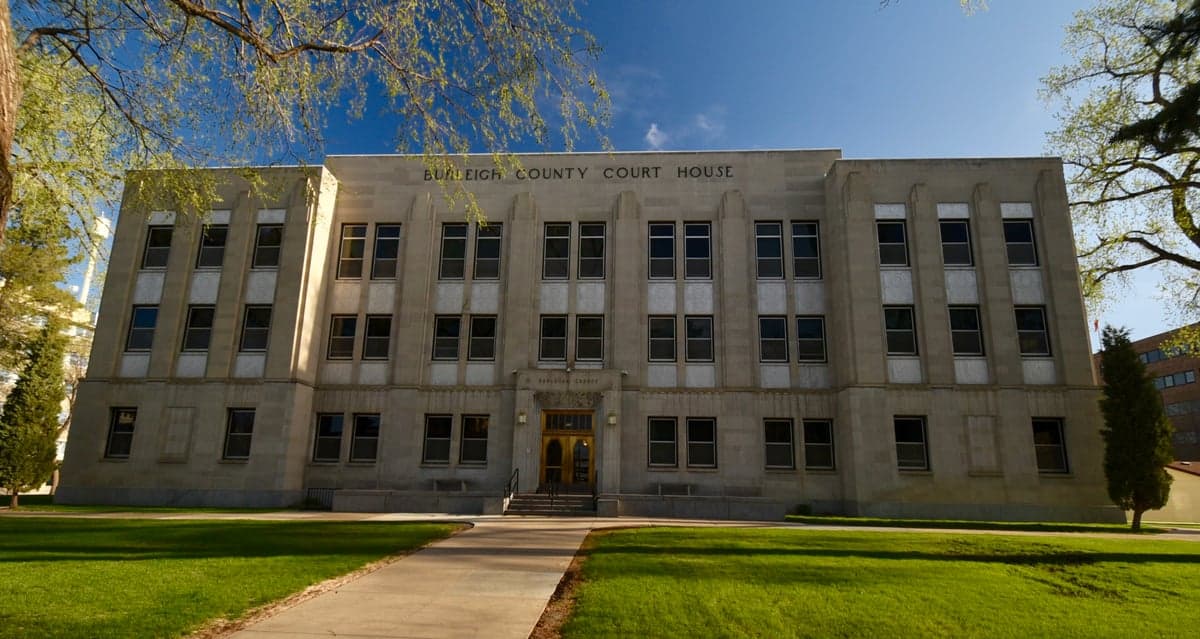
Photo: Wikipedia
Personal Sovereignty in Burleigh County
Viable for self-reliance. Generally workable, though some barriers may limit total independence.
What does Personal Sovereignty tell us?
Personal Sovereignty measures your capacity for self-reliance and independence with minimal government friction. Higher scores mean fewer barriers between you and the way you want to live... but it assumes you have the space you need and good neighbors.
What does this tell us?
Personal Sovereignty measures your capacity for self-reliance and independence with minimal government friction. Higher scores mean fewer barriers between you and the way you want to live... but it assumes you have the space you need and good neighbors.
State Policy
Energy independence: Net exporter (500% of energy produced in-state)
Personal Liberty
Homesteading

Personal Liberty Analysis
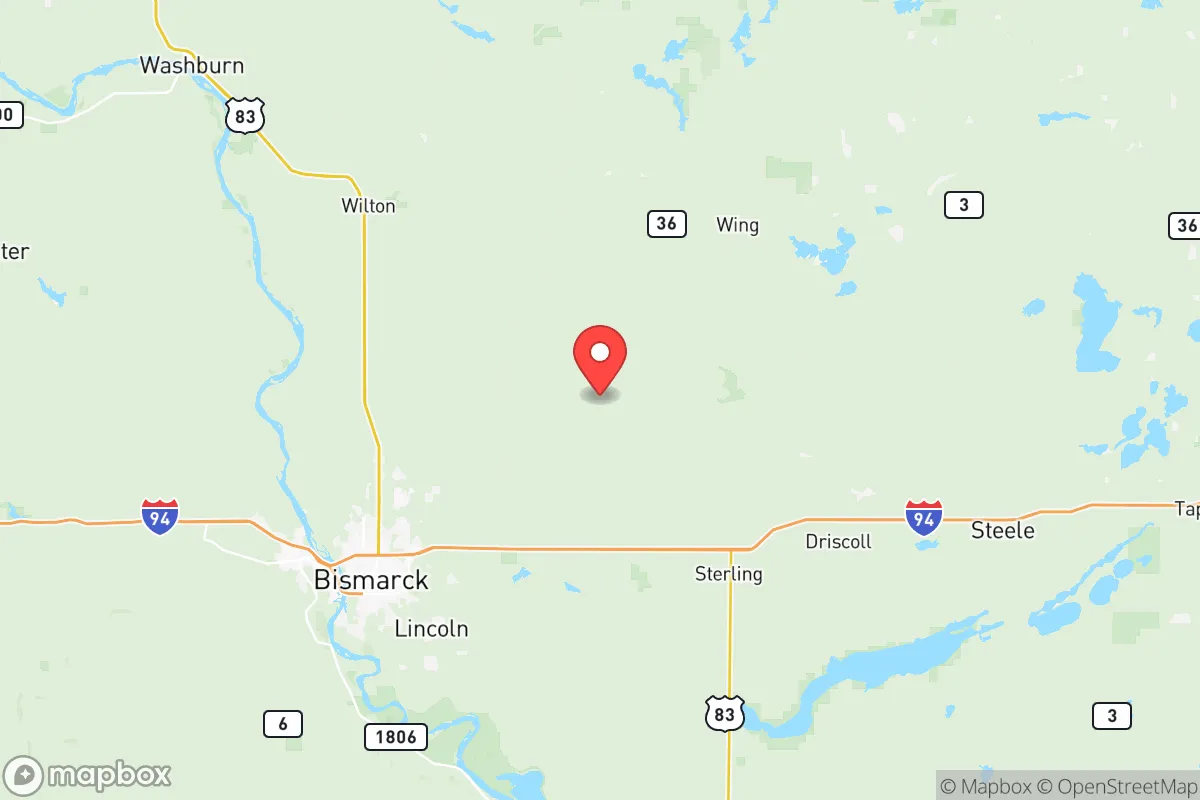
Burleigh County, anchored by the state capital of Bismarck, offers a personal sovereignty environment that is among the most robust in the Upper Midwest, driven by North Dakota’s consistently low-tax, low-regulation state framework and a deeply ingrained culture of self-reliance. For individuals and families who prioritize autonomy—whether in financial decisions, self-defense, or lifestyle choices—the county provides a legal and cultural landscape where government intervention is notably light compared to states like Minnesota, Colorado, or Oregon. The key differentiator is that while the state sets a permissive baseline, local ordinances in cities like Bismarck, Mandan, and smaller towns like Wing and Sterling can subtly shift the practical experience of personal freedom, particularly around land use and property rights.
Tax burden and regulatory posture: how North Dakota compares to neighboring states
Burleigh County residents benefit from one of the lowest combined state and local tax burdens in the nation. North Dakota has no state income tax on wages (it taxes only interest and dividend income above a threshold), and the state sales tax is 5%, with Burleigh County adding a local option of 1.5% for a total of 6.5%—lower than the rates in many Minnesota or Colorado jurisdictions. Property taxes are moderate, with the average effective rate in Burleigh County hovering around 1.1% of assessed value, though agricultural land is assessed at a lower productivity-based rate, a boon for those seeking acreage. The regulatory posture is equally light: North Dakota is a right-to-work state, has no statewide building code for single-family homes in unincorporated areas (though Bismarck and Mandan enforce their own codes), and permits a wide range of home-based businesses without the layers of permitting common in more urbanized states. For example, in the unincorporated areas around Menoken or Driscoll, a resident can operate a small welding shop, raise livestock, or run a daycare with minimal county interference—a stark contrast to the zoning battles common in suburban Colorado or Washington. The state’s energy and agricultural sectors dominate, and the regulatory environment is explicitly designed to avoid impeding those industries, which translates to a general hands-off approach for individual landowners as well.
Self-defense and gun law specifics: what the Second Amendment means in practice
North Dakota is a constitutional carry state, meaning no permit is required to carry a concealed firearm for anyone 18 or older who can legally possess a firearm. Burleigh County’s sheriff’s office issues permits for those who want reciprocity with other states, but the process is shall-issue and typically takes less than 30 days. There is no state-level red flag law, no magazine capacity restrictions, and no firearm registration. The state preempts local gun ordinances, so Bismarck and Mandan cannot enact their own restrictions stricter than state law—a critical protection for gun owners. Stand-your-ground laws are in effect, with no duty to retreat in any place where a person has a lawful right to be. The practical culture in Burleigh County is heavily pro-Second Amendment: gun ranges are common, hunting is a primary recreational activity, and firearms are openly carried in rural areas like Sterling or Wing without comment. For a family moving from a restrictive state like California or New York, the shift is dramatic—you can purchase a firearm with a simple background check, carry it without a permit, and use it in self-defense without fear of prosecution for exercising a legal right. The only notable local nuance is that Bismarck’s city parks prohibit firearms in certain designated areas (like the zoo), but these are limited and clearly posted.
Self-reliance and homesteading viability: lot sizes, zoning, and off-grid feasibility
Burleigh County offers a wide spectrum of homesteading and off-grid living options, but the feasibility depends heavily on whether you choose land within Bismarck’s extraterritorial jurisdiction or in the unincorporated county. In the city of Bismarck, minimum lot sizes are typically 6,000 to 8,000 square feet for single-family homes, and the city enforces building codes, requires connection to municipal water and sewer, and prohibits permanent off-grid living (no composting toilets or solar-only systems without a backup grid connection). Mandan has similar rules. However, once you move outside the city limits—into areas like Menoken, Wing, or the rural stretches near the Missouri River—the county’s zoning is far more permissive. In unincorporated Burleigh County, there is no minimum lot size for agricultural use, but for residential development, the county requires at least 1 acre for a single-family home on a septic system, and 2.5 acres if you want to drill a well. Off-grid living is entirely legal: you can install solar panels, wind turbines, and rainwater collection systems without permits, provided you meet basic health department standards for septic and well water. The county does not require a building permit for structures under 200 square feet, making it easy to erect a shed, greenhouse, or tiny home as a starter dwelling. For a family serious about self-reliance, the area around Sterling—about 20 miles southeast of Bismarck—offers affordable 5- to 40-acre parcels with no HOA restrictions, where you can keep chickens, goats, or a horse, and build a house using owner-builder construction methods. The trade-off is that these areas lack municipal services: you must haul your own trash, maintain your own road access, and be prepared for winter power outages, which are common in rural Burleigh County. The county’s emergency services (sheriff, fire, ambulance) are responsive but have longer response times in remote areas—a factor for families with medical needs.
Personal liberties: parental rights, medical autonomy, speech, and property
North Dakota has a strong track record on parental rights in education: the state does not mandate critical race theory or comprehensive sex education in K-12 schools, and parents have the legal right to opt their children out of any curriculum they find objectionable. The state also has a school choice program that includes charter schools and open enrollment within districts, though Burleigh County’s public schools (Bismarck Public Schools, Mandan Public Schools) are generally well-regarded and traditional in approach. Medical autonomy is a mixed picture: North Dakota has no vaccine mandate for adults, and COVID-era restrictions were minimal compared to coastal states, but the state does require certain childhood vaccinations for school attendance (with medical and religious exemptions available). Telehealth and direct-primary-care arrangements are legal and growing, and the state has no certificate-of-need laws for most medical facilities, which keeps the healthcare market relatively competitive. Free speech is robustly protected; the state has no hate speech laws that criminalize expression, and public protests are common without permit requirements for small gatherings. Property rights are strongly protected: North Dakota has a right-to-farm law that shields agricultural operations from nuisance lawsuits, and the state’s eminent domain process requires a public hearing and just compensation. In Burleigh County, property taxes are assessed at 50% of market value for residential property, and there is a homestead tax credit for low-income seniors. The county assessor’s office is transparent and appeals are straightforward. For a family that values the ability to use their land as they see fit—whether for a home business, a shooting range, or a hobby farm—Burleigh County’s legal framework is among the most accommodating in the nation.
Overall, Burleigh County ranks as a high-sovereignty area within the United States, comparable to rural counties in Montana, Idaho, or Wyoming, but with the added advantage of a stable state capital economy and access to healthcare and infrastructure. The regulatory environment is light but not absent—you cannot ignore building codes in Bismarck or dump waste on your property—but for a family or individual who wants to live with minimal government interference, own firearms without restriction, and pursue a self-reliant lifestyle on acreage, Burleigh County offers a balance of freedom and practicality that is increasingly rare. The key is choosing the right location within the county: Bismarck and Mandan for convenience and services, the unincorporated areas around Menoken, Sterling, or Wing for maximum autonomy and land use flexibility.

* Values derived from national, state, county, city and local statistics and may differ in a specific area. Last updated: 2026-07-14T08:36:20.000Z
Narrative content on this page is AI-generated and may contain mistakes. Verify any details that matter before acting on them.
ReloMaps may earn a commission from affiliate links at no extra cost to you.

