Photo: Wikipedia
Political ClimatePolitical Climate in Barnes County
Showing state-level results — no local-only data available.
Local Political AnalysisPolitical Analysis of Barnes County
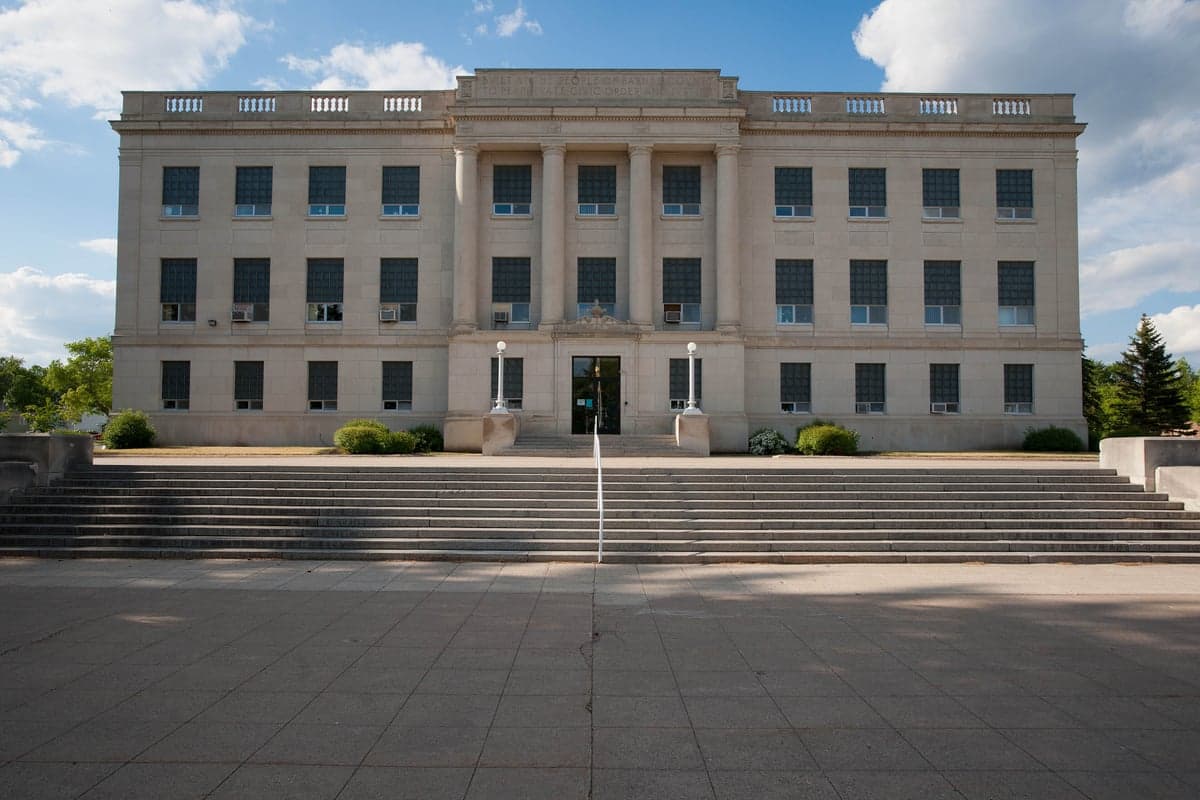
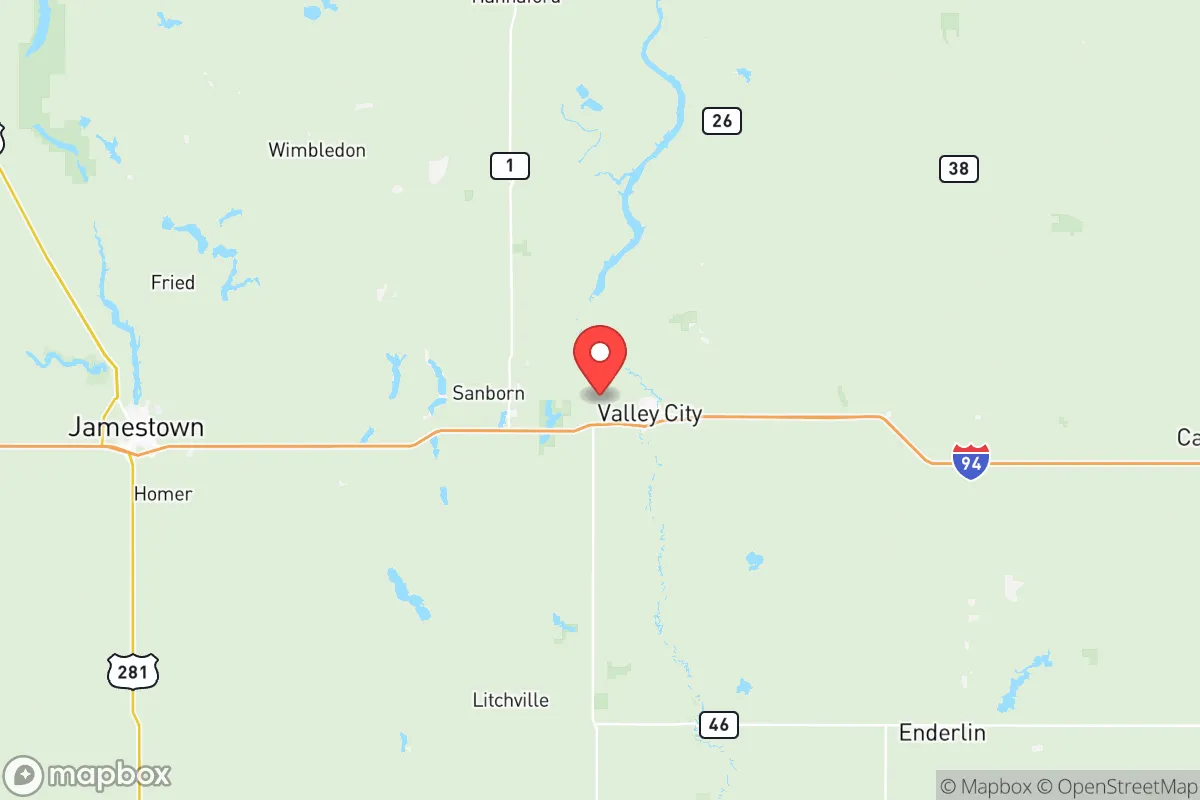
Barnes County, North Dakota, is a solidly Republican area with a Cook PVI of R+18, meaning it votes about 18 points more Republican than the national average. The county has been reliably red for decades, with Valley City, the county seat and largest town, often delivering decisive margins for GOP candidates, though it occasionally shows a slightly more moderate streak than the surrounding rural townships. The political trajectory here is stable and deeply conservative, with little sign of shifting toward the center or left in the near future.
How it compares
Compared to the rest of North Dakota, Barnes County is somewhat more Republican than the state as a whole. While North Dakota itself has a strong GOP lean—voting for Donald Trump by about 34 points in 2020—Barnes County's R+18 PVI places it in the upper tier of conservative counties in the state. For context, neighboring Cass County (home to Fargo) is more moderate, with a PVI around R+12, while rural counties like McIntosh or Logan can exceed R+30. Within Barnes County itself, there's some variation: Valley City tends to be the most competitive area, with Democratic candidates occasionally winning precincts near the university or downtown, while towns like Dazey, Rogers, and Wimbledon are deeply red, often delivering 80% or more of the vote to Republican candidates. The swing precincts are mostly in the southern part of the county, near the Sheyenne River valley, where a mix of farmers and commuters to Fargo create a slightly more balanced electorate.
What this means for residents
For conservative residents, Barnes County's political climate means their values are well-represented at the local level—county commission, school board, and state legislative seats are almost always held by Republicans. Policies like low property taxes, limited zoning, and support for agriculture and energy extraction are the norm. For liberal residents, the reality is more isolating. While Valley City offers a small but active Democratic-NPL presence, especially around Valley City State University, progressive voices are rarely reflected in local governance. Socially, most residents are welcoming regardless of political affiliation, but openly liberal views can be met with polite disagreement or, in more rural areas, quiet avoidance. The practical effect is that conservative residents enjoy a sense of cultural alignment with their neighbors and local institutions, while liberal residents often find their political energy channeled into state-level or national causes rather than local races.
Culturally, Barnes County stands out for its strong agricultural identity and a slower pace of life compared to the eastern part of the state. The county has a notable Norwegian and German heritage, which influences local festivals, food, and community values like self-reliance and neighborly assistance. Policy-wise, the county leans toward limited government intervention, with a focus on maintaining rural infrastructure and supporting the local farm economy. One distinction from the rest of North Dakota is that Barnes County has been slightly more cautious about oil and gas development than counties in the Bakken region, reflecting its reliance on traditional agriculture rather than energy extraction. For anyone moving here, the political climate is straightforward: expect a conservative, community-oriented environment where personal relationships matter more than party labels, but where the overall direction of local policy is firmly Republican.

State Political ClimatePolitical Climate in North Dakota
State Political AnalysisPolitical Environment in the State
North Dakota is a deeply red state, but its brand of conservatism is more pragmatic and populist than the firebrand style seen in some other parts of the country. The state has voted Republican in every presidential election since 1968, and in 2024, Donald Trump carried it by a massive 20-point margin. However, the political landscape is not monolithic; it’s shaped by a distinct urban-rural divide, a strong libertarian streak, and a history of progressive economic policies like the state-owned Bank of North Dakota. Over the last 10-20 years, the state has shifted further right on social issues, even as its economy has diversified beyond agriculture and oil, driven by growth in cities like Fargo and Bismarck.
Urban vs. rural divide
The political map of North Dakota is a classic study in contrasts. The state’s two major metros, Fargo (Cass County) and Bismarck (Burleigh County), are reliably Republican, but they lean more moderate than the rural hinterlands. Fargo, home to North Dakota State University and a growing tech and healthcare sector, has a younger, more educated population that sometimes votes for moderate Democrats in local races. In 2022, for example, Fargo’s state house district saw a competitive race, though Republicans still hold the majority. Bismarck, as the state capital and a hub for energy and government workers, is solidly conservative but less culturally rigid than the small towns. The real red wall is in the western oil patch, including Williston and Watford City, where the boom in fracking and pipeline construction has drawn a transient, male-dominated workforce that votes overwhelmingly Republican. Meanwhile, the rural northeast, around Grand Forks and the Red River Valley, is a mix of farming communities and the University of North Dakota, creating a more nuanced political environment. Grand Forks County has trended Republican in recent cycles, but it still elects some Democrats to local office, reflecting its agricultural roots and union influence. The rural counties in the central and western parts of the state, like McKenzie County, are among the most Republican in the nation, often voting 80% or more for GOP candidates.
Policy environment
North Dakota’s policy environment is defined by low taxes, limited regulation, and a strong emphasis on individual liberty. The state has no personal income tax, a flat corporate income tax rate of 4.31%, and a sales tax rate of 5% (with local options adding up to 2.5%). Property taxes are relatively low, though they vary by county. The regulatory posture is business-friendly, especially for energy and agriculture, with streamlined permitting for oil and gas development. On education, the state has a robust system of public schools, but there is growing support for school choice, including charter schools and private school vouchers. In 2023, the legislature passed a bill expanding access to open enrollment, allowing students to attend schools outside their district. Healthcare policy is a mixed bag: North Dakota expanded Medicaid under the Affordable Care Act in 2013, a move that was controversial among conservatives but has since become widely accepted. The state also has a strong network of rural hospitals, though some are struggling financially. Election laws are relatively strict: voters must present a valid ID at the polls, and absentee voting requires an excuse, though mail-in voting is available for those who qualify. The state has also implemented voter ID laws that require a current address, which can be a hurdle for students and transient workers.
Recent policy direction
Recent legislation in North Dakota points toward a more assertive conservative agenda, particularly on cultural and social issues. In 2023, the legislature passed a near-total ban on abortion, with exceptions only for rape, incest, and to save the mother’s life. The law took effect after the state’s trigger ban was upheld by the courts. On gun rights, North Dakota is a constitutional carry state, meaning no permit is required to carry a concealed firearm. In 2021, the legislature passed a law allowing teachers and school staff to carry firearms on school grounds, a move that was supported by the state’s powerful gun lobby. On parental rights, the state has enacted laws requiring schools to notify parents of any changes to a student’s health or well-being, including mental health services, and has banned transgender girls from participating in female sports. On property rights, the state has been a battleground over eminent domain, particularly in the context of carbon capture pipelines. In 2023, the legislature passed a bill that limits the use of eminent domain for private projects, a response to backlash from landowners in the path of proposed pipelines. On voting and ballot access, the state has tightened rules around ballot initiatives, requiring a higher threshold for signatures and a single-subject rule, making it harder for citizen-led measures to reach the ballot. This was a direct response to the successful legalization of medical marijuana in 2016 and the failed attempt to legalize recreational marijuana in 2022.
Civil unrest & political movements
North Dakota has seen its share of political flashpoints, most notably the Standing Rock protests in 2016-2017, where thousands of activists, including Native American tribes and environmental groups, gathered to oppose the Dakota Access Pipeline. The protests were a major national story and highlighted tensions between the state government, which supported the pipeline, and the Standing Rock Sioux Tribe, which argued it threatened water supplies and sacred sites. The state’s response, including the use of law enforcement and National Guard troops, was controversial and remains a sore point for many. More recently, the debate over carbon capture pipelines has sparked a new wave of activism, with landowners and environmental groups joining forces to oppose the use of eminent domain for private gain. On the right, the state has seen the rise of populist movements, including the North Dakota Republican Party’s internal battles between establishment and more libertarian-leaning factions. The state has also been a testing ground for election integrity measures, with some activists pushing for hand-counting of ballots and stricter voter ID laws, though these efforts have not gained widespread traction. Immigration politics are less prominent here than in border states, but there is a growing debate over the state’s need for immigrant labor to fill jobs in agriculture and energy, with some communities like Dickinson seeing an influx of workers from Latin America and Africa.
Projection
Over the next 5-10 years, North Dakota’s political trajectory will likely remain solidly Republican, but the state’s demographic shifts could introduce new dynamics. The population is aging, and younger residents are moving to cities like Fargo and Bismarck for jobs, while rural areas continue to lose population. This could lead to a slight moderation in the state’s politics, as urban voters tend to be more moderate on social issues. However, the influx of workers to the oil patch and the growth of the energy sector will likely reinforce the state’s conservative lean. The debate over carbon capture and renewable energy could also reshape the political landscape, as the state balances its traditional reliance on fossil fuels with the economic opportunities of the green energy transition. In-migration from other states, particularly from the West Coast and Midwest, is modest but growing, and these newcomers may bring more diverse political views. For someone moving in now, expect a state that remains deeply conservative but with a pragmatic, live-and-let-live attitude, especially on economic issues. The culture wars will continue, but the state’s small population and strong sense of community mean that politics is often less polarized than in larger states.
For a new resident, the bottom line is that North Dakota offers a stable, low-tax environment with a strong sense of individual liberty, but it’s also a place where conservative social values are deeply embedded in the culture. If you’re a conservative, you’ll find a welcoming political climate and a government that aligns with your values. If you’re a liberal, you’ll be in the minority, but the state’s small size and pragmatic streak mean you can still find your niche, especially in Fargo or Grand Forks. The key is to understand that North Dakota’s politics are shaped by its geography and economy, and that the state’s residents value self-reliance, community, and a no-nonsense approach to governance.
* Values derived from national, state, county, city and local statistics and may differ in a specific area. Last updated: 2026-06-22T19:24:16.000Z
Narrative content on this page is AI-generated and may contain mistakes. Verify any details that matter before acting on them.
ReloMaps may earn a commission from affiliate links at no extra cost to you.

