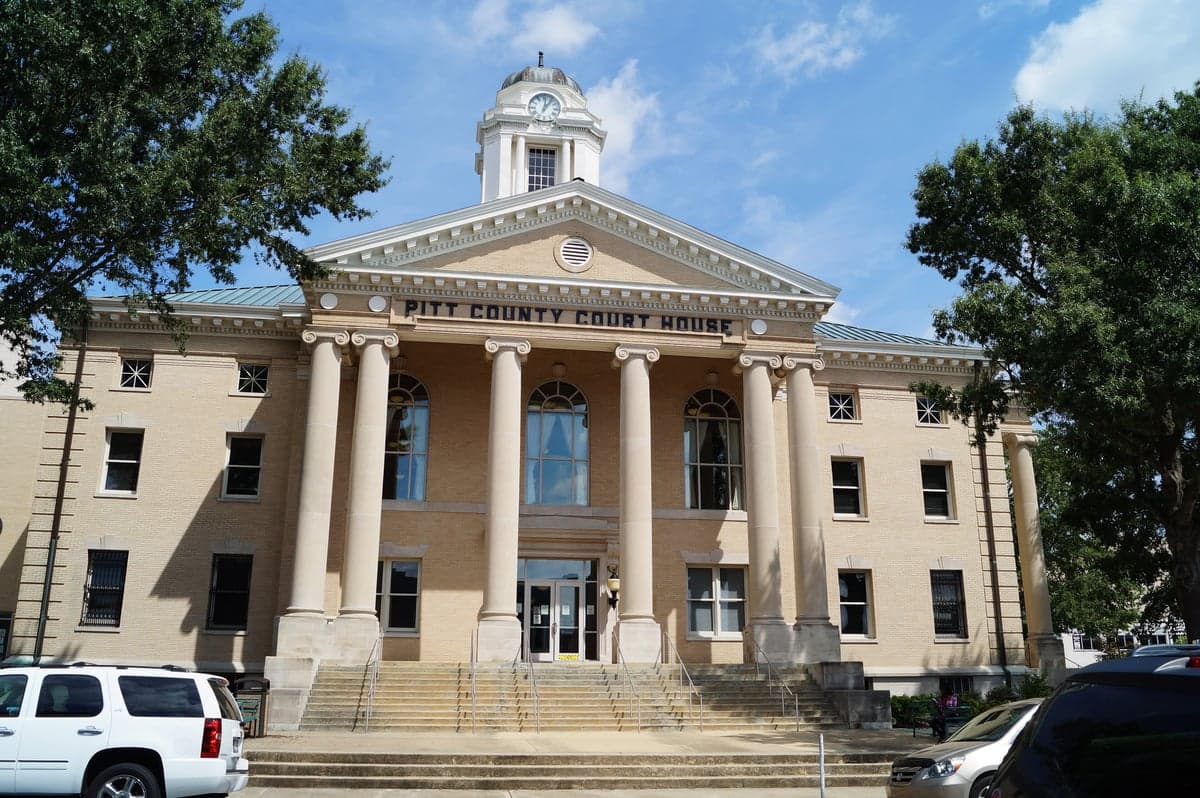
Photo: Wikipedia
Quality of Life in Pitt County
A livable area that tracks near national norms for affordability, walkability, and neighborhood health.
What does Quality of Life tell us?
Quality of Life measures an area by evaluating factors like cost of living, nearby amenities, country club access, airport proximity, socioeconomic signals and neighborhood character. For large states, this is a general average — quality of life can vary dramatically between metro areas, suburbs, and rural communities within the same state.
What does this tell us?
Quality of Life measures an area by evaluating factors like cost of living, nearby amenities, country club access, airport proximity, socioeconomic signals and neighborhood character. For large states, this is a general average — quality of life can vary dramatically between metro areas, suburbs, and rural communities within the same state.
Cost of Living
22% below national average
106%
The Real Cost of Living in Pitt County for 2026
| Tier | Individual | Family (4) |
|---|---|---|
| Survival | $15k | $29k |
| Comfortable | $38k | $55k |
| Luxury | $106k+ | $165k+ |
| Elite (Top 5%) | $133k+ | $205k+ |
Quality-of-Life Analysis
Pitt County offers a broad quality-of-life spectrum that ranges from the college-town energy of Greenville to quiet crossroads communities where agriculture still shapes daily rhythm. With a cost-of-living index of 78—22 percent below the national average—and a median home value of $194,300, the county attracts everyone from East Carolina University students and medical professionals at Vidant Health to retirees seeking affordable acreage. The average commute of just under 22 minutes holds true whether you live in a downtown Greenville apartment or a farmhouse near Stokes, making the entire county feel connected without the congestion of larger metros.
Largest town(s) & population centers
Greenville is the county's undisputed hub, home to roughly 90,000 residents and the region's economic engine. Daily life here centers on East Carolina University, the Vidant Medical Center campus, and a growing downtown dining-and-arts scene along the Tar River. Young professionals and families gravitate to neighborhoods like Lakewood Estates and the Greenville Rose area for their walkability to shops and parks, while newer subdivisions along Memorial Drive and Arlington Boulevard cater to commuters who want suburban-style homes within the city. Winterville (population ~10,000) functions as Greenville's primary suburb, with its own historic Main Street, lower property taxes, and a slower pace that appeals to families trading city density for larger lots. Both towns offer the county's highest concentration of retail, healthcare, and dining, yet housing remains affordable—median rent across the county is just $971, and in Greenville entry-level homes often fall below the median $194,300 figure.
Smaller towns & rural pockets
Outside the Greenville-Winterville corridor, Pitt County reveals a diverse patchwork of smaller communities. Ayden (pop. ~5,000) is known for its historic commercial district and the annual Ayden Collard Festival; it offers small-town walkability and homes frequently priced under $150,000. Farmville (pop. ~4,600) sits on the county's eastern edge with a quiet downtown, the Farmville Central High School sports tradition, and easy access to Highway 264 for commuters heading to Greenville or even the coast. Griffon (pop. ~3,000) straddles the Pitt-Greene county line and retains a rural crossroads character, with a handful of local eateries and a strong sense of neighborly connection. Bethel (pop. ~1,700) and Falkland (pop. ~100) represent the most rural end of the spectrum—Bethel has a small historic district and an active volunteer fire department, while Falkland is little more than a cluster of homes and farms along secondary roads. Unincorporated places like Stokes, Pactolus, and Bell Arthur are dominated by farmland, pine forests, and wide-open spaces, attracting residents who prioritize privacy and land ownership over proximity to chain stores.
Cost & lifestyle range
The spread in living costs across Pitt County is significant but remains below national averages at every point. At the high end, Greenville’s newer subdivisions—such as those near the Greenville Country Club or along the Tar River—can push home values into the $350,000–$450,000 range, but still well under the national median. Rent in Greenville averages $971, though two-bedroom apartments near ECU or Vidant can run $1,100–$1,300. At the low end, rural homes in Bethel, Stokes, or Pactolus often sell for $120,000–$160,000, and land is available for well under $10,000 per acre. Utilities are comparable countywide, but property taxes are lower in the unincorporated areas than inside Greenville or Winterville. The county’s overall cost-of-living index of 78 means that a family earning $50,000 can rent a nice home in Ayden or Farmville and still have room for savings, while a dual-income household on a combined $80,000 can comfortably buy a starter home in most of the smaller towns.
Pitt County works best for people who want genuine diversity of setting within one county. College students and young professionals thrive in Greenville’s walkable core; families often choose Winterville or Farmville for good schools and lower crime rates; and retirees or remote workers seeking true quiet gravitate toward Stokes or Bethel. The short average commute—under 22 minutes—means a rural home near Pactolus still puts you within a half-hour of full-service hospitals and dining, giving residents the rare advantage of deep affordability without rural isolation.

Crime in Pitt County
Crime rates similar to the national median for U.S. locations.
Violent CrimeViolent Crime Analysis
Property CrimeProperty Crime Analysis
Crime Analysis
Pitt County reports a violent crime rate of 310.5 per 100,000 residents and a property crime rate of 1,694.6 per 100,000, placing it above both North Carolina state averages and national benchmarks. The county's largest city, Greenville, drives much of the reported crime, while smaller towns such as Winterville and Ayden offer lower incident rates. Safety perceptions vary significantly depending on whether one lives in the urban core of Greenville or the outlying rural communities.
Crime in context
Pitt County's violent crime rate of 310.5 per 100,000 is roughly 11% higher than the North Carolina state average of about 280 per 100,000 (2023 NC SBI data) and well above the national median of around 260 per 100,000. Property crime at 1,694.6 per 100,000 exceeds both the state average of approximately 1,450 per 100,000 and the national figure near 1,500. The urban core of Greenville accounts for a disproportionate share of these incidents, particularly aggravated assault and larceny. By comparison, Winterville—a town of roughly 10,000—reports violent crime rates about 35% lower than the county average, and Ayden sees property crime nearly 20% below the county norm. The district attorney for Pitt County's judicial district (District 4) has adopted policies emphasizing diversion and reduced sentences for certain non-violent offenses. Critics argue this progressive approach, sympathetic to offenders, weakens deterrence and leaves residents exposed to repeat property and drug-related crimes. For families and businesses evaluating relocation, this legal environment is a tangible factor: a justice system that prioritizes offender rehabilitation often produces higher recidivism and more outdoor drug markets in the affected communities.
What residents experience
For daily life, the gap between urban and suburban safety is pronounced. Greenville residents report concerns about theft from vehicles, package porch piracy, and occasional burglaries, especially near the East Carolina University campus and the downtown district. The property crime rate of 1,694.6 translates to roughly 4.6 property crimes per day across the county, most concentrated in Greenville's commercial corridors and rental-heavy neighborhoods. In contrast, residents in Grifton and Simpson describe their communities as low-risk, with neighbors keeping doors unlocked and children walking to local parks. The presence of a progressive District Attorney in Greenville has led to reduced jail stays for repeat property offenders, meaning that known individuals cycle back onto the same streets with minimal interruption. For victims, this erodes trust: a stolen item or vandalized property rarely results in meaningful accountability, and the burden of prevention shifts fully onto the household.
Neighborhood-level safety in Pitt County diverges sharply. Areas near the ECU campus and Greenville's downtown core report the highest incident densities, while bedroom communities like Winterville and Ayden maintain notably lower crime volumes. Rural stretches between Grifton and Simpson see the lowest reported rates overall, though response times can be longer due to sheriff's department coverage distances. Prospective residents should evaluate specific ZIP codes—28458 (Simpson) and 28583 (Grifton) consistently register the fewest incidents, while 27858 (east Greenville) requires caution. Consulting the Pitt County Sheriff's Office annual report and local neighborhood watch data provides a more granular picture than county-wide averages alone.
* Values derived from national, state, county, city and local statistics and may differ in a specific area. Last updated: 2026-06-24T22:15:22.000Z
Narrative content on this page is AI-generated and may contain mistakes. Verify any details that matter before acting on them.
ReloMaps may earn a commission from affiliate links at no extra cost to you.

