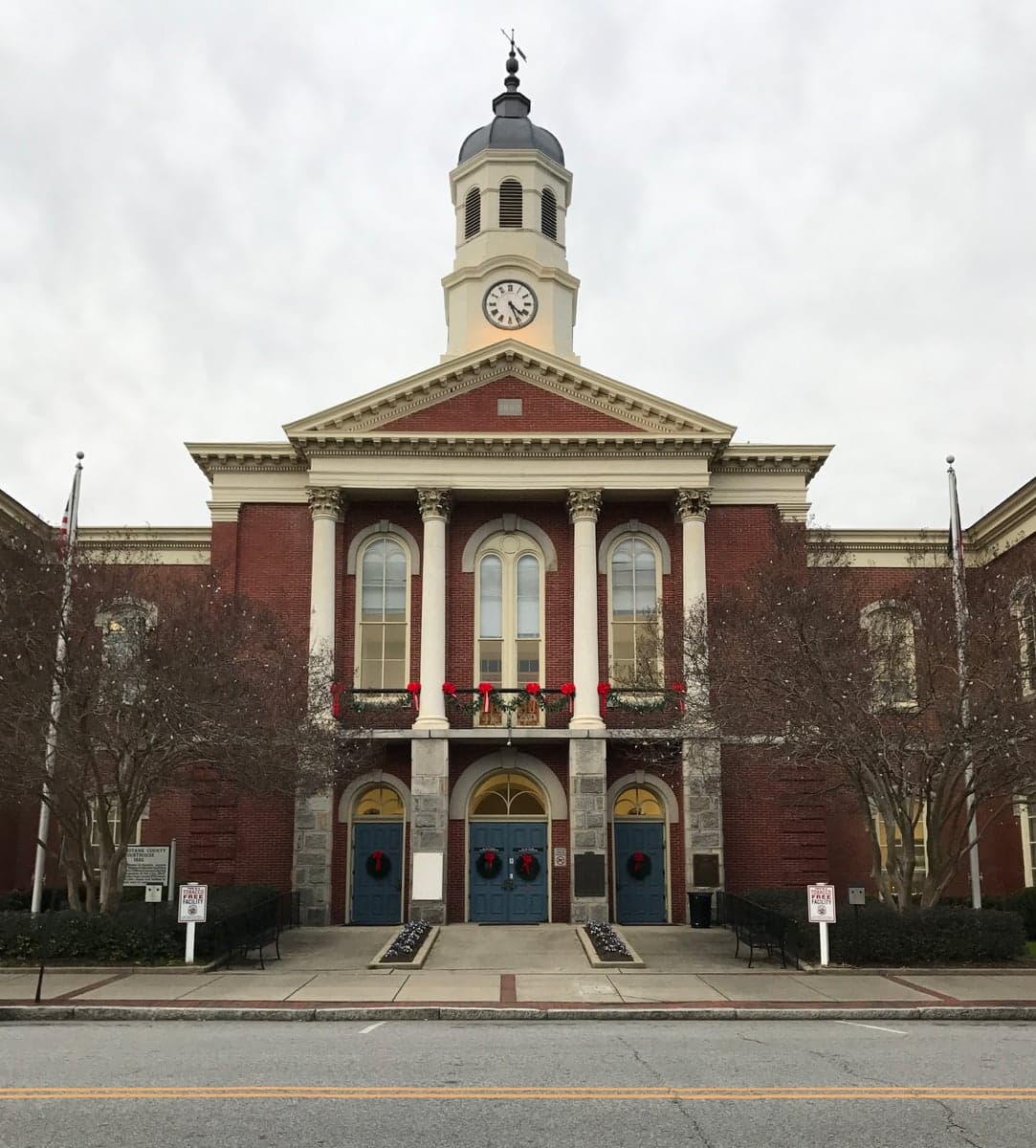
Photo: Wikipedia
Quality of Life in Pasquotank County
A livable area that tracks near national norms for affordability, walkability, and neighborhood health.
What does Quality of Life tell us?
Quality of Life measures an area by evaluating factors like cost of living, nearby amenities, country club access, airport proximity, socioeconomic signals and neighborhood character. For large states, this is a general average — quality of life can vary dramatically between metro areas, suburbs, and rural communities within the same state.
What does this tell us?
Quality of Life measures an area by evaluating factors like cost of living, nearby amenities, country club access, airport proximity, socioeconomic signals and neighborhood character. For large states, this is a general average — quality of life can vary dramatically between metro areas, suburbs, and rural communities within the same state.
Cost of Living
9% below national average
100%
The Real Cost of Living in Pasquotank County for 2026
| Tier | Individual | Family (4) |
|---|---|---|
| Survival | $18k | $34k |
| Comfortable | $43k | $64k |
| Luxury | $108k+ | $167k+ |
| Elite (Top 5%) | $127k+ | $196k+ |
Quality-of-Life Analysis
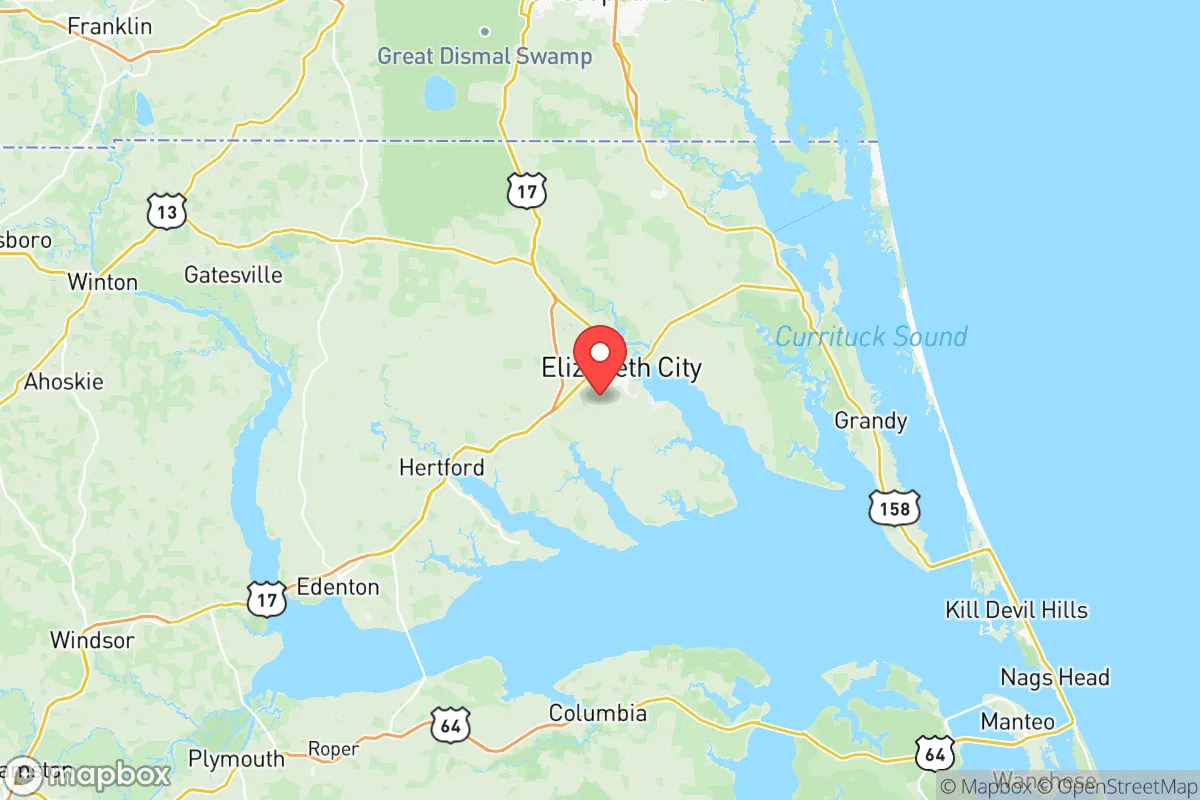
Pasquotank County, North Carolina, offers a quality-of-life spectrum that spans the urban convenience of Elizabeth City, the quiet charm of small riverside communities, and the open spaces of working farmland. With a cost of living index of 91 (below the U.S. average of 100), the county attracts a mix of young families seeking affordable homes, retirees drawn to the waterways, and commuters who work in the Hampton Roads region of Virginia. The county’s character shifts noticeably from the historic streets of its county seat to the sparsely populated townships along the Pasquotank River and the Dismal Swamp Canal.
Largest town(s) & population centers
Elizabeth City is the county’s sole incorporated city and its undisputed population and economic hub, home to roughly 18,000 of the county’s 40,000 residents. Daily life here centers on a walkable downtown along the Pasquotank River, anchored by the Museum of the Albemarle and a growing collection of breweries and waterfront restaurants. The city is also a regional employment center, with major employers including Sentara Albemarle Medical Center, the U.S. Coast Guard’s Elizabeth City base (the East Coast’s primary aviation logistics hub), and Elizabeth City State University, a historically Black university that enrolls around 1,800 students. Housing in the city ranges from historic bungalows in the Riverside and Shepard Street neighborhoods to newer subdivisions on the western edge near U.S. Highway 17, with median home values around $223,300 and median rents near $1,146.
Smaller towns & rural pockets
Outside Elizabeth City, the county’s rural character takes over in unincorporated communities that function as distinct social hubs. Weeksville, located about six miles south of Elizabeth City, is a tight-knit community centered on Weeksville Elementary School and a handful of churches, with many residents living on one-to-five-acre lots. Nixonton, on the northern bank of the Pasquotank River, is a historic river landing community where older farmhouses sit alongside newer waterfront builds. Further east, Mount Hermon and Providence are crossroads communities surrounded by soybean and corn fields, where the nearest grocery store is a 15-to-20-minute drive into Elizabeth City. The county also includes a portion of the Great Dismal Swamp National Wildlife Refuge, where the unincorporated area of South Mills offers a rural, nature-oriented lifestyle with direct access to the Dismal Swamp Canal Trail.
Cost & lifestyle range
The cost-of-living spread across Pasquotank County is modest but real. At the higher end, waterfront properties along the Pasquotank River in Elizabeth City’s Riverside Historic District and newer developments near the Albemarle Plantation golf community (technically in adjacent Perquimans County but serving Pasquotank residents) can push home prices to $400,000 or more. At the lower end, older homes in Elizabeth City’s mid-century neighborhoods like Hugh Cale and Pine Lake frequently sell for $150,000 to $180,000, and rental rates in the county’s apartment complexes, such as those along Halstead Boulevard, average near the countywide median of $1,146. The average commute of about 27 minutes reflects a county where many residents drive to jobs in Elizabeth City itself, while a notable share commutes north to Chesapeake and Virginia Beach, Virginia, via U.S. 17 — a drive that takes 45 to 60 minutes. Rural residents in South Mills and Nixonton trade longer drives for larger lots and lower property taxes, while city residents pay slightly more for the convenience of walkable amenities and shorter commutes.
The county’s lifestyle range ultimately suits two distinct profiles: those who want small-city amenities with a riverfront setting, and those who want genuine rural living with the security of a regional hospital and university within a 20-minute drive. Families with school-age children often gravitate to Elizabeth City for its three public elementary schools and Pasquotank County High School, while retirees and remote workers increasingly choose the river communities of Nixonton and Weeksville for their combination of water access and affordable land. The county’s below-average cost of living and median home value of $223,300 make it one of the more accessible waterfront counties on the North Carolina coast, though the trade-off is a quieter social scene and fewer high-end retail options than nearby Virginia Beach. For buyers who value proximity to the water, a reasonable commute to Hampton Roads, and a cost structure that leaves room in the budget, Pasquotank County offers a balanced middle ground between rural isolation and suburban convenience.

Crime in Pasquotank County
Crime rates similar to the national median for U.S. locations.
Violent CrimeViolent Crime Analysis
Property CrimeProperty Crime Analysis
Crime Analysis
Pasquotank County, anchored by the city of Elizabeth City, presents a mixed safety profile for 2026: its violent crime rate of 325.1 per 100,000 residents sits below the national average, but property crime at 1,765.6 per 100,000 runs notably higher than both state and national benchmarks. The county’s overall picture is heavily influenced by Elizabeth City, which accounts for the vast majority of the population and reported incidents, while the surrounding unincorporated areas and smaller communities like Weeksville and Mount Hermon experience significantly lower call volumes.
Crime in context
Pasquotank County’s violent crime rate of 325.1 per 100,000 is roughly 7% below the national average of approximately 350 per 100,000, and it compares favorably to North Carolina’s statewide rate of about 420 per 100,000. However, the property crime rate of 1,765.6 per 100,000 is a clear outlier — it runs about 25% higher than the national average and roughly 30% above the North Carolina average. This gap is driven almost entirely by larceny and motor vehicle theft in Elizabeth City’s commercial corridors, particularly along the U.S. 17 business route and near the College of The Albemarle campus. For context, neighboring Camden County, directly across the Pasquotank River, reports property crime rates roughly half of Pasquotank’s, underscoring that the issue is localized rather than regional.
What residents experience
For residents, the practical reality is that violent crime is rare but not absent. Elizabeth City’s downtown and the neighborhoods surrounding the waterfront — including the area near the Museum of the Albemarle — see occasional aggravated assaults and robberies, often tied to late-night activity. The city’s police department has responded with a focused patrol strategy along Ehringhaus Street and Hughes Boulevard, the two main commercial arteries. Property crime is the more tangible daily concern: vehicle break-ins and package thefts are reported regularly in the residential neighborhoods between Elizabeth City State University and the city’s historic district. Residents in the county’s rural western sections, including the communities of Nixonton and Sawyer’s Creek, report minimal crime, with most calls involving farm equipment theft or trespassing rather than violent incidents.
One factor worth noting for prospective residents is the judicial environment. Pasquotank County falls within North Carolina’s 1st Prosecutorial District, which also covers Camden, Currituck, Dare, and Gates counties. The district attorney’s office has maintained a moderately conservative charging philosophy, and Elizabeth City’s municipal court handles most low-level property offenses efficiently. However, the nearby city of Norfolk, Virginia — roughly 45 minutes north — has adopted increasingly progressive prosecution policies, including declining to prosecute certain drug and theft offenses. While Norfolk’s policies do not directly affect Pasquotank County, the regional spillover is real: some offenders travel south across the state line, and the Elizabeth City Police Department has noted an uptick in repeat property offenders with prior records in Virginia jurisdictions.
Neighborhood-level variation
Safety varies dramatically within Pasquotank County. The safest areas are the rural southern and western portions — the communities around Bethel and the Pasquotank River’s western shore — where violent crime is virtually nonexistent and property crime is limited to occasional outbuilding thefts. Elizabeth City’s most desirable neighborhoods, including the Riverside and Westover subdivisions, report crime rates comparable to small-town North Carolina averages. The highest concentration of incidents clusters in the city’s central core, specifically the blocks between Main Street and the railroad tracks, and in the public housing areas near the ECSU campus. Prospective buyers should note that the county’s unincorporated areas lack their own police forces, relying on the Pasquotank County Sheriff’s Office, which maintains response times of roughly 8-12 minutes outside the city limits — a meaningful consideration for rural property owners.
* Values derived from national, state, county, city and local statistics and may differ in a specific area. Last updated: 2026-10-28T00:27:26.000Z
Narrative content on this page is AI-generated and may contain mistakes. Verify any details that matter before acting on them.
ReloMaps may earn a commission from affiliate links at no extra cost to you.

