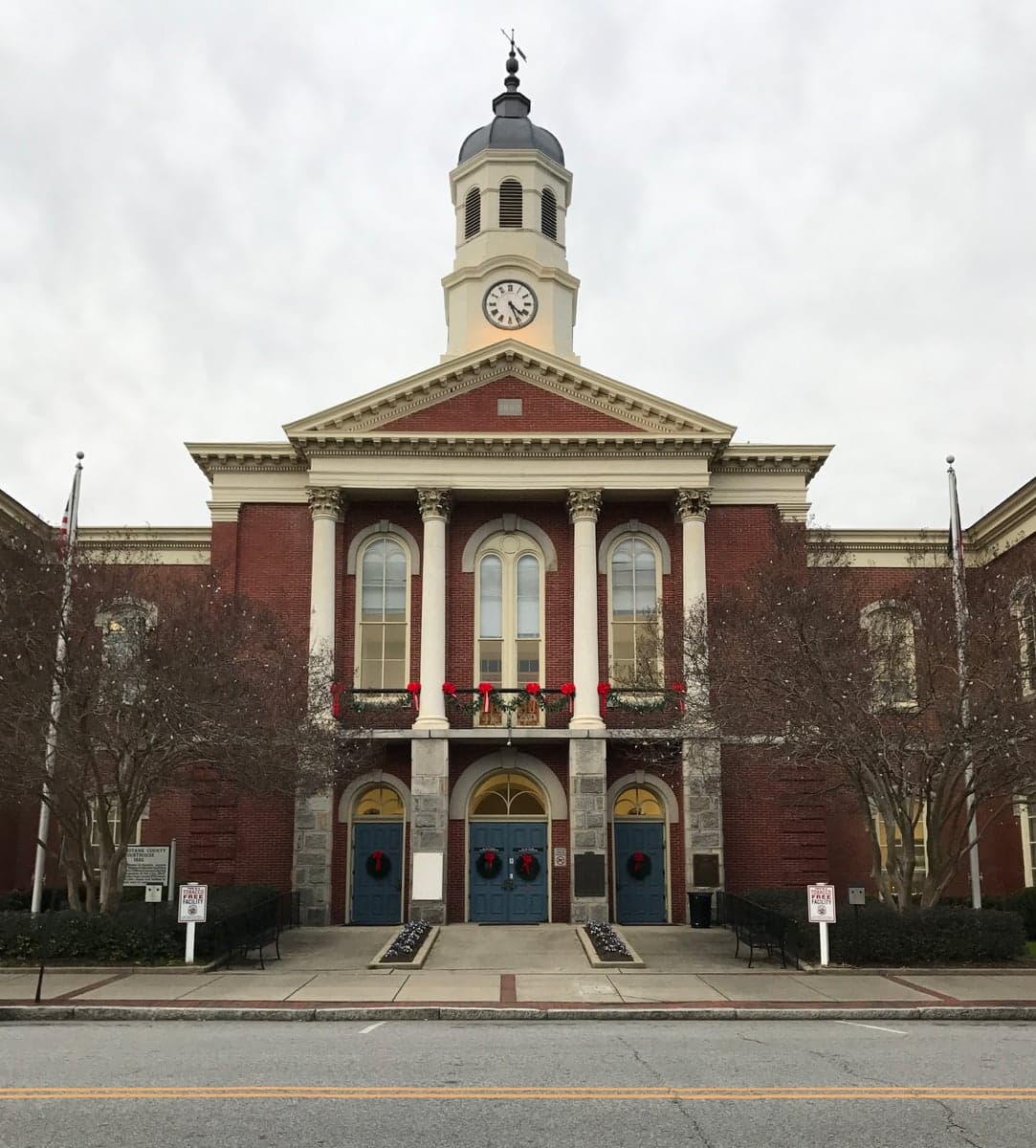
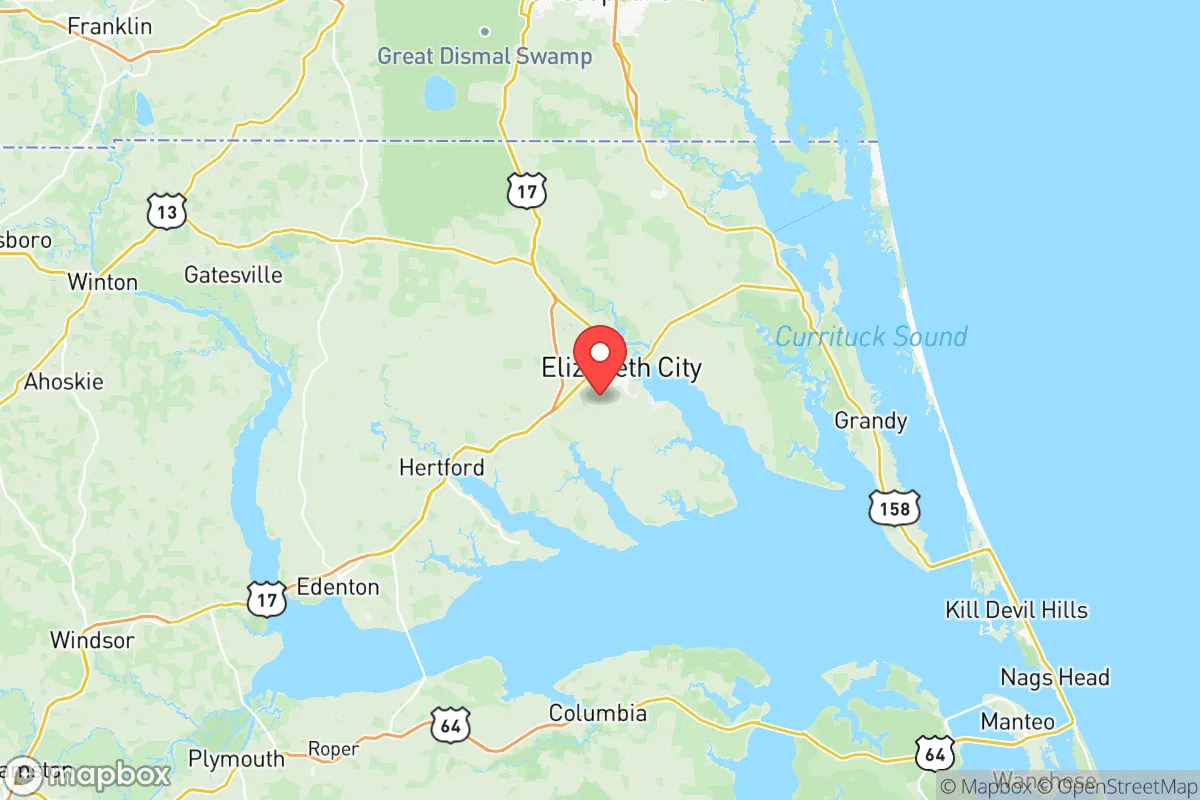
Photo: Wikipedia
Personal Sovereignty in Pasquotank County
Viable for self-reliance. Generally workable, though some barriers may limit total independence.
What does Personal Sovereignty tell us?
Personal Sovereignty measures your capacity for self-reliance and independence with minimal government friction. Higher scores mean fewer barriers between you and the way you want to live... but it assumes you have the space you need and good neighbors.
What does this tell us?
Personal Sovereignty measures your capacity for self-reliance and independence with minimal government friction. Higher scores mean fewer barriers between you and the way you want to live... but it assumes you have the space you need and good neighbors.
State Policy
Energy independence: Importer (24% of energy produced in-state)
Personal Liberty
Homesteading

Personal Liberty Analysis
Pasquotank County, North Carolina, offers a moderate-to-light regulatory environment that leans favorably for those prioritizing personal sovereignty, with Elizabeth City as the county seat and primary population center. The county’s autonomy profile is shaped by North Carolina’s statewide preemption laws, a relatively low property tax rate, and a rural-urban split between the Elizabeth City metro area and the surrounding unincorporated communities like Weeksville, Nixonton, and Mount Hermon. For a relocation researcher, the key takeaway is that Pasquotank provides a workable middle ground: it lacks the extreme libertarian posture of some western North Carolina mountain counties, but it is markedly less restrictive than the state’s urban centers like Raleigh or Charlotte.
Tax burden and regulatory posture: how Pasquotank compares to the rest of North Carolina
Pasquotank County’s tax burden is modest by North Carolina standards, with a county property tax rate of approximately 0.62 per $100 of assessed value as of 2025, which is below the state median for counties. Elizabeth City adds a municipal rate of roughly 0.55, bringing the combined rate for city residents to about 1.17 — still competitive when compared to Wake County’s combined rates that often exceed 1.30. The county operates under North Carolina’s statewide building code uniformity, meaning there is no local patchwork of construction mandates beyond the state minimums, a significant advantage for those building or renovating. Zoning is light outside the Elizabeth City extraterritorial jurisdiction (ETJ); unincorporated areas like Weeksville and Nixonton have no county-wide zoning ordinance, allowing property owners to use land for residential, agricultural, or light commercial purposes without special-use permits. The regulatory posture is best described as permissive-but-standard: no county-level income tax, no local sales tax add-ons beyond the state’s 6.75% rate, and a business licensing process that is streamlined for sole proprietors. For comparison, neighboring Currituck County has a higher property tax rate (0.63) but imposes stricter coastal development regulations, while Pasquotank’s inland position avoids most of the Coastal Area Management Act (CAMA) permitting hurdles that affect waterfront properties.
Self-defense and gun law specifics: what Second Amendment protections look like here
North Carolina is a shall-issue state for concealed carry permits, and Pasquotank County’s sheriff’s office processes applications with typical turnaround times of 45 to 60 days, consistent with state averages. The county does not impose any local firearm ordinances — Elizabeth City, Weeksville, and all unincorporated areas follow the state’s preemption statute, which prohibits cities and counties from enacting their own gun restrictions. This means no local waiting periods, no local magazine capacity bans, and no local assault weapon restrictions, even within the Elizabeth City city limits. North Carolina law allows permitless open carry for anyone legally allowed to possess a firearm, and as of 2023, the state does not require a permit to purchase a handgun, eliminating the prior purchase permit system that had been administered by county sheriffs. For those interested in training, the Pasquotank County Sheriff’s Office offers concealed carry classes, and the Elizabeth City Gun Club provides a 300-yard rifle range and pistol bays for practice. Stand-your-ground protections are codified in state law, and North Carolina’s Castle Doctrine covers vehicles and occupied structures. The practical effect for Pasquotank residents is that self-defense law is uniform and predictable — there are no local quirks to navigate, and the county’s rural character means law enforcement response times in areas like Mount Hermon or Salem can exceed 15 minutes, making personal firearm ownership a practical consideration for many households.
Self-reliance and homesteading viability: lot sizes, zoning, and off-grid feasibility
Homesteading in Pasquotank County is genuinely viable, particularly in the eastern and southern portions of the county where agricultural zoning dominates. The county’s minimum lot size for agricultural use is 1 acre in most unincorporated areas, though parcels of 5 to 20 acres are common and affordable — land prices in the Nixonton and Mount Hermon areas average $4,000 to $7,000 per acre, roughly half the cost of comparable land in Wake or Mecklenburg counties. Off-grid living is feasible but requires attention to state-level rules: North Carolina does not mandate grid connection for residential properties, and Pasquotank County has no county-wide requirement for municipal water or sewer hookups, allowing private wells and septic systems on parcels of 1 acre or more. Solar panel installation is permitted without special county review, and net metering is available through Dominion Energy, the primary utility provider, though the county’s flat terrain and coastal cloud cover reduce solar efficiency by about 15% compared to the mountains. Rainwater collection is legal and unregulated at the county level, and the state’s 2023 farm bill protections allow for on-farm processing of certain agricultural products without commercial kitchen licensing. The main constraint is the county’s floodplain regulations in the western lowlands near the Pasquotank River — properties in the 100-year floodplain require elevation certificates and raised foundations, adding $10,000 to $20,000 to construction costs. For those seeking maximum autonomy, the Weeksville area offers the best combination of affordable acreage, minimal zoning, and proximity to Elizabeth City’s hardware and supply stores.
Personal liberties: parental rights, medical autonomy, speech, and property
Pasquotank County’s personal liberty environment is shaped by North Carolina’s statewide policies rather than local ordinances. Parental rights are protected under state law, with a 2023 statute requiring parental consent for any medical treatment of minors and mandating that schools notify parents of curriculum changes involving sexuality or gender identity — Elizabeth City’s school board has implemented these policies without the contentious public battles seen in some urban districts. Medical autonomy is moderate: North Carolina does not mandate COVID-19 vaccinations, and Pasquotank County has no local vaccine requirements, but the state does require immunizations for school attendance with limited religious exemptions. The county’s health department follows state protocols, and there are no local mask mandates or business restrictions currently in effect. Free speech protections are robust, with the county’s public comment periods at commissioners’ meetings routinely drawing residents who speak on controversial topics without restriction, and the Elizabeth City waterfront park hosts regular public gatherings. Property rights are a notable strength: North Carolina’s 2018 Farm Act limits local government authority to regulate agricultural operations, and Pasquotank County has no rent control, no inclusionary zoning, and no short-term rental restrictions outside the Elizabeth City ETJ. The county’s approach to property is best illustrated by its handling of the former Elizabeth City Air Force Base — the 1,500-acre site was transferred to a local authority and is being redeveloped with minimal regulatory friction, prioritizing private sector use over government mandates.
Relative to other North Carolina areas, Pasquotank County sits comfortably in the upper-middle tier for personal sovereignty. It is more permissive than the state’s urban cores — no local gun ordinances, no county-wide zoning, and a tax rate that undercuts most metropolitan counties — but it lacks the radical deregulation found in some western counties like Yancey or Mitchell, where property taxes hover near 0.50 and county governments are minimal. For a single individual or family seeking a balance of legal protections, affordable land, and a light regulatory touch, Pasquotank offers a practical, low-friction environment that rewards self-reliance without requiring residents to fight the system at every turn.

* Values derived from national, state, county, city and local statistics and may differ in a specific area. Last updated: 2026-10-28T00:27:26.000Z
Narrative content on this page is AI-generated and may contain mistakes. Verify any details that matter before acting on them.
ReloMaps may earn a commission from affiliate links at no extra cost to you.

