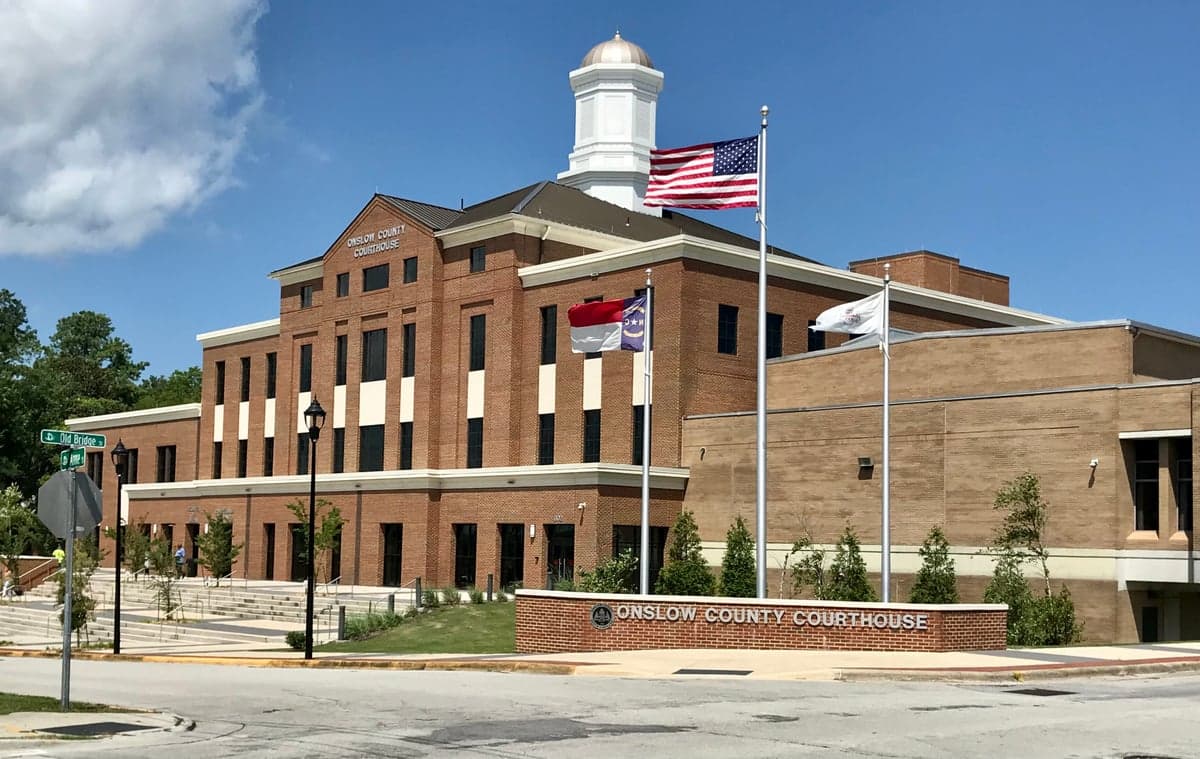
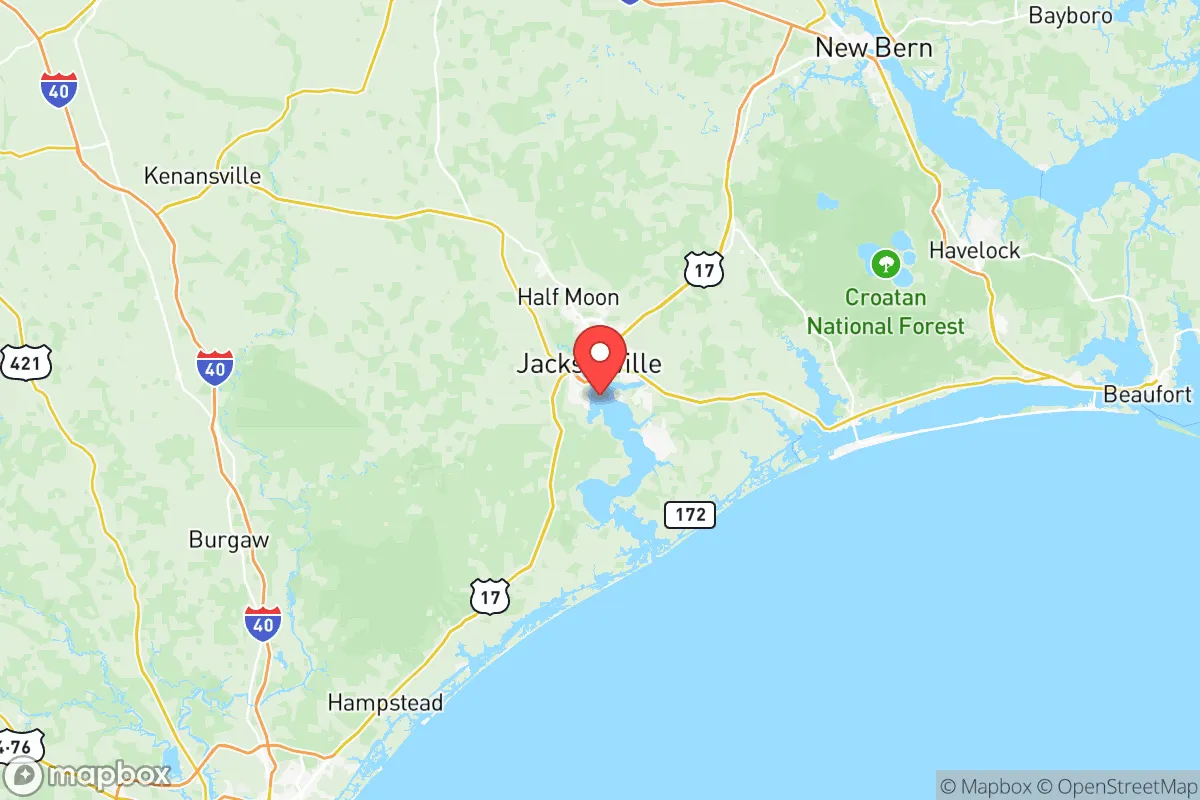
Photo: Wikipedia
Quality of Life in Onslow County
A livable area that tracks near national norms for affordability, walkability, and neighborhood health.
What does Quality of Life tell us?
Quality of Life measures an area by evaluating factors like cost of living, nearby amenities, country club access, airport proximity, socioeconomic signals and neighborhood character. For large states, this is a general average — quality of life can vary dramatically between metro areas, suburbs, and rural communities within the same state.
What does this tell us?
Quality of Life measures an area by evaluating factors like cost of living, nearby amenities, country club access, airport proximity, socioeconomic signals and neighborhood character. For large states, this is a general average — quality of life can vary dramatically between metro areas, suburbs, and rural communities within the same state.
Cost of Living
7% below national average
103%
The Real Cost of Living in Onslow County for 2026
| Tier | Individual | Family (4) |
|---|---|---|
| Survival | $19k | $36k |
| Comfortable | $43k | $63k |
| Luxury | $102k+ | $158k+ |
| Elite (Top 5%) | $120k+ | $185k+ |
Quality-of-Life Analysis
Onslow County, anchored by the Marine Corps base Camp Lejeune and the city of Jacksonville, offers a quality-of-life spectrum that ranges from dense, military-oriented town living to quiet, unincorporated rural pockets and beach-adjacent communities. The county’s character is heavily shaped by its active-duty and veteran population, but its different areas attract distinct groups: young service families and defense contractors gravitate toward the convenience of Jacksonville, while retirees, long-term residents, and those seeking land or lower taxes are drawn to smaller towns like Richlands, Swansboro, and the unincorporated stretches of the county’s northern and western reaches.
Largest town(s) & population centers
Jacksonville is the county’s undisputed hub, home to roughly 70,000 residents and the primary commercial, retail, and employment center. Daily life here revolves around the base: the city’s schools, medical facilities (including Naval Medical Center Camp Lejeune), and a dense strip of national-chain restaurants and big-box stores along Western Boulevard cater almost entirely to military families. The median home value in Jacksonville sits around $219,500, and the median rent is $1,198, making it more affordable than the national average (cost-of-living index of 93). The average commute of 21.6 minutes is manageable, though traffic on Highway 17 and Western Boulevard can spike during base shift changes. Camp Lejeune itself is a de facto population center, with on-base housing, schools, and amenities that create a self-contained lifestyle for thousands of active-duty personnel and their dependents. For those seeking a more traditional small-city feel, Swansboro (population ~3,000) sits on the White Oak River and offers a historic waterfront district with local shops, seafood restaurants, and a slower pace, though it still falls within commuting distance to Jacksonville and the base.
Smaller towns & rural pockets
Outside the Jacksonville orbit, Onslow County’s smaller communities offer distinctly different lifestyles. Richlands (population ~2,500) in the northern part of the county is a classic rural town with a historic downtown, a strong sense of community, and access to the New River. It attracts families who want a quieter, more land-oriented life while still being within a 20-minute drive to Jacksonville’s amenities. Hubert (unincorporated, population ~2,000) lies along Highway 24 and serves as a bedroom community for both Jacksonville and the coastal areas, with a mix of older homes and newer subdivisions. Folkstone and Dixon are unincorporated rural pockets where land is cheaper and homes are often on well and septic; these areas appeal to those seeking acreage, privacy, or a more self-sufficient lifestyle. Piney Green (unincorporated) is a sprawling, semi-rural area west of Jacksonville that has seen steady suburban-style development but retains a mix of farmland and wooded lots.
Cost & lifestyle range
The cost of living varies noticeably across the county. At the lower end, rural areas like Folkstone and Dixon offer median home values well below the county average of $219,500, often in the $150,000–$180,000 range for older homes on larger lots. Rent in these areas is scarce but can be found for under $1,000 for a single-family home. At the higher end, Swansboro’s waterfront properties and newer subdivisions near the coast push median home values above $300,000, and rentals near the water can exceed $1,500. Jacksonville itself sits in the middle: a typical three-bedroom home in a subdivision like Carolina Forest or Brentwood runs $200,000–$250,000, while newer construction near the base’s back gates can top $300,000. The county’s overall cost-of-living index of 93 means groceries, utilities, and healthcare are all slightly below the national average, but property taxes are low (Onslow County’s rate is around $0.55 per $100 of assessed value), which helps stretch budgets further in rural areas.
Who thrives in Onslow County? Military families and veterans who value proximity to Camp Lejeune, base services, and a community that understands their lifestyle will find Jacksonville and its immediate suburbs most convenient. Retirees and those seeking a slower, land-based life are better suited to Richlands, Folkstone, or the rural northern tier. Waterfront lovers and those willing to pay a premium for coastal charm will gravitate toward Swansboro. The county’s affordability, short commutes, and mix of town and country make it a practical choice for anyone who prioritizes low cost of living and a strong military-connected community over urban nightlife or cultural density.

Crime in Onslow County
Crime rates similar to the national median for U.S. locations.
Violent CrimeViolent Crime Analysis
Property CrimeProperty Crime Analysis
Crime Analysis
Onslow County, North Carolina, presents a mixed safety profile shaped by its large military population and the contrasting environments of its coastal and inland communities. With a violent crime rate of 310.5 per 100,000 residents and a property crime rate of 1,694.6 per 100,000, the county sits above the national average for property offenses but below the national violent crime benchmark. The presence of Marine Corps Base Camp Lejeune, which accounts for a significant portion of the county's population, creates unique public safety dynamics that differ markedly from typical rural or suburban counties in the state.
Crime in context
Onslow County's violent crime rate of 310.5 per 100,000 is slightly below the national average of 380 per 100,000 but notably higher than the North Carolina state average of approximately 290 per 100,000. The property crime rate of 1,694.6 per 100,000 exceeds both the national average (1,954 per 100,000) and the state average (roughly 1,500 per 100,000). Jacksonville, the county seat and largest city, drives much of this property crime, with auto theft and larceny from vehicles being particularly common near the base and along Western Boulevard. By contrast, the smaller towns of Swansboro and Holly Ridge report significantly lower property crime rates, often 30-40% below the county average, due to their tighter-knit communities and lower transient populations. The county's proximity to the coast also introduces seasonal crime spikes during tourist months, particularly in beach-adjacent areas like North Topsail Beach.
What residents experience
Daily life in Onslow County varies sharply by location. Residents in Jacksonville and the unincorporated areas around Camp Lejeune frequently encounter property crime as a routine concern—package theft, vehicle break-ins, and occasional burglaries are common complaints in neighborhoods near the base's main gates. The District Attorney's Office for the 4th Prosecutorial District, which covers Onslow County, has historically taken a moderately tough stance on property crimes, but the high turnover of military personnel means many cases involve defendants who leave the area before prosecution, leading to lower clearance rates. Violent crime is more concentrated: assaults and robberies are disproportionately reported in the commercial corridors of Jacksonville, particularly along Marine Boulevard and around the Jacksonville Mall, while domestic violence incidents are elevated in military housing areas. Residents in Richlands and the rural western part of the county report feeling safer, with violent crime incidents being rare and property crime largely limited to unlocked outbuildings and farm equipment theft.
Neighborhood-level variation
The safety landscape within Onslow County is not uniform. Swansboro consistently ranks as the safest municipality, with a violent crime rate below 150 per 100,000 and property crime roughly half the county average, attributed to its older demographic, active neighborhood watch programs, and limited commercial development. Holly Ridge, though small, also maintains low crime figures due to its distance from Jacksonville's nightlife and transient population. Conversely, the Piney Green area and the neighborhoods immediately surrounding Camp Lejeune's main gate experience the highest crime densities, driven by the convergence of young service members, off-base rental properties, and easy access to bars and retail. The progressive-leaning judicial philosophy sometimes seen in larger North Carolina metro areas like Raleigh or Durham has not taken root in Onslow County; local judges and the district attorney generally prioritize public safety and victim rights, which helps keep violent crime from escalating further. For families and retirees, the safest strategy is to choose homes in Swansboro, Holly Ridge, or the rural outskirts of Richlands, while avoiding the high-turnover rental zones near the base.
* Values derived from national, state, county, city and local statistics and may differ in a specific area. Last updated: 2026-07-02T10:10:28.000Z
Narrative content on this page is AI-generated and may contain mistakes. Verify any details that matter before acting on them.
ReloMaps may earn a commission from affiliate links at no extra cost to you.

