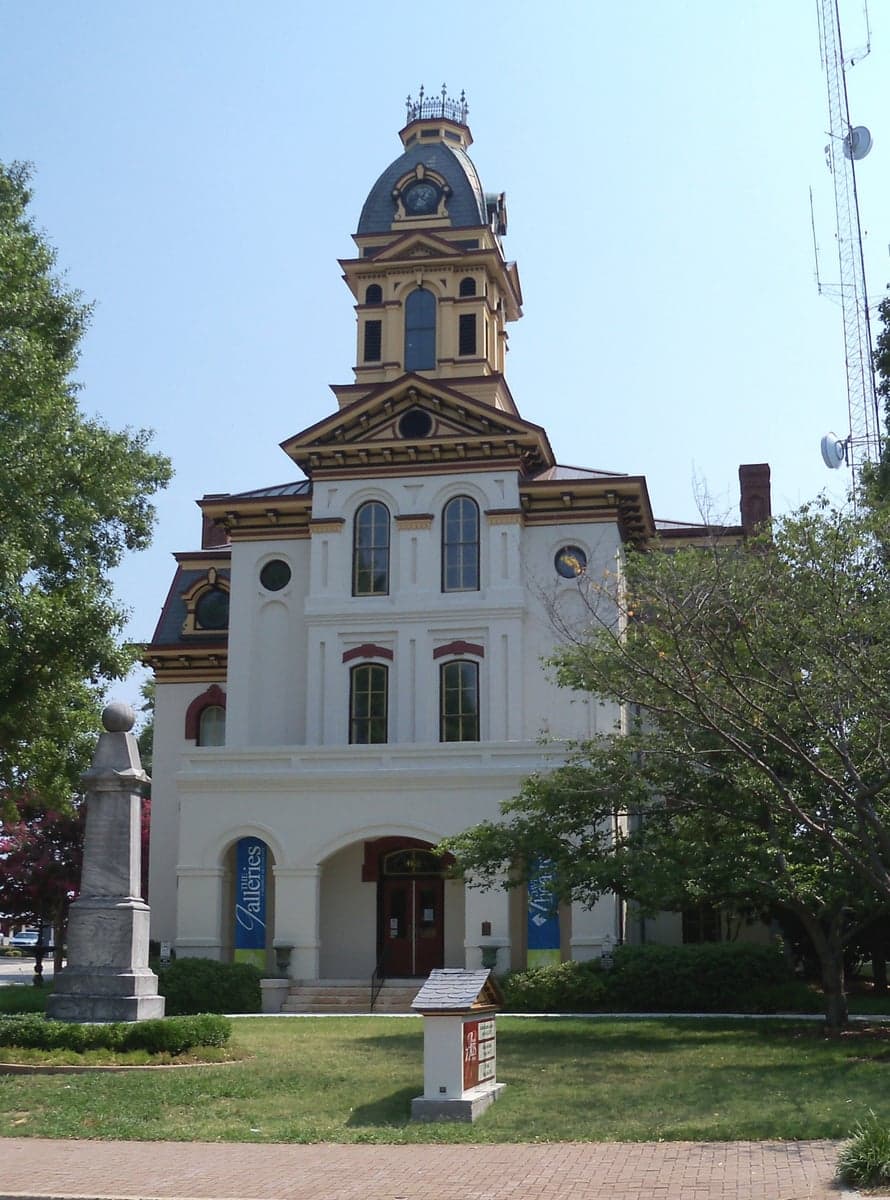
Photo: Wikipedia
Quality of Life in Cabarrus County
A livable area that tracks near national norms for affordability, walkability, and neighborhood health.
What does Quality of Life tell us?
Quality of Life measures an area by evaluating factors like cost of living, nearby amenities, country club access, airport proximity, socioeconomic signals and neighborhood character. For large states, this is a general average — quality of life can vary dramatically between metro areas, suburbs, and rural communities within the same state.
What does this tell us?
Quality of Life measures an area by evaluating factors like cost of living, nearby amenities, country club access, airport proximity, socioeconomic signals and neighborhood character. For large states, this is a general average — quality of life can vary dramatically between metro areas, suburbs, and rural communities within the same state.
Cost of Living
12% above national average
95%
The Real Cost of Living in Cabarrus County for 2026
| Tier | Individual | Family (4) |
|---|---|---|
| Survival | $21k | $39k |
| Comfortable | $62k | $91k |
| Luxury | $147k+ | $228k+ |
| Elite (Top 5%) | $173k+ | $268k+ |
Quality-of-Life Analysis
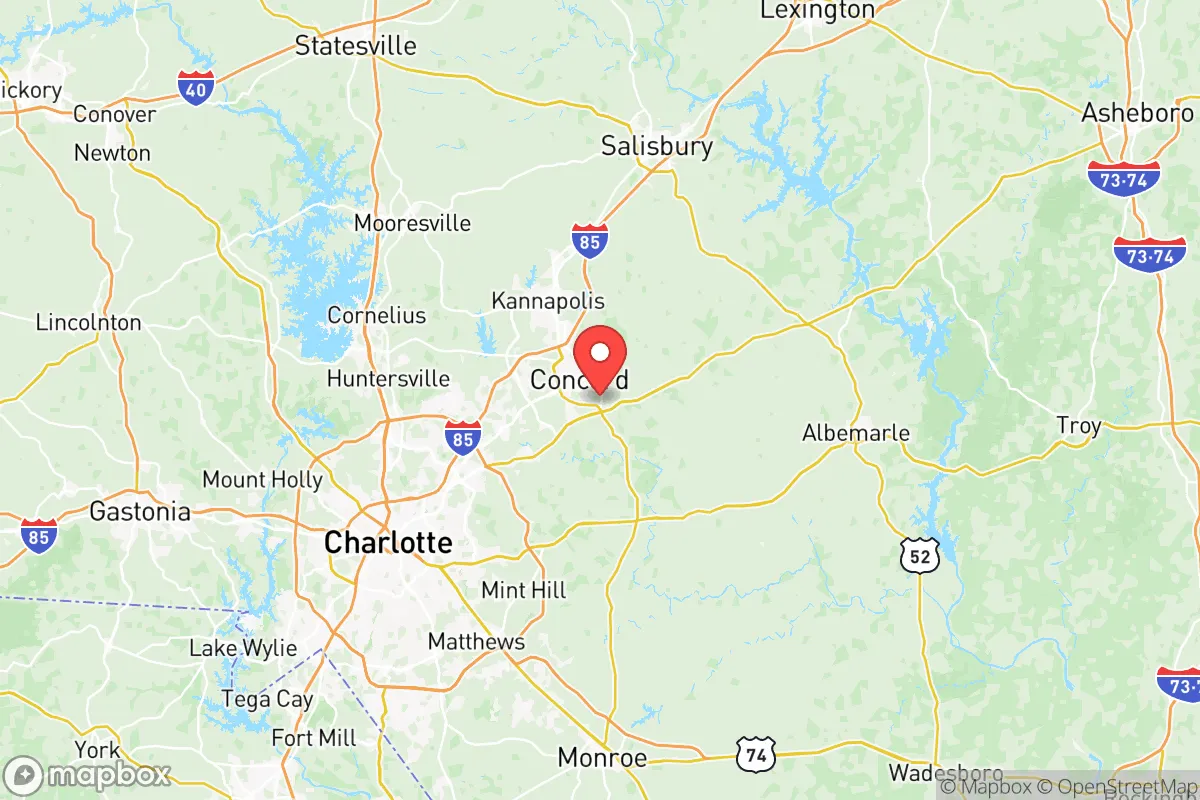
Cabarrus County, North Carolina, offers a broad quality-of-life spectrum that spans fast-growing suburbs, historic small towns, and working farmland, attracting residents from young families seeking large-lot subdivisions to retirees drawn to walkable main streets. The county's character shifts notably from the Charlotte-adjacent city of Concord in the southwest to the more rural, independent communities like Mount Pleasant and Midland in the east. The overall cost of living index of 112 (100 = U.S. average) reflects the premium of being within commuting distance of Charlotte, yet home values and rents remain lower than in Mecklenburg County proper, with a median home value of $318,600 and median rent of $1,303.
Largest town(s) & population centers
Concord is the county's largest city and primary population center, home to roughly 105,000 residents. Daily life here centers on the mix of big-box retail along Concord Mills Boulevard, the Concord-Padgett Regional Airport employment zone, and the historic downtown district along Union Street. The city has seen explosive residential growth in master-planned neighborhoods like the Country Club of Concord and Afton Village, which offer walkability and amenities such as pools and clubhouses. Kannapolis, with about 55,000 residents, is the second major population center and has undergone a downtown revitalization around the North Carolina Research Campus, a biotechnology and agriculture research hub. Kannapolis feels more blue-collar than Concord but is drawing new residents with its lower home prices — many homes sell for under $300,000 — and the expanding West Avenue dining and entertainment district. Both cities feed into the Charlotte job market, and the average county commute of 28 minutes is manageable for those working in Huntersville, University City, or uptown Charlotte.
Smaller towns & rural pockets
East of the I-85 corridor, the county's character shifts dramatically. Mount Pleasant (population ~2,200) is a tight-knit former mill town with a historic downtown anchored by the Mount Pleasant Collegiate Institute campus and a popular farmers market. It sits amid horse farms and row-crop fields, and residents there accept a longer commute — often 35 to 45 minutes to Concord or Charlotte — in exchange for larger lots and lower property taxes. Midland, an unincorporated community straddling the Cabarrus-Stanly county line, is even more rural, with no municipal services and homes set on one- to five-acre wooded tracts. The western edge of the county, near the towns of Harrisburg and Locust, represents a hybrid zone: Harrisburg has grown into a bedroom suburb with new subdivisions and a modest downtown, while Locust remains a small town of about 3,000 residents with a slower pace and a strong sense of local community. The rural pockets east of Highway 601 include areas like Poplar Tent and Flowes Store, where historic churches and volunteer fire departments remain community anchors.
Cost & lifestyle range
The cost of living and available amenities vary substantially across Cabarrus County. At the higher end, the Weddington Woods and Stonebridge neighborhoods in Concord and the Wynnefield area of eastern Kannapolis feature new construction homes priced from $400,000 to $700,000, with homeowners associations providing pools, tennis courts, and walking trails. These areas also offer easy access to the Concord Parkway shopping corridor and I-85, keeping commute times below the county average. At the lower end, older neighborhoods in southwest Kannapolis and the Mill Hill section of Concord have median home values around $220,000, with many smaller ranch homes and duplexes renting for $1,000 to $1,200 per month. Rural properties in Mount Pleasant and Midland have the widest price spread: a three-bedroom fixer-upper on half an acre might list for $250,000, while a horse farm on 10 acres can exceed $600,000. Property tax rates are uniform countywide at roughly $0.62 per $100 of assessed value, so the biggest cost difference comes from the home price itself — households with a 20% down payment on a $320,000 home pay about $1,620 per year in county taxes, while the same rate on a $220,000 home yields about $1,364 annually.
Families who want the largest home and lot for their money should look east of Highway 601, while professionals who prioritize a short commute and shopping convenience will gravitate toward Concord and Kannapolis near I-85. Retirees often split between the walkable downtowns of Concord and Kannapolis for cultural amenities and the rural quiet of Mount Pleasant for space and gardening. No single area suits everyone, and the county's strength lies in letting residents choose a lifestyle that matches both their budget and their tolerance for highway driving. The data shows that the median-priced home is still $318,600, meaning a dual-income household earning the Charlotte metro median of about $80,000 can afford a typical 3-bedroom starter home — something increasingly rare in Mecklenburg County itself.

Crime in Cabarrus County
Crime rates similar to the national median for U.S. locations.
Violent CrimeViolent Crime Analysis
Property CrimeProperty Crime Analysis
Crime Analysis
Cabarrus County, with a violent crime rate of 310.5 per 100,000 residents and a property crime rate of 1,694.6 per 100,000, presents a mixed safety profile typical of a fast-growing suburban area adjacent to a major metropolitan hub. While these figures are lower than the most dangerous urban cores in North Carolina, they are elevated compared to the safest rural counties and the state average, reflecting the challenges of rapid population growth. The most significant safety concerns for residents and newcomers lie in property crime and the proximity of Charlotte's criminal spillover into communities like Concord and Kannapolis.
Crime in context
Cabarrus County's violent crime rate of 310.5 per 100,000 is notably higher than the national average of roughly 380 per 100,000, but it sits well below the alarming rates seen in North Carolina's most dangerous cities like Lumberton or Rocky Mount. The property crime rate, at 1,694.6 per 100,000, is actually close to the national average of approximately 1,954 per 100,000, indicating that theft and burglary are not out of control relative to the rest of the country. However, these statistics mask a critical local reality: the data is heavily influenced by the higher-crime corridors along I-85 in Concord and the southern parts of the county near Charlotte. By comparison, towns like Harrisburg and Midland report significantly lower crime figures, often ranking among the safer zip codes in the greater Charlotte region. The contrast between these communities and the more urbanized areas of Concord and Kannapolis is stark.
What residents experience
Residents in Cabarrus County primarily experience crime as a matter of opportunity rather than random violence. Property crime, including vehicle break-ins, package theft, and porch piracy, is the most common complaint, especially in apartment complexes and subdivisions near major retail corridors like Concord Mills. Violent crime, while less frequent, is often concentrated in specific lower-income neighborhoods and apartment complexes in Concord and Kannapolis where drug activity and gang affiliation are present. The Charlotte-Mecklenburg Police Department's proactive arrest policies in the adjacent county have pushed some criminal elements eastward into Cabarrus, especially along the I-85 corridor. A major concern for law-abiding residents is the judicial environment in Cabarrus County's court system. Under the influence of more progressive prosecutorial philosophies that prioritize "restorative justice" and diversion programs over strict sentencing, some offenders cycle through the system quickly. This leniency, while intended to reduce recidivism, often results in repeat property crimes and undermines deterrence, leaving victims feeling that the system fails to prioritize public safety. This is a particular worry for families moving from communities with tougher sentencing policies.
Neighborhood-level safety varies dramatically. The affluent, family-oriented town of Harrisburg consistently records some of the lowest crime rates in the entire Charlotte metro region, making it a top pick for safety-conscious families. Midland in the eastern part of the county also offers a quieter, more rural feel with very low crime. By contrast, areas near downtown Concord, particularly around Bell Avenue and closer to the Speedway, see higher instances of theft and assault. Prospective residents are advised to research specific zip codes—those in 28075 (Harrisburg) and 28159 (Midland) are notably safer than 28025 (Concord) or 28081 (Kannapolis). Overall, Cabarrus County can be a safe place to live if one chooses the right neighborhood and remains vigilant about property crime, but the trend toward progressive criminal justice policies in the district is a legitimate factor to weigh for those prioritizing long-term security.
* Values derived from national, state, county, city and local statistics and may differ in a specific area. Last updated: 2026-06-22T04:26:14.000Z
Narrative content on this page is AI-generated and may contain mistakes. Verify any details that matter before acting on them.
ReloMaps may earn a commission from affiliate links at no extra cost to you.

