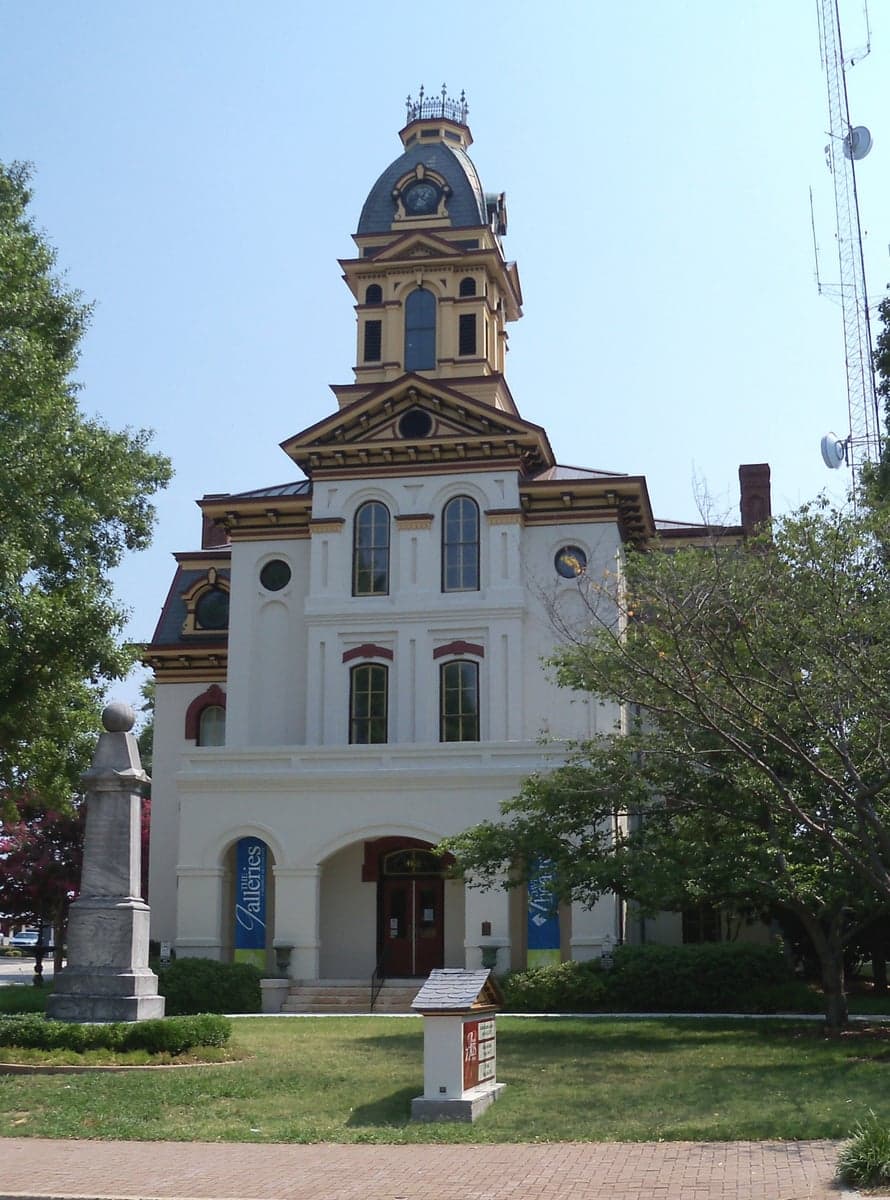
Photo: Wikipedia
Personal Sovereignty in Cabarrus County
Viable for self-reliance. Generally workable, though some barriers may limit total independence.
What does Personal Sovereignty tell us?
Personal Sovereignty measures your capacity for self-reliance and independence with minimal government friction. Higher scores mean fewer barriers between you and the way you want to live... but it assumes you have the space you need and good neighbors.
What does this tell us?
Personal Sovereignty measures your capacity for self-reliance and independence with minimal government friction. Higher scores mean fewer barriers between you and the way you want to live... but it assumes you have the space you need and good neighbors.
State Policy
Energy independence: Importer (15% of energy produced in-state)
Personal Liberty
Homesteading

Personal Liberty Analysis
Cabarrus County, North Carolina, offers a notable degree of personal sovereignty that blends a fiscally conservative tax environment, strong gun rights protections, and practical opportunities for self-reliance, making it a compelling option for individuals and families prioritizing freedom from overreaching government. Located in the fast-growing Charlotte metro area, the county’s regulatory posture is generally light-touch, especially compared to nearby Mecklenburg County, yet it varies across its municipalities. From the historic downtown of Concord to the more rural expanses of Mount Pleasant and Midland, residents experience a spectrum of autonomy, with the strongest leeway for homesteading and off-grid living found outside the denser city cores. This analysis breaks down the specific freedoms—tax burden, self-defense laws, homesteading viability, and personal liberties—that shape daily life in Cabarrus County.
Tax burden and regulatory posture in Cabarrus County
North Carolina’s state-level fiscal policies create a favorable baseline for personal sovereignty, and Cabarrus County adds to this with a relatively modest local tax load. The state levies a flat income tax of 4.5% (as of 2025) and a sales tax of 4.75%, with Cabarrus County adding a 2.25% local option for a combined 7% sales tax, which is lower than the 8.25% in neighboring Mecklenburg. Property taxes in Cabarrus County are among the most competitive in the metro area: the county rate is $0.615 per $100 of assessed value, plus municipal rates that average 20–40 cents, depending on the town. For example, a home valued at $350,000 in Concord (city rate ~$0.35) would owe roughly $3,975 annually, while a comparable property in Charlotte would exceed $5,000. Regulatory burden is light overall, with no county-level business licensing fees and a streamlined permitting process for home renovations. However, incorporated towns like Concord and Kannapolis enforce stricter zoning and building codes (e.g., minimum lot sizes of 0.25 acres in suburban neighborhoods), while unincorporated areas—particularly around Mount Pleasant and Midland—offer greater flexibility for workshops, sheds, and home businesses without city intrusion.
Self-defense and gun law specifics in Cabarrus County
North Carolina is a strong shall-issue state for concealed carry permits, and Cabarrus County reflects this with a gun-friendly culture and minimal local restrictions. State law permits open carry of handguns without a permit, and concealed carry requires a permit (issued after a background check and training) that is valid statewide. Cabarrus County’s sheriff’s office processes permits efficiently, with typical turnaround of 45–60 days. There are no county-level gun registration, ammunition, or capacity restrictions. Stand-your-ground laws apply, allowing the use of deadly force to defend oneself without a duty to retreat when lawfully present. Local ranges, such as the Cabarrus County Gun Range in Concord and private clubs near Harrisburg, are easily accessible. The presence of the Charlotte Motor Speedway area also hosts periodic gun shows. Importantly, municipal differences are minimal; Concord does not impose its own gun laws beyond state mandates, though carrying in government buildings is prohibited by state law. For readers from restrictive states like New York or California, the shift to a presumptive-respect culture is substantial.
Self-reliance and homesteading viability: lot sizes, zoning, and off-grid feasibility
Homesteading viability in Cabarrus County varies sharply between its urbanized and rural pockets, with the best opportunities for self-reliance found outside the main towns. In unincorporated areas like Midland and Mount Pleasant, minimum lot sizes are typically 1–2 acres, and many parcels of 3–5 acres are available for under $70,000. Zoning in these areas permits livestock (chickens, goats, even cattle on larger tracts) without special permits, and the county only restricts noise and waste in certain residential subdivisions. Off-grid feasibility is high in principle: North Carolina does not require grid connection for new homes, though a well and septic system must be approved by the county health department. Solar panels and rainwater collection are allowed by right, but the county recommends—not mandates—a backup generator. In contrast, Concord and Kannapolis enforce suburban rules: chickens are limited to 4 hens with no roosters, lot sizes rarely exceed 0.5 acres, and accessory dwellings require permits. The Agricultural Advisory Board supports small-scale farming, and the Cabarrus County Cooperative Extension offers workshops on soil health and canning. For a family seeking true off-grid living, the rural fringe near Locust or the southern border with Stanly County provides the most leeway.
Personal liberties: parental rights, medical autonomy, speech, and property
Cabarrus County’s personal liberty environment is shaped by North Carolina’s strong parental rights framework and limited local intervention. State law guarantees parents’ rights to direct their children’s education, including homeschooling without government curriculum oversight for families filing a notice of intent. Cabarrus County Schools, based in Concord, is a large district (30,000+ students), but the county also hosts numerous private and religious schools, particularly around Concord and Kannapolis. Medical autonomy is robust: the state permits over-the-counter sales of supplements and herbal remedies, and there are no county-level mask or vaccination mandates as of 2025. Speech rights are protected under state law, and the county has no local ordinances restricting public protest or political signage beyond standard time/place rules for parades. Property rights are strong, with North Carolina’s “right to repair” laws protecting homeowners from exclusive contracts, and the county’s zoning board is known for approving variance requests, especially in rural areas. The one caution is the presence of homeowners’ associations (HOAs) in newer subdivisions—particularly in Harrisburg and parts of Kannapolis—which can impose restrictive covenants on fences, paint colors, and parking. Buyers should verify deed restrictions before purchase.
Overall, Cabarrus County offers a high degree of personal sovereignty relative to most metropolitan areas in the eastern United States, particularly for those who avoid dense suburbs and choose rural or small-town settings. The tax burden is among the lowest in the Charlotte region, gun laws are permissive, and homesteading is practically viable on acreage outside the main towns. While municipalities like Concord and Kannapolis add some layers of regulation, the county’s default posture is one of trust in individual decision-making. For a conservative-leaning individual or family seeking independence without leaving metropolitan job access, Cabarrus County strikes a strong balance—far freer than Mecklenburg or Wake counties, and more accommodating than the regulatory-heavy environments of Virginia or the Northeast. The key tradeoff is lifestyle: choose the open spaces of Mount Pleasant for maximum self-reliance, or the convenience of Concord for lighter oversight than comparable suburban areas.

* Values derived from national, state, county, city and local statistics and may differ in a specific area. Last updated: 2026-06-22T04:26:14.000Z
Narrative content on this page is AI-generated and may contain mistakes. Verify any details that matter before acting on them.
ReloMaps may earn a commission from affiliate links at no extra cost to you.

