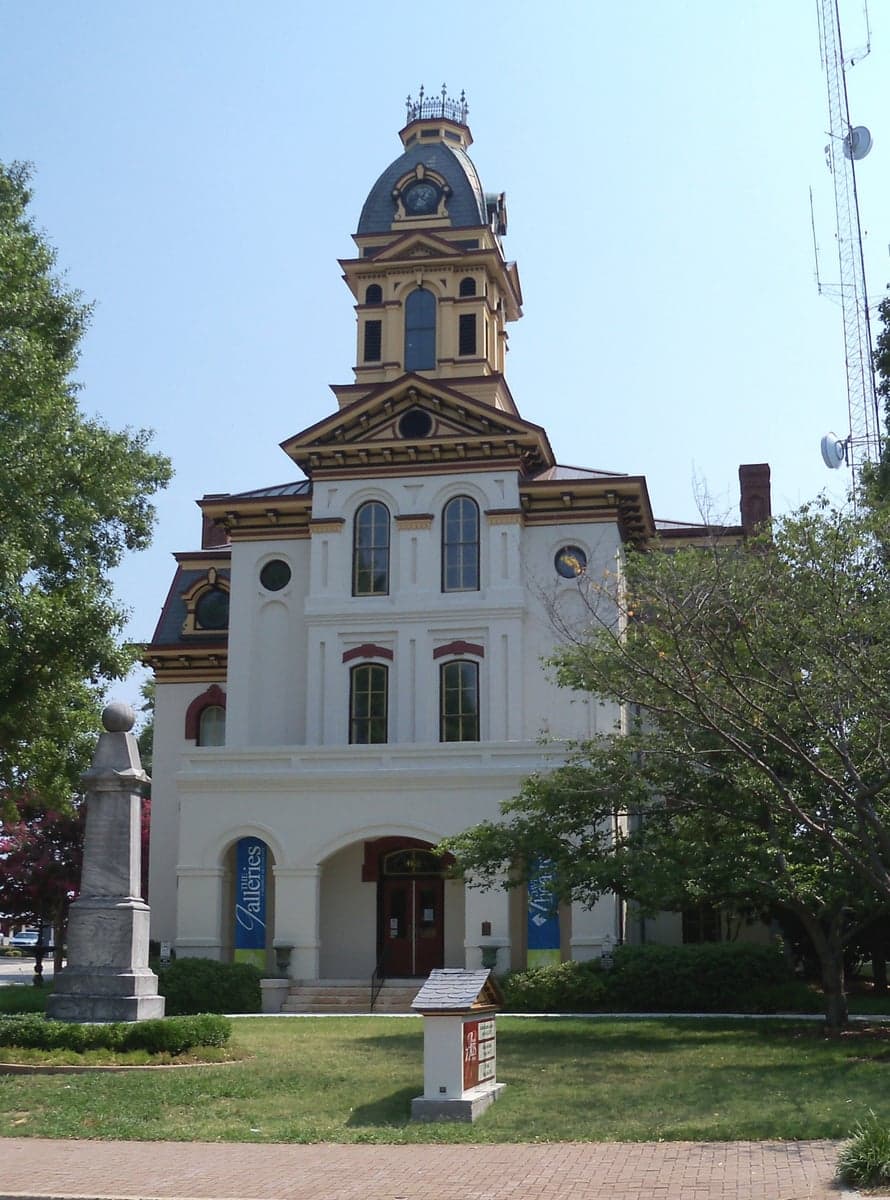
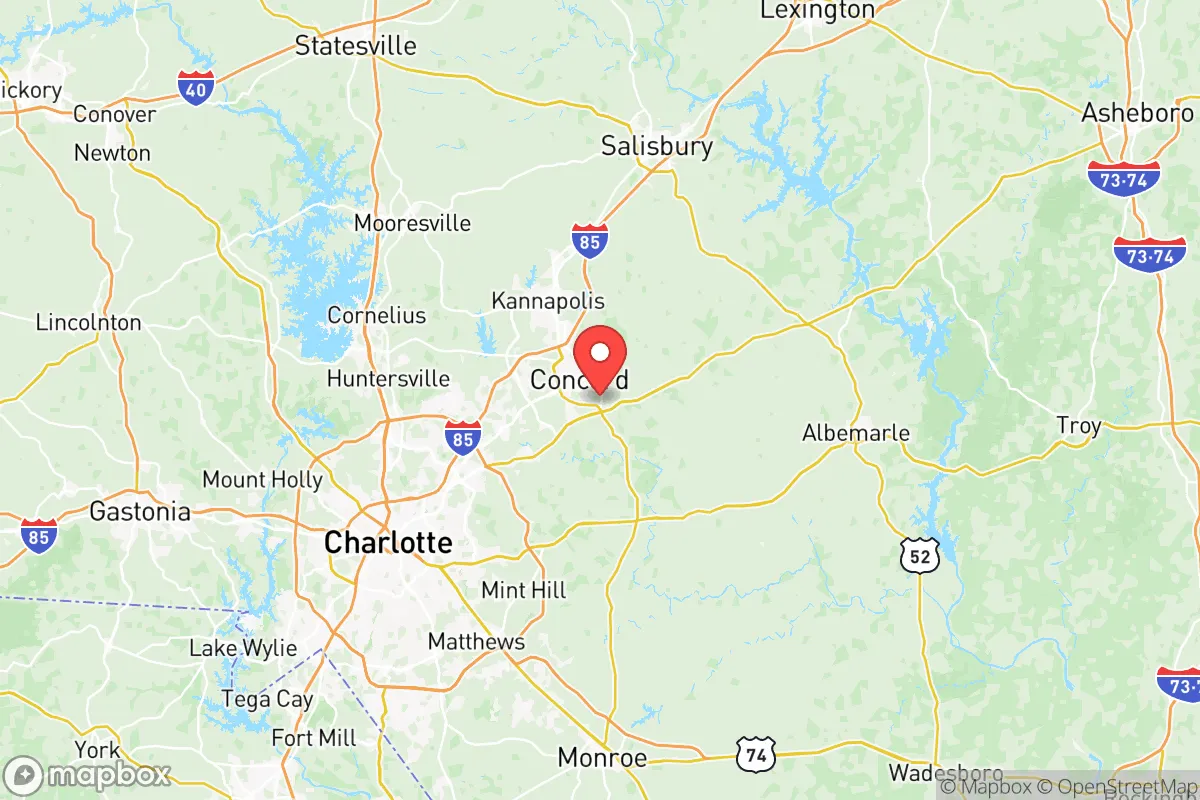
Photo: Wikipedia
Demographics of Cabarrus County
Affluence Level in Cabarrus County
A middle-class area roughly in line with national averages across income, home values, education, and employment.
People of Cabarrus County
The people of Cabarrus County, North Carolina in 2026 are a predominantly white (58.7%) and increasingly diverse population of 231,262, shaped by waves of agricultural settlement, industrial opportunity, and modern Sun Belt migration. While the county’s historic identity is rooted in German and Scots-Irish farming communities and the textile mills of Kannapolis and Concord, its current character is being redefined by Hispanic (12.4%) and Black (18.5%) growth, a significant Indian-subcontinent community (3.7%), and ongoing suburban expansion. Residents describe the county as a family-oriented, conservative-leaning area that balances Southern heritage with a fast-growing, multi-ethnic economy centered on healthcare, motorsports, and logistics.
Settlement & growth (pre-1960)
Long before European settlement, the land that is now Cabarrus County was home to the Catawba Native American nation, who had villages and hunting grounds along the Catawba River. The first European settlers arrived in the mid-1700s, primarily of Scots-Irish and German descent, drawn by the promise of fertile farmland and the relative religious freedom of the North Carolina backcountry. German-speaking Lutherans and Reformed Church members established early congregations in what are now Mount Pleasant and Concord, while Scots-Irish Presbyterians settled the western parts of the county, including areas around Harrisburg. These early waves were almost entirely agrarian, with small family farms producing tobacco, corn, and livestock.
The discovery of gold in 1799 at Reed Gold Mine near Midland sparked the nation’s first gold rush, drawing a small but notable influx of prospectors and merchants. This boom was short-lived, however, and through the 19th century, Cabarrus remained a largely rural, agricultural county. The most transformative event came in the early 20th century with the rise of the textile industry. In 1908, James W. Cannon founded Cannon Mills, which turned Kannapolis into a company town and the world’s largest producer of towels and sheets. This industrial pivot drew thousands of workers from the surrounding countryside and from other Southern states, including white mill hands from the Piedmont and, later, Black workers who migrated from rural areas during the Great Migration. By 1950, Kannapolis and Concord had become bustling, working-class mill towns, with the population dominated by white Southerners of British and German descent, alongside a smaller but established Black community that lived primarily in segregated neighborhoods like Logan in Concord.
Modern era (post-1965)
The post-1965 era brought profound change. The closure of Cannon Mills in the 1980s and the broader decline of American textiles devastated Kannapolis, leading to a population loss of about 7,000 between 1970 and 1990. However, the county rebounded powerfully through suburbanization, driven by the growth of Charlotte and the construction of Interstate 85. Cabarrus County became a prime destination for domestic migrants, especially white families from the Rust Belt and other parts of the South seeking lower taxes, newer housing, and good schools. This wave concentrated in master-planned communities and subdivisions around Concord (particularly the Afton Ridge area and near Concord Mills mall) and in Harrisburg, which transformed from a rural crossroads into a dense bedroom suburb.
The 1965 Hart-Cellar Act also reshaped immigration patterns, though the county’s foreign-born share remains low at just 5.3% in 2026. The largest growth came from Hispanic immigration, driven by construction, landscaping, and poultry processing jobs. The Hispanic community, now 12.4% of the population, is most concentrated in Kannapolis and parts of Concord, where Mexican and Central American families have established small businesses, churches, and community organizations. The Indian-subcontinent community (3.7%) is a more recent, professional wave, largely drawn by medical and IT jobs in Charlotte’s suburbs; Indian families are particularly visible in the newer subdivisions of western Cabarrus County near the Mecklenburg line, including the Brewster’s Glen area of Concord. East and Southeast Asian residents (1.7%), including Vietnamese and Chinese families, are a smaller but growing presence, often working in healthcare and academia. The Black population (18.5%) remains concentrated in older neighborhoods in Concord and Kannapolis, but has seen growth as middle-class Black families move from Charlotte for larger homes and lower costs.
The future
Cabarrus County is on a clear trajectory toward greater diversity, albeit from a low starting point. Projections suggest the Hispanic and Indian-subcontinent shares will continue to rise, driven by natural growth and ongoing migration, while the white share will steadily decrease. The county’s population is expected to top 270,000 by 2035, with new development spreading into eastern areas like Mount Pleasant and southern Midland, which are seeing subdivisions and townhomes. The cultural identity is evolving into a hybrid: the old textile-mill, red-and-blue Southern ethos is blending with a more suburban, multi-ethnic, professional-class character. Politically, the county leans conservative, but the growing diversity is slowly shifting voting patterns in Concord and Kannapolis. For a new resident, this means moving into a place that still prizes family values and low taxes, but is no longer the homogeneous mill town of the 1950s—it is becoming a dynamic, multi-layered suburban county where a Colombian family, an Indian doctor, and a third-generation white mill descendant might all live on the same street.
Cabarrus County is becoming a more diverse, suburban-majority county where the old Southern mill-town identity is giving way to a newer, Sun Belt identity rooted in healthcare, logistics, and Charlotte’s spillover growth. Those moving in now will find a community still in transition—conservative and family-focused, but increasingly multi-ethnic and outward-looking—offering affordable housing, good schools, and proximity to Charlotte’s amenities. The challenge for the county will be managing rapid growth while maintaining the sense of place that has made it home for generations.

* Values derived from national, state, county, city and local statistics and may differ in a specific area. Last updated: 2026-06-22T04:26:14.000Z
Narrative content on this page is AI-generated and may contain mistakes. Verify any details that matter before acting on them.
ReloMaps may earn a commission from affiliate links at no extra cost to you.

