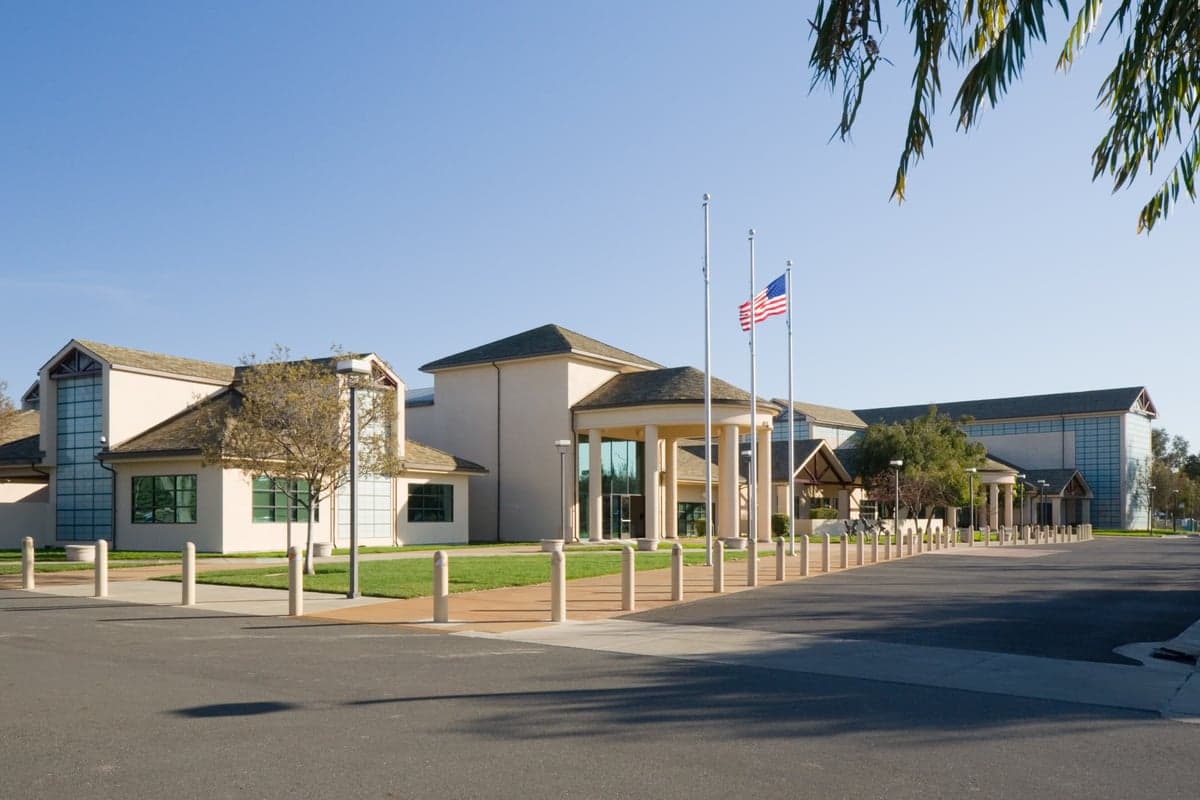
Photo: Wikipedia
Strategic Assessment of Newark, CA
Multiple tactical vulnerabilities. Population density, target proximity, or disaster risk are likely compounding. A retreat property and exit planning is required.
What does the Strategic Assessment tell us?
Our Strategic Assessment grades tactical survivability of an area. Major population centers, military targets, fallout zones, natural disasters, and border exposure all drive risk — lower exposure means a more defensible position in a crisis.
This is heavily inspired by Joel Skousen's Strategic Relocation book. Highly recommended you checkout the book ($)What does this tell us?
Our Strategic Assessment grades tactical survivability of an area. Major population centers, military targets, fallout zones, natural disasters, and border exposure all drive risk — lower exposure means a more defensible position in a crisis.
This is heavily inspired by Joel Skousen's Strategic Relocation book. Highly recommended you checkout the book ($)Strategic Pillars

Key Distances
Regional Safe Places
Below is our recommended "safe zones" in California and the surrounding area based on our strategic heuristics. For most people, it's unrealistic to live in a “safe zone” full-time due to work, family or other personal reasons. They tend to be more rural. However, many of these areas are perfect for second homes and retreat properties that double as a vacation home or even a short-term rental.

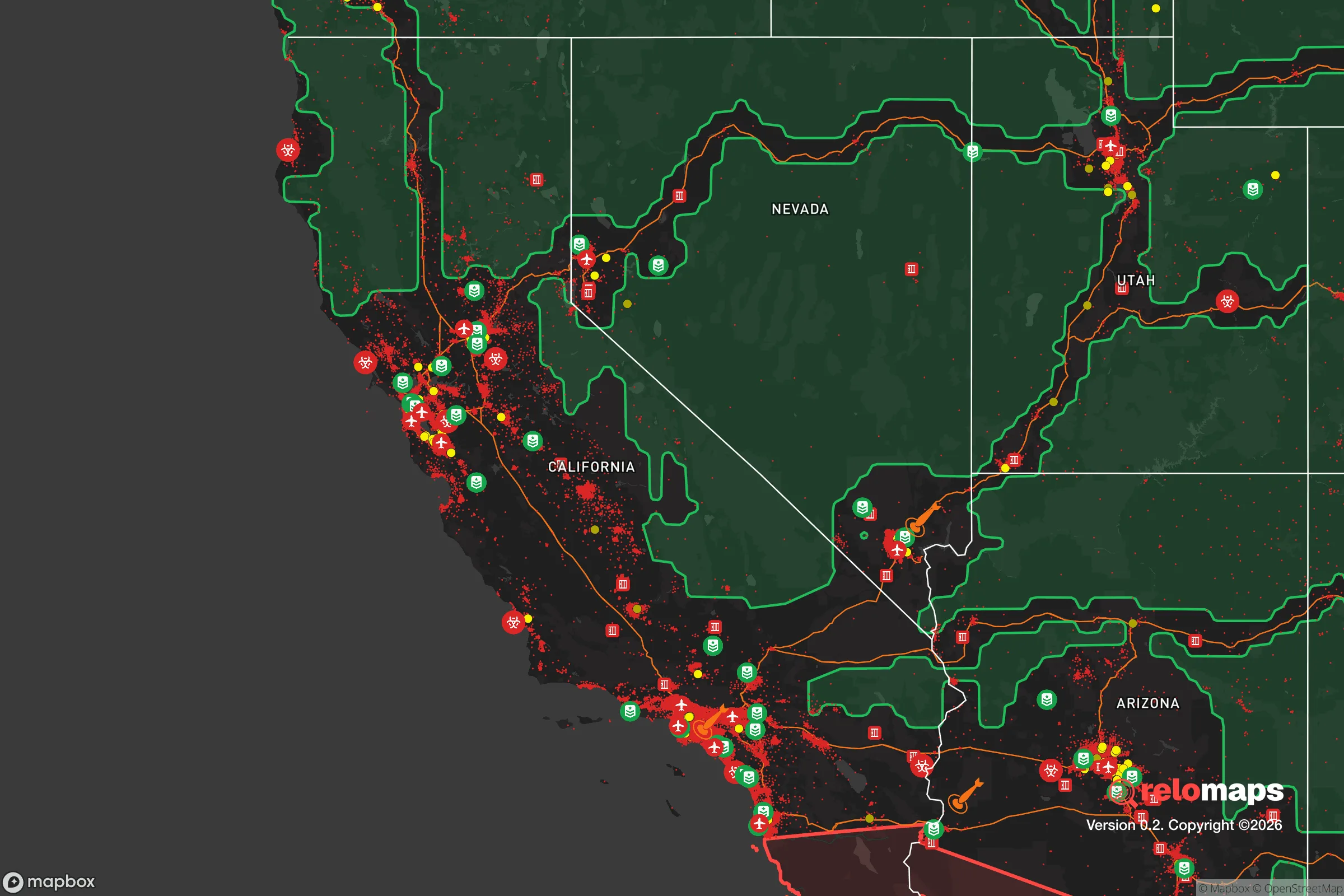


Important Note: For informational purposes only. This does not mean nothing bad ever happens in the green zones. Please use common sense. This is based on public data and modeled with AI. We tried to take a conservative approach but mistakes happen. We update this regularly as new information becomes available.
Solar Generator Recommendations
Backup power matters more here than in safer locations. We've picked three solar generators across budgets and capacity tiers — start with the budget unit if you only need a few essentials, or step up if you want to run a fridge and HVAC for days at a time.

Jackery Portable Power Station Explorer 300
Budget OptionPower on the Go: Weighing only 11 lbs, it's convenient to set up and store with book-sized foldable solar panels

BLUETTI Portable Power Station AC180
Designed for both indoor and outdoor scenarios, AC180 is highly capable as it has a robost capacity and continuous output power.

EF ECOFLOW DELTA Pro Ultra Power Station
Upgraded PickEcoFlow DELTA Pro Ultra is a whole-home energy system designed to grow with your family. Integrated with the Smart Home Panel 2, it scales to meet your evolving energy needs — keeping your home powered, intelligent, and secure through every stage of life.
We earn a commission, at no additional cost to you.
Strategic Assessment Analysis
Newark, California, presents a mixed strategic picture for the relocation-minded reader focused on resilience and self-sufficiency. While its position within the San Francisco Bay Area offers economic opportunity and logistical connectivity, the same geography that makes it a convenient hub also places it in a zone of elevated risk from both natural hazards and man-made threats. For a conservative-leaning individual or family weighing disaster readiness, Newark demands a clear-eyed assessment of its trade-offs: strong local governance and infrastructure against proximity to high-value, high-risk targets.
Geographic position and natural advantages: The Bay Area's central node
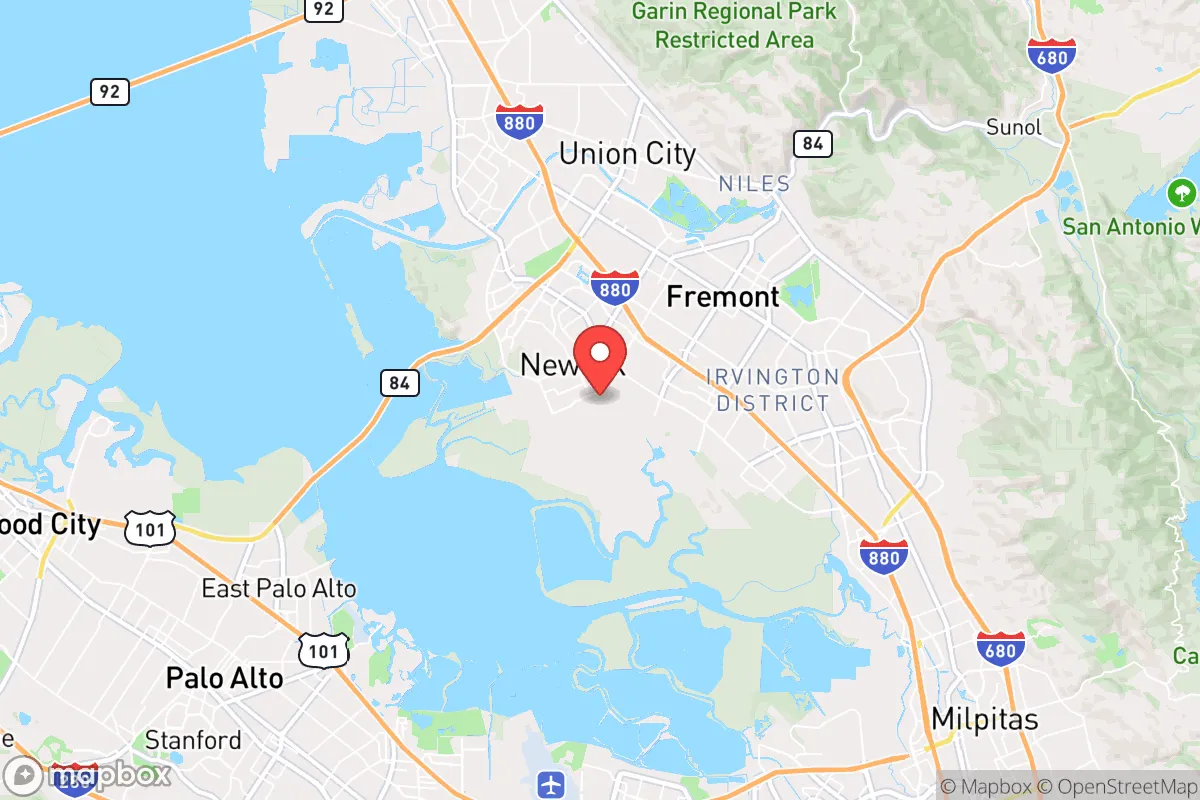
Newark sits at the southeastern edge of San Francisco Bay, directly adjacent to the Dumbarton Bridge, which connects the East Bay to the Peninsula. This location gives residents rapid access to major employment centers—including Silicon Valley, Fremont, and San Jose—without requiring a daily commute through the most congested corridors. The city's flat terrain, part of the alluvial plain formed by Coyote Creek and the bay, offers straightforward building conditions and minimal landslide risk compared to the hillsides of Oakland or Berkeley. Newark also benefits from a Mediterranean climate with mild, wet winters and dry summers, reducing the likelihood of extreme weather events like blizzards or hurricanes. The nearby Don Edwards San Francisco Bay National Wildlife Refuge provides a buffer of open space to the west, and the city's network of parks and sloughs offers some natural drainage capacity. However, the area's flatness and low elevation—much of Newark sits between 10 and 20 feet above sea level—introduce a significant vulnerability: sea-level rise and storm surge. The bay's water levels have risen roughly 8 inches over the past century, and projections suggest an additional 1 to 2 feet by 2050, which could impact low-lying neighborhoods and the critical transportation infrastructure along the shoreline. For a relocator prioritizing long-term stability, Newark's geographic advantages are real but tempered by its exposure to gradual environmental change.
Risks, exposures, and proximity to fallout-relevant landmarks
Newark's most significant strategic vulnerability is its location within the broader Bay Area, a region dense with high-profile targets for both natural and man-made disruptions. The city lies roughly 10 miles from the San Andreas Fault and about 5 miles from the Hayward Fault, both capable of producing magnitude 7.0 or greater earthquakes. A major seismic event would likely damage roads, bridges, and utilities across the region, potentially isolating Newark from surrounding communities. The Dumbarton Bridge, a critical evacuation and supply route, is particularly susceptible to seismic damage. Beyond natural hazards, Newark's proximity to Silicon Valley—home to major tech headquarters, data centers, and defense contractors—elevates its risk profile in a conflict or terrorist scenario. The city is within 20 miles of the Port of Oakland, a major shipping hub, and within 30 miles of the San Francisco International Airport and the Port of San Francisco. These are plausible targets for conventional or asymmetric attacks, and Newark's position along the I-880 and I-84 corridors means it could be affected by secondary effects such as evacuation traffic, supply chain disruptions, or fallout from an incident at a nearby industrial facility. The area also hosts several chemical storage and processing sites along the bay, including refineries in Richmond and Rodeo roughly 30 miles north. For a relocator concerned with fallout—whether from a dirty bomb, industrial accident, or broader conflict—Newark's central location is a double-edged sword: it offers resources and connectivity, but also places residents within the blast radius of regional vulnerabilities.
Practical resilience for a relocator: Food, water, energy, and defensibility
Newark's practical resilience—the day-to-day ability to sustain oneself during a disruption—is a mixed bag. The city's water supply comes from the State Water Project and the Hetch Hetchy system, both of which are vulnerable to earthquake damage and drought. While Newark has some local groundwater storage, it is not sufficient for a prolonged outage. Residents should plan for at least two weeks of stored water per person, and ideally a filtration system capable of treating surface water from the bay or local sloughs—though the latter requires careful treatment due to salinity and pollution. Food security is moderate: Newark has several grocery stores and is within 15 minutes of larger distribution centers in Fremont and Hayward, but the city lacks significant agricultural land. Community gardens exist but are small-scale. For long-term self-sufficiency, a relocator would need to look east toward the Livermore Valley or south toward the agricultural areas of Morgan Hill for more robust food production. Energy infrastructure is relatively reliable, with PG&E serving the area, but the grid is aging and prone to Public Safety Power Shutoffs during high fire risk. Solar adoption is growing, and Newark's flat terrain and ample sunshine make rooftop solar a viable option for reducing grid dependence. Battery storage is recommended to pair with solar, given the region's occasional multi-day outages. Defensibility is Newark's weakest point. The city is flat, densely populated, and crisscrossed by major highways, making it difficult to secure in a widespread breakdown. There are no natural chokepoints or elevated positions that would allow a small group to control access. The nearest defensible terrain is the Diablo Range to the east, roughly 20 miles away, or the hills of the Peninsula to the west. For a relocator prioritizing security, Newark is best viewed as a base of operations with good logistics rather than a redoubt. The city's police force is professional and well-funded, but in a prolonged crisis, law enforcement resources would be stretched thin across the region.
Overall, Newark offers a strategic position for someone who values economic opportunity and regional connectivity but is willing to invest in personal preparedness. The city's flat terrain, mild climate, and access to major transportation corridors make it a practical choice for a relocator who works in the Bay Area and wants to be close to the action. However, the same factors that make Newark convenient also expose it to earthquake risk, sea-level rise, and proximity to high-value targets. For a family or individual serious about disaster readiness, Newark requires a proactive approach: stored supplies, redundant water and power systems, and a clear evacuation plan for the worst-case scenarios. It is not a bug-out location, but it can serve as a resilient home base for those who understand its limitations and prepare accordingly. The key is to treat Newark as a hub, not a fortress—and to have a secondary plan for relocation if the regional risk profile shifts. For the conservative-leaning relocator who values self-reliance and strategic thinking, Newark is a viable option, but only with eyes wide open to its vulnerabilities.

* Values derived from national, state, county, city and local statistics and may differ in a specific area. Last updated: 2026-09-26T17:40:15.000Z
Narrative content on this page is AI-generated and may contain mistakes. Verify any details that matter before acting on them.
ReloMaps may earn a commission from affiliate links at no extra cost to you.

