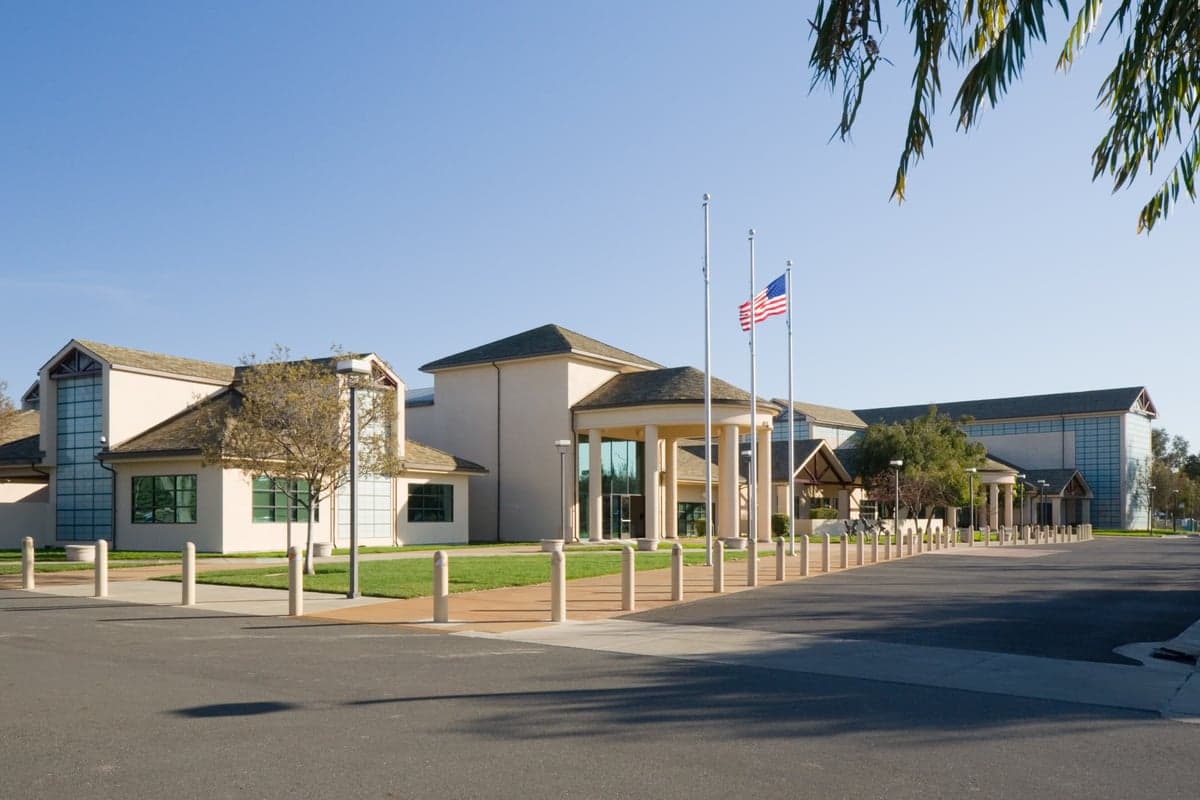
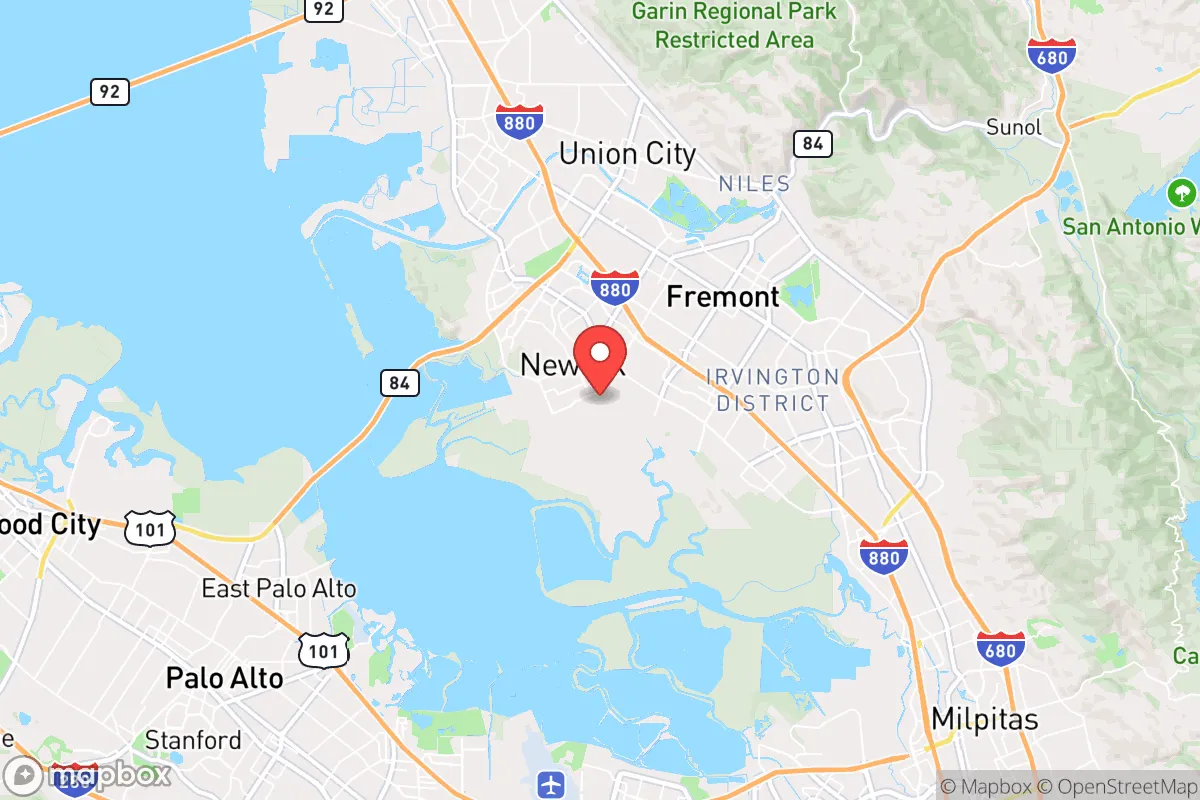
Photo: Wikipedia
Demographics of Newark, CA
Affluence Level in Newark, CA
A wealthy area with high-earning, well-educated households. Incomes, home values, and educational attainment meaningfully outpace national averages.
People of Newark, CA
The people of Newark, California, today form a dense, majority-minority community of 47,145 residents, defined by its striking ethnic diversity and a strong Asian and Hispanic presence. With a foreign-born population of 20.6% and a college-educated rate of 47.1%, Newark is a family-oriented, middle-class suburb where East/Southeast Asian (29.2%), Indian subcontinent (13.5%), and Hispanic (28.6%) communities each outnumber the non-Hispanic white population (18.7%). This is a city shaped by successive waves of immigration and domestic migration, creating a distinctive blend of cultures that sets it apart from its more famously affluent neighbors like Fremont and Palo Alto.
How the city was settled and grew
Newark’s human history is almost entirely a 20th-century story. Originally part of the vast Rancho de los Coches Mexican land grant, the area remained sparsely populated farmland until the early 1900s. The city’s first real population wave came with the establishment of the Leslie Salt Company in the 1910s, which drew a small workforce of Portuguese, Italian, and Mexican laborers to the salt flats and surrounding agricultural fields. These early settlers clustered in what is now the Old Newark neighborhood, a historic core along Thornton Avenue and the former railroad line. The city was officially incorporated in 1955, but its population remained modest—under 10,000—until the 1960s. The defining growth catalyst was the expansion of Silicon Valley and the construction of the Dumbarton Bridge (completed 1982), which turned Newark into a commuter bedroom community for tech workers in Palo Alto, Menlo Park, and Mountain View.
Modern era (post-1965)
The post-1965 immigration reforms and the tech boom transformed Newark’s demographics dramatically. The first major wave of East/Southeast Asian immigrants—primarily Chinese and Filipino families—arrived in the 1970s and 1980s, drawn by affordable housing and proximity to tech jobs. They settled heavily in the Newark Gardens and Birchwood neighborhoods, areas characterized by mid-century ranch homes and proximity to the city’s top-rated schools. A second, larger wave of Indian subcontinent immigrants—engineers and IT professionals from India—began arriving in the 1990s and accelerated through the 2000s. They concentrated in the newer developments of Bridgepointe and Warm Springs Village, where larger single-family homes and newer townhomes were built. The Hispanic population, which includes both long-established Mexican-American families and newer arrivals from Central America, is more dispersed but has a strong presence in Old Newark and the Central Newark corridor along Mowry Avenue. The non-Hispanic white share has fallen from over 70% in 1980 to just 18.7% today, as Newark became one of the most ethnically diverse cities in Alameda County.
The future
Newark’s population is projected to continue diversifying, though the pace of change may slow as the city approaches build-out. The East/Southeast Asian and Indian subcontinent populations are likely to remain the fastest-growing groups, driven by continued tech-sector employment and chain migration. New housing developments, such as the Newark Smart City project near the Dumbarton Bridge approach, are attracting younger, college-educated families—many of them first- or second-generation immigrants—who value Newark’s relative affordability compared to Fremont or Palo Alto. The Hispanic population is expected to grow more slowly but remain a stable, significant share. The city’s cultural identity is evolving from a quiet blue-collar suburb into a polyglot, upwardly mobile community where English, Spanish, Mandarin, and Hindi are commonly heard in schools and shopping centers. The non-Hispanic white population will likely continue its gradual decline, though some older white residents remain in the established neighborhoods of Newark Gardens and Old Newark.
For someone moving in now, Newark offers a stable, family-oriented environment with strong schools and a genuinely multicultural character. It is becoming a denser, more diverse, and more educated city—a place where the American suburban dream is being redefined by immigrant ambition and tech-economy opportunity, not by any single ethnic or cultural majority.

* Values derived from national, state, county, city and local statistics and may differ in a specific area. Last updated: 2026-09-26T17:40:15.000Z
Narrative content on this page is AI-generated and may contain mistakes. Verify any details that matter before acting on them.
ReloMaps may earn a commission from affiliate links at no extra cost to you.

