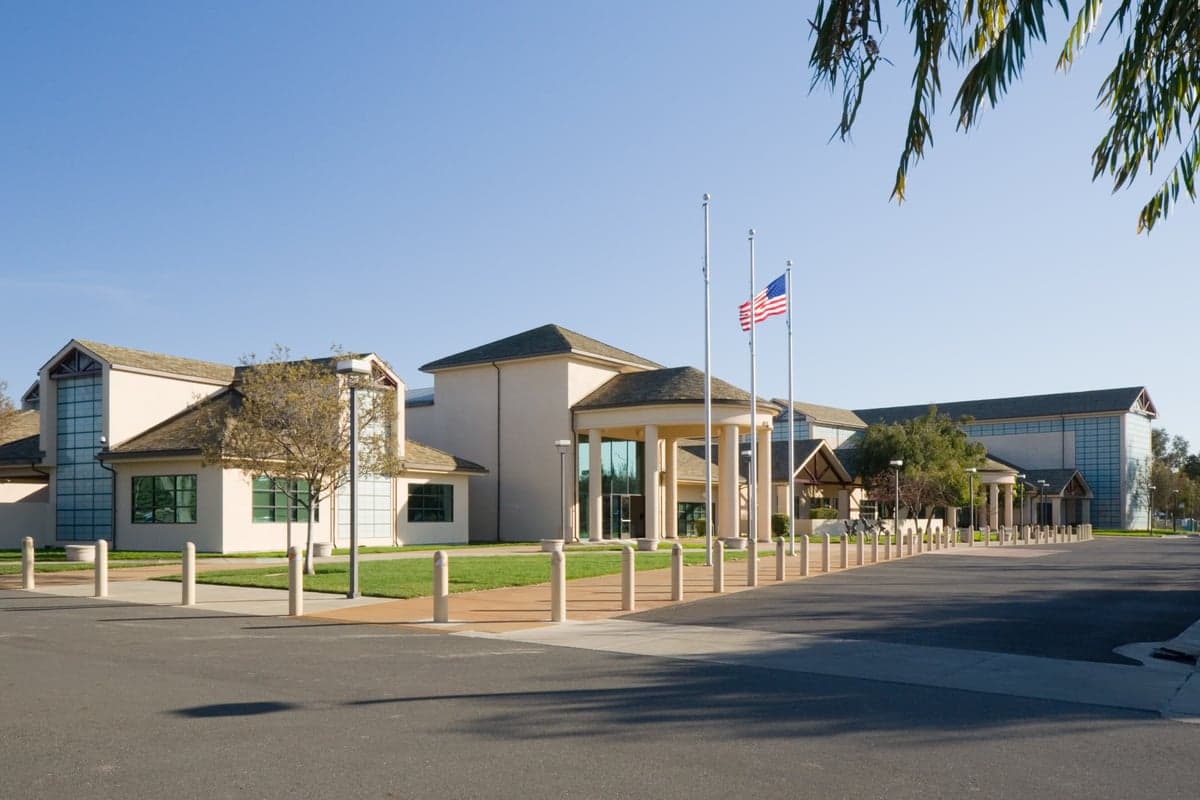
Photo: Wikipedia
Personal Sovereignty in Newark, CA
Viable for self-reliance. Generally workable, though some barriers may limit total independence.
What does Personal Sovereignty tell us?
Personal Sovereignty measures your capacity for self-reliance and independence with minimal government friction. Higher scores mean fewer barriers between you and the way you want to live... but it assumes you have the space you need and good neighbors.
What does this tell us?
Personal Sovereignty measures your capacity for self-reliance and independence with minimal government friction. Higher scores mean fewer barriers between you and the way you want to live... but it assumes you have the space you need and good neighbors.
State Policy
Energy independence: Importer (33% of energy produced in-state)
Personal Liberty
Homesteading

Personal Liberty Analysis
Newark, California, presents a complex personal sovereignty environment where state-level mandates often override local preferences, creating a regulatory atmosphere that leans heavily toward collective governance rather than individual autonomy. Located in Alameda County within the San Francisco Bay Area, Newark residents navigate some of the nation's highest tax burdens and most restrictive gun laws, while facing limited opportunities for self-reliant living due to dense suburban zoning. For a relocation-minded reader prioritizing personal freedom, Newark offers strong protections for medical autonomy and parental rights in education, but the overall sovereignty picture is constrained by California's progressive policy framework.
Tax burden and regulatory posture in Newark
Newark's tax environment is among the heaviest in the United States, driven by California's state income tax rates that top out at 13.3% for high earners, the highest marginal rate in the country. Sales tax in Newark is 10.25%, which includes Alameda County's district surcharges, making everyday purchases notably more expensive than in neighboring states like Nevada or Arizona. Property taxes are capped at roughly 1% of assessed value under Proposition 13, but annual increases are limited to 2%, which benefits long-term homeowners while new buyers face higher effective rates due to rising home prices — the median home value in Newark exceeds $1.2 million as of 2025. The regulatory posture is heavy-touch: California's California Environmental Quality Act (CEQA) imposes extensive review processes on new construction and business operations, and Newark's municipal code adds layers of permitting for home-based businesses, fence heights, and even tree removal. For a family or individual seeking to minimize government interference in financial decisions, the combined tax and regulatory load is a significant deterrent, though the trade-off includes well-funded public services and infrastructure.
Self-defense rights and gun law specifics in Newark
California's gun laws are among the most restrictive in the nation, and Newark residents must comply fully with state mandates. Newark does not issue concealed carry permits (CCWs) to the general public under the "may-issue" framework that was replaced by the Bruen decision in 2022; however, Alameda County's sheriff has historically been reluctant to approve permits, and as of 2025, the county's issuance rate remains below 1% of eligible adults. The state bans "assault weapons" by feature, requires a 10-day waiting period for all firearm purchases, mandates a background check for ammunition sales, and enforces a 10-round magazine capacity limit. Self-defense in the home is legally protected under the "castle doctrine," but there is no "stand your ground" law — a duty to retreat applies in public spaces before using deadly force. For a reader who views firearm ownership as a core personal liberty, Newark's environment is highly restrictive; the practical effect is that self-defense options are limited to less-lethal tools or reliance on law enforcement, which has an average response time of 8-12 minutes in the city.
Self-reliance and homesteading viability in Newark
Newark's suburban character, with typical lot sizes of 5,000 to 7,000 square feet, makes traditional homesteading impractical. Zoning codes prohibit livestock such as chickens, goats, or bees on most residential parcels, and the city's municipal code restricts front-yard vegetable gardens to 40% of the landscaped area. Off-grid living is effectively impossible: all residences must connect to municipal water and sewer systems, and solar panel installations require permits and utility interconnection agreements. Rainwater harvesting is allowed but limited to two 55-gallon barrels per property for non-potable use, and composting is permitted only in enclosed bins that meet city specifications. For a family seeking food self-sufficiency, the Bay Area's mild climate allows year-round gardening, but the small lot sizes and restrictive codes mean that a serious homesteading operation would require relocation to unincorporated Alameda County or a rural area like Livermore or the Delta region. Newark's regulatory environment prioritizes neighborhood aesthetics and public utility reliability over individual self-reliance.
Personal liberties in Newark: parental rights, medical autonomy, speech, and property
Parental rights in Newark are shaped by California's progressive education policies. The Newark Unified School District follows state mandates on curriculum, including comprehensive sex education starting in 7th grade, and parents cannot opt their children out of LGBTQ-inclusive lessons. However, California law does provide a parental "bill of rights" that allows parents to access school records and participate in decision-making, and Newark schools have active parent-teacher organizations. Medical autonomy is relatively strong: California protects the right to refuse medical treatment, including vaccines for school attendance (though unvaccinated children may be excluded during outbreaks), and the state has robust medical marijuana and psilocybin decriminalization laws. Free speech is protected under the First Amendment, but Newark's public spaces require permits for demonstrations, and the city has noise ordinances that restrict amplified speech after 10 p.m. Property rights are limited by California's rent control laws (Newark has its own rent stabilization ordinance covering units built before 1995) and by the state's coastal commission authority, which can restrict development near the San Francisco Bay shoreline. For a conservative-leaning reader, the balance tilts toward collective rights over individual property and parental control, though medical autonomy offers a notable exception.
Compared to other areas in the Bay Area, Newark sits in the middle of the sovereignty spectrum — less restrictive than San Francisco or Berkeley on housing and business regulation, but far more constrained than rural counties like Colusa or Modoc. For a relocation-minded individual or family who prioritizes personal freedom, Newark's high tax burden, restrictive gun laws, and limited homesteading viability make it a challenging choice. The city's strengths lie in its strong medical autonomy protections and relatively stable property tax structure for long-term owners, but the overall environment is one where state and local government play a dominant role in daily life. A reader seeking maximum personal sovereignty would likely find better alignment in Nevada, Texas, or even California's Central Valley, where lower taxes, looser gun laws, and larger lot sizes offer more room for self-reliant living.

* Values derived from national, state, county, city and local statistics and may differ in a specific area. Last updated: 2026-09-26T17:40:15.000Z
Narrative content on this page is AI-generated and may contain mistakes. Verify any details that matter before acting on them.
ReloMaps may earn a commission from affiliate links at no extra cost to you.

